Michael Bloomberg is pouring another $36 million into Democratic campaigns in the final days before the November 3 midterm elections, Politico reported on Friday, in a late surge of spending aimed at erasing Republican financial advantages in competitive races and expanding the map into seats where polling is close but little outside money has arrived. The new Bloomberg $36 million Democrats push comes on top of roughly $80 million the billionaire former New York City mayor announced last week, taking his publicly known late-campaign giving past $115 million with just days left until voters decide control of Congress.
According to Politico's reporting, picked up by Newsmax, the Daily Caller and Political Wire on Friday, Bloomberg's latest round of donations breaks down into an itemised total of about $35.75 million, rounded in the reporting to nearly $36 million. The largest single piece, $16 million, went to the House Majority PAC, the super PAC aligned with Democratic House leadership, to fund streaming and television advertising in Colorado's 3rd and 5th districts; Florida's 7th, 9th, 13th and 27th districts; Nebraska's 1st; New York's 21st; Washington's 3rd; and Wisconsin's 3rd.
A further $12 million went to Everytown for Gun Safety, the gun-control nonprofit Bloomberg co-founded, to support eight congressional candidates with ties to the gun-safety movement. The districts targeted by that money are Arizona's 6th; Florida's 22nd; Iowa's 1st, 2nd and 3rd; Michigan's 8th and 10th; and Pennsylvania's 8th. In several of those races, the Democratic candidates are former volunteers with Moms Demand Action, Everytown's grassroots arm, running in states carried by President Donald Trump in the 2024 election.
The candidate-level donations reach into some of the cycle's most watched contests. In Texas, where Senator Ted Cruz warned this week that Republicans could lose every statewide race, Bloomberg gave $2.5 million to Democratic Senate nominee James Talarico, who is challenging Republican Ken Paxton. In Kansas, where an October 29 CNN poll found Democrat Adam Hamilton leading Republican Senator Roger Marshall by four points, Bloomberg gave $2 million to Hamilton's campaign. In Georgia, he gave $2.5 million to Democratic gubernatorial nominee Keisha Lance Bottoms, plus $750,000 to Gina Hinojosa's gubernatorial campaign in Texas.
Howard Wolfson, a senior adviser to Bloomberg, told Politico the timing was deliberate. "When the wind is at your back, you want to put more boats in the water," Wolfson said. "And it seemed to us that the wind was even more strongly blowing this week." House Majority PAC President Mike Smith said the last-minute spending "makes it harder for the other side to respond effectively," adding: "There's a strategy behind trying to do some of these late plays to put Republicans on their heels and then also be the only game in town."
Bloomberg, one of the Democratic Party's most important megadonors, has a long record of intervening late in campaigns. House Minority Leader Hakeem Jeffries told The New York Times he was hoping Bloomberg's spending would boost his party's chances of taking the House, saying: "Mayor Bloomberg played an incredibly instrumental role in the decisive midterm election in 2018. The extraordinary support from Mayor Bloomberg will once again help Democrats flip the House." In 2018, Democrats retook the House majority, and Bloomberg was among the party's biggest individual backers.
The former mayor's gun-safety giving is the longest thread in the story. Everytown for Gun Safety and its predecessor groups, Mayors Against Illegal Guns and Moms Demand Action, have received more than $270 million from Bloomberg since 2007, according to The New York Times. The $80 million round announced on October 20 already included $24 million for Everytown, which means the group's total from this week's announcement reaches at least $36 million. Bloomberg also spent more than $1 billion on his own unsuccessful 2020 presidential campaign, a scale of personal spending few donors in either party can match.
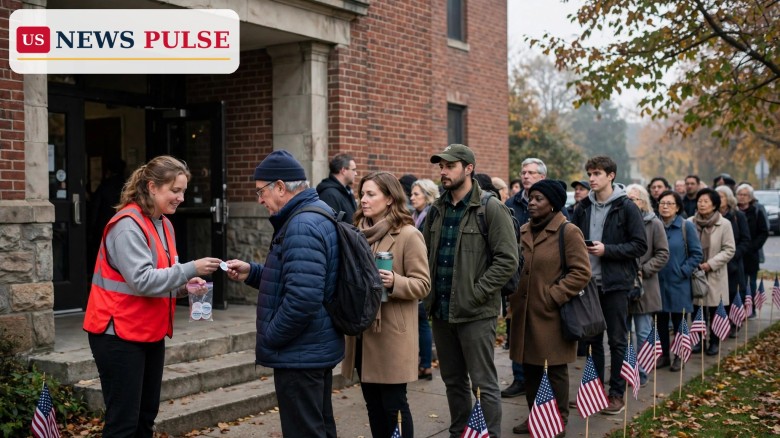
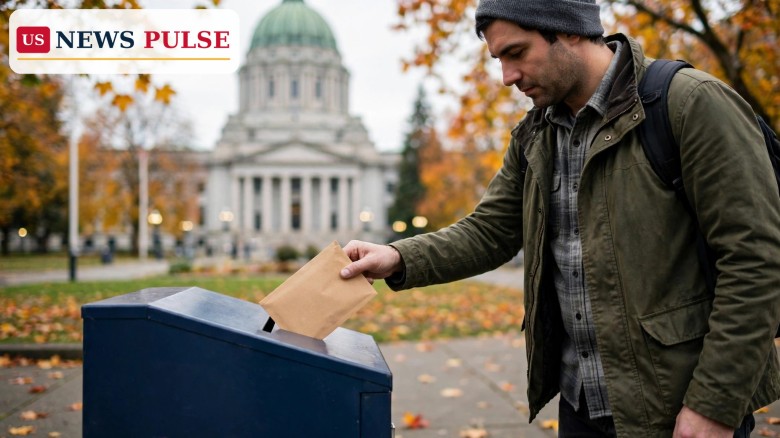
The stakes on November 3 are unusually high. Voters will fill all 435 House seats, 35 Senate seats and 39 state and territorial governorships, with control of both chambers of Congress in play. More than 48 million early ballots had already been cast by Friday, more than in any previous midterm election, according to the University of Florida's Election Lab. National polling has pointed in the Democrats' direction: RealClearPolling averages cited by Al Jazeera put Democrats ahead of Republicans by 51.4 percent to 43.2 percent on the generic ballot, and an Emerson College poll released on Friday put President Trump's approval rating at 37 percent, a new low for that pollster.
The money race is not one-sided. Tracking data from AdImpact cited in campaign-finance reporting shows political advertising spending crossed $3.8 billion by mid-October. On the Republican side, technology executive Elon Musk is expected to end the cycle as the single biggest donor, having given on average $3.6 million per day since July, according to Bloomberg's campaign-finance reporters, or roughly $366 million in total. Billionaire venture capitalist Reid Hoffman has put $8 million into the Democratic Party of Wisconsin over the past five weeks, CNBC reported, to help its gubernatorial nominee David Crowley against Republican Tom Tiffany.
The House races tell the clearest story of Bloomberg's two-pronged approach. In Iowa, all three targeted districts are held by Republicans and all three Democratic challengers have gun-safety movement ties. In the 1st District, Republican Representative Mariannette Miller-Meeks faces Democrat Christina Bohannon; in the 2nd, Republican Joe Mitchell faces Democrat Lindsay James; and in the 3rd, Republican Representative Zach Nunn faces Democrat Sarah Trone Garriott. In Michigan's 8th District, Democratic Representative Kristen McDonald Rivet faces Republican Thomas J. Smith, while the open 10th District seat is contested by Democrat Christina Hines and Republican Michael Bouchard.
In Arizona's 6th District, Republican Representative Juan Ciscomani faces Democrat JoAnna Mendoza, and in Pennsylvania's 8th, Republican Representative Rob Bresnahan Jr. faces Democrat Paige Cognetti. Everytown also touted a $1 million advertising campaign for Democratic Governor Abigail Spanberger shortly after she defeated then-Republican Lieutenant Governor Winsome Earle-Sears in Virginia's 2025 gubernatorial race, a reminder that the group's electoral work extends beyond Washington. The House Majority PAC advertising, by contrast, is aimed squarely at television and streaming viewers in districts where Democratic strategists believe a final burst of spending can move late-deciding voters.
For the Senate and governor races, the donations land in states where Democrats see genuine openings. Texas is the headline case: Talarico's challenge to Paxton has drawn enormous national attention and money, and Cruz's leaked warning that Texas is "excruciatingly close" has sharpened Democratic hopes there. Kansas is the quieter surprise: no Democrat has won a Senate race in the state since 1932, yet polling has shown Hamilton competitive with Marshall. Georgia's governor race, where Bottoms is the Democratic nominee, is another contest where late outside money can fund the final week of advertising that campaigns otherwise could not afford.
Democratic leaders welcomed the announcement as a decisive late boost. Jeffries' praise for Bloomberg's 2018 role framed the new money as a repeat of a proven formula: heavy late spending in House races, targeted at districts where Democrats need to protect incumbents and flip Republican-held seats. Wolfson's "wind at your back" comment signalled that Bloomberg's team believes the political environment has moved in Democrats' favour in the final week, with polling, early-vote figures and the president's approval rating all cited by Democratic strategists as reasons for optimism.
Republican strategists, meanwhile, have argued that late money has limits when so many ballots are already cast. With more than 48 million votes banked before the final weekend, a large share of the electorate cannot be reached by any advertisement, however well funded. But Smith's comment about being "the only game in town" captures the other side of that argument: in districts where Republican outside groups have already spent their budgets, a fresh $16 million from the House Majority PAC can dominate the final days of television and streaming, when undecided voters are paying the most attention.
The gun-safety angle also drew attention. Bloomberg's $12 million for Everytown-backed candidates is one of the largest single-cycle investments the gun-control movement has made in House races, and it comes as gun policy remains a sharp dividing line in suburban districts. The eight candidates backed through Everytown include former Moms Demand Action volunteers, giving the spending a grassroots story that Democratic campaigns can tell on the ground as well as on television.
Late money matters most in close races, and the 2026 midterms are full of them. Control of the House is expected to be decided by a handful of districts, several of which are on Bloomberg's target list, and the Senate majority could hinge on Texas and Kansas, where his candidate donations are among the largest single gifts of the cycle. A $36 million injection four days before Election Day is not enough to change the national environment, but it is more than enough to fund the final advertising blitz in a dozen districts and to give three high-profile statewide campaigns a closing argument they could not otherwise afford.
The spending also illustrates how the 2026 campaign-finance landscape has changed. Billionaire donors now routinely move tens of millions of dollars in the final week, and the line between party committees, super PACs and single-issue groups has blurred: Bloomberg's money flows through the House Majority PAC, through Everytown and directly to candidates, covering television, streaming, grassroots organising and candidate operations at once. For voters in the targeted districts, the practical effect is simple: the final days of the campaign will be louder, more heavily advertised and more contested than the weeks that came before.
There is also a longer-term signal. Bloomberg's willingness to spend more than $115 million in the final fortnight of a midterm cycle, on top of hundreds of millions in earlier cycles, shows that Democratic megadonors see 2026 as a hinge election. If Democrats retake the House, Bloomberg's late spending will be cited as part of the reason; if they fall short, the same spending will be cited as evidence that even record late money cannot overcome a difficult map. Either way, the $36 million announcement is a marker of how much the party's biggest donors believe is at stake on November 3.
The money will be spent almost immediately. House Majority PAC advertising in the 10 targeted districts is already being placed for the final weekend, and Everytown's candidate support will fund closing-week field and media work in Arizona, Florida, Iowa, Michigan and Pennsylvania. Campaign finance disclosures in the coming weeks will show the precise timing and recipients of each donation, and analysts will measure whether the targeted districts moved in the final polls.
On Tuesday, November 3, voters will deliver the verdict. Early voting ends on October 31 in most counties, and the remaining ballots will be cast on Election Day itself. Results in the targeted House districts, and in the Texas, Kansas and Georgia statewide races, will be among the first indicators of whether Bloomberg's late bet paid off. Whatever the outcome, the 2026 cycle will be remembered as one in which billionaire spending reached new heights, with Bloomberg's $116 million late surge standing as the Democratic side's biggest single statement.
Publicly, at least $116 million in the final fortnight: about $80 million announced last week plus nearly $36 million more this week, according to Politico and The New York Times. Earlier cycle donations, including $11 million for a New York primary race, would take the total higher.
$16 million to the House Majority PAC for ads in 10 districts, $12 million to Everytown for Gun Safety for eight House candidates, $2.5 million to James Talarico in Texas, $2 million to Adam Hamilton in Kansas, $2.5 million to Keisha Lance Bottoms in Georgia and $750,000 to Gina Hinojosa in Texas.
His team says the political winds favour Democrats and late spending is hard for opponents to answer. House Majority PAC President Mike Smith said late plays put Republicans "on their heels" and leave Democrats as "the only game in town" in the final days.
Partly. Early voters cannot be reached, but undecided and Election Day voters can, and in districts decided by a few thousand votes, a final advertising blitz can still matter.
Elon Musk is expected to be the cycle's biggest single donor, giving on average $3.6 million per day since July, or roughly $366 million in total, according to Bloomberg's campaign-finance reporting.
Related coverage: Trump's Texas rallies and the Talarico surge and Trump's $5,000 dividend promise back in the spotlight.
Leave a Comment



 | Today's Date: