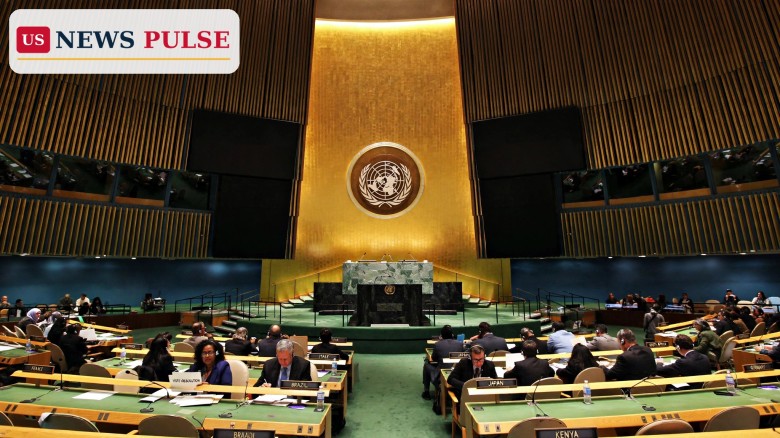
The G20 group photo cancelled in Atlanta on Friday morning has become the defining image of a summit that never got its picture. Foreign ministers of the world's largest economies opened two days of talks in Atlanta, Georgia, on October 30, 2026, but the traditional group photograph was scrapped shortly before the meeting began, after several European officials threatened to boycott or walk out rather than be photographed alongside Russia's foreign minister, Sergei Lavrov.
United States Secretary of State Marco Rubio, chairing the meeting, cancelled the photo to stop a ceremonial moment turning into a diplomatic incident. The talks themselves went ahead as planned, but the missing photograph said more about the state of the G20 than any posed lineup could have.
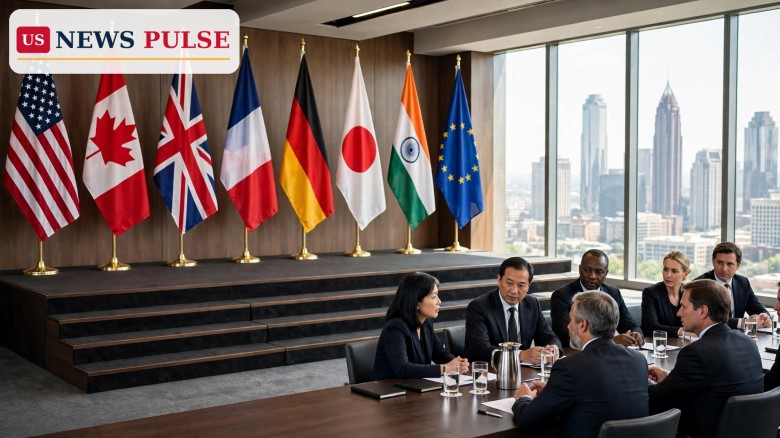
The photo is normally the most choreographed moment of any G20 gathering: ministers line up in rows, flags behind them, smiles fixed for the cameras. In Atlanta, that ritual collapsed before it began. A diplomatic source told AFP that the group photo planned for Friday morning was called off shortly before the two-day meeting started, because some European officials objected to appearing alongside Lavrov.
Two US officials told the Associated Press that European officials "balked" at the prospect of being photographed with Lavrov, prompting Rubio to cancel the picture. A US official said the photo was cancelled due to the controversy and to avoid allowing "a ceremonial photo opportunity to become a diplomatic distraction". In other words, the host decided that no photograph was better than a photograph of a split.
The talks themselves went ahead, but the missing photograph will be the detail most people remember from Atlanta.
Lavrov's presence in Atlanta was controversial long before Friday morning. Russia has been shunned by most of the West since its full-scale invasion of Ukraine in February 2022, and Lavrov himself remains under international sanctions. He has travelled only infrequently to NATO member states since the war began, which made his appearance at a US-hosted G20 meeting on American soil a notable event in itself.
European leaders have also refused to appear in photographs with Russian delegations at earlier G20 meetings this year, including a September gathering where European finance ministers declined to pose with Russian officials after Washington invited Moscow back. Atlanta was therefore not a first; it was a pattern hardening into policy.
The Atlanta meeting, held on October 30 and 31, sets the stage for the G20 leaders' summit, which President Donald Trump is scheduled to host at his Doral golf club in Miami on December 14 and 15. Trump has invited Russian President Vladimir Putin to Miami, and it remains unclear whether Putin will accept.
At its heart, the cancellation was about what a photograph would have signalled. For the European ministers, standing shoulder to shoulder with Lavrov would have suggested a normality they insist does not exist while Russia's war in Ukraine continues. German Foreign Minister Johann Wadephul put it bluntly ahead of the meeting: "there is no normality with Russia". He added that Europeans "must not send out any misleading visual signals", and cautioned against "falsely optimistic signals" from the gathering.
Wadephul also made clear that refusing a photograph is not the same as refusing to talk. "We have to exchange our differences of opinion here at the table," he said. That distinction — talk, but no posed unity — captures the European position in Atlanta: engage with Russia in the room, but do not hand Moscow a picture it can present as rehabilitation.
Britain took a similar line. The British Foreign Office restated the United Kingdom's longstanding policy of avoiding direct bilateral engagement with Russian ministers over the war in Ukraine, adding that it had "no plans" to change its stance. The message from London, Berlin and Warsaw was consistent: dialogue yes, photo opportunity no.
For Rubio, the calculation was practical: a boycott or walkout during the photograph would have been a bigger story than a cancelled one.
Rubio opened the talks with an appeal for unity that acknowledged just how divided the room was. "We are in a critical moment — I would call it a moment of choosing, and I would say not just for my country, the United States of America, but frankly, for the world," he told his counterparts. He warned that the world faces "interconnected economic and geopolitical crises", citing disruptions to global energy and food supplies, trade and freedom of navigation, and cautioned that these developments pose "severe threats to essential foundations of the global economic order".
Sikorski, Poland's deputy prime minister and foreign minister, backed the decision in plain terms. Speaking to media in Atlanta, he called the cancellation of the group photograph "the right decision", adding: "I am not the only one who does not want to be photographed with Lavrov."
Wadephul used the meeting to press Russia directly, saying: "Today, in this forum, I will once again call on Russia to finally accept Ukraine's offer of a ceasefire, starting in the Black Sea." His remarks linked the photo dispute to the substantive demand at the heart of the European position: a ceasefire first, normal optics later.
Diplomatic sources were frank about the limits of the gathering: instead of a final declaration, the meeting will likely conclude with a chair's summary drafted by the United States.
A cancelled photograph might sound trivial. It is not, because the G20's power has always been partly symbolic: when the world's largest economies stand together, markets, allies and adversaries read it as a signal of coordination. When they cannot even stand together, the signal is the opposite — and it arrives at a moment when coordination is genuinely needed.
Global energy prices have rocketed since US-Israeli strikes on Iran from late February triggered Tehran's blockage of the Strait of Hormuz, a waterway crucial to the global transit of oil, gas and fertilisers. Freedom of navigation — keeping sea lanes open to commerce "without threats or tolls", in the words of a US State Department official — is the central American priority in Atlanta. Alisha Chhangani of the Atlantic Council expects Washington to push for agreement on what that means within and beyond Hormuz, but notes China dissented against such wording at an earlier finance ministers' gathering.
The divisions on display in Atlanta also run across the other great questions of the moment: the Russia-Ukraine war, the US-Israeli war against Iran, US tariffs, and China's actions in the South China Sea. With no consensus in sight on any of them, the meeting's most likely product — a US-drafted chair's summary — will describe positions rather than resolve them.
There is also a domestic American dimension. The meeting takes place days before the midterm elections, with fuel prices a key campaign issue and Trump signalling he could attack Iran again after Tuesday's vote. Fresh negotiations between Moscow, Kyiv and Washington are expected in November, and Atlanta was a staging post for those talks, not a substitute for them.
The ministers' meeting continues on Saturday, October 31, with the focus expected to stay on energy, supply chains and maritime security. Watch for any bilateral meetings on the sidelines — particularly involving Rubio and Lavrov — and for the wording of the chair's summary when the meeting closes.
Beyond Atlanta, the test is Miami. The December 14-15 leaders' summit at Doral will face the same question in sharper form: whether Putin attends, whether a leaders' group photograph happens, and whether the leaders can produce a joint statement where their foreign ministers could not.
The November round of Moscow-Kyiv-Washington talks will also show whether Atlanta's frank exchanges moved anything. Wadephul's call for a Black Sea ceasefire, and the American push on freedom of navigation, both need Russian answers that a photograph — taken or not — cannot supply.
Several European officials threatened to boycott or walk out rather than be photographed with Russia's Sergei Lavrov, so Secretary of State Marco Rubio cancelled the traditional photo to avoid a diplomatic distraction.
European officials raised the objection, according to US officials. Poland's Radoslaw Sikorski publicly supported the cancellation, Germany's Johann Wadephul warned against misleading visual signals, and Britain restated its policy of avoiding direct bilateral engagement with Russian ministers over Ukraine.
Yes. The talks proceeded as planned after the photo was cancelled, with Rubio opening the meeting and ministers discussing energy, food, trade and freedom of navigation.
Probably not. A diplomatic source said the meeting will likely conclude with a chair's summary drafted by the United States instead of a final declaration.
Attention moves to the leaders' summit in Miami on December 14-15, where it remains unclear whether Vladimir Putin will accept Trump's invitation, and to fresh Moscow-Kyiv-Washington talks expected in November.
Related coverage on US News Pulse: G20 Atlanta meeting opens as Rubio hosts divided ministers on Iran and Ukraine; Trump says Iran war will be wrapped up soon as mediators return to Tehran; Ukraine refinery strike ends pause as fire hits Russian oil plant.
Leave a Comment



 | Today's Date: