In the Daytona Trump threat arrest, a 21-year-old Daytona Beach woman was arrested on Thursday, October 29, 2026, after authorities said she posted a social media threat to kill President Donald Trump ahead of his campaign rally in the Florida city, in a case that put the sharp end of election-season security — and the line between a so-called joke and a felony — back in the spotlight just four days before the November 3 midterm elections. Allison Jeanne Albro was taken into custody at 8 p.m. on October 29, according to Volusia County court records, and was being held at the Volusia County branch jail ahead of an initial court appearance scheduled for 1:30 p.m. on Friday, October 30. The Daytona Trump threat arrest, as it was reported by the Daytona Beach News-Journal, came hours before Trump was due to take the stage at the Ocean Center in Daytona Beach on Friday evening, an event that drew thousands of supporters, closed roads across the city centre and brought a heavy presence of sheriff's deputies, Secret Service agents and FBI personnel to the streets around the venue.
The chain of events began, according to the sheriff's office, when authorities learned of a social media post in which Albro allegedly said she planned to attend the Trump rally in her home city the next day and shoot the president with a Glock handgun. The Volusia Sheriff's Office Domestic Security Unit and the U.S. Secret Service contacted Albro after learning of the post, Sheriff Mike Chitwood said in a statement he shared on social media on Friday morning. By that evening, she had been arrested and booked into the Volusia County branch jail. The arrest time recorded in court records was 8 p.m. on Thursday, October 29 — the night before the rally, and the same day the post is reported to have appeared.
Chitwood's account of what Albro told investigators was blunt. She said she was joking, he said, and told investigators she did not have access to the Glock mentioned in her post or any other weapon, and that she would never hurt anyone. That explanation did not change the outcome. In the same social media statement, Chitwood wrote: "We are not going to tolerate threats to assassinate the president," adding: "I would strongly advise anyone else thinking of posting a 'joke' along these lines to think twice." The sheriff also confirmed that his office was coordinating with the Secret Service, the FBI and other law enforcement agencies on security for the presidential visit — a standard but visibly stepped-up posture for a presidential campaign stop in the final days of a national election.
What the public record does not yet show is as important as what it does. Court records available when the News-Journal reported the arrest did not list a bail amount for Albro, and did not name an attorney representing her. No charging document beyond the two counts described in the court records has been published in the reporting so far, and no statement from Albro herself, beyond the account of her remarks to investigators relayed by the sheriff, has been reported. As with any arrest, the charges are allegations: Albro is presumed innocent unless and until proven guilty in court, and the question of whether prosecutors can show she intended her post as a genuine threat — rather than, as she told investigators, a joke — is likely to be central to how the case proceeds.
The arrest landed in the middle of one of the most security-conscious stretches of the 2026 campaign. Trump was scheduled to speak at the Ocean Center in Daytona Beach on Friday, October 30, at 7 p.m., with doors opening at 3:30 p.m. and the rally programme beginning at 5 p.m. The 9,300-seat venue, at 101 N. Atlantic Avenue, was the site of his fourth visit to Daytona Beach since his first campaign stop in the city on August 3, 2016, and his second Florida rally in as many Fridays, following an appearance at Florida Gulf Coast University's Alico Arena in Fort Myers a week earlier. Both Florida stops were staged in support of the same two candidates: Representative Byron Donalds, the Republican candidate for governor, and Senator Ashley Moody, the Republican candidate for the U.S. Senate, who was appointed to the seat in 2025 and is now seeking election in her own right.
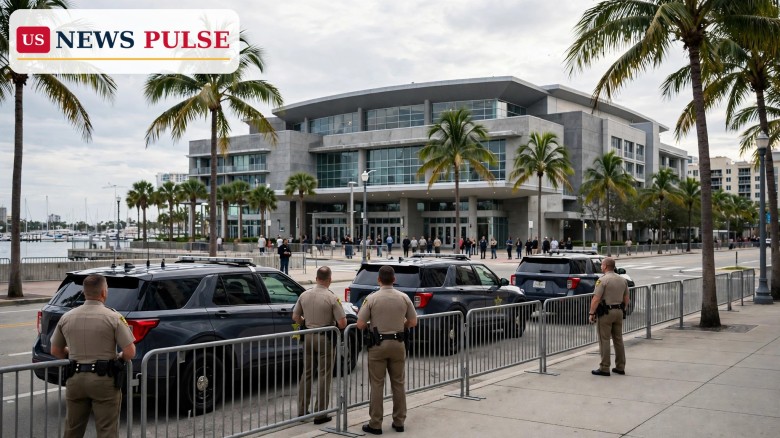
The security operation around the Daytona Beach visit was extensive even before the arrest became public. The Federal Aviation Administration issued temporary flight restrictions covering a 30-nautical-mile radius around Daytona Beach International Airport — and, in the live reporting, around Ormond Beach Municipal Airport, where Trump was expected to land — from 5 p.m. to 11 p.m. on October 30. The airport said normal airline traffic would not be affected, but warned of a short ground freeze of 15 to 30 minutes before the arrival and departure of Air Force One, during which no aircraft would be allowed to land or move on the airfield, and of possible minor delays for flights between 6 p.m. and 9 p.m. Daytona Beach police, meanwhile, announced what they called "significant traffic impacts throughout the city," closing Atlantic Avenue completely between Oak Ridge Boulevard and Main Street from 5 p.m. to 9 p.m., Earl Street from 8 a.m., and Peninsula Drive between Main and Ora streets from 4 p.m., with further temporary closures along the presidential travel route.
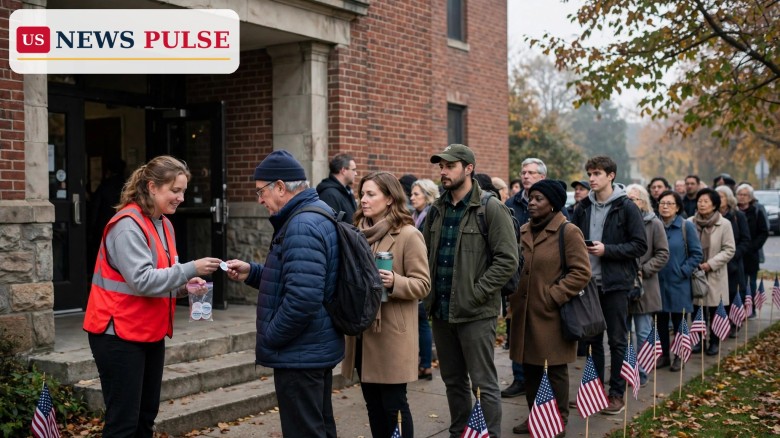
Supporters had begun gathering long before the doors opened. Live coverage from the News-Journal described a few hundred people already in line by late morning, one supporter who said he had arrived at 3:30 a.m. to be first in line, and a morning photo gallery of smiling supporters waiting outside the Ocean Center. A Democratic congressional candidate, Bale Dalton, planned to greet Trump supporters outside the venue in the early afternoon, in a district race — Florida's 7th — that has tightened enough for the Cook Political Report to shift it from likely Republican to lean Republican. The group JustUs Volusia was also expected to protest at the venue from 3:30 p.m., having organised No Kings rallies across the area. In other words, the rally was already a magnet for crowds, counter-demonstrators and cameras before the threat arrest added a criminal case to the day's story.
Florida treats written threats far more seriously than spoken ones, and that distinction is at the heart of the charges against Albro. Under Florida Statute 836.10, it is unlawful to send, post or transmit — or to procure the sending, posting or transmission of — a writing or other record, including an electronic record, in any manner in which it may be viewed by another person, when that writing makes a threat to kill or do bodily harm to another person, or to conduct a mass shooting or an act of terrorism. A social media post falls squarely within that definition, because the statute expressly covers electronic records that can be viewed by another person. A violation is a second-degree felony, punishable by up to 15 years in prison and a fine of up to $10,000.
The second charge — using a two-way communications device to commit a felony — is a third-degree felony under Florida law, and is commonly filed alongside a written-threats count when a phone or computer was used to send the message. Together, the two counts frame the case as prosecutors and investigators will likely present it: not as a passing remark, but as a written, transmitted threat tied to a specific, imminent public event. The defence, if Albro's account to investigators is any guide, is likely to turn on intent. Florida's written-threats law, as interpreted by the courts, requires the state to show that the defendant made a true threat and intended it to be a true threat — a question that turns on the words used, the context in which they appeared, and what the accused could actually have done. Albro's reported statements — that she was joking, had no weapon and would never hurt anyone — go directly to that question, but they are not, on their own, a legal defence: investigators and prosecutors will weigh them against the post itself, its timing the night before a presidential visit, and any other evidence gathered from her devices or interviews.
There is also a federal dimension that has not yet been charged in this case, but that shapes how such threats are handled. Threats against the president are a federal crime as well as a state one, and the Secret Service is required to investigate threats against protected persons regardless of whether the person making them later says they were joking. That is why the Volusia Sheriff's Office Domestic Security Unit worked the case jointly with the Secret Service, and why the FBI was also involved in the security coordination for the visit. Whether federal charges follow is a decision for federal prosecutors, and no such charge had been reported at the time the arrest became public. For now, the case rests on the two Florida counts in the Volusia County court records.
The most consequential reaction so far has come from the sheriff who announced the arrest. "We are not going to tolerate threats to assassinate the president," Sheriff Mike Chitwood wrote in the statement he shared on social media on Friday morning. "I would strongly advise anyone else thinking of posting a 'joke' along these lines to think twice." The warning was aimed less at Albro, who was already in custody, than at anyone else tempted to post something similar as the campaign enters its final weekend — a period when, as Chitwood's office noted, the sheriff's department, the Secret Service, the FBI and other agencies are coordinating security for a presidential visit in real time.
Albro's own reported words, as relayed by Chitwood, form the other half of the public record so far: she told investigators she was joking, did not have access to the Glock mentioned in her post or any other weapon, and would never hurt anyone. No attorney for Albro had been named in the court records available at the time of reporting, so there has been no defence statement to weigh against the sheriff's account. The White House and the Trump campaign had not, in the reporting available, issued a specific public comment on the arrest itself, though the rally went ahead as scheduled on Friday evening, with the security measures described above in place. Local reporting also captured the mood among supporters waiting outside the Ocean Center, many of whom told reporters they were unconcerned about rising costs and did not hold Trump primarily responsible for them — a reminder that, for the crowd, the rally was a campaign event first and a security story second.
Beyond Daytona Beach, the arrest fits a pattern that law enforcement agencies have warned about throughout the 2026 campaign: social media posts about political violence, even posts their authors later describe as jokes, are investigated as potential threats, and the involvement of the Secret Service means they are rarely left to local police alone. The case also arrives at a moment when the campaign's own schedule has been unusually volatile — Trump cancelled rallies in Kansas and Iowa on October 29, shifting to tele-rallies, then reversed course on October 30 and put both events back on the calendar for Sunday, November 1 — so any disruption to a scheduled appearance, even a threat that produces an arrest rather than an incident, is treated as a significant event in its own right.
The Daytona case matters for three reasons that go beyond a single arrest in a single Florida city. First, it is a practical lesson in how the law treats online speech in 2026. A post that takes seconds to write, and that its author may have intended as dark humour or attention-seeking, can produce a second-degree felony charge carrying up to 15 years in prison the moment it is read as a threat to kill a named, protected person ahead of a scheduled appearance. The "it was just a joke" explanation is not ignored by investigators — Chitwood himself reported it — but it does not automatically end an investigation, and it does not prevent an arrest when the post, its timing and its target together meet the threshold for a written threat.
Second, the case illustrates the security burden of the final days of a presidential campaign. A single post triggered a joint response from a sheriff's domestic security unit, the Secret Service and the FBI, alongside flight restrictions, road closures and a ground freeze at the local airport. Multiply that by dozens of campaign stops across nearly 20 states in the final 72 hours — the scale of the tele-rally and in-person programme Trump embarked on after the Kansas and Iowa cancellations were reversed — and the cost, in personnel and public disruption, of investigating even a non-credible threat becomes clear. That is precisely why sheriffs like Chitwood issue public warnings: deterrence is cheaper than deployment.
Third, the arrest is a reminder of the legal exposure that now surrounds political speech online, for supporters and critics alike. Florida's written-threats statute does not distinguish by party, target or motive: it asks whether a writing or electronic record, viewable by another person, threatened to kill or do bodily harm. As the midterms approach, with early voting already past 43 million ballots nationally and emotions running high in tight races from Florida's 7th District to the Texas and Kansas Senate contests, the line between venting, joking and threatening is being policed — literally — in real time. The Daytona arrest will not settle where that line falls; a court will, if the case proceeds to trial. But it has already shown where law enforcement draws it on the night before a presidential rally.
The immediate next step is Albro's initial court appearance, scheduled for 1:30 p.m. on Friday, October 30, at which a judge would typically advise her of the charges, consider bail — no bail amount was listed in the court records available before the hearing — and set future dates. If she has not yet retained or been appointed counsel, that question is also likely to be addressed at the appearance. From there, prosecutors in Volusia County will decide whether to file a formal information on the two counts as charged, to amend them, or, if the evidence does not support a true-threat finding, to reduce or drop them. Any federal referral would be a separate decision, made by federal prosecutors after reviewing the Secret Service investigation.
Politically, the calendar moves faster than the court case. Trump was due to speak in Daytona Beach on Friday evening in support of Donalds and Moody, four days before Election Day on Tuesday, November 3, and then to hold the reinstated Kansas and Iowa rallies back-to-back on Sunday, November 1, alongside nearly 20 tele-rallies. The Daytona arrest is unlikely to change that schedule — the rally went ahead with the security plan already in place — but it will remain part of the story of the campaign's closing weekend, cited by law enforcement as a warning and by campaign watchers as evidence of the temperature of the final days. For voters in Volusia County, the more immediate legacy is practical: road closures, flight restrictions and a heightened police presence that, for one Friday evening, made a routine campaign stop feel anything but routine.
Allison Jeanne Albro, 21, of Daytona Beach, was arrested at 8 p.m. on October 29, 2026, after authorities said she posted a social media threat to kill President Donald Trump ahead of his October 30 rally in the city.
One count of making written threats to kill or do bodily injury, a second-degree felony in Florida punishable by up to 15 years in prison, and one count of using a two-way communications device to commit a felony, a third-degree felony.
According to Sheriff Mike Chitwood, Albro told investigators she was joking, did not have access to the Glock mentioned in her post or any other weapon, and would never hurt anyone. Investigators arrested her despite that explanation.
Yes. Trump was scheduled to speak at the Ocean Center in Daytona Beach at 7 p.m. on Friday, October 30, in support of Byron Donalds for governor and Ashley Moody for the U.S. Senate, with doors opening at 3:30 p.m. and extensive security, flight restrictions and road closures in place.
Her initial court appearance was scheduled for 1:30 p.m. on Friday, October 30, 2026. Court records available before that hearing did not list a bail amount or an attorney representing her.
Sources: Daytona Beach News-Journal, October 30, 2026 (arrest, charges, sheriff's statement, court records); News-Journal live rally coverage and rally guides, October 30, 2026 (venue, timings, FAA restrictions, road closures); Florida Statute 836.10 and penalty summaries (second-degree felony, up to 15 years). This article reports allegations as stated by authorities; the accused is presumed innocent unless proven guilty.
Leave a Comment



 | Today's Date: