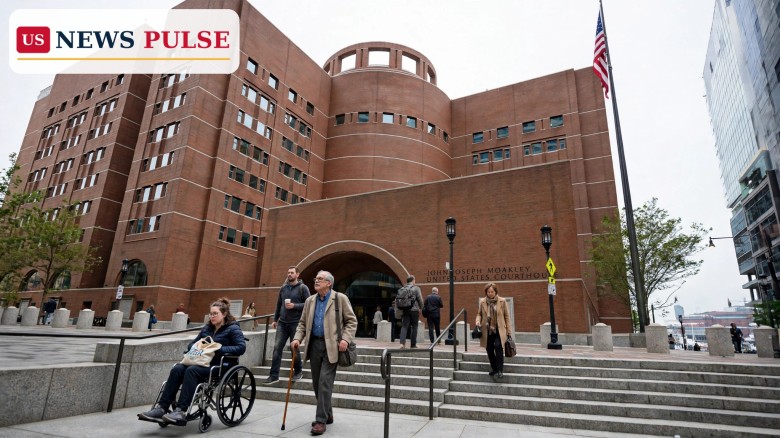
A federal judge in Boston has blocked part of the Trump administration's Medicaid work requirements, ruling that chronically ill Americans cannot be forced to prove their conditions stop them from working before they can qualify for a medical exemption. The decision, handed down on Thursday, October 29, 2026, is a partial victory for 25 states and the District of Columbia that sued the administration in June, and it lands just weeks before the new work rules are due to take effect on January 1, 2027.
Judge Stearns, who sits in the District of Massachusetts and was appointed by former President Bill Clinton, issued a 16-page ruling striking down the key extra test CMS had added to the medically frail exemption. The agency's rule, issued in June 2026 to implement work requirements enacted in the 2025 law known as the One Big Beautiful Bill Act, said a person counted as medically frail only if their physical, mental or other behavioural health condition significantly impaired their ability to comply with the community engagement requirement.
Stearns ruled that the added test unlawfully narrowed the exemption Congress had written. The law says the definition of medically frail must include people who are blind or disabled, people with substance use disorders or disabling mental disorders, people with certain disabilities that significantly impair daily activities, and people with serious or complex medical conditions. The judge read the word including in that list as a floor, not a ceiling: anyone inside those five groups qualifies, without having to clear a second hurdle showing their condition prevents them from meeting the work rule.
The states argued the extra proof requirement would force seriously ill people to clear unnecessary hurdles to keep government-funded health insurance, and that states would face costly and intensive changes to their eligibility systems to enforce it. Stearns agreed, writing that the states had met their burden of showing irreparable harm for which monetary damages would provide inadequate compensation. He warned that enforcing an unlawful definition of medically frail may lead to the disenrolment of otherwise eligible vulnerable individuals relying on Medicaid coverage for continuity of care.
CMS, the agency that adopted the rule, declined to comment on the ruling. The decision is a permanent injunction against the narrowed definition, and the court also granted the states a six-month stay of enforcement on determinations of medical frailty, giving them time to update their eligibility verification systems. The stay does not move the January 1, 2027 start date set by Congress.
Medicaid is the public health insurance programme for low-income people, funded jointly by state and federal governments. Under the 2025 law, most adults aged 19 to 64 covered by the Medicaid expansion must, from January 1, 2027, show that they work or do community service for at least 80 hours a month, or are enrolled in an education programme at least half the time, to keep their coverage.
The law carves out exceptions, including for people considered medically frail or otherwise having special medical needs, and for people in addiction treatment programmes, among others. The fight in this case was never about whether work requirements exist. It was about how wide the medical door stays open. The administration's guidance effectively made the door narrower: a diagnosis alone was not enough, and a patient also had to demonstrate that the condition limited their ability to meet the work rule.
That distinction matters in practice. A person with a serious but managed condition, such as a controlled mental health disorder or a disability that affects daily life without making every form of community engagement impossible, could have been caught by the extra test. Patient advocates argued the test would push people into repeated paperwork, doctor visits and appeals at exactly the moment their health was least stable. The states said the same burden would fall on them, in the form of new verification systems, staff training and disputed determinations.
Stearns's ruling removes that second test but leaves the rest of the architecture in place. The 80-hour requirement itself was not struck down, and the judge expressly did not declare Medicaid work requirements unlawful. Anyone counting on the ruling to end the work rules entirely will be disappointed; what it does is restore the exemption to the breadth Congress wrote, rather than the narrower version CMS adopted.
The case arrived in a year when Medicaid has become one of the most contested fronts in American health policy. The One Big Beautiful Bill Act, signed into law in 2025, was the vehicle for the first nationwide Medicaid work requirements, and CMS moved quickly in June 2026 to publish the implementation guidance that states are now racing to put into practice. Twenty-five states and the District of Columbia, most of them led by Democrats, sued the same month, arguing the guidance rewrote the statute.
The timing sharpened the stakes. With the January 1, 2027 start date approaching, states have been building eligibility systems, hiring staff and writing notices to millions of expansion enrollees, many of whom have never had to document monthly hours before. A ruling that changes the exemption test in late October leaves little room for error, which is why the court paired its injunction with a six-month stay on frailty determinations: states get breathing room to reprogram their systems without the January deadline itself shifting.
The ruling also fits a broader pattern of courts policing how agencies implement big new statutes. Judges have repeatedly told administrations of both parties that guidance cannot add conditions Congress did not impose, even when the underlying policy is lawful. Here, Stearns applied that principle narrowly and surgically: he struck the one added phrase that did the narrowing work, and left the surrounding rule standing.
For context, Medicaid expansion covers millions of low-income adults, and the work-requirement debate has always turned on a factual question that neither side has fully settled: how many enrollees are already working, caring for family members, or in school, and how many would lose coverage through paperwork rather than through a genuine failure to meet the hours test. Earlier state experiments with work requirements produced large coverage losses driven largely by reporting failures, a history the states cited and the administration disputed. Stearns did not resolve that debate, but his irreparable-harm finding reflects the risk that eligible people could lose continuity of care while the argument continues.
Judge Stearns put the states' harm in stark terms, writing that they face the burden of costly and intensive alterations to their eligibility verification systems, and that the public faces potential for great hardship in the absence of an injunction because enforcing an unlawful definition of medically frail may lead to the disenrolment of otherwise eligible vulnerable individuals relying on Medicaid for continuity of care.
The Centers for Medicare and Medicaid Services declined to comment on the ruling, leaving open whether the administration will appeal, seek a stay, or rewrite the guidance. An appeal would go to the First Circuit Court of Appeals, and the administration could also ask a higher court to pause the injunction while it litigates. Neither step had been announced at the time of publication.
Patient and disability advocates welcomed the decision as a protection for people whose conditions are serious even when they do not make every activity impossible, arguing that a medical exemption should turn on diagnosis and need, not on a second bureaucratic proof exercise. Supporters of the work requirements, by contrast, have long argued that exemptions should be tightly drawn so the programme rewards work and community engagement, and they are likely to press that case on appeal or in revised guidance.
The ruling drew attention beyond health policy circles because of its timing, four days before the November 3 midterm elections, in a campaign season in which health coverage, federal benefits and the cost of care have featured heavily. The decision does not change anyone's coverage overnight, but it changes what states can demand from some of their sickest enrollees in the weeks when they are finalising their systems.
The ruling matters for three reasons. First, it protects continuity of care for people in the five protected groups, who will not have to prove an extra impairment on top of their diagnosis to keep an exemption. For someone managing a serious condition, that is the difference between keeping a doctor, a prescription and a treatment plan, and losing them to a paperwork dispute.
Second, it sets a limit on how agencies can implement the new law. If CMS wants a narrower exemption, Stearns's logic says, it must persuade Congress to write one, not add the narrowing language through guidance. That principle will shape every future Medicaid rule, and possibly rules in other benefit programmes, where an agency is tempted to tighten eligibility by redefinition.
Third, it clarifies what the January 1, 2027 deadline actually means. The work requirements are coming, and most expansion adults will need to document 80 hours a month or be in school at least half time. The ruling does not delay that. What it does is make the start cleaner: states now know the exemption test they must apply, and enrollees in the protected groups know they will not face the extra hurdle the court struck down.
The immediate question is whether the administration appeals. An appeal could seek to restore the narrowed definition, and a request to stay the injunction would be the fastest way to do it. If no stay is granted, states will spend the six-month stay period updating their frailty determinations to match the court's reading, while the January 1, 2027 work requirement itself takes effect on schedule.
Enrollees should watch for new notices from their state Medicaid agencies explaining how exemptions will be verified, and should keep medical documentation current, because two limits the judge upheld still apply: states must reject proof of medical frailty drawn from claims and encounter data more than 12 months old, and states may accept only one self-attestation per continuous period of enrolment. Those rules survived, and they will still shape how exemptions are proved.
Congress could also intervene, either by writing the narrower definition into law or by broadening the exemption further, but with the midterms four days away, legislative action before January is unlikely. The likelier path is litigation: a First Circuit appeal, and possibly a Supreme Court petition, over how much discretion CMS has to define medical frailty. Until then, the court's reading stands, and the five protected groups keep the broader exemption Congress wrote.
Does this ruling end Medicaid work requirements? No. The 80-hour monthly work or community service requirement for most Medicaid expansion adults aged 19 to 64 still begins on January 1, 2027. The ruling only strikes the extra proof test for the medically frail exemption.
Who qualifies as medically frail under the ruling? People in the five groups Congress listed: those who are blind or disabled, those with substance use disorders or disabling mental disorders, those with certain disabilities that significantly impair daily activities, and those with serious or complex medical conditions. They qualify without proving their condition also impairs their ability to meet the work rule.
What did the judge leave in place? Two limits on proving frailty survived: states must reject medical proof from claims or encounter data more than 12 months old, and states may accept only one self-attestation per continuous enrolment period.
What should Medicaid enrollees do now? Keep medical documentation current, respond to state notices, and check with their state Medicaid agency about how exemptions will be verified. The January 1, 2027 deadline for the work requirement itself has not moved.
Could the ruling be reversed? Yes. The administration may appeal to the First Circuit and seek a stay of the injunction. Until a higher court rules otherwise, however, the broader exemption stands.
Related coverage on US News Pulse: FDA warns over Darwin's cat food after Salmonella cases, Supreme Court extends block on full SNAP payments, and more in our Health section.
Leave a Comment



 | Today's Date: