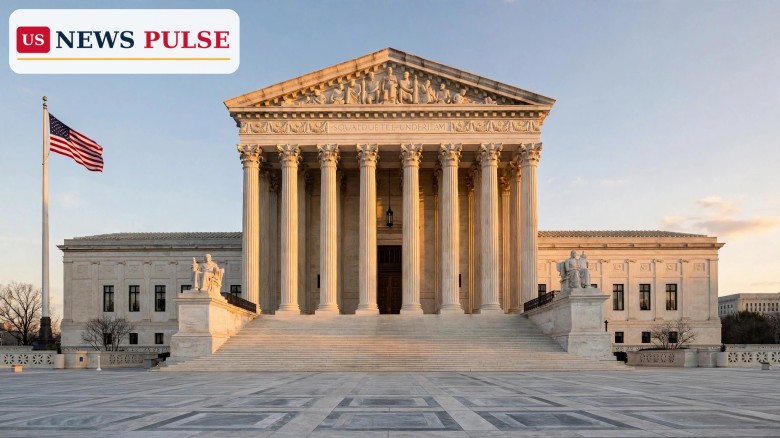
Chief Justice John Roberts defended judicial independence in Buffalo, New York, on Wednesday, telling judges and lawyers that federal courts exist to decide cases and, in doing so, to check the excesses of Congress and the executive. Roberts judicial independence was the unmistakable theme of an appearance that drew applause from the 600 people gathered to mark the 125th anniversary of the federal courts in the Western District of New York.
“Judicial independence is crucial,” Roberts said, in remarks reported by the Associated Press. He described three co-equal branches of government as the Constitution’s one innovation, adding: “That innovation doesn’t work if the judiciary is not independent.” The chief justice, who was born in Buffalo, was speaking in his hometown at a moment when President Donald Trump and his allies have repeatedly attacked federal judges who have slowed parts of the administration’s agenda, accusing so-called “activist judges” of overstepping their bounds.
Roberts spoke in conversation with a federal judge at a gathering of judges and lawyers in Buffalo, answering questions about judicial independence at a time when the courts are under sustained political fire. His answer was direct. The role of the federal courts, he said, is to “decide cases, but in the course of that, check the excesses of Congress or the executive.” That role, he added, “does require a degree of independence.”
The audience response was immediate. The Associated Press reported applause from the 600 people present as Roberts made the case for an independent judiciary, a theme he has returned to repeatedly even as he has largely avoided naming individual critics. Much of what he said was familiar ground for a chief justice who has defended the institution before. What gave the remarks fresh force was their timing: they landed days before the November 3 midterm elections, with the Supreme Court about to take up a run of high-profile cases and emergency appeals filed by the Trump administration.
Roberts also addressed the calls, made by Trump and some of his allies, to impeach judges because of their rulings. He largely repeated the rare public statement he issued in March, when he rebuked such calls after the president floated impeaching U.S. District Judge James Boasberg. “Impeachment is not how you register disagreement with a decision,” Roberts said, restating the position that the normal appellate review process, not impeachment, exists for that purpose. He added that he has no plans to retire, a point that will disappoint any speculation about a vacancy at the top of the court.
The tension between the White House and the federal bench has been building all year. Federal judges have paused or halted key parts of the president’s agenda, including executive orders and enforcement actions, and some of those rulings came from judges appointed by Trump in his first term. The administration and its supporters have answered with accusations that judges are acting as political opponents rather than neutral arbiters, and with talk of impeachment that Roberts has now twice pushed back against in public.
Roberts, appointed to the Supreme Court by President George W. Bush in 2005, has long cast judicial independence as a structural necessity rather than a personal privilege for judges. In his Buffalo remarks he returned to that argument: the Constitution’s division of power into three co-equal branches only works, he said, if the judiciary can decide cases without fear of political punishment. That framing matters because it turns the debate away from any single ruling and toward the system itself. A judge who blocks a policy, on this view, is not thwarting democracy but performing the checking function the system assigns to the courts.
The remarks also followed, by less than a week, a forceful condemnation of attacks on judges by Justice Ketanji Brown Jackson. The two appearances, taken together, amount to the court’s most visible defence of its own independence in months, delivered not through opinions but through public speeches by two of its members. And they arrived on a day when the judiciary’s friction with the administration was on full display in Washington, where Judge Boasberg spent more than an hour questioning Justice Department lawyers about the use of the Alien Enemies Act to summarily deport hundreds of migrants to El Salvador earlier this year. Boasberg’s March 15 order temporarily blocking that use of the law had itself drawn the White House’s ire and the impeachment talk Roberts addressed in March.
Roberts judicial independence is not a new slogan for the chief justice, but the Buffalo speech is best understood as a response to a specific moment. The Supreme Court is slated to hear a number of high-profile cases and emergency appeals filed by the Trump administration in the next few months, cases that are all but certain to keep the court in the spotlight. Among them are the administration’s executive orders banning transgender service members from serving in the U.S. military, restoring fired federal employees to their jobs, and a case about whether children born in the United States to parents who entered the country illegally should be granted citizenship, with oral arguments in the citizenship case due to begin next week.
Speaking before those arguments, Roberts was effectively setting out the ground rules as he sees them: the court will decide the cases, and it will do so independently of the political pressure surrounding them. That message cuts both ways. It reassures critics of the administration that rulings against the government are legitimate exercises of judicial power, and it warns the administration’s supporters that a ruling they dislike is not, by itself, evidence of judicial misconduct. It also places the chief justice himself at the centre of the coming fights, since he will preside over a court with a 6-3 conservative majority that has, in recent years, both upheld and blocked major Trump policies.
The Buffalo setting added a personal note. Roberts was born in the city, and the event marked 125 years of the federal courts in the Western District of New York. Speaking to a hometown audience of judges and lawyers, he framed independence as a local inheritance as much as a national principle: a system built in their courtrooms, sustained by their work, and dependent on the public’s willingness to accept decisions it dislikes.
Roberts’s central lines were quoted widely within hours of the appearance. “Judicial independence is crucial,” he said. “That innovation doesn’t work if the judiciary is not independent.” On impeachment, he was equally plain: “Impeachment is not how you register disagreement with a decision.” The applause reported from the room suggested the audience of judges and lawyers heard the remarks as a defence of their own work as much as of the Supreme Court.
The White House has not, in the reporting reviewed for this article, issued a direct response to the Buffalo remarks. That silence is itself notable: Roberts’s March statement drew a sharp reaction from the president’s supporters at the time, and his latest remarks repeat the same position in stronger institutional language. Legal commentators, meanwhile, have read the speech as a deliberate doubling down, noting that Roberts chose to restate his position just as the court prepares for its most politically charged docket in years rather than waiting for a ruling to speak for him.
Within the judiciary, the speech landed alongside Judge Boasberg’s Washington hearing, where the judge pressed Justice Department lawyers about remarks from Trump and Homeland Security Secretary Kristi Noem. The pairing illustrated Roberts’s point in real time: lower-court judges are still testing the administration’s claims in open court, and the chief justice is publicly defending their right to do so.
The speech matters because public trust in the courts is itself part of how the courts work. A ruling that the losing side accepts as legitimate, even grudgingly, ends a dispute. A ruling dismissed as the work of a partisan judge invites defiance, further litigation and political retaliation, including impeachment threats. Roberts’s argument is that independence is what makes acceptance possible: if judges can be punished for unpopular decisions, their decisions stop being a check on power and start being an extension of it.
It also matters for the cases ahead. When the court rules on the military ban, the fired employees and birthright citizenship, the losing side will be tempted to attack the court rather than the reasoning. Roberts has now given the court’s answer in advance, in his own words, before any of those opinions is written. Whether that answer holds will be tested not by speeches but by the opinions themselves, and by how the political branches receive them.
The court’s calendar will do the talking next. Oral arguments in the birthright citizenship case are expected to begin next week, with the military and federal-employee cases following in the months ahead. Each will test Roberts’s Buffalo argument in a different way, and each will produce a ruling that one side of the political divide will dislike. Watch, too, for whether the White House or its allies renew impeachment talk after any ruling against the administration, and whether Roberts responds again.
Meanwhile, the lower courts continue their own work. Judge Boasberg’s deportation case, the voting-rights litigation heading toward a ruling on November 2, and the many emergency appeals still moving through the system will all reach the Supreme Court in some form. Roberts’s message to those judges was clear: decide the cases, and trust that independence, not approval, is the job.
He said judicial independence is crucial, that federal courts exist to “decide cases, but in the course of that, check the excesses of Congress or the executive,” and that the system of three co-equal branches does not work if the judiciary is not independent.
He repeated his March position that impeachment is not how to register disagreement with a decision, saying the normal appellate review process exists for that purpose, after Trump allies floated impeaching judges over rulings.
No. He said at the Buffalo appearance that he has no plans to retire.
Cases on the ban on transgender service members, restoring fired federal employees, and birthright citizenship, with oral arguments in the citizenship case expected to begin next week.
His remarks came amid sustained attacks on federal judges who have paused parts of the Trump agenda, less than a week after Justice Ketanji Brown Jackson condemned attacks on judges, and just before a run of high-profile Supreme Court cases.
Related coverage: a federal judge ordered the Trump team to name every state pressured over noncitizen voting, the Supreme Court extended its block on full SNAP payments, and Trump said the Iran war will be “wrapped up soon”.
Leave a Comment



 | Today's Date: