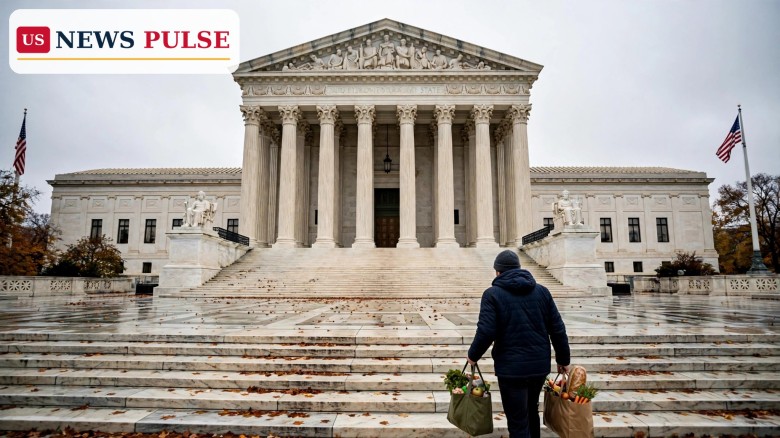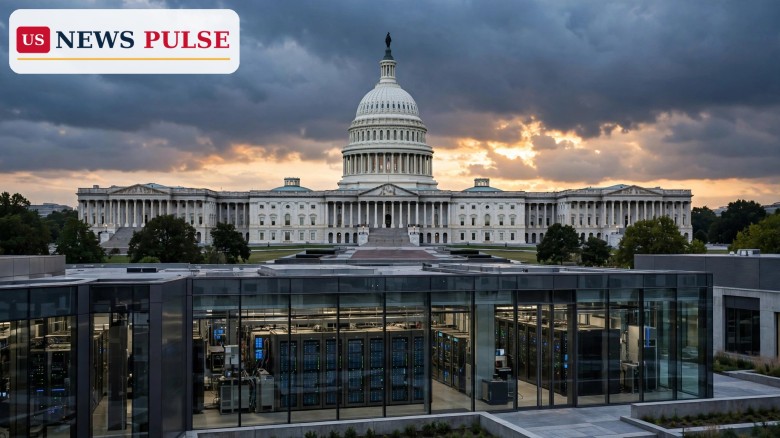
House Democrats moved on Wednesday, October 28, 2026, to put Congress on record against an AI bailout before any artificial intelligence company has asked for one. The no AI bailout resolution, introduced by Representatives Greg Casar of Texas and Maxine Waters of California, says Congress should oppose any measure that would rescue insolvent AI-related firms or shield their senior executives from accountability for reckless conduct that helped cause a failure.
The move lands six days before the November 3 midterm elections, at a moment when the AI boom is being financed with staggering sums of borrowed money and off-balance-sheet-style guarantees, and when polling shows a majority of Americans are uneasy about how fast AI is developing. Supporters present the resolution as a pre-emptive line in the sand: if the AI bet goes wrong, they argue, the companies and their executives should face ordinary bankruptcy, not a taxpayer rescue.
House Democrats introduced the resolution on Wednesday, calling on Congress to withhold support for artificial intelligence companies if they go bankrupt. The text states that Congress would oppose any measure that would rescue insolvent AI-related firms or shield senior executives from accountability for "reckless conduct that contributed to the failures of such firms."
The resolution goes further than a simple statement of opposition. It sets out how a failed AI firm should be handled: the company should "wind down or reorganize" through ordinary bankruptcy processes. Any resolution process, it says, should promote competition, help workers and prioritise pension and retirement fund holders. And it draws a sharp line around leadership, saying senior executives found to have taken excessive risk or acted unlawfully should "be held fully accountable under civil and criminal law."
What the resolution is matters as much as what it says. A simple House resolution expresses the sentiment of the House of Representatives only. It is not legally binding, it does not create a new law, and it does not require approval from the Senate or the president. Its power is political: it forces a public position, gives opponents of a future rescue a document to point to, and signals to markets and to the White House where at least one bloc in Congress stands before a crisis arrives.
The reporting reviewed for this article names no AI company that is insolvent, and no AI company that has sought a federal rescue. The resolution is pre-emptive by design. The advocacy group More Perfect Union flagged its introduction as breaking news on Wednesday, describing it as a pre-emptive move to stop the federal government from bailing out AI companies if the industry collapses, with failed firms subjected instead to the ordinary bankruptcy process.
The resolution arrives after a year in which AI spending has reached a scale that would have been difficult to imagine even a few years ago. Technology companies are increasingly relying on outside investors, financial guarantees and complex financing arrangements to fund their data centre expansion. Those arrangements could leave substantial obligations outside conventional debt disclosures, making it difficult to determine who bears the risk if anticipated AI profits fail to materialise.
The numbers behind that warning are enormous. S&P estimates that Amazon, Microsoft, Alphabet, Oracle, Meta and SpaceX will collectively spend more than $7 trillion on AI-related capital expenditures between 2025 and 2030. The largest technology companies in the United States were expected to borrow a record $420 billion in 2027 to finance the AI boom, according to Goldman Sachs data cited in Wednesday's reporting, a rise of 60 percent from 2026 levels as companies pour money into data centres, chips and other AI infrastructure. Investors have grown concerned about how much additional debt will hit the market as companies rush to build the infrastructure needed to compete.
That borrowing sits alongside a web of cross-investments. Major AI chipmakers such as Nvidia, Advanced Micro Devices (AMD) and Broadcom have expressed interest in investing up to $5 billion collectively in Meta while it seeks billions to fund its expanding AI infrastructure. Those investments offer a chance to benefit financially from the expansion of AI infrastructure, but they also mean that trouble at one large company could ripple through its partners and suppliers.
The earnings season now under way has only sharpened the debate. Meta recently led a $198 billion day of AI spending announcements, including a $95 billion raise of its own, while Alphabet reported third-quarter 2026 revenue of $127,577 million, up 25 percent year on year, with Google Cloud revenue soaring 103 percent to $30,709 million. Alphabet's profit missed expectations after an $8.7 billion net loss on equity securities, a reminder that even the strongest AI balance sheets carry volatile exposures. Anthropic, the maker of Claude, filed for a Nasdaq listing in October, putting another huge AI valuation in front of public investors.
Public opinion, meanwhile, has turned sceptical. An ABC News/Washington Post/Ipsos poll from October 21 found that 57 percent of Americans believe AI is bad for society, while 42 percent viewed it favourably. Most US adults, 64 percent, said AI is developing too quickly, according to a survey conducted by the Associated Press-NORC Center for Public Affairs Research. The resolution's sponsors are speaking into that mood: a public that is far from convinced that the AI boom is working for them is unlikely to welcome a rescue for its biggest winners.
The no AI bailout argument rests on a simple claim: the companies that would benefit most from a rescue are the same companies that chose the risk. Under the resolution's logic, firms that borrowed hundreds of billions of dollars, signed complex guarantees and built data centres on the expectation of enormous future profits should live with the consequences if those profits do not arrive. Ordinary bankruptcy, not a government backstop, is the mechanism for sorting out who gets paid, in what order, and who loses their investment.
The emphasis on workers and pension holders is deliberate. In a bankruptcy, the order in which creditors are paid decides who bears the loss. By saying resolution processes should help workers and prioritise pension and retirement fund holders, the resolution pushes back against a scenario in which executives and large investors are protected while employees and retirees absorb the damage. The accountability clause makes the same point about leadership: executives who took excessive risks or broke the law should not be able to shelter behind a rescue package.
The resolution also echoes a position already taken on the other side of the political divide. White House AI czar David Sacks has previously said there will be no federal bailout for AI, telling followers that the United States has at least five major frontier model companies and that if one fails, others will take its place, according to Reuters. That convergence matters: when both a Democratic House resolution and the White House's AI chief say no rescue is coming, the message to investors is harder to dismiss as partisan posturing.
Still, the limits of the resolution should be kept in view. It binds nobody. A future Congress facing a genuine financial panic, with jobs, pensions and credit markets at stake, would be free to ignore it. Its value is as an early, public commitment device: the more lawmakers who go on record now, while no rescue is on the table, the harder it becomes to assemble a bailout quietly later. The reporting reviewed for this article contained no response from Republican House leadership or from the AI companies themselves, and this article does not attribute any position to them.
The resolution's own language is its clearest statement of intent. Congress would oppose any measure that would rescue insolvent AI-related firms or shield senior executives from accountability for "reckless conduct that contributed to the failures of such firms," it says. Failed firms, it adds, should "wind down or reorganize" through ordinary bankruptcy processes, and executives found to have taken excessive risk or acted unlawfully should "be held fully accountable under civil and criminal law."
More Perfect Union, the advocacy group that highlighted the introduction, summarised it in blunt terms: House Democrats had pre-emptively introduced a resolution to stop the federal government from bailing out AI companies in the event of the industry collapsing, with the companies subjected to the ordinary bankruptcy process instead.
The polling cited alongside the resolution tells its own story. The ABC News/Washington Post/Ipsos finding that 57 percent of Americans believe AI is bad for society, against 42 percent who view it favourably, and the AP-NORC finding that 64 percent say AI is developing too quickly, suggest the sponsors are not running ahead of public opinion. They are, if anything, catching up with it.
From the White House side, Sacks's earlier position provides the other half of the debate. "The U.S. has at least 5 major frontier model companies. If one fails, others will take its place," he said in a post on his personal X account, according to Reuters, adding that the goal was rapid infrastructure buildout without increasing residential electricity rates. The argument there is about competition, not punishment: a failure, in this view, is survivable because rivals remain.
The resolution matters for three reasons, even though it changes no law. First, it names the risk before it becomes a crisis. Bailouts are hardest to oppose once they are framed as emergency measures to save jobs and stabilise markets. A pre-emptive resolution tries to win the argument while the facts are still abstract and the companies are still profitable, rather than in the middle of a panic.
Second, it reframes who the AI boom is for. The debate about AI in Washington has often centred on competition with China, the speed of model development and the race to build data centres. This resolution shifts the focus to distribution: who pays when the bet fails. Workers, pension holders and taxpayers, in the sponsors' framing, should not be the backstop for risks taken by executives and shareholders who stood to gain the most if the bet paid off.
Third, it tests whether scepticism about AI can become a durable political force. With the midterms six days away, both parties are watching the same polls showing majority unease about AI's speed and social impact. A resolution that attracts support, or even just attention, could encourage further measures: disclosure of AI-related guarantees, limits on certain financing structures, or conditions on federal support for data centre infrastructure. None of those is proposed in this resolution, but the resolution creates a record that such ideas have a constituency.
There is also a cautionary side. Critics of pre-emptive anti-bailout pledges have long argued that they can be counterproductive: if markets believe a rescue is impossible, a failure could become disorderly, harming workers and pensioners more than a managed intervention would. The resolution tries to answer that concern by insisting that bankruptcy processes help workers and prioritise pension holders, but it does not spell out how that priority would be enforced. That gap is likely to be the focus of the next round of debate, if the resolution gains traction.
The immediate next step is co-sponsorship and attention. As a simple House resolution, the measure needs no committee markup to make its point, but its influence will depend on how many members sign on and whether it becomes a talking point in the final days of the midterm campaign. With the House in session for the shutdown funding fight and the midterms on November 3, the calendar gives it a narrow but high-profile window.
Watch also for responses from the other side of the aisle and from the industry. No Republican response and no company response appeared in the reporting reviewed for this article, but both will matter: a bipartisan version of the pledge would carry far more weight than a Democratic-only marker, while industry silence could be read either as confidence that no rescue will be needed or as a decision not to engage with a hypothetical.
The earnings calendar will keep the underlying question alive. Amazon and Apple report on October 29, a day after the resolution's introduction, and their capital spending guidance will be read as a fresh signal of how much debt the AI buildout still requires. The Federal Reserve's October decision to hold rates at 3.75 to 4.00 percent, with two officials dissenting in favour of a hike, also frames the borrowing environment: money is not cheap, and the cost of financing the AI boom will remain a live issue into the December meeting.
Longer term, the resolution is best read as an opening move rather than a conclusion. If the AI industry keeps growing and stays profitable, it will be remembered as a warning that was never tested. If a major AI firm stumbles, it will be remembered as the document that forced Congress to say, in advance, what it would and would not do. Either way, the sponsors have ensured that the next debate about an AI rescue will not start from scratch.
It is a simple House resolution introduced on October 28, 2026, by Representatives Greg Casar and Maxine Waters, stating that Congress should oppose any measure rescuing insolvent AI-related firms or shielding their executives from accountability, and that failed firms should go through ordinary bankruptcy.
No. A simple House resolution expresses the sentiment of the House of Representatives only. It does not require Senate or presidential approval and does not change the law.
No AI company seeking a federal rescue was named in the reporting reviewed for this article. The resolution is pre-emptive, introduced before any failure or rescue request.
The firm should wind down or reorganise through ordinary bankruptcy processes, with resolution processes that promote competition, help workers and prioritise pension and retirement fund holders, while executives who took excessive risks or acted unlawfully face full civil and criminal accountability.
The resolution comes as AI companies borrow record sums for data centres and infrastructure, with more than $7 trillion in AI capital spending projected for Amazon, Microsoft, Alphabet, Oracle, Meta and SpaceX between 2025 and 2030, while polls show 57 percent of Americans believe AI is bad for society and 64 percent say it is developing too quickly.
Related coverage on US News Pulse: Meta's $95 billion AI raise leads a $198 billion day of AI spending, Alphabet Q3 earnings: Google Cloud soars 103% as profit miss sends shares down and Anthropic IPO filing: Claude maker seeks Nasdaq listing as ANT in $2 trillion test.
Leave a Comment



 | Today's Date: