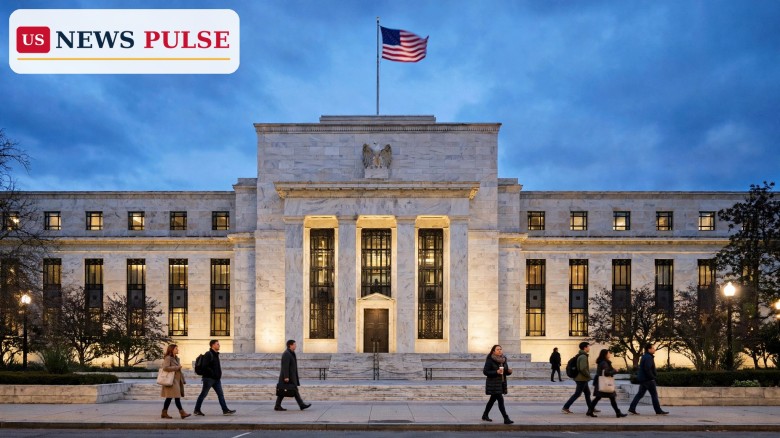
The Federal Reserve held interest rates steady on Wednesday, October 28, 2026, keeping its benchmark range at 3.75% to 4.00% in a 10-2 vote, even as the latest inflation figures showed price pressures running hotter than policymakers would like. The Fed rate decision October 2026 leaves September's quarter-point increase in place, pauses the tightening cycle less than a week before the November 3 midterm elections, and sets up December as the next likely decision point, with traders still betting on another increase before the year ends. Chair Kevin Warsh was due to face reporters at 2:30 p.m. Eastern Time to explain why a central bank that had just raised rates chose to wait, and what would have to change for it to move again.
The Federal Open Market Committee announced its decision at 2 p.m. Eastern Time on Wednesday, at the end of a two-day meeting that began on Tuesday, October 27. The outcome matched what markets had overwhelmingly expected: CME FedWatch data put the chance of an October increase below 10%, and stocks edged higher at the opening bell as traders waited for the announcement, with the S&P 500 up 0.2%, the Dow Jones up 0.1% and the Nasdaq up 0.4% in early trading. The hold preserves the range set at the September meeting, when the Fed raised rates by a quarter of a percentage point for the first time since 2023.
The split inside the committee is the most important part of the statement. Cook and Hammack both wanted to raise the range by a quarter point immediately, rather than wait. Their dissents put on the record the case that inflation, not growth, is the pressing danger: consumer inflation at 3.7% and producer inflation at 6.3% are both well above the Fed's 2% target, and producer-price gains often feed through to consumer prices in the months that follow. The majority, by contrast, chose patience. In the committee's words, inflation remains elevated, and more information will help the committee determine the policy stance appropriate. That is the language of a central bank buying time to see whether September's increase is already doing enough work, and whether the next batch of data confirms that inflation is broadening or fading.
Unlike some meetings, this one came with no updated economic projections and no new dot plot of officials' rate forecasts, so investors had fewer formal clues than usual about where the committee expects rates to go. That put extra weight on Warsh's press conference, scheduled for 2:30 p.m. Eastern Time, where he was expected to be pressed on the central bank's reasoning, on the December outlook, and on whether the timing of the pause, six days before voters go to the polls, reflected anything beyond economics.
To understand Wednesday's decision, it helps to retrace the path that brought rates to 3.75% to 4.00%. The Fed raised rates by 25 basis points in September 2026, its first increase since 2023, after the core personal consumption expenditures price index, the Fed's preferred inflation gauge, rose 0.2% in August. At the same meeting, the Board of Governors unanimously approved raising the interest rate paid on bank reserves to 3.90%, effective September 17. Most officials at that September meeting said another increase would probably be needed this year to bring inflation back toward target. The question all autumn has been when, not whether.
The data since September has mostly strengthened the hawks' case. The consumer price index rose 3.7% over the 12 months through September, and the producer price index jumped 6.3% over the same period, a sign that businesses are facing sharply higher costs that could keep working through to shop prices over the holiday season. At the same time, the labour market has cooled without collapsing: employers added an estimated 29,000 jobs in September, a figure that disappointed forecasters, and unemployment ticked up to 4.2% from 4.1% in August, while initial claims for unemployment insurance fell to 194,000 in the week ending October 17, the lowest since the week of July 18. That combination, low hiring but also low firing, is what economists have called a low-hire, low-fire labour market, and it gives the Fed room to wait without fearing an imminent jobs crisis.
Other forces have complicated the picture. The war with Iran has cost the US military at least $47.1 billion as of mid-October, according to a new estimate from US Central Command reported by several outlets, and the lingering energy shock from the conflict, together with the holdover effects of tariffs, strong demand from the artificial intelligence industry and healthy consumer spending, are all cited by Fed officials as drivers of higher prices. Some of that inflation is supply-driven and hard for interest rates to fix; some of it, officials argue, is demand-driven and squarely within the Fed's control. Telling the two apart is the central difficulty of this meeting, and it is why the committee wanted another round of data before acting.
The case for pausing rests on three arguments. First, September's increase has had barely six weeks to work through the economy, and rate changes affect mortgages, business investment and hiring with a lag; moving again before the first increase has bitten risks over-tightening. Second, the Fed had no fresh projections at this meeting to anchor a second consecutive move, and a pause keeps its options open for December, when it will have a fuller picture. Third, officials had signalled patience ahead of the meeting, and a surprise increase would have jolted markets that had priced in less than a 10% chance of a hike.
The case for hiking now, made by Cook and Hammack in their dissents, is simpler: inflation is not falling fast enough. A 3.7% consumer inflation rate and a 6.3% producer inflation rate, with the Fed's own preferred core measure expected to rise 0.3% in September after a 0.2% rise in August, point in the wrong direction. JPMorgan Chase chief US economist Michael Feroli, quoted by CNBC ahead of the decision, argued that Warsh would need to explain why the committee raised rates after a two-tenths core reading in September but held after an expected three-tenths reading now, and warned that an unexplained hold less than a week before the midterms would only encourage thoughts that policy was being driven by considerations other than employment and inflation. That challenge now falls to Warsh at the press conference, and his answer will shape how the December meeting is priced.
Politics hangs over the decision whether officials acknowledge it or not. Affordability has taken centre stage ahead of the midterms, with voters frustrated by high prices at petrol pumps and grocery stores, and Democrats pulling ahead in some early polls. President Donald Trump has argued the Fed should lower interest rates, and he repeatedly criticised Warsh's predecessor, Jerome Powell, for not cutting quickly enough. A further increase would also raise borrowing costs on mortgages, car loans and credit cards, at exactly the moment households are feeling squeezed. Traders anticipated that the Fed would hold off in October partly over fears of appearing politicised so close to an election, and the committee's decision does nothing to settle that debate.
The committee's own statement was deliberately spare. Inflation remains elevated, it said, adding that more information will help the committee determine the policy stance appropriate. That single sentence carries the whole decision: prices are too high to declare victory, but the data are not yet clear enough to justify a second increase in a row. Markets read it as a hawkish hold, a pause that keeps the door open to December rather than a signal that tightening is over.
Before the announcement, economists had framed the stakes in unusually blunt terms. Feroli's warning, reported by CNBC, was that Warsh would have to explain the apparent change of approach between September and October, and that failing to do so would invite questions about political timing. That pressure reflects a broader unease: after a September increase justified by a modest core inflation reading, a hold after a stronger reading looks, to critics, like inconsistency. Warsh's press conference is therefore not a formality. It is where the Fed must show its working, and where any hint about December, whether hawkish or dovish, will move bond yields, mortgage rates and stock prices within minutes.
Investors, for their part, had already made up their minds about the longer run. Even before Wednesday's announcement, futures pricing put the chance of at least one further increase by year-end at nearly 75%, and reporting after the decision described a quarter-point December hike as largely expected. The logic is straightforward: most officials said in September that another increase would be needed this year, inflation has since got worse rather than better, and a December move would let the Fed act after the midterms, when the charge of political timing is harder to make.
Wednesday's hold matters for three groups above all. For households, it means borrowing costs stay where they are for now, but probably not for long: a December increase would push mortgage, car loan and credit card rates higher, just as families head into the holiday season with grocery and fuel prices already elevated. For businesses, it means the cost of capital stays high and the incentive to delay investment remains, even as the artificial intelligence boom drives huge capital spending by the largest technology companies. For the Fed itself, it means credibility is on the line: having raised rates in September for the first time in three years, it must now show that it can follow through if inflation stays hot, without appearing to bend to political pressure in either direction.
It also matters for the election. Voters do not vote on the federal funds rate, but they do vote on the cost of living, and the Fed's decisions shape the prices and borrowing costs they feel every day. A hold days before the midterms avoids a headline rate increase in the final week of campaigning, but it also leaves the central bank open to the charge that it timed its pause for political comfort. If inflation data due on Thursday, September personal income and outlays including the PCE price index, plus the advance estimate of third-quarter GDP, both from the Bureau of Economic Analysis, come in hot, that charge will be harder to answer, and the case for December will be stronger still.
The immediate focus is Warsh's press conference and the market reaction to it, followed by Thursday's data releases. The PCE price index and the third-quarter GDP estimate, due at 12:30 GMT on October 29, will give the Fed its first hard read on whether consumer spending and underlying inflation are cooling or accelerating. Strong numbers would reinforce the dissenters' case and push December hike odds higher; soft numbers would give the majority's patience a vindication and could even reopen talk of a longer pause.
Beyond that, the calendar is clear. The next decision point is December, when the Fed will publish fresh projections and a new dot plot, giving investors a formal read on how many officials expect further increases. Alphabet and Microsoft were also reporting earnings around the same time as the Fed decision, with Amazon and Apple due on October 29, so markets are judging the economy and corporate America in the same breath. For borrowers, the practical advice is unchanged: rates are on hold today, a December increase is the market's base case, and anyone planning a mortgage, car loan or large credit card balance should not assume today's rates will still be available at Christmas.
It held its benchmark interest rate range at 3.75% to 4.00%, unchanged from September, in a 10-2 vote. Governors Lisa Cook and Beth Hammack dissented, preferring a quarter-point increase.
The majority wanted more information before a second consecutive increase, arguing that September's hike needs time to work through the economy and that fresh data will clarify whether inflation is broadening or fading.
Investors largely expect it: futures pricing on October 26 put the chance of at least one more increase by year-end at nearly 75%, and most officials said in September that another hike would be needed this year.
Nothing changes immediately, but a December hike would push borrowing costs higher on mortgages, car loans and credit cards, so today's rates may not last.
September personal income and outlays, including the PCE price index, and the advance estimate of third-quarter GDP, both due from the Bureau of Economic Analysis on October 29, plus Warsh's press conference remarks.
Related coverage: Fed rate decision October 2026: why a pause looked likely despite high inflation, US national debt hits record $40.53 trillion as interest costs near $800 billion, US jobless claims fall to 194,000 as hiring stays sluggish before Fed decision.
Leave a Comment



 | Today's Date: