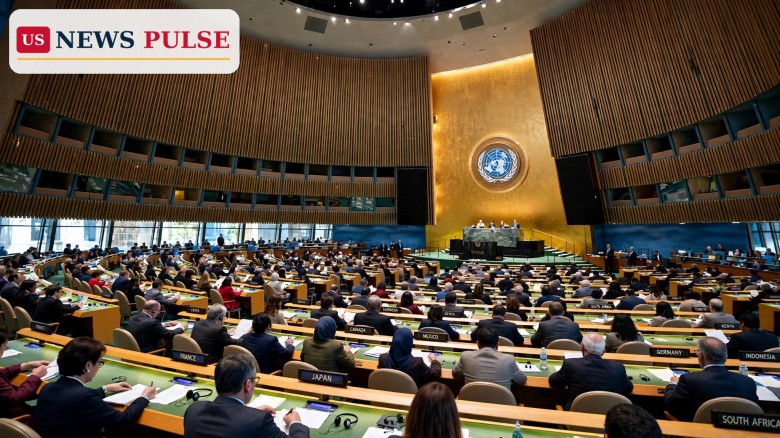
The UN Cuba embargo vote ended the way it has for more than three decades, but with a noticeably different margin. On Wednesday, October 28, 2026, the United Nations General Assembly voted 130-17 to condemn the United States embargo on Cuba, with 25 countries abstaining, delivering a 34th consecutive rebuke of the decades-old blockade even as Washington's most aggressive lobbying campaign in years peeled away support from last year's tally.
The result was both a defeat and a partial victory for the Trump administration. The resolution passed overwhelmingly, as it always does, but the United States persuaded roughly 20 countries to change their position compared with 2025, when the vote was 165-7 with 12 abstentions. Ten more countries voted against the resolution this year, and 13 more abstained, a shift concentrated in Europe and in Latin America and the Caribbean.
The General Assembly took up the annual Cuban-drafted resolution calling for an end to the US economic, commercial and financial embargo against Cuba. When the electronic tally was displayed, 130 delegations had voted in favour, 17 against and 25 had abstained. The United States and Israel were among those voting against, as they have been in previous years.
The headline number told only part of the story. Compared with 2025, the "yes" column shrank by 35 votes. Western European countries that had supported the resolution for 34 years moved to abstention, including Germany, Italy and Latvia, according to Associated Press reporting on the vote. Lithuania, Slovenia and the United Arab Emirates broke from their historic positions by voting against the resolution.
In Latin America and the Caribbean, countries that have traditionally backed Cuba's resolution also shifted. Costa Rica, Colombia, Trinidad and Tobago, Honduras and Chile either opposed the resolution or abstained, reflecting the reach of Washington's lobbying in a region where the administration has close allies.
Yet the core outcome did not change. A large majority of the world's governments still voted to condemn the embargo, including allies of the United States that have themselves criticised Cuba's political and economic system. Mexico's ambassador, Hector Vasconcelos, told the Assembly that using unilateral measures to pressure a sovereign state was "incompatible with the principles enshrined in the charter of this organization."
India's representative added that restrictions on fuel exports to Cuba had aggravated the country's energy crisis, disrupting healthcare, education, water supplies, food distribution and transportation, and said India hoped the embargo would be lifted at the earliest so Cubans could pursue their legitimate development aspirations.
The US embargo against Cuba was first imposed in 1960, after Fidel Castro's revolution toppled dictator Fulgencio Batista and nationalised properties belonging to US citizens and corporations. It was tightened into a near-total blockade in 1962 and codified in law by the Helms-Burton Act of 1996, which is why a General Assembly resolution, however lopsided, cannot by itself end it. Only Congress can lift the central statutory embargo, a point that frames every year's vote as a political signal rather than a legal act.
For most of the last three decades the signal was remarkably stable. The 2024 vote was 187-2, with only the United States and Israel opposed. The 2025 vote, at 165-7 with 12 abstentions, already showed some erosion. The 2026 result, 130-17 with 25 abstentions, is the weakest showing for the resolution in the modern era of the annual vote, and the Trump administration will present it as evidence that its campaign is working, even though the resolution still passed by a margin of 113 votes.
The vote comes as Cuba faces what its government and many outside analysts describe as a breaking point. In late January 2026, President Donald Trump announced tariffs on any country that sells or provides oil to Cuba, a warning that has effectively cut off fuel to the island. The resulting shortages have produced widespread power outages affecting cooking, water supply, internet and telephone services, on top of an already deep financial crisis.
Cuba's own report, submitted alongside the draft resolution, claimed more than $8 billion in losses and damages from the maximum-pressure sanctions imposed under the Trump administration. So far this year the United States has threatened 30 percent tariffs against countries sending fuel to Cuba, created a new secondary sanctions regime targeting foreign firms operating on the island, and issued dozens of new sanctions and visa restrictions against Cuban officials, ministries, joint ventures, state-owned companies and the country's fledgling private sector.
The Trump administration's diplomatic push against the annual resolution, spearheaded by Ambassador Mike Waltz, was more intense than last year's effort, and it began well before the vote. Last week Waltz hosted a small group of US-backed Cuban dissidents and researchers at an invitation-only event making the case against the resolution, citing the island's political prisoners, foreign medical brigades, corruption, inequality and the military-run monopoly GAESA. The same day he held a press conference with the chief executive of Freedom House titled "Holding the Cuban Regime Accountable for its Human Rights Abuses," urging other ambassadors to weigh those issues before voting.
Cuban Foreign Minister Bruno Rodríguez alleged that US officials had threatened tariffs, visa denials for foreign officials and their families, and the suspension of US assistance for countries that did not vote with the United States. He presented no concrete evidence for those claims, but the pattern of US outreach was public: Secretary of State Marco Rubio pressed Salvadoran President Nayib Bukele, whose country did not participate in last year's vote, to join the United States and like-minded partners at the United Nations, and spoke in recent weeks with the presidents of Panama, Argentina and Colombia about regional and UN-related issues, though it was not clear whether the Cuba vote was specifically raised in each call.
Waltz also invoked the presence of Cubans fighting for Russia in Ukraine to lobby European capitals against supporting Cuba's resolution, an argument used in last year's push as well. The Cuban government has reiterated a "zero-tolerance policy" against mercenarism, saying none of the Cubans who have fought in the conflict had the encouragement, support or consent of any state institution, and that investigations into recruitment abroad have brought 43 people before Cuban courts in 12 proceedings, with prosecutors seeking sentences of 5 to 16 years.
Days before the US media blitz, Cuba's ambassador to the UN, Ernesto Soberón, called Waltz's dissident event the result of Rubio's "unhealthy obsession with Cuba" and staged a protest against Waltz and the event panellists alongside colleagues from Cuba's UN mission. A week earlier, a similar interaction between Waltz and Soberón took place outside a US-hosted panel with Cuban dissidents and former prisoners.
The debate itself produced the week's most dramatic moment on Tuesday, a day before the vote, when Waltz and Rodríguez clashed face to face at the podium. Waltz had begun criticising the Cuban government over alleged corruption and repression, displaying a photograph of former leader Fidel Castro wearing two Rolex watches which he claimed were worth approximately $40,000 each.
"According to the regime's own statistics, that would pay for 55 years of an average Cuban wage," Waltz said, before holding up a photograph of current President Miguel Díaz-Canel, alleging that he also wore an expensive watch. "It didn't just start with Castro. This is the current Cuban President, also with a Rolex on," he said.
Rodríguez then walked down to the podium, accused Waltz of lying and demanded that his point of order be recognised. "You are a liar!" he shouted. Waltz shot back: "This individual needs to back away from this podium. He's not going to intimidate me in the United States of America like he tries to intimidate political prisoners! I'm the representative of the United States of America. Back up!" Proceedings were suspended as UN security and personnel intervened, and a video later showed a member of the Cuban delegation trying to snatch the phone of Waltz's spokesperson, J.P. Freire, as he filmed the incident.
Rodríguez later wrote on X that Waltz was at the UN, not at a national security meeting at the White House, adding: "With his crude lies at the UN General Assembly, the US government has launched another desperate attempt to justify its economic aggression against Cuba and its criminal energy blockade."
Waltz subsequently told Fox News that Rubio had signed off on the expulsion from the United States of the Cuban diplomat involved in the phone incident, a step reported separately in US News Pulse's coverage of the expulsion. The clash, and the expulsion, marked a clear break from the diplomatic decorum usually expected at the UN and a new phase of contentiousness between Washington and Havana.
After the vote, analysts noted the limits of the pressure campaign as well as its gains. The administration persuaded roughly 20 states to change position but could not defeat a measure that has passed every year for 34 years, and the shift did nothing to ease the plight of ordinary Cubans, who bear the brunt of both the embargo and the island's own economic failures. Other US allies that criticised Cuba's system nonetheless maintained their firm position against what they describe as unilateral coercive measures that indiscriminately punish the Cuban people, violate international law and discourage reform.
The vote matters for three reasons. First, it measures the Trump administration's ability to convert bilateral leverage into multilateral results. Moving 20 countries is a real diplomatic achievement, and the administration will cite Germany, Italy and Latvia abstaining for the first time, and Lithuania, Slovenia and the UAE voting no, as proof that the old consensus is cracking. But the fact that 130 countries still voted yes, including many close US partners, shows the limits of arm-twisting on an issue where most of the world has long since made up its mind.
Second, the vote sharpens the contrast between the administration's Cuba policy and its approach to the island's people. Washington argues that pressure on Havana, including the fuel squeeze, secondary sanctions and visa restrictions, will force political change. Havana argues that the embargo is collective punishment that hits hospitals, schools and food distribution hardest. The General Assembly's answer, year after year, is that most governments side with Havana's framing, even when they share Washington's criticism of the Cuban government.
Third, the confrontation on the Assembly floor signals how personal and public the US-Cuba fight has become. A shouting match between an ambassador and a foreign minister, a suspended session, an expelled diplomat and a public threat of covert action do not read like routine diplomacy. They read like a campaign, and they raise the stakes for whatever comes next between the two countries.
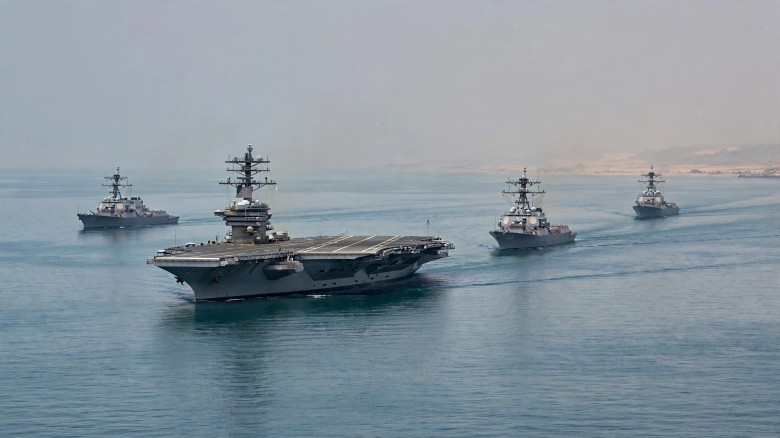
The immediate aftermath will be watched in Havana, Washington and across the Caribbean. The Trump administration's pressure on Cuba's fuel supplies continues, and Trump himself raised the prospect of military posturing last week, saying on the campaign trail in Florida that US warships returning from the Middle East could stop over in Cuba on their way back from the war in Iran. "What we're going to do with Cuba is we're going to come back from Iran. Those beautiful ships will pass Cuba. We'll have one of them stop about 50 yards off the coast. They'll raise up their hands. And then we're going to send Marco Rubio in to finish up the deal," he said, repeating a pledge made five months earlier.
Rubio, for his part, called on Friday for Cuban leaders to enter into a "discrete partnership" with the CIA, a move widely read as an effort to frighten Havana with the spectre of covert operations. At the same time, reporting has described direct talks between senior US defence, intelligence and policy officials and their Cuban counterparts, as well as back-channel discussions about Cuba's key economic assets, suggesting that pressure and negotiation are running in parallel.
For Cuba, the vote offers moral support but no material relief. The resolution is not legally binding, Congress shows no sign of lifting the core embargo, and the fuel crisis continues. Havana's challenge is to convert a 130-vote moral victory into fuel, food and medicine, while Washington's challenge is to show that moving 20 votes at the UN translates into change on the island. Neither side's task got easier on Wednesday.
Related coverage on US News Pulse: UN Cuba embargo vote preview: world to judge US blockade after fiery UN clash, Cuban diplomat expelled after shoving US official at UN, Waltz confirms, and US Iran war warning: Washington tells Gulf to brace for short, intense campaign.
What was the UN Cuba embargo vote result in 2026? The General Assembly voted 130-17, with 25 abstentions, to condemn the US embargo on Cuba on October 28, 2026, the 34th year the resolution has passed.
How does the 2026 vote compare with 2025? In 2025 the vote was 165-7 with 12 abstentions. Support fell by 35 votes in 2026, while opposition rose by 10 and abstentions by 13, a shift the Trump administration attributes to its lobbying campaign.
Is the UN resolution legally binding? No. General Assembly resolutions on the embargo are non-binding expressions of world opinion. The core US embargo is codified in US law, notably the Helms-Burton Act of 1996, and only Congress can lift it.
Why did some traditional supporters of Cuba change their votes? The Trump administration lobbied intensively, with Ambassador Mike Waltz hosting dissident events and pressing allies on human rights, corruption and Cubans fighting for Russia in Ukraine. Germany, Italy and Latvia abstained for the first time, while Lithuania, Slovenia and the UAE voted against.
What happens to Cuba now? The fuel squeeze and sanctions continue, and Trump has floated a warship stopover off Cuba's coast while Rubio has called for a "discrete partnership" with the CIA, even as back-channel talks are reported. The vote itself changes no law, but it keeps international attention on an island in deep economic crisis.
Leave a Comment



 | Today's Date: