Overcapacity tariffs that were ready to go are staying on the shelf, for now. US officials have finished the investigations needed to impose new duties on China, Japan and more than a dozen other economies accused of producing too much of everything from solar modules to chemicals and cars, but the Trump administration has held off unveiling them as the November 3 midterm elections approach, according to a report published on Friday, October 30, 2026.
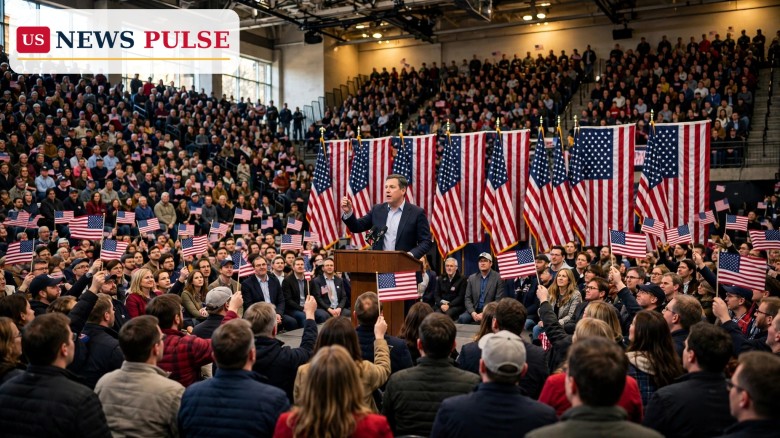
The reason, in the reporting, is political as much as economic. With voters anxious about affordability, a move that could push up consumer prices days before an election that will decide control of Congress is a risk the White House appears unwilling to take yet. The pause also protects a fragile trade truce with Beijing, which had already been strained by a long dispute over tariffs, refunds and the limits of presidential power.
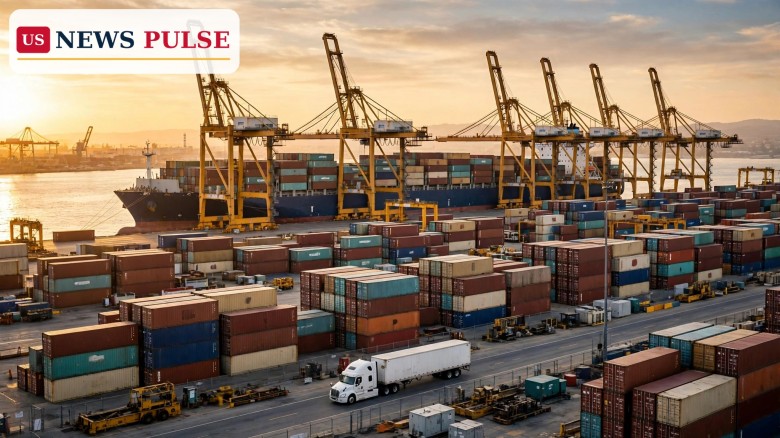
Nikkei Asia reported on October 30 that US trade investigators have largely completed probes of 16 economies accused of overproducing goods, a key step toward reviving Trump's trade agenda. The report, citing people close to the Office of the United States Trade Representative (USTR), said the timeline for unveiling the new duties remains unclear, and that the administration has held off taking action as the midterm elections draw near.
China is the centrepiece. One person familiar with the matter told Nikkei that China is set to face a 7.5% tariff over excess capacity, while other economies are expected to absorb similar or lower rates. That figure matches earlier Bloomberg reporting from August, which said Washington was preparing a 7.5% duty on Chinese goods that would restore Trump's second-term duties on China to around 20%, a level Beijing has previously said is consistent with its trade truce with Washington.
The timing is the story. Bloomberg reported in September that USTR had held off unveiling tariffs on China and other trading partners until after a summit between President Xi Jinping and Trump in late September. USTR chief Jamieson Greer said this month that the measures could be unveiled within "weeks". Nikkei's report suggests the next delay is electoral: across the campaign trail, public anxiety over affordability has emerged as a central issue, making any decision that risks pushing up consumer prices politically sensitive.
USTR did not immediately respond to Nikkei's request for comment. China's Commerce Ministry said in August that the country opposed the use of "overcapacity" as a pretext for unilateral tariffs, and has previously warned that it reserves the right to take all necessary measures in response.
The overcapacity case began in March 2026, when the Trump administration launched investigations into more than a dozen major trading partners under Section 301 of the Trade Act of 1974, over what it called structural excess capacity and production in manufacturing sectors. Section 301 is the same law used for the China tariffs first imposed in 2018, and it gives USTR broad authority to act against practices it deems unreasonable or discriminatory.
The investigation was born out of a court defeat. On February 20, 2026, the Supreme Court ruled 6-3 in Learning Resources, Inc. v. Trump that the International Emergency Economic Powers Act (IEEPA) did not authorise the president to impose tariffs, striking down the sweeping "reciprocal" and fentanyl-related duties imposed in 2025. The ruling opened the way for refunds of roughly $166 billion in duties collected between February 2025 and February 2026, and forced the administration to rebuild its tariff architecture on other legal foundations, including Section 122, Section 232 and Section 301.
Greer told Bloomberg Television in July that the excess-capacity investigation would take longer than a parallel inquiry into forced labour because of its complexity, and that the delay had nothing to do with efforts to maintain the truce with Beijing. In August, China's Commerce Ministry spokeswoman Huang Ling said the investigations politicise economic and trade issues and represent a typical act of unilateralism and protectionism, and released a document titled "China's Position on the so-called Excess Capacity Issue", warning that protectionism would pose long-term risks to global growth.
The truce itself is time-limited. The trade truce agreed in 2025 was set to last one year and is due to expire on November 10, 2026, days after the midterms. Separately, 178 product exclusions from the older 2018 China Section 301 tariffs run out at 11:59 p.m. Eastern on November 9, with no extension published as of early October. The calendar therefore points to a busy November for trade policy, whatever happens on Tuesday.
The core tension is simple: tariffs designed to protect domestic producers can also raise prices for domestic consumers, and voters notice prices first. The New York Federal Reserve study cited by Nikkei puts a number on it: every 1 percentage point increase in the average tariff rate raises consumer goods prices by roughly 0.25% within a year. A 7.5% duty on China alone would not translate mechanically into a 7.5% price rise, because importers, exporters and retailers absorb part of any duty, but the direction of travel is clear, and it is awkward for a campaign built around affordability.
That is why the pause matters more than the rate. Announcing the duties now would hand Democrats a fresh argument in the final days of the campaign, that the administration is adding to household costs. Waiting until after November 3 costs the administration little in trade terms, since the investigations are done, but buys it a calmer political backdrop. It also avoids a confrontation with Beijing in the same week as an election, when any retaliation, from new Chinese duties to curbs on exports, would land hardest.
Businesses, meanwhile, are left in limbo. Importers cannot price contracts confidently while a 7.5% China duty is reported but not published, and domestic producers who lobbied for protection cannot plan around relief that has not arrived. The reported option of announcing a higher headline rate and suspending part of it to reach an effective 7.5% would add another layer of uncertainty, since the suspended portion could later be revived.
USTR has not commented publicly on the Nikkei report, and the White House has previously dismissed tariff reporting as speculation, saying any announcements will come directly from the administration. Greer's "weeks" comment this month is the closest thing to an official timetable, and it deliberately leaves the door open to action before or after the election.
China's position has been consistent since August: the Commerce Ministry describes "overcapacity" as a pretext, says it will closely monitor and comprehensively assess any follow-up measures, and reserves the right to respond. Beijing's earlier acceptance of a roughly 20% overall US duty level as consistent with the truce suggests it sees 7.5% as tolerable, provided it is not the start of a wider escalation. That tolerance has limits, and Chinese officials have repeatedly linked trade stability to respect for the truce.
Domestic reaction is split along familiar lines. Manufacturers in sectors hit by cheap imports, from solar to chemicals, have long argued that excess capacity abroad depresses prices unfairly and threatens American jobs. Importers, retailers and consumer groups argue the opposite, that duties are ultimately paid by American buyers. With gas prices still high, at a national average of $4.22 in late October according to AAA, and inflation elevated, the consumer argument carries unusual weight this cycle.
The overcapacity decision is a window into how the second Trump administration balances its two most powerful impulses: protectionism and electoral politics. The tariff agenda is central to Trump's economic identity, and the Supreme Court defeat in February was a serious blow to it. Rebuilding that agenda through Section 301 is legally stronger, but it is also slower and more exposed to economic evidence about prices, which is why the administration is moving carefully.
It also matters for the US-China relationship. The November 10 expiry of the trade truce, the November 9 expiry of product exclusions, and the pending overcapacity decision together mean the next few weeks could either extend a period of relative stability or reopen a trade war. Allies are watching too: Japan and more than a dozen other economies are in the same investigation, and a duty that hits them alongside China would complicate efforts to build a common front on trade.
For voters, the practical question is whether prices rise after the election. A post-midterm tariff announcement would be the first test of whether the administration's affordability message survives contact with its own trade policy, and whether Congress, which will be reshaped on Tuesday, is willing to check or endorse it.
Three dates frame the next steps. First, the midterms on Tuesday, November 3, which will decide whether Republicans keep narrow majorities in the Senate and House, and therefore how much political room the White House has for a tariff announcement. Second, November 9, when 178 China Section 301 product exclusions expire unless USTR extends them. Third, November 10, when the US-China trade truce is due to expire.
Greer's "weeks" timetable suggests an announcement could come in that window, but the administration could also wait longer, publish the investigation findings without duties, or announce duties with a delayed start date. Watch for a USTR notice in the Federal Register, for any statement from China's Commerce Ministry, and for whether Japan or other economies in the probe are treated differently from China. Any announcement that singles out China at 7.5% while sparing allies would signal a narrower, Beijing-focused strategy; a broad announcement would signal a return to the wider protectionist agenda.
They are duties proposed on goods from economies accused of producing more than the market can absorb, which US investigators say depresses prices unfairly and threatens domestic producers. The current probe covers solar modules, chemicals, automobiles and other manufacturing sectors.
One source told Nikkei Asia that China is set to face a 7.5% tariff over excess capacity, with other economies expected to face similar or lower rates. Earlier reporting said this would restore overall US duties on China to around 20%.
According to Nikkei, the administration has held off as the midterms near because affordability is a central campaign issue and any move that risks pushing up consumer prices is politically sensitive days before an election.
Section 301 of the Trade Act of 1974, launched in March 2026, after the Supreme Court ruled in February 2026 that the emergency-powers law used for earlier tariffs did not authorise them.
USTR chief Jamieson Greer said this month they could be unveiled within "weeks". Key dates around the decision are the November 3 midterms, the November 9 expiry of product exclusions, and the November 10 expiry of the US-China trade truce.
Related coverage: US-India trade deal nears finish as White House calls talks productive; US warns EU that $3.4B Airbus loan threatens hard-won aircraft trade truce; Oil prices surge past $117 as Houthi attacks and Hormuz tanker blast stoke fears.
Sources: Nikkei Asia, October 30, 2026; Bloomberg via Straits Times, August 2026; China Daily, August 27, 2026; Federal Reserve Bank of New York study cited by Nikkei Asia; Supreme Court ruling, Learning Resources, Inc. v. Trump, February 20, 2026; AAA Newsroom, October 29, 2026. Image: original illustration for US News Pulse; featured image carries the US News Pulse logo at the top left.
Leave a Comment



 | Today's Date: