Oil prices surged on Friday, October 30, 2026, as a fresh attack on a tanker in the Strait of Hormuz and Houthi strikes on Saudi Arabia's biggest oil refineries rattled energy markets four days before the US midterm elections. Brent crude jumped past $117 a barrel, putting both global benchmarks on course for a fourth straight monthly gain and their steepest rise since July.
The rally matters far beyond trading screens. With crude above $100 a barrel, American drivers are already paying $4.22 a gallon on average, according to AAA, and analysts warn that any further escalation in the Gulf could push pump prices higher just as voters head to the polls on Tuesday, November 3.
Oil prices rose through Friday morning in London trading, extending a rally that began as traders braced for a possible escalation in the US-Iran conflict after the midterm elections. Brent crude futures for December, which expire on Friday, were up $2.74, or 2.4%, at $117.62 a barrel as of 1045 GMT, Reuters reported. The more active January contract gained $2.78 to $113.58. US West Texas Intermediate crude futures climbed $2.18, or 2.1%, to $104.18.
Earlier in the session, Brent had traded at $115.74, up 86 cents, and WTI at $102.72, up 72 cents, before the gains accelerated during the European morning. By mid-morning, Brent was changing hands near $116.59 in some snapshots, with the December contract's expiry adding to the day's volatility.
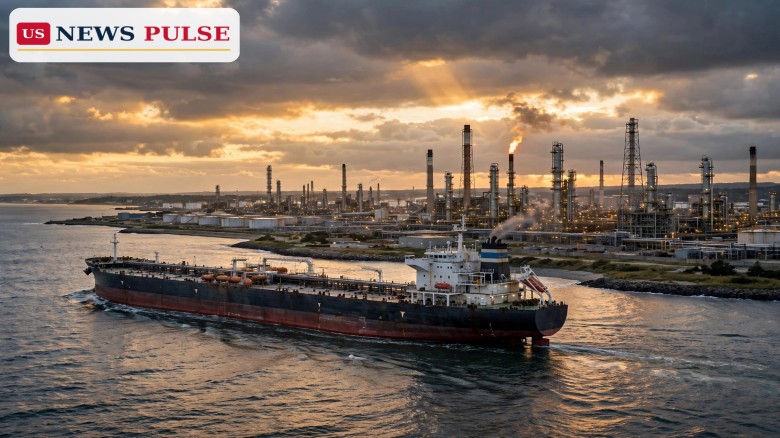
The immediate trigger on Friday was the attack on a tanker in the Strait of Hormuz, the narrow waterway between Iran and Oman through which a large share of the world's seaborne oil passes. The UK Maritime Trade Operations agency said the vessel was hit by explosive devices attached by a small boat. It did not identify the tanker, and it was not immediately clear who was behind the attack.
The incident followed a sharp escalation on Thursday, when Yemen's Iranian-backed Houthi militants said they had attacked several sites in Saudi Arabia, including its largest oil refinery at Ras Tanura, the Rabigh refinery and a production facility at Abqaiq owned by state company Saudi Aramco. A Saudi-led coalition separately said it had intercepted a cruise missile launched by the Houthis towards the kingdom's western region.
Saudi Arabia is the world's largest oil exporter, and Ras Tanura and Abqaiq sit at the heart of its export machine. Abqaiq is the world's largest oil processing facility, and any credible threat to it tends to move prices fast, because traders price in the risk of lost barrels long before any damage is confirmed.
The rally is the latest chapter in a war that has now entered its eighth month. The US-Israeli war on Iran began on February 28, 2026, and fighting around the Gulf has repeatedly spilled into shipping lanes and energy infrastructure since then. The Strait of Hormuz normally carries roughly a fifth of global oil and gas consumption, which is why even an unattributed attack on a single tanker can send prices sharply higher.
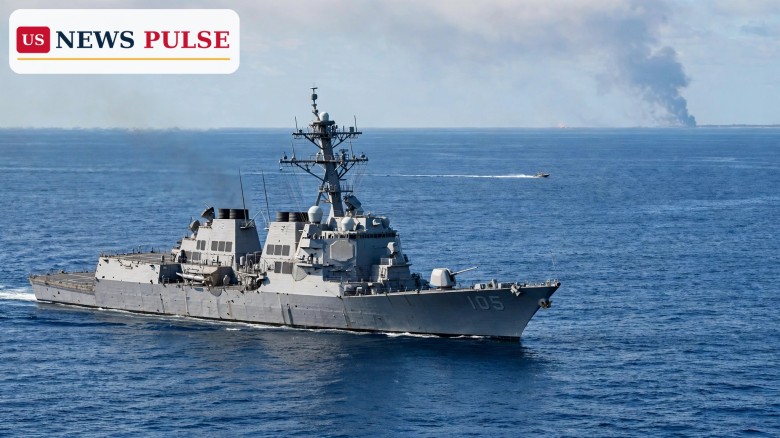
Only a day earlier, on Thursday, October 29, Iran's Revolutionary Guards said three oil tankers had exploded and caught fire after hitting sea mines on an unauthorised southern route through the strait. That claim, which had no independent confirmation, was itself part of a running dispute over mine-clearing in the waterway, with US Central Command insisting the main transit routes had been cleared.
October has been a brutal month for energy markets. Brent was on course to finish close to 14% higher for the month, while WTI was heading for a 15% jump, its fourth consecutive monthly gain and its strongest since July. WTI settling above $100 for the first time since April underlines how far prices have moved from their pre-war range.
The war's wider economic fingerprints are visible across the region. Earlier this week, sources told Reuters that ExxonMobil and Chevron had cancelled plans for their executives to travel to the United Arab Emirates for the industry's biggest oil show next week, a sign of how seriously even the largest companies are taking the security risk.
Behind Friday's jump is a political calendar as much as a military one. Several analysts told Reuters that investors expect a possible resumption of US attacks on Iran after the November 3 midterms, and are buying oil now to insure against it.
"The oil market is getting increasingly spooked as we approach the midterms," said Ole Hansen, head of commodity strategy at Saxo Bank. He added that some investors and analysts expect another resumption of US attacks on Iran after the elections.
Saul Kavonic, head of energy research at MST Marquee, said: "Continued kinetic action around the Strait of Hormuz amidst doubts of a viable diplomatic pathway are keeping oil prices elevated in expectation of an escalation of the conflict in coming weeks."
Giovanni Staunovo, commodity analyst at UBS, struck a similar note, saying: "We're still seeing a higher likelihood of an escalation and supply disruption." He added that Iranian officials had been cautious about whether a deal was possible in the short term.
A Saxo Bank briefing in Singapore on Thursday warned that oil prices could become even more volatile in the next couple of weeks because of Israel's parliamentary election and the US midterm vote. The bank said crude was expected to trade in a higher range of $70 to $90 a barrel, compared with a pre-war level of $60 to $70, even after the conflict ends, citing the risk of renewed hostilities and the need for inventory replenishment.
Diplomatic efforts have not stopped. Qatari mediators returned to Tehran on Friday as part of coordinated efforts to reach a deal between the US and Iran, an official briefed on the talks told Reuters.
US President Donald Trump said on Thursday that Vice President JD Vance had reached out to Iran to help the country get medical supplies, after US media reported that Vance had written to Tehran's top security official to revive peace talks. Iran has received a letter from Vance but has not responded to it yet, the country's semi-official Tasnim news agency reported, adding that Tehran wants the US to meet its conditions and that "any position that contradicts this framework is unacceptable."
The mixed signals — mediation in Tehran, missiles over Saudi Arabia, and an unattributed attack in Hormuz — are exactly what traders say they are pricing in: a diplomatic track that has not yet produced a deal, running alongside a military track that keeps producing incidents.
For the wider market, Friday's oil jump landed on a fragile day. US stock futures fell in early trading as Amazon and Intel earnings rattled technology shares, with Nasdaq-100 futures down more than 2% before the open. Rising crude added to the pressure, lifting energy costs while investors were already nervous about artificial intelligence spending.
The most direct consequence for Americans is at the pump. AAA said on Thursday, October 29, that the national average for a gallon of regular gasoline had fallen 5 cents over the past week to $4.22, but that crude oil prices above $100 a barrel were limiting further declines. The national average is $1.19 higher than a year ago, and California's statewide average dropped below $6 a gallon this week for the first time since mid-September, to $5.94.
Diesel, which powers trucking and farming, is even more exposed: national averages were around $6.33 to $6.35 a gallon this week, close to record October levels. When diesel rises, the cost of moving food and goods rises with it, feeding into the inflation that voters have consistently named as a top concern.
That political sensitivity is hard to overstate four days before an election. The latest snapshot of the economy, released Thursday, showed US GDP growing at a 3.4% annual rate in the third quarter, while September PCE inflation — the Federal Reserve's preferred gauge — rose to 3.6% from a year earlier. The Federal Reserve held interest rates at 3.75% to 4.00% on October 28, and policymakers have pointed to energy-driven price pressures as a reason for caution.
Consumer confidence data collected in October also showed Americans still broadly pessimistic about the cost of energy, goods and services, even as headline confidence recovered somewhat. A sustained oil spike into November would test that fragile mood — and the Fed's December decision — at the same time.
Several dates will shape what comes next. The December Brent contract expires on Friday, which can amplify price swings as positions roll into January. The US midterm elections take place on Tuesday, November 3, and analysts are openly debating whether the days after the vote bring a new round of US strikes on Iran, a diplomatic breakthrough, or both in sequence.
Israel's parliamentary election adds a second political clock, and the UAE oil show next week will go ahead without the top executives of ExxonMobil and Chevron, a small but telling indicator of how companies are weighing travel risk in the Gulf.
On the water, the key questions are practical: who attacked the Hormuz tanker, whether shipping insurers raise war-risk premiums further, and whether tankers begin rerouting or waiting for naval escort. Each of those steps adds cost and delay, and each tends to show up in crude prices before it shows up anywhere else.
For now, the market's message is unambiguous. A war in its eighth month, a chokepoint under attack, refineries in the world's largest exporting country in the crosshairs, and two elections in the next few days have combined into a $117 oil price — and traders are betting the story is not over.
Two events combined: a tanker in the Strait of Hormuz was hit by explosive devices attached by a small boat, and Yemen's Houthis said they had attacked Saudi refineries at Ras Tanura and Rabigh and an Aramco facility at Abqaiq on Thursday. Traders also fear a resumption of US attacks on Iran after the November 3 midterms.
Brent crude for December rose $2.74, or 2.4%, to $117.62 a barrel by 1045 GMT on Friday, while the January contract gained $2.78 to $113.58. US WTI crude climbed $2.18, or 2.1%, to $104.18. For October, Brent was up close to 14% and WTI around 15%.
AAA put the national average for regular gasoline at $4.22 a gallon on October 29, down 5 cents on the week but $1.19 higher than a year ago. AAA warned that crude above $100 a barrel is limiting further declines, so a sustained rally would be expected to slow or reverse the recent dip at the pump.
No. The strait remains open, but attacks on tankers and mine claims have raised insurance costs and security fears. The waterway normally carries about a fifth of global oil and gas consumption, so even the threat of disruption moves prices.
Analysts are divided. Some expect a possible resumption of US strikes on Iran after November 3; others point to Qatari mediation in Tehran and the Vance letter as signs of a diplomatic track. Saxo Bank expects crude to stay in a $70 to $90 range even after the conflict ends, above the pre-war $60 to $70 range.
Related coverage on US News Pulse: Hormuz tankers on fire after mine strikes, Iran Guards say, as oil-route fear grows; Iran attack options briefed to Trump by top admiral as post-election strikes loom; Vance letter to Iran: Trump denies peace talks, says it was medical aid.
Sources: Reuters via SRN News and Business Standard, October 30, 2026; UK Maritime Trade Operations; AAA Newsroom, October 29, 2026; US Bureau of Economic Analysis, October 29, 2026.
Leave a Comment



 | Today's Date: