On Tuesday, November 3, the artificial intelligence boom will face its most direct test yet at the ballot box, as data center ballot measures in 10 states ask voters whether the vast computing plants powering AI should be delayed, restricted or banned in their communities. At least 41 measures in 38 local jurisdictions will be decided alongside the midterm elections, according to the nonpartisan research group Ballotpedia, cited by Reuters on October 29, and no state has more at stake than Ohio, where voters in more than a dozen jurisdictions will consider 21 proposals.
The votes will not settle the national debate over AI on their own. But they will show, town by town, whether the promises of jobs and tax revenue still outweigh fears about electricity bills, water use, farmland and noise — and whether a backlash that has so far been local can become a template for state and federal policy.
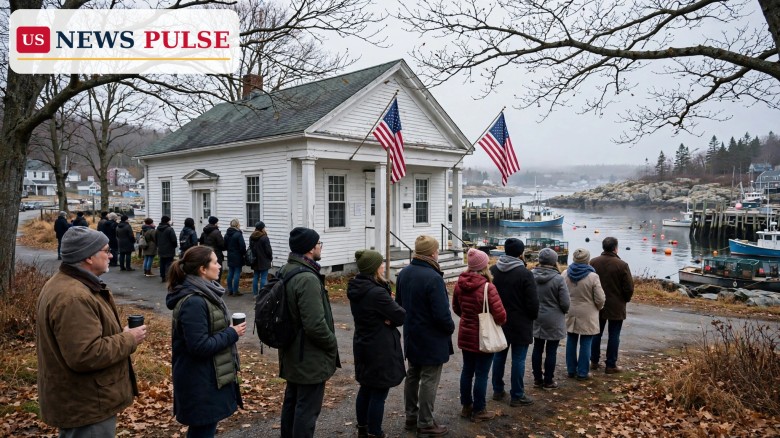
Reuters reported on October 29 that voters in 10 states will decide on Election Day whether to curb data center development in their communities, as the rapid buildout needed to power the AI boom stirs local opposition. The measures are not identical: some would ban large facilities outright, others would impose moratoriums, change zoning rules, require voter approval for big projects, or demand financial guarantees from developers seeking tax incentives.
Ohio is the centre of the fight. The state is one of the country's fastest-growing data center markets, and Ballotpedia counts 21 related proposals there — more than half the November 3 total. Illinois has seven measures, while Wisconsin and Kansas have three each, and California, Michigan, Nevada and Florida have one each on the November ballot, according to Ballotpedia's analysis reported by Agri-Pulse. Across the whole of 2026, including measures already decided earlier in the year, Ballotpedia counts at least 49 measures in 13 states.
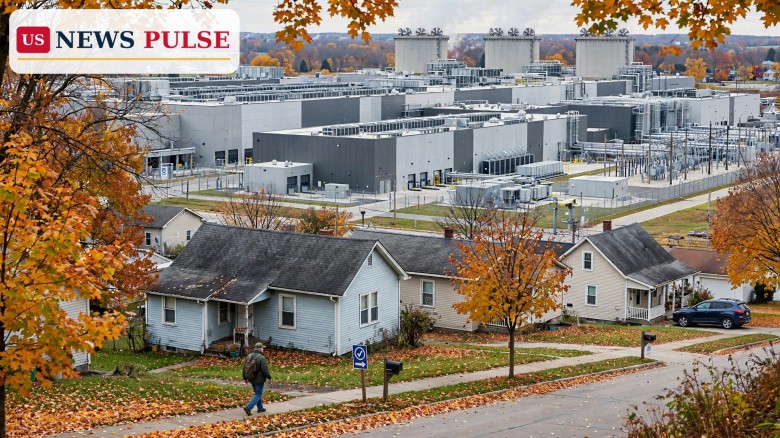
The highest-profile single vote may be in Sunbury, a community near Columbus, where a measure banning data centers that use more than 25 megawatts of power could derail Amazon's proposed $2 billion development. Amazon's public policy lead, Shannon Kellogg, appeared on local television in October to answer questions about the project ahead of the vote. An Amazon spokesperson declined to tell Reuters whether ballot initiatives across the country would affect the company's wider expansion plans, saying only that its facilities support jobs and generate millions in tax payments and that its commitment to host communities will not change regardless of any single outcome.
Data centers are the warehouse-sized buildings full of servers that run cloud services and AI applications. A report for the US Department of Energy by Lawrence Berkeley National Laboratory found that data centers used about 176 terawatt-hours of electricity in 2023, roughly 4.4 percent of all US electricity, up from 58 terawatt-hours in 2014. The International Energy Agency estimates that a typical AI-focused data center uses as much electricity as 100,000 households, and the largest ones under construction will use many times more.
That scale explains why electricity bills have become a campaign issue in 2026. The US Energy Information Administration estimates that the average residential electricity price was 17.3 cents per kilowatt-hour in 2025 and will average 18.2 cents in 2026, an increase of about 5 percent, faster than overall inflation. Utilities are also spending heavily to replace ageing poles, wires and substations and to harden the grid against storms and wildfires, while natural gas prices, which set the price of much of the country's electricity, have risen. Data centers are only one driver of bills, but in communities where a new plant is proposed, they are the most visible one.
Water is the second flashpoint. Some measures define a high-impact facility by water use as well as power — in Emporia, Kansas, for example, voters are considering a proposal to prohibit high-impact data centers across zoning districts, defined as those with peak loads above 10 megawatts or daily water withdrawals above 100,000 gallons. In Ohio, one city's measure would require a public vote for projects on 50 or more acres, using more than 20 megawatts at peak, or more than 500,000 gallons of water a day. Developers say modern cooling systems recycle water and use far less than older designs; opponents say the sheer number of plants makes the total demand impossible to ignore.
Politically, the backlash crosses party lines. Most states require petition drives or other proof of public support to qualify a measure, so the tally itself reflects organised opposition across the political spectrum. In Congress, a bill meant to make large power users pay for their own grid upgrades passed the House by 417 votes to 3 and then stalled in the Senate. Polling points the same way: a September PBS News/NPR/Marist poll found 58 percent of voters believed new data centers would have a mostly negative effect on the country, and 65 percent opposed having one built in their own community.
The November 3 measures fall into four broad types. Bans are the bluntest: about a dozen Ohio communities are considering bans on some or all data centers, often above a size threshold such as 25 megawatts. Moratoriums would pause new approvals while rules are rewritten. Zoning changes would move large facilities away from homes, schools and farmland. And voter-approval or financial-guarantee measures would let residents vote on the biggest projects or require developers to post money against promised tax payments and infrastructure costs.
What the measures mostly do not do is set electricity rates. Rates are set by state regulators and, in regions like PJM, the grid operator covering much of the mid-Atlantic and Midwest, by regional markets. A local ban can therefore stop a plant — and with it, the grid upgrades and water demand that come with it — without directly cutting anyone's bill. That distinction matters for voters who hope a yes vote will lower their monthly statement: it may prevent a future increase linked to a specific project, but it will not reverse the broader drivers of prices.
Supporters of the industry argue the trade is worth making. Data centers bring construction jobs, a smaller number of permanent jobs, and large property tax payments that can fund schools and local services. They also bring the computing capacity that AI companies say the United States needs to stay ahead of China. Opponents counter that the permanent job count is modest for the scale of the subsidy, that tax incentives can cost more than they return, and that once farmland is paved over, it does not come back.
Jessica Baker, an organiser with the advocacy group Conserve Ohio, told Reuters that Democrats and Republicans alike back bans on certain facilities. "We all want the same thing," she said, adding that worries about electricity and water use are driving the push. Even if developers generate their own power through gas turbines or nuclear reactors, she said, many residents do not want the sites nearby, fearing health risks to children such as asthma.
Baron Fung, who oversees IT infrastructure research at Dell'Oro Group, told Reuters that restrictions in Ohio would more likely redirect projects than end them. Developers could shift demand to other sites, he said, and the industry already contends with years-long waits for grid connections and rising construction costs. John McWilliams, head of data centre insights at Cushman & Wakefield, made the same point from the other side: growth suggests local opposition has not meaningfully slowed the sector, with capacity under construction up 48 percent in six months, and projects still moving forward in areas without friction.
Polling underlines how conditional acceptance has become: likely voters favoured a local ban by 52 percent to 33 percent, but 54 percent would allow a centre if developers covered grid costs and funded reliability upgrades.
Tuesday's votes matter beyond the towns that cast them because they are the first systematic test of whether local democracy can shape the AI buildout. Until now, data center siting has largely been a negotiation between companies, utilities and local officials, often conducted through tax-incentive deals agreed behind closed doors. A wave of citizen-initiated measures — 31 of the 38 November measures reached the ballot through petitions, according to Ballotpedia — changes who gets a say.
The results will also feed state and federal debates: Ohio's statewide amendment effort, organised by Conserve Ohio, missed this year's deadline and now aims for 2027, while the House's near-unanimous ratepayer-protection vote awaits Senate action.
Polls close on Tuesday, November 3, and the local measures will be counted alongside the midterm races for Congress, governor and state legislature. In Ohio, the Sunbury result will be watched first: if the 25-megawatt ban passes, Amazon will have to say whether it redesigns, relocates or litigates. Legal challenges are likely wherever a ban passes, since developers may argue that a voter-approved ban cannot retroactively block a project already permitted.
Beyond November, expect the fight to move to statehouses: over 40 states considered more than 260 data center bills in 2025, and South Carolina and Maryland have already enacted rate-negotiation laws.
At least 41 measures in 38 local jurisdictions across 10 states, according to Ballotpedia, cited by Reuters. Across the whole of 2026, including earlier votes, the total is at least 49 measures in 13 states.
Ohio is one of the fastest-growing data center markets in the country, and organised local opposition, led by groups such as Conserve Ohio, has qualified 21 proposals in more than a dozen jurisdictions there.
Not directly. Local measures can stop a specific plant and its associated grid and water demand, but electricity rates are set by state regulators and regional markets, not by local ballot votes.
A measure banning data centers using more than 25 megawatts could derail Amazon's proposed $2 billion project near Columbus. Amazon has not said whether the result would change its wider expansion plans.
They create many construction jobs and a smaller number of permanent jobs, alongside large property tax payments. Opponents argue the permanent job count is modest relative to the power, water and tax incentives involved.
Related coverage on US News Pulse: Big Tech earnings test: Alphabet, Amazon and Apple face AI spending verdict; Anthropic IPO filing: Claude maker seeks Nasdaq listing as ANT in $2 trillion test; Seven governor races 2026 to watch as Trump, economy shape midterms.
Sources: Reuters (Courtney Rozen), October 29, 2026, via WIO News and Virginia Business; Ballotpedia data center ballot analysis via Agri-Pulse, October 2026; Lawrence Berkeley National Laboratory / US Department of Energy data center energy report; US Energy Information Administration price estimates; PBS News/NPR/Marist poll, September 2026. Image: original illustration for US News Pulse; featured image carries the US News Pulse logo at the top left.
Leave a Comment



 | Today's Date: