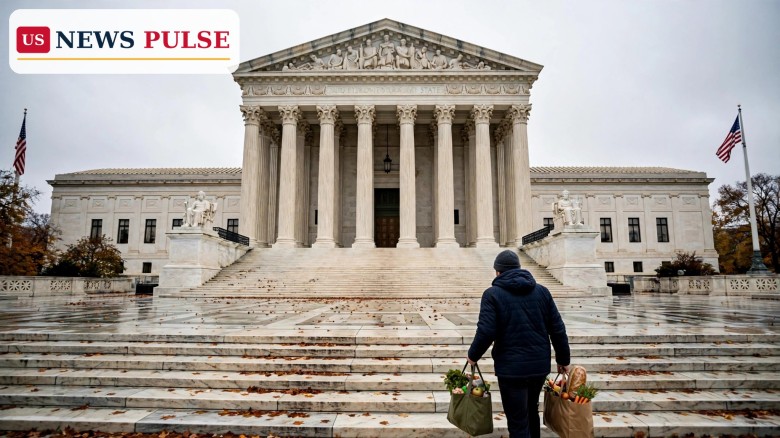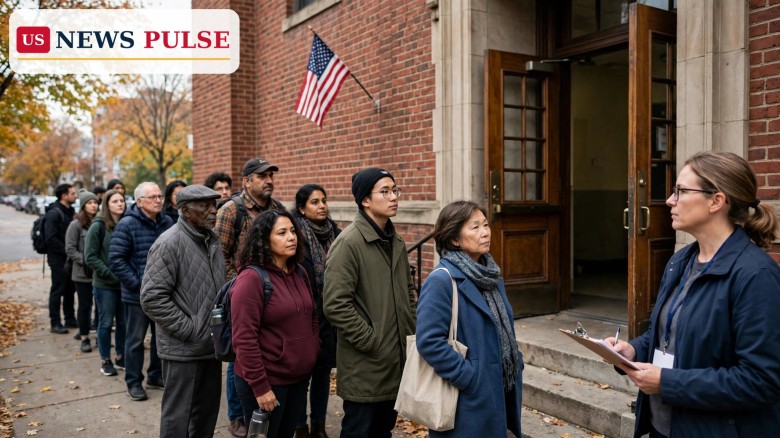
One week before Americans vote in the 2026 midterm elections, the coming contest is already being watched like no other in modern memory. Tens of thousands of election observers are preparing to fan out to polling places on Tuesday, November 3, in an extraordinary three-way watch: a sprawling volunteer protection effort organised by Democrats and nonprofit groups, the largest election monitoring programme ever run by the Justice Department, and a Republican operation of its own. The result, election officials and activists on all sides agree, could look unlike anything seen at American polls in modern times.
The mobilisation is driven by fear on the Democratic side that President Donald Trump will use the vast resources of the federal government to influence an election that could curb his power for the final two years of his presidency, and by a determination on the Republican side to document anything it considers unlawful. The White House rejects the premise entirely, insisting the president has done more than any predecessor to guarantee free and fair elections. What is not in dispute is the scale: never before have so many pairs of eyes been trained on the act of voting itself.
According to an Associated Press report published on October 26, Democrats and outside watchdogs are planning a massive presence at the polls on Election Day. The effort among Democratic and nonprofit groups includes training volunteers to stand watch outside polling places and report anything they consider concerning. The network runs from traditional government watchdogs such as Common Cause and the American Civil Liberties Union through a flood of volunteers assembled by state Democratic parties, congressional leaders, national activist groups and organisations focused on protecting democracy.
The numbers are striking. State Democratic parties have trained an estimated 10,000 volunteers to observe polling places and report anything potentially concerning they might see from federal agents. Common Cause has trained roughly 16,000 more volunteers to stand watch at voting precincts, said Suzanne Almeida, the group's vice president of states. A broader Election Protection coalition involving 300 other groups has trained tens of thousands more. Smaller pockets of volunteers are also preparing to show up, including roughly 100 organised by Senate Democrats and hundreds more from a Democratic-allied group called Save America, which is training clergy members, veterans, teachers and other local community members. National groups such as Indivisible and MoveOn are activating their own expansive networks.
On the other side of the ledger, the Justice Department is planning its largest-ever election monitoring effort, with about 1,000 department staff expected to observe voting and ensure federal laws are being followed, spokesperson Kiersten Pels said. That is far more than the roughly 289 monitors deployed in the 2022 midterms or the 714 sent for the 2024 presidential election. The department plans to send them to every state, focusing on high-population areas, jurisdictions that have had problems in the past and districts with close elections, according to a senior department official who briefed reporters on condition of anonymity.
The Republican National Committee said its operation involves deploying election integrity deputy state directors in 22 states, among them Arizona, Michigan, Georgia and North Carolina. Those workers are the eyes and ears of the RNC in the field, recruiting volunteers and organising trainings, said Ally Triolo, the RNC's election integrity communications director. At the same time, the RNC has enlisted nearly 22,000 poll workers and is recruiting poll-watching volunteers for competitive districts, who will observe the process and help ensure election rules are followed in accordance with the law, Triolo said.
Federal monitors have quietly observed American elections for decades, largely without incident, documenting possible civil rights violations such as the absence of Spanish-language ballots or polling places inaccessible to voters with disabilities. What has changed is the political temperature around them. Trump continues to make baseless allegations of cheating in the election, and his administration has already filed lawsuits in California and Alaska that could affect ballot counting or certification. In Alaska, the Justice Department is seeking to block certification if Republican incumbent Dan Sullivan loses, arguing that confusion with a same-name rival on the ballot could decide the race. In California, the department has challenged the counting of mail ballots.
Democratic leaders have responded by building an apparatus that rivals a presidential campaign. The Democratic National Committee created a first-of-its-kind cybersecurity unit staffed by former CIA and FBI officials to monitor and report online misinformation, including artificial intelligence deepfakes, said Jane Kleeb, vice chair of the DNC. Democratic mayors, attorneys general and secretaries of state are hosting tabletop exercises simulating worst-case scenarios, such as a surge of Immigration and Customs Enforcement officials at voting locations or the seizure of ballots and voting equipment. On Capitol Hill, Democratic leaders have assembled a legal team that rivals that of any presidential campaign.
The Senate Democrats' observer corps adds another layer. Announced on October 14, it recruited and trained more than 100 congressional staffers to monitor voting and ballot counting in nine states with closely contested Senate races, including Ohio, Georgia and Michigan, Democratic leader Chuck Schumer and Senator Alex Padilla told reporters. Their mission is to document possible voter intimidation, threats against election workers and other irregularities, including during the counting and certification of ballots after the November 3 vote. Padilla said the observers could remain deployed for days or even weeks after the election if necessary.
For all the alarm, the legal powers of election observers are narrow, and the rules vary by state. Federal monitors have no more legal authority than a member of the public, unless they are working in one of the very few places where a court has explicitly authorised federal observers, according to Justin Levitt, a former deputy assistant attorney general in the Justice Department's Civil Rights Division and now a professor at LMU Loyola Law School. They can watch and document, but only within whatever rules the state has set for anyone else who wants to observe an election. If state law allows observers, they can observe. If it does not, they cannot. If there are conditions, they have to follow them.
The Justice Department insists its monitors are trained to comply with federal law governing conduct at polling places and will not interfere with the voting process. Department officials have said the monitors will not be armed, will not interact with voters and will not handle ballots or voting equipment. Trump himself, asked about department monitors being sent to Georgia, told a reporter recently: "They're not going to do anything other than watch." The Democratic Mayors Association, in guidance issued to local Democratic officials, notes that federal law prohibits the presence of federal immigration agents, the FBI or other investigative personnel at the polls, and reminds officials that federal agents are not allowed to be armed at polling places, nor to interact with voters or handle ballots or equipment.
That reassurance has not settled the argument. Civil rights organisations are concerned about plans to involve criminal prosecutors in observation, where the department previously usually used civil lawyers and support staff. The NAACP has filed a lawsuit seeking to bar prosecutors and other law enforcement officers from working as observers, calling such plans voter intimidation. The department says observers will not identify themselves as prosecutors and that the lawsuit is based on unfounded fears. A senior department official has said observers will not check voters' citizenship on Election Day, though the department has said they will document possible violations of federal election law, including possible voting by non-US citizens.
There is already a test case from this year's primary season, when the department said it deployed more than 100 election monitors across hundreds of polling locations. At least one placement sparked tensions with local officials. Wyoming Governor Mark Gordon, a Republican, said the behaviour of two monitors during that state's primary was "a bit aggressive" and "irregular". A Laramie County clerk said the Justice Department monitors arrived at the polls intending to interview voters, but her office did not allow it. The department disagrees that the monitors did anything improper, Pels said.
"We've never done this before," Kleeb said of the party's sweeping efforts. But "we've never had to deal with the president of the United States saying that he may seize ballots, put ICE agents outside polling locations and other kinds of very clear direct threats to the voting process."
Harmeet Dhillon, the Trump appointee who leads the Justice Department's Civil Rights Division, was asked on CBS' "60 Minutes" whether the administration is planning to send ICE agents to polling places. "There is no plan to do that," she responded.
White House spokeswoman Lauren Bis blamed "radical Democrats" for creating fears about election security by refusing to enact voter ID requirements and other Republican-backed measures. "President Trump has done more than any other president to ensure we have free and fair elections," Bis said.
Schumer was blunt about the purpose of the Senate observers. "Their role is very clear: to observe, to document, and report the facts," he said. "Donald Trump does not get to decide who votes. He doesn't get to decide which votes count." Padilla added: "I don't put anything past the Trump administration to try to interfere with the election," warning that Democrats were preparing for possible challenges to the results. He stressed the Senate observers would have no role in administering elections or handling ballots: "They're not there to interfere. They're not there to cause a scene."
Almeida acknowledged the risk that so many uncoordinated groups could create confusion of their own. There are so many organisations working to protect the voting process, including many that cannot legally coordinate with each other, that some officials involved worry about unintentionally creating chaos outside polling locations. "It will actually take all of us if some of the threats we are most worried about come to pass," she said.
Mary Corcoran, Save America's executive director, said her group's volunteers have already been monitoring precincts during early voting in Georgia, Michigan, North Carolina and Ohio to help give voters a sense of security. "The fear is the point, and we must do something about it," she said. "Left unanswered, fear does the work of keeping people home without a single agent setting foot at a polling place."
The observer surge matters because the 2026 midterms will decide control of Congress for the last two years of Trump's presidency, and because trust in the process is itself on the ballot. The last two elections have shown how quickly disputes over counting and certification can escalate, and both parties are now building the machinery to fight those disputes in real time. Tens of thousands of trained watchers, on both sides, mean that almost any incident at a polling place, real or perceived, is likely to be filmed, reported and litigated within hours.
It also matters for ordinary voters. Local election officials are already taking precautions. Chris Swope, the city clerk in Lansing, Michigan, said he preemptively contacted law enforcement and his attorney in case federal monitors violate election law, although he expects them to abide by the rules. If voters arrive to find crowds of observers, cameras and competing claims of intimidation, the risk is not only confrontation but discouragement: people who feel watched may simply stay home. That is precisely the outcome Corcoran's group says it is trying to prevent, and precisely the outcome voting rights advocates fear federal monitors could produce.
Finally, the observer battle is a preview of the certification fights to come. The Justice Department's Alaska and California lawsuits, the Senate observers' mandate to watch counting for days or weeks after Election Day, and the legal teams assembled on Capitol Hill all point to a contest that will not end on the night of November 3. The observers are not just watching the vote. They are positioning for everything that happens after it.
Early voting is already under way in many states, and some observation has already begun, with Save America volunteers monitoring precincts in Georgia, Michigan, North Carolina and Ohio. The full deployment arrives on November 3, when monitors from all three camps take their positions at polling places across the country, with the heaviest presence expected in high-population areas, jurisdictions with troubled histories and the closest races.
After the polls close, the watch continues. Senate Democratic observers may remain deployed for days or weeks while ballots are counted and certified, and the Justice Department's monitors will be watching the same process. Legal challenges already filed in Alaska and California could shape how those counts are treated, and any new disputes will land before courts and election officials who have spent weeks preparing for exactly this scenario. The next flashpoint may not be a single incident at a single polling place, but the slow, contested count that follows.
Tens of thousands. State Democratic parties trained about 10,000 volunteers, Common Cause trained about 16,000 more, a 300-group Election Protection coalition trained tens of thousands more, the Justice Department is sending about 1,000 staff, and the RNC has recruited nearly 22,000 poll workers plus poll-watching volunteers.
They can watch and document, within the rules each state sets for observers. They cannot question voters, handle ballots or equipment, or interfere with voting, and the Justice Department says they will not be armed or identify themselves as prosecutors while observing.
Administration and military officials have said they have no plans to deploy immigration agents or troops to polling sites, and Harmeet Dhillon, head of the Justice Department's Civil Rights Division, said on "60 Minutes" that there is no plan to send ICE agents to polling places.
Democratic leaders say they are responding to what they describe as direct threats to the voting process, including suggestions that ballots could be seized or ICE agents posted outside polling places, and to the Justice Department's lawsuits affecting counting and certification in California and Alaska.
The RNC has election integrity deputy state directors in 22 states, including Arizona, Michigan, Georgia and North Carolina, has enlisted nearly 22,000 poll workers, and is recruiting poll-watching volunteers for competitive districts to observe the process and report anything that seems unlawful.
Related coverage on US News Pulse: Peltola asks judge to toss DOJ certification case in Alaska, DOJ demands 400 suspected noncitizen votes set aside in Washington, and Dark money floods the 2026 midterms.
Leave a Comment



 | Today's Date: