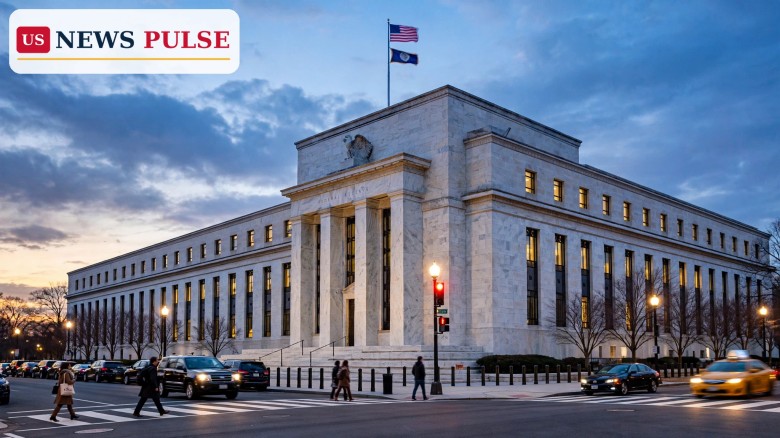
The Federal Reserve heads into its final meeting before the midterm elections with a difficult choice: raise rates again to fight stubborn inflation, or hold steady and wait for clearer evidence. With its two-day meeting concluding on October 28, 2026, the Fed Rate Decision October 2026 is shaping up as a pause — even though prices are still rising far faster than the central bank wants.
The Federal Reserve's rate-setting committee meets on October 27 and 28, 2026, to set the benchmark federal funds rate — the rate that influences mortgages, car loans, credit cards and business borrowing. In September it voted unanimously to raise the range for the first time in three years, to 3.75% to 4%, as inflation refused to fall back to the 2% goal.
This month, the question is whether to hike again or pause. Most forecasters believe a cut is not a realistic outcome from this meeting, despite the Trump administration's preference for lower rates and a September jobs report that disappointed forecasters. The debate is between another increase, which would make borrowing more expensive, and holding steady, which risks letting high inflation linger.
Market pricing points firmly toward patience: traders put roughly a 90% chance on rates staying unchanged this week, with a December hike at around 82%. The dollar index held around 102 on Tuesday after two straight rises, as investors awaited the announcement plus GDP and PCE inflation data.
The Federal Reserve raises its benchmark rate to slow rising prices and lowers it to stimulate the job market. September's unanimous vote broke a three-year run without an increase, reflecting concern that inflation — now above the 2% target for five consecutive years — was becoming entrenched rather than fading.
In September, most committee members signalled at least one more hike this year. Of the 19 members (only 12 vote), two saw no need for further increases, 12 saw room for one more quarter-point hike, and four favoured two quarter-point increases or one half-point rise before year-end. Chair Kevin Warsh did not submit his own projections.
Since then, policymakers have learned consumer prices rose 3.7% in September from a year earlier, up from 3.4% in August. Both figures sit well above target — the core of the case for moving again. But monetary policy takes time to filter through the economy, and that lag is the core of the case for waiting.
The backdrop is unusually political. The cost of living remains top of mind for voters as they prepare to cast ballots on November 3, and this is the Fed's final meeting before those elections. Fed officials routinely say their decisions are driven by data, not politics, and the pause argument is framed in those terms: waiting gives officials more time to assess the response to the last hike.
The case for holding steady rests on timing and uncertainty: 94 of 100 economists polled by Reuters expect the range to stay at 3.75% to 4% this month. A hold would give officials more time to judge how households and businesses are responding to September's increase.
“My colleagues and I will need to come to our own judgment, which may take more time,” Fed Vice Chair Philip Jefferson said on October 1.
One large uncertainty remains the war in Iran. President Donald Trump said in September it would “end immediately” following the midterms, though he has also suggested he may resume strikes after November 3 — a swing that matters enormously for energy prices, and therefore inflation.
“'Are we going to escalate or de-escalate?' is huge in terms of impact on energy prices and therefore inflation,” Johns Hopkins finance professor Yuval Bar-Or said. “Speculating without recognizing that that's a pivotal event would be incomplete.”
Not everyone is comfortable waiting: several officials remain concerned about inflation, and Chair Warsh has recommitted to price stability.
“It's hard to be in a discussion with central bankers and not compare notes and hear the same thing about the surge in prices,” Warsh said on October 16 in Bangkok.
Cleveland Fed President Beth Hammack warned on October 12 that delay carries its own risk. “With each passing month, persistently elevated inflation raises the risks of an inflationary mindset becoming entrenched in the economy,” she said. “Trimming the sails through frequent smaller adjustments reduces the risks of being blown far off course.”
Chicago Fed President Austan Goolsbee, a nonvoting committee member, also worries inflation may not ease on its own. “The danger is that the inflation is less coming from things that might naturally go away, like tariff impacts on prices, and is shifting more to just old-fashioned overheating of demand,” he told NPR earlier this month.
That is why, even as a pause looks likely this week, every one of the 100 economists in the Reuters poll expects a December increase. The question is not whether the Fed will move again, but when.
For households, the decision flows directly into everyday costs: a higher rate pushes up mortgage, auto-loan and credit-card costs, squeezing budgets already stretched by 3.7% annual price rises. A pause gives borrowers breathing room, but a December hike would simply delay the squeeze by a few weeks.
For markets, the stakes are equally clear. Renewed interest in the AI trade, spurred by Anthropic's IPO filing, has supported the dollar, but the Fed's stance sets the tone for stocks and bonds into year-end. A surprise hike would likely jolt equities and push yields higher; a pause with hawkish December language could do much of the same work without the shock.
For the White House, the meeting lands in a fraught moment. Trump has repeatedly criticised the Fed for not cutting rates more aggressively, and he is still pressing for Governor Lisa Cook and former Chair Jerome Powell to leave the committee. Trump first attempted to fire Cook in August 2025 over mortgage-fraud allegations she denies; the Supreme Court blocked her removal, saying he could only fire her “for good reason.” He revived the effort this month with a “committee of inquiry” and a demand she testify on November 5 — her lawyer, Abbe Lowell, called it “demonstrably biased” and said she could appear only after the December meeting. Powell, whose term runs to January 2028, says he will remain until the investigation into him is “truly over.”
The committee announces its decision on October 28, followed by Chair Warsh's press conference, where traders will parse every word for December signals. GDP and PCE inflation data this week, the November 3 midterms and any Iran shift will feed into that judgment.
If the Fed pauses as expected, attention turns to December, where markets and economists alike expect a quarter-point increase. Hotter inflation or surging energy prices could bring that hike forward; a softer jobs report or Iran de-escalation could push it back. An October pause would look less like a change of direction than a deliberate delay.
Related coverage: Anthropic's IPO filing, Trump's $1 million voter-fraud reward, and Steelers' historic Paris win.
The committee concludes its two-day meeting on October 28, 2026, announcing whether it holds, hikes or cuts the benchmark rate, followed by a press conference from Chair Kevin Warsh.
The range is 3.75% to 4%, set by the unanimous September 2026 hike — the first increase in three years.
Monetary policy takes time to work, September's hike has barely filtered through, and uncertainties — Iran and the midterm outcome — could soon change the outlook. A total of 94 of 100 economists polled by Reuters expect no change this month.
All 100 economists in the Reuters poll expect a December increase, and traders put the chance at around 82% — most likely a quarter-point rise, depending on inflation, jobs and energy data.
A higher rate tends to push up mortgage, auto-loan and credit-card rates, while a hold keeps costs steadier short term — though a December hike would still feed through.
Leave a Comment



 | Today's Date: