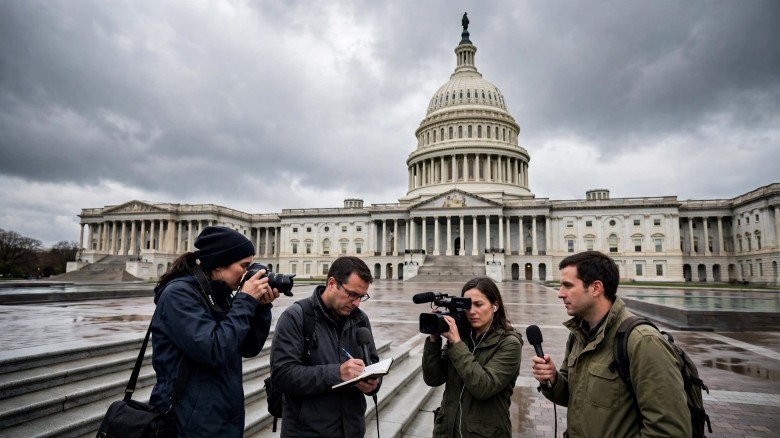
Democrats on the House Judiciary Committee have thrown one of the most explosive documents of the election season into the final stretch of the 2026 midterm campaign, publishing a detailed staff report on the Epstein files and demanding an independent special counsel to investigate President Donald Trump's ties to the late financier Jeffrey Epstein. The report, released on Monday, October 26, lands just eight days before voters decide control of Congress on November 3, and it has already set off a furious exchange between Capitol Hill and the White House.
The report compiles survivor interviews, FBI records and documents released under the Epstein Files Transparency Act, and it argues that the Justice Department cannot be trusted to examine the president's own connections to the case. The White House has rejected the document outright, calling it a partisan attack timed to sway an election. The president has repeatedly denied any wrongdoing connected to Epstein and has not been charged with any offence arising from the affair.
The unsigned staff report was published by Democrats on the House Judiciary Committee on Monday, October 26. It draws together interviews with survivors, FBI material and files disclosed under the Epstein Files Transparency Act, the law Congress passed requiring publication of the government's Epstein records. According to summaries of the document, 11 women spoke to committee staff about their experiences, and at least five of them accused the president of rape or sexual assault that took place in Epstein's company or presence.
One of the accounts, from Beatrice Keul, had not previously been reported, according to coverage of the release. The report does not itself bring charges or make findings of criminal guilt: it is a congressional staff document, not a court ruling, and the allegations it repeats remain unproven in a court of law. Its central recommendation is procedural rather than prosecutorial — that an outside prosecutor, free of the current Justice Department's chain of command, should take over.
The report's sharpest criticism is aimed at Attorney General Todd Blanche, who served as the president's personal lawyer before taking charge of the Justice Department. Democrats accuse Blanche and other department officials of steering Maxwell, Epstein's former associate, away from discussing one survivor during her interviews, and of holding back or redacting material that should have been disclosed. In the Democrats' telling, that conduct could amount to obstruction or witness tampering — a claim the department has not publicly answered in detail since the report's release.
The report formally asks Blanche himself to appoint the special counsel, while conceding that the department under his leadership is unlikely to take even that minimal step. The Democrats argue that a prosecutor investigating the president cannot credibly answer to an attorney general they describe as conflicted, and that the inquiry should also cover Epstein's alleged accomplices and co-conspirators, as well as the alleged concealment of files inside the department.
Jeffrey Epstein, a wealthy financier who moved among politicians, business executives, celebrities and academics, died in federal custody in 2019 while awaiting trial on sex-trafficking charges involving minors. His death was determined to be a suicide. For years afterward, the files held by the Justice Department and the FBI became one of the most fought-over sets of records in American politics, feeding both legitimate demands for transparency and a swirl of conspiracy theories.
Trump, who was once a close friend of Epstein, fought for months to prevent the Justice Department from releasing the files, before eventually signing a law passed by Congress that required their publication. The House voted 421 to 1 to release the material, and the Senate passed the measure by unanimous consent. Even after the law, the disclosure fight continued: a federal judge later found that the department had failed to fully comply with the statute's disclosure requirements, a decision the department is appealing while maintaining that its staff completed a massive, expedited review.
The president's name appears repeatedly across the released documents, a fact that both sides now cite for opposite purposes. Democrats say the volume of references demands an independent look; the White House says mere mentions in a vast file prove nothing, and points to the president's repeated denials. Trump has said he severed ties with Epstein years before the financier's arrest and maintains that he has been cleared of wrongdoing.
Ghislaine Maxwell, Epstein's former girlfriend, remains the only person convicted of a crime in connection with the trafficking operation. She is 64 and serving a 20-year prison sentence after her 2021 conviction for supplying underage girls to Epstein. Her interviews with Justice Department officials have become a second front in the dispute, with Democrats claiming she was guided away from discussing a survivor whose account could have been damaging.
A special counsel is an outside prosecutor appointed to handle a matter where the Justice Department faces a conflict of interest or where public confidence requires independence. Democrats want one here for three overlapping reasons: to investigate the president's own ties to Epstein, to pursue any surviving accomplices or co-conspirators, and to examine whether department officials improperly shielded material from the public.
The practical obstacle is obvious. The power to appoint a special counsel sits with the attorney general — the very official the report accuses of a conflict. Representative Jamie Raskin, the ranking Democrat on the Judiciary Committee, has framed the problem bluntly, accusing the department of covering up crimes to protect the president and noting that five women have directly accused Trump of rape or sexual assault in Epstein's company or presence.
Democrats have acknowledged that the current department is unlikely to act on their request. That admission is itself part of the strategy: by making the demand now, they are setting out an oversight agenda they could pursue with real subpoena and legislative power if they win back the House on November 3. The report also gives Democratic campaigns a fresh, documented basis for the Epstein-focused advertising that has already cost more than $35 million this cycle, according to reports.
Republicans, for their part, have spent months arguing that the Epstein issue is being weaponised for electoral gain. The White House's response to the report followed that line exactly, portraying the document as a pre-election stunt rather than a serious oversight product.
On the Democratic side, Raskin's message was that the Justice Department's handling of the files has itself become part of the scandal. The report argues that the department's redactions and its treatment of Maxwell show an institution working to protect the president rather than to pursue the truth, and that only an independent prosecutor can break that pattern.
The White House answered in far blunter language. Communications director Steven Cheung denounced the report in a post on X, calling it "complete bullshit" and accusing Democrats and the media of peddling lies and ridiculous accusations against the president for political gain ahead of every election cycle. He added that the American people see through the effort. White House spokesperson Lauren Bis separately characterised the document as a partisan attempt to shift political momentum, reiterating that Trump cut ties with Epstein years ago and insisting that the president has been cleared of wrongdoing.
Survivor advocates, meanwhile, have long argued that the debate over the files has too often sidelined the people at the centre of the case. Survivors who pressed Congress for the transparency law said the long delay in exposing the material amounted to a betrayal that allowed more people to be harmed — a reminder that, behind the partisan warfare, the records concern real victims whose accounts are still being tested.
The report matters for three reasons that go beyond a single news cycle. First, it escalates the Epstein affair from a transparency dispute into a direct challenge to the independence of federal law enforcement. If the Justice Department is accused of covering up material about its own boss, the question is no longer only what Epstein did, but whether the institutions meant to investigate wrongdoing can still do so.
Second, the timing is inseparable from the election. With control of the House and possibly the Senate at stake on November 3, the report hands Democrats a closing argument about accountability, and hands Republicans a closing argument about politicised investigations. Polling released this week already shows the president's approval rating at 32 percent, with Democrats leading the generic congressional ballot — a backdrop that makes every new revelation land harder.
Third, the report could shape what happens after the election regardless of who wins. A Democratic House would be positioned to subpoena witnesses, hold hearings and press for a special counsel with institutional force. A Republican hold on Congress would more likely bury the demand, but the underlying files and the judge's finding of incomplete disclosure would remain, keeping the legal fight alive in the courts.
In the immediate term, the ball sits with the Justice Department, which has given no public sign that it will appoint a special counsel. Watch for whether Blanche or the department issues a formal response to the specific claims about Maxwell's interviews and the redactions, since silence on those details may become as politically costly as the report itself.
Congress will also be a stage. Expect Democrats to raise the report in campaign appearances and in the final pre-election session, and expect Republicans to counter that the document is unsigned, partisan and timed for maximum electoral damage. The courts, too, remain in play: the department's appeal against the ruling that it failed to fully comply with the transparency law could determine how much more material reaches the public, and when.
Longer term, the fate of the special counsel demand probably turns on November 3. A change in House control would give the report's authors the tools to pursue it; a Republican victory would leave it as a campaign document rather than an investigation. Either way, the Epstein files are not going away — the transparency law, the pending litigation and the survivor accounts guarantee that the argument over what the government knew, and what it hid, will continue well past election day.
What is the House Democrats' Epstein report?
It is a 53-page staff report published on October 26, 2026, by Democrats on the House Judiciary Committee, compiling survivor interviews, FBI records and documents released under the Epstein Files Transparency Act. It urges the appointment of an independent special counsel.
What does the report allege about President Trump?
It says 11 women gave accounts to committee staff, and at least five accused Trump of rape or sexual assault in Epstein's company or presence. Trump denies all such allegations and has not been charged with any offence connected to Epstein.
Why do Democrats want a special counsel?
They argue the Justice Department cannot credibly investigate the president because Attorney General Todd Blanche was previously Trump's personal lawyer, and they accuse department officials of steering Maxwell away from a survivor and withholding or redacting files.
What has the White House said?
The White House has dismissed the report as a partisan, pre-election attack. Communications director Steven Cheung called it "complete bullshit," and spokesperson Lauren Bis said Trump severed ties with Epstein years ago and has been cleared of wrongdoing.
Could a special counsel actually be appointed?
Only the attorney general can appoint one, and Democrats concede the current department is unlikely to act. The demand is more likely to gain force if Democrats win back the House on November 3 and can pursue it with subpoena power.
Related coverage on US News Pulse: the latest Trump approval poll ahead of the midterms, the South Carolina Senate race where former governors crossed party lines, and the Anthropic IPO filing testing the markets.
Leave a Comment



 | Today's Date: