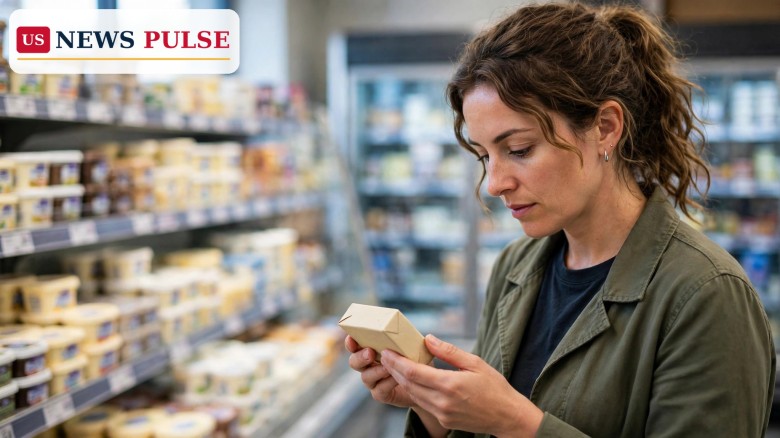
Check your refrigerator this morning. The U.S. Food and Drug Administration has formally classified the recall of Miyoko's Creamery European Style Salted Plant Milk Butter as Class II, over yeast, mold and E. coli contamination. The recall covers 1,304 cases of the 8-ounce butter, sold in 10 states, and shoppers who bought it before the recall may still have an affected tub sitting at home.
The renewed attention comes because the FDA only assigned the Class II tag on October 23, 2026, weeks after the recall began in September. The company says every potentially affected product has now been removed from store shelves. But a tub bought in early September could still be in a home refrigerator, and with a best-by date of November 5, 2026, it may look perfectly fine. If the lot number and date match, throw it out or return it.
The FDA's enforcement report lists the recall as a Class II event, the agency's middle tier: eating the product may cause temporary or medically reversible health problems, or the chance of serious harm is remote. It is not the most severe classification, but it is a formal federal warning, not a quiet quality tweak.
The recalling firm is Prosperity Organic Foods Inc., based in Boise, Idaho, which makes the Miyoko's Creamery line. The company voluntarily launched the recall on September 11, 2026, after manufacturer testing found the contamination. Grocery chains began posting their own warnings in September, before the FDA's October classification brought the recall back into the headlines.
The scale is specific: 1,304 cases of the 8-ounce butter. The product is the salted European-style plant milk butter, a vegan spread made with cashews and plant oils instead of dairy milk. It sits in the same refrigerated case as ordinary butter, and a recalled tub looks identical to a safe one unless you check the code on the package.
The FDA's distribution list names 10 states: Connecticut, Florida, Georgia, Illinois, Indiana, Iowa, Maryland, New Hampshire, New Jersey and Wisconsin. Shoppers there who bought it in September or earlier should check the package now, even if already opened.
The recall unfolded in stages through September, which is part of the reason the FDA's October 23 classification caught shoppers by surprise. The earliest public warning appears to have come from Market Basket, the New England chain, which first alerted customers on September 3, citing high yeast counts that did not meet quality standards.
Two weeks later, on September 17, Market Basket updated its warning: the butter may potentially contain E. coli — an escalation from a quality problem to a possible pathogen. Sprouts Farmers Market posted its own recall notice on September 14, warnings also appeared from Wegmans and Raley's, and the company launched its formal voluntary recall on September 11.
None of the recall notices reviewed reports any confirmed illnesses linked to the butter. That is reassuring, but it is not a clean bill of health for any individual tub: recalls are often issued before illnesses are confirmed, precisely so that people stop eating the product first.
The timing adds urgency. The recalled butter carries a best-by date of November 5, 2026, just days away, and a tub bought weeks ago may still be in a refrigerator, a second fridge or a vacation home. Here the date is an identifier: with the UPC and lot code, it tells you whether your tub is part of the recall.
It is not the first food recall to hit American kitchens this autumn. Related recent recalls covered on this site include the toothpaste recall of more than 4.3 million tubes and the Darwin's cat food Salmonella alert.
Do not rely on the brand name alone: only one product and lot are covered, so check all three identifiers:
If all of those match, do not eat the butter — even in cooking, because of cross-contamination: it can spread bacteria to utensils, surfaces and other food. Throw the tub away in a secure, double-bagged container, or return it to the store for a full refund. Retailers that posted the recall, including Sprouts, Wegmans and Raley's, have offered refunds.
If you have already eaten some of the recalled butter, watch for symptoms rather than panicking. According to the Mayo Clinic, E. coli symptoms typically begin three to four days after exposure and include stomach cramps, diarrhea that may be bloody, nausea and vomiting. Anyone who develops those symptoms should contact a healthcare professional. Children under five, older adults and people with weakened immune systems face the highest risk.
Mold brings its own risks. According to the U.S. Department of Agriculture, some molds can trigger allergic reactions and breathing problems, while others produce mycotoxins, toxic substances that can make people sick. That is why a tub from the recalled lot should go in the bin even if it looks and smells normal.
Miyoko's has moved to reassure customers that the problem is contained. Replying to a customer on Facebook on October 26, the company said safety was among its top priorities, that it had voluntarily pulled a very small number of products in early September out of an abundance of caution, and that all potentially affected products had since been fully removed from stores.
That reassurance cuts both ways: if the shelves are clear, the remaining risk is in home refrigerators. The advice for anyone holding a matching tub is unchanged: discard it or return it.
A butter recall sounds small until you think about how butter is used: on toast, in baking, in sauces and vegetables, often without being cooked long or hot enough to kill bacteria, and handled by everyone in the household, including children. One contaminated tub can reach a lot of plates.
The recall also shows a gap in how food safety news travels. It began in September, the FDA classification landed on October 23, and many shoppers only heard about it when the classification made headlines days later — by which time affected tubs had sat in refrigerators for weeks. Store notices come first and federal classification later, so the final safety step always falls on the shopper opening the fridge.
The immediate next step belongs to shoppers: check the UPC, lot and best-by date, and discard or return any matching tub. Retailers should continue to accept returns for a full refund, and anyone who develops symptoms after eating the product should seek medical advice promptly.
Separately, shoppers should note a second, smaller Miyoko's action that surfaced on October 26. A community co-op notice that day announced a voluntary withdrawal of one lot of Miyoko's Creamery Unsalted European-Style Plant Butter — UPC 8-57554-00599-5, 8 ounces, best-by November 27, 2026, lot 1008243 — to investigate mold complaints, with a full refund at the store. That unsalted lot differs from the FDA's Class II salted-butter recall, but check both if you buy the brand.
Miyoko's Creamery European Style Salted Plant Milk Butter, 8 ounces, UPC 857554005773, lot 07871, best by November 5, 2026 (shipping cases: lot 1007871). Only that product and lot are covered.
Connecticut, Florida, Georgia, Illinois, Indiana, Iowa, Maryland, New Hampshire, New Jersey and Wisconsin, according to the FDA. Sprouts, Wegmans and Raley's also posted notices in September.
Do not eat it, even in cooking, because of cross-contamination risk. Discard it in a secure, double-bagged container or return it for a full refund.
None of the recall notices reviewed reports confirmed illnesses linked to the product. But E. coli symptoms can take three to four days to appear, so anyone who ate it and develops cramps, diarrhea, nausea or vomiting should contact a healthcare professional.
No: the Class II action covers only the salted product and lot above. A separate unsalted lot, best by November 27, 2026, lot 1008243, was voluntarily withdrawn on October 26 over mold complaints. Check both if you buy the brand.
Leave a Comment



 | Today's Date: