Israel's election-day drama took a stunning turn this week when one of Benjamin Netanyahu's fiercest rivals demanded a criminal investigation into the prime minister himself, accusing him of treason for allegedly pushing the country's military toward a confrontation with Iran on the eve of the vote. The Netanyahu treason probe demand, lodged with the attorney general on Monday, October 26, 2026, has electrified an already knife-edge campaign and raised an extraordinary question at the heart of Israeli democracy: did a sitting prime minister try to use war as an election weapon?
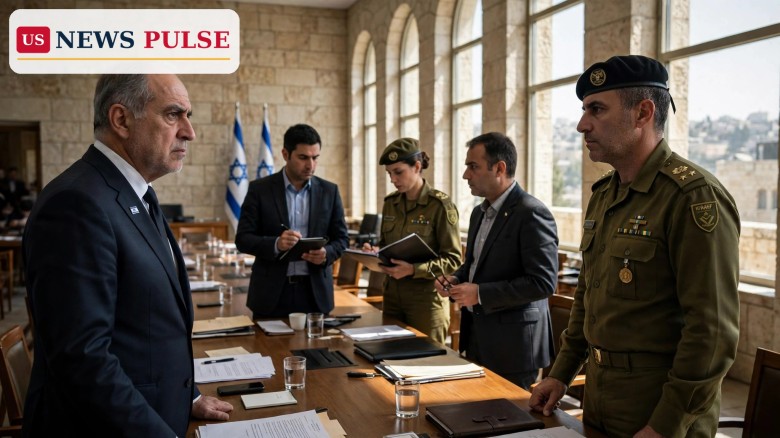
At the centre of the storm is a reported clash between Netanyahu and Lieutenant General Eyal Zamir, the chief of staff of the Israel Defense Forces. According to Israel's Channel 12 and reporting by The New York Times, Zamir resisted a directive from Netanyahu concerning Iran in the days before Tuesday's election, insisting on fuller deliberations and written legal authorisation from the political leadership before carrying out any order. Netanyahu has dismissed the reports as "rubbish", and his defence minister has denied any rift between the government and the army. But the opposition has seized on the episode, and voters went to the polls on Tuesday with the allegation hanging over the final hours of the campaign.
The row erupted on Sunday, October 26, when Channel 12 News reported a heated confrontation between Netanyahu and Zamir over an order connected to Iran. Citing unnamed sources, the broadcaster said Zamir had been resisting carrying out the directive and wanted further deliberations as well as signed documentation from Netanyahu confirming the legal authorisation for it. Channel 12 did not describe the directive itself, and speculation has centred on whether it concerned a fresh attack on Iran. A military source quoted by the network warned that the matter involved "an action that could lead to a flare-up with Iran, at a sensitive and dramatic moment, creating this potential miscalculation".
The New York Times added significant detail on Monday, reporting that Netanyahu had spent weeks trying to arrange a new airstrike on Iran ahead of Tuesday's election, only to meet resistance from the military chief. The newspaper, citing senior Israeli defence officials and people briefed on the discussions, said Zamir had also grown concerned in recent days that Netanyahu was pressing for a separate action against Iran that would fall short of an overt military strike. The nature of that proposed action was not specified. Zamir, according to the report, believed such a move would be a miscalculation that could provoke Iran into attacking Israel.
On Monday, Liberman moved the story from the newsroom into the legal arena. In a formal complaint to the attorney general, the Yisrael Beiteinu founder argued that over recent weeks Netanyahu had leaned on Israel's security leadership to pursue actions risking a flare-up with Tehran, and that seeking war on the election's doorstep while prepared to put soldiers at risk out of fear of defeat amounted to betrayal. Posting on X, Liberman wrote: "The attempt to drag the State of Israel into war on the eve of elections, together with the willingness to sacrifice IDF soldiers solely due to fear of losing the elections, constitutes treason against the state."
The timing could hardly have been more charged. Israelis voted on Tuesday, October 27, in the first election since the Hamas attacks of October 7, 2023, with Netanyahu's political survival on the line. Final polls put the opposition bloc led by former military chief Gadi Eisenkot at 52 to 56 seats in the 120-seat Knesset, against about 50 for Netanyahu's bloc, with neither side reaching the 61 seats needed for a majority. Polling stations closed at 10 p.m. local time, with exit polls expected immediately afterwards.
Iran has dominated this election more than any other issue. Netanyahu, 77, has campaigned relentlessly on his security record, telling voters that only he can "finish the job" against Tehran and warning that Israel faces potential annihilation if his rivals prevail. In a Channel 14 interview on the eve of the vote, he said: "I think this is a fateful moment for the future of the state, because we have enemies who want to annihilate us. Only if we remove this fanatical, zealous regime from the face of the earth will we, of course, secure our future." He added pointedly: "Gadi Eisenkot will not strike Iran."
The prime minister has also repeatedly claimed that Iran wants him to lose and might try to disrupt the vote. Over the weekend he posted an AI-generated image showing a nuclear mushroom cloud above Tel Aviv and said in a television interview that the election concerned "Israel's existence". He has warned Israelis that the country could lose billions of dollars in American military assistance and face international banking restrictions if his opponents win, and his suggestion that cryptocurrency could cushion such sanctions drew an unusual public rebuke from the Bank of Israel.
Netanyahu and his close ally, US President Donald Trump, have already claimed twice to have devastated Iran's capabilities in bombing campaigns in 2025 and again this year. Trump has endorsed Netanyahu in this election, urging Israelis to keep him in power to "finish the job" against Iran. At the same time, the White House has said there will be no attacks on Iran before the American midterm elections next Tuesday, November 3, even as Trump has been presented with military options ranging from renewed operations to the use of a massive bunker-busting bomb.
Eisenkot, 66, offers a different kind of security credential. He joined the Golani Brigade in 1978, served as military chief from 2015 to 2019, and briefly joined Netanyahu's emergency government after October 7 before quitting over what he called the absence of a clear political strategy. His son was killed serving in Gaza in December 2023. He has campaigned on government accountability, an official inquiry into the October 7 failures, ending broad military-service exemptions for ultra-Orthodox men, and ending Hamas rule in Gaza within 18 months. Final surveys projected his Yashar party winning 22 to 23 seats, ahead of Netanyahu's Likud on 19 to 21, with the Bennett-Lapid "Together" alliance third on 14 to 15 seats.
It is important to be precise about what Liberman's complaint is and is not. It is a demand for an investigation, not an opened criminal inquiry and certainly not a finding of wrongdoing. Reports from Israeli media note that Liberman's letter lacks particular examples of a specific unlawful order, and analysts quoted in the coverage consider a treason probe on the basis of that letter alone to be highly unlikely. The attorney general, Gali Baharav-Miara, has a long and publicly fractious relationship with Netanyahu's government, which has repeatedly sought to remove her, adding another layer of political sensitivity to any decision she takes.
What gives the episode its force is not the legal paperwork alone but the cast of characters and the specific detail at its core. A sitting prime minister, a chief of staff demanding signed legal authorisation before acting, and a former defence minister filing a treason complaint on the eve of an election: the combination is without recent precedent in Israeli politics. The demand for written authorisation matters because it suggests the military leadership did not consider a political instruction sufficient on its own, and it echoes a broader anxiety in Israel about the politicisation of the armed forces. Eisenkot voiced that anxiety directly on Sunday night, writing on X: "I warn Netanyahu: Do not dare place your political interests above the state's security." He added that Zamir had his complete trust and that he would not stand for the military being "turned into a tool in Netanyahu's survival campaign".
The military itself has tried to stay above the fray. In a statement, the IDF said its operational decisions were based strictly on security considerations and its responsibilities as a national institution. Zamir was not, according to The New York Times, opposed to military action against Iran in principle. His objection was to the timing: launching an operation before the election, when, he and Air Force commander Major General Omer Tischler argued, it would be difficult to explain to the public why an attack needed to happen at that particular moment. The political sensitivities, they argued, were unavoidable.
The denials from the government have been categorical. Netanyahu dismissed the Channel 12 report as "rubbish". Defence Minister Israel Katz said reports of a gap between the army and the political leadership were "entirely baseless and false", adding that he could state "unequivocally that there was no intention on Israel's part to initiate an attack on Iran before the elections". The government has also pointed to its record, arguing that its Iran policy has kept Israel safe and that the opposition is weaponising anonymous leaks.
The opposition has been equally blunt. Beyond Liberman and Eisenkot, leaders from the right to the centre-left have said they would work to form a coalition with Eisenkot, who held a slight lead in the final polls. On the streets, the mood among Netanyahu's critics was captured by Tel Aviv resident Or Horning, who told AFP he hoped the premier was on his way out after three years of what he called "utter chaos". "I think he's been in power for too long and has done too much damage," the 39-year-old tech worker said. "He's a great manipulator and a great sales guy, and also a very smart individual, but I think his time is up."
Iran, for its part, has dismissed the whole contest. Foreign ministry spokesman Esmaeil Baqaei said: "It makes no difference to us who, in these elections, takes the helm of a regime that has brought nothing but violence and massacres to our region." Tehran denies pursuing nuclear weapons, while Israel is widely believed to possess a nuclear arsenal of its own. Netanyahu has said he would destroy Iran's nuclear programme and bring down its government, even as he has previously claimed Israeli operations had already destroyed that programme.
This story matters far beyond one election because it touches the relationship between civilian leadership and the military in a country where that relationship is sacred. If voters believe a prime minister contemplated war for electoral advantage, trust in democratic institutions takes a blow that outlasts any single campaign. If, on the other hand, the reports prove baseless, the episode still shows how anonymous leaks and eve-of-election allegations can dominate a campaign and potentially move undecided voters in the final hours.
It also matters for the United States. Washington is Israel's closest ally and largest arms supplier, and the White House has tied its own Iran strategy to Netanyahu's survival, with Trump publicly backing him and warning of what a change of government might mean. Any renewed Israel-Iran fighting in the weeks after the vote could complicate coalition negotiations, pressure the rival camps toward a national unity government that includes Netanyahu, or draw the United States into a wider regional conflict. American officials have already said Trump holds "all the cards" on Iran, and the president has been briefed on options for renewed strikes after the midterms.
Finally, the episode matters for the coalition arithmetic that follows the vote. With neither bloc projected to reach 61 seats, the Arab parties, forecast at a combined 14 to 16 seats, could hold the balance of power, even though Liberman has rejected joining any arrangement that depends on them. Netanyahu has repeatedly invoked the prospect of Arab parties influencing a government to mobilise right-wing voters, while Eisenkot's camp argues that only a broad change bloc can restore accountability after October 7. The treason allegation feeds directly into that argument, framing the election as a referendum on whether security policy serves the state or one man's survival.
The immediate next step is the count. Exit polls were expected shortly after polls closed at 10 p.m. local time on Tuesday, with preliminary results overnight and into Wednesday. Official results are scheduled for publication by November 4, and the deadline for appeals is November 18. The interim government would continue in a caretaker capacity until a successor takes office, and coalition negotiations in Israel can take weeks or even months; the country held five elections between 2019 and 2022 amid repeated failures to form stable governments.
On the legal front, all eyes are on the attorney general. She may acknowledge Liberman's complaint, seek further material, or let it lapse after the vote. Legal commentators note that a treason investigation against a sitting prime minister would be an extraordinary step requiring far more specific evidence than a political complaint typically contains. The more likely near-term consequence is political: the allegation will feature in coalition talks, in any future inquiry into the conduct of the war, and in the opposition's case for a change of government.
On the security front, the question that started this story has not gone away. Senior Israeli defence officials told The New York Times that renewed fighting with Iran in the weeks after the vote could have significant political consequences, whatever government emerges. The region will be watching whether the new government, whoever leads it, chooses confrontation or diplomacy, and whether the army's insistence on clear legal authorisation becomes a lasting check on political adventurism.
What is the Netanyahu treason probe demand? It is a formal complaint filed on October 26, 2026, by Yisrael Beiteinu leader Avigdor Liberman asking Attorney General Gali Baharav-Miara to investigate Prime Minister Benjamin Netanyahu on suspicion of treason, over alleged attempts to push Israel toward war with Iran before the election. No investigation has been opened and no charges have been brought.
What did IDF chief Eyal Zamir reportedly do? According to Channel 12 and The New York Times, Zamir resisted an Iran-related directive from Netanyahu before the election, demanding fuller deliberations and signed legal authorisation from the political leadership. He was not opposed to action against Iran in principle, but objected to the pre-election timing and feared Iranian retaliation.
How has Netanyahu responded? He dismissed the reports as "rubbish", and Defence Minister Israel Katz said there was no intention to attack Iran before the election and that claims of a rift with the army were "entirely baseless and false".
Could this change the election result? Exit polls were due after 10 p.m. on Tuesday, October 27, with neither bloc projected to reach the 61-seat majority. The allegation may influence undecided voters and will certainly shape coalition negotiations, but the final parliamentary arithmetic will be decided by the count, with official results due by November 4.
Why does this matter for the United States? President Donald Trump has endorsed Netanyahu and tied US Iran policy to his survival, while also saying there will be no attacks on Iran before the November 3 midterms. Any renewed Israel-Iran fighting could complicate coalition talks and draw Washington deeper into a regional conflict.
Read more on US News Pulse: Israel Election 2026: Netanyahu fights for survival as Israel votes today and US Iran strike plans: forces ready within 96 hours of Trump order, reports say.
Leave a Comment



 | Today's Date: