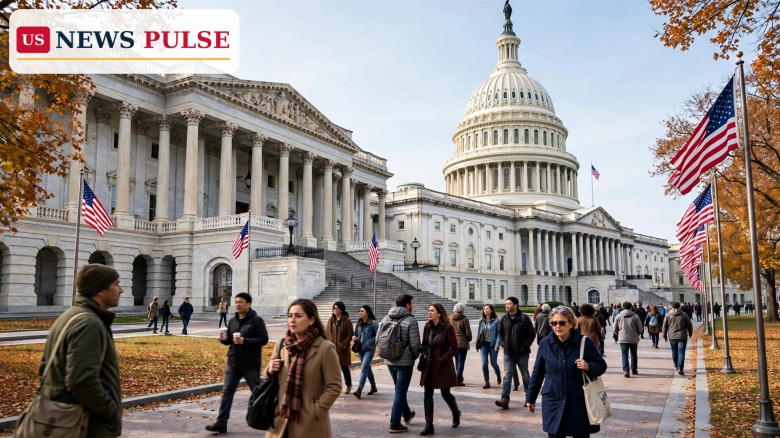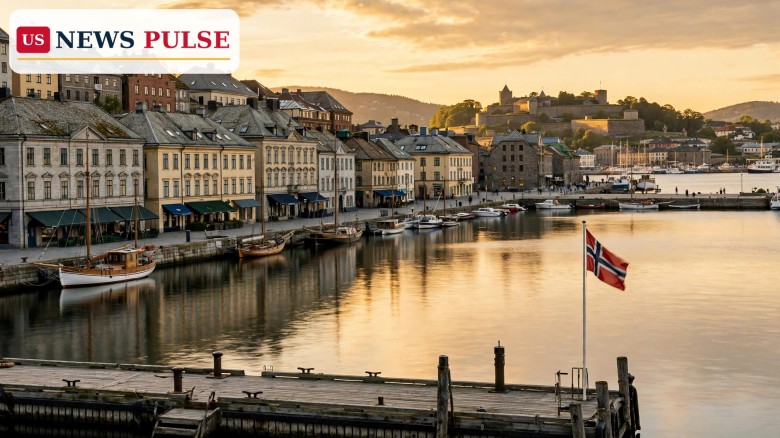
A Trump Norway Nobel Prize row has erupted one week before the United States midterm elections, after President Donald Trump used a campaign rally in Michigan to attack Norway over the Nobel Peace Prize, calling the country a "shithouse country" and saying he did not want Norwegian immigrants in the United States because its Nobel Committee had not given him the prize. Norway's government responded calmly on Monday, insisting that the committee which awards the prize is independent and that Oslo does not decide who wins it — a reply that has turned a rally outburst into an international talking point in the final days of a fiercely fought campaign.
Trump was speaking at a campaign rally at McMorran Place Arena in Port Huron, Michigan, on Sunday, October 25, when he turned to the subject of the Nobel Peace Prize — an award he has openly coveted since returning to the White House in January 2025. Addressing the crowd, he attacked Norway in blunt terms, drawing laughter from supporters, and tied the insult explicitly to the prize decision.
"Frankly, Norway sucks. Norway has become a shithouse country, actually," he said during Sunday's speech, according to Agence France-Presse and other outlets reporting from the rally. He went on to say that he would welcome immigrants from certain countries but not Norway "because I didn't get the Nobel Prize".
"So I don't want anybody from Norway," he said. "I don't want anything to do with Norway."
The remarks were made in the Michigan town of Port Huron ahead of the crucial midterm elections on November 3, in which Americans will decide control of Congress for the final two years of Trump's presidency, along with dozens of governorships and thousands of state offices. Trump has spent the final weeks of the campaign criss-crossing battleground states for Republican candidates, and his Michigan stop was part of that closing push.
Despite the rally rhetoric, there was no official indication of a new United States policy on Norwegian immigrants, according to AFP reporting on Monday. No executive order, proclamation or Department of Homeland Security announcement targeting Norwegian nationals followed the speech, and the White House did not immediately announce any change to immigration rules. That gap between rally language and formal policy is an important part of the story: what Trump said on stage does not, by itself, change who can enter the United States.
Trump has made no secret of his desire to win the Nobel Peace Prize since returning to office in January 2025. He has repeatedly argued that his record of brokering ceasefires and settlements entitles him to the award, and he has complained publicly and privately about being overlooked. When this year's prize was announced on October 9, it went instead to Pillay, the South African jurist and former United Nations rights chief, recognised for her work upholding international law.
Trump's response to that announcement was swift and scathing. He called the committee's choice "a disgraceful and embarrassing decision" and argued that the award should have gone to him. At the Port Huron rally he returned to the theme, asking the crowd: "I said 'What about me? Do they do two of them?' Think of it, I settled, so I'm not in love with Norway." He was also reported, in coverage citing the New York Times, to have dismissed Pillay as "a woman nobody had ever heard of".
The language itself has a history. Trump came under fire in 2018, during his first term, after using similar vulgar expressions to refer to Haiti and certain African countries in a meeting about immigration — remarks that drew condemnation from governments around the world and from members of Congress in both parties. The New York Times noted the contrast with his first-term posture toward Norway itself: he was then courteous toward the country, describing it as a place the United States should accept more immigrants from. On Sunday, that warmth was gone.
Norway's position, as its government has repeated for years, is that the Nobel Peace Prize is not a government award. The Nobel Committee operates independently of the Norwegian government, which does not decide who receives the prize. That independence is the point Oslo returned to on Monday, rather than matching Trump's language.
The heart of the Trump Norway Nobel Prize dispute is a simple institutional fact that Norway's leaders keep restating: the government in Oslo does not pick the Peace Prize winner. The committee that makes the choice acts independently, and Norwegian officials say they have reminded Trump of that fact before.
That is why Foreign Minister Eide's response was deliberately low-key. Rather than escalating the row, he treated the independence of the committee as settled and uncontroversial — something Trump himself already knows. "He knows very well that the Nobel Committee is independent," Eide told NRK on Monday. "We have reminded him of that, in case anyone is wondering, and that is still the case."
The calm tone matters. Norway brushed aside the sharp criticism on Monday, according to AFP, saying it has no involvement in deciding the winners of the prize. In Norway, the reaction was reported as bewilderment and exasperation among top officials, who have repeatedly said they do not influence who is awarded the prize. There was no suggestion from Oslo of retaliation, of a diplomatic protest, or of any change in Norway's own policies toward the United States.
For Trump, the prize has become a recurring grievance. He has openly jockeyed for it for about a decade, mentioning it in dozens of interviews and speeches and complaining about it privately, according to the New York Times account summarised in coverage of the row. The 2026 award to Pillay — announced two weeks before the Port Huron rally — gave that grievance a fresh target, and Norway, as the home of the Peace Prize, became the stand-in for the committee's decision.
Norway's official reaction came from its foreign minister, and it was notably restrained. Eide's NRK interview on Monday is, so far, the fullest government response: a reminder of the committee's independence, delivered without insults in return and without any hint of a policy consequence.
That restraint has been widely noted in coverage of the row. Where Trump's rally remarks drew laughter from his supporters in Port Huron, the Norwegian response drew on a familiar diplomatic playbook: do not take the bait, restate the facts, and let the story pass. Officials in Oslo have, in the words of the New York Times account, met the remarks with bewilderment and exasperation rather than anger — a tone that reflects both the absurdity, from Norway's perspective, of being blamed for an independent committee's choice, and the value Norway places on its long alliance with the United States.
There has been no indication that the row has affected practical cooperation between the two countries. Norway remains a close American ally, and nothing in the Norwegian response suggested any review of that relationship. The story, for now, is a political one: a president venting a personal grievance on the campaign trail, and a small allied country politely declining to own a decision it did not make.
Back in the United States, the remarks fit a pattern of the campaign's final week, in which Trump has used rallies to air grievances and energise his base. Whether the Norway attack helps or hurts that effort is a matter of political judgement: supporters in Port Huron laughed, but the clip has also travelled widely, giving Democrats and commentators a fresh example of the president's language about an ally.
The row matters for three reasons. First, it touches an ally. Norway is a long-standing partner of the United States, and presidential attacks on allies — even rhetorical ones — are noticed in foreign capitals, where they are read as signals about American reliability. A calm Norwegian response limits the damage, but it does not erase the headline.
Second, it illustrates the gap between campaign rhetoric and policy. Trump said he did not want Norwegian immigrants, but no policy followed. Voters, journalists and foreign governments are left to judge which of the president's rally statements will become action and which will remain applause lines. That ambiguity is itself a feature of the campaign's closing days, when the president is speaking several times a day to partisan crowds.
Third, it shows how personal the 2026 campaign has become. A dispute about a peace prize — an award given by an independent committee to a South African jurist for upholding international law — has become a campaign-trail attack on an entire country. That personalisation of foreign policy, from the prize to the countries associated with it, is part of why the clip has travelled so far beyond Michigan.
It also matters because of timing. With one week to go before November 3, every rally line is amplified, clipped and shared. The Norway remarks arrived in the same final stretch as Trump's Texas double-header, his $1 million voter-fraud reward offer, and a flurry of late polls showing a tight race for control of Congress. In that environment, even a detour into Nobel grievance becomes part of the national conversation.
Watch first for any White House clarification. If the administration treats the Port Huron remarks as pure campaign rhetoric, the story is likely to fade within days, as rally lines often do. If any official step toward Norwegian nationals were announced — and none has been so far — that would transform the row from a diplomatic embarrassment into a policy fight, with legal and congressional consequences.
Watch second for further comment from Oslo. Norway's government has said its piece for now, but if Trump repeats the attack at another rally, officials may be pressed again. A second, sharper Norwegian response would signal that patience is wearing thin; continued calm would signal a deliberate decision to wait out the campaign.
Watch third for the campaign trail itself. Trump is due to continue rallying through the final week, and the Nobel grievance may resurface — either as a repeated applause line or, if the reaction grows, as something his campaign decides to drop. Either way, the prize row has already secured its place in the closing chapter of the 2026 campaign: a reminder that, in this election, even a peace prize can become a political weapon.
Related coverage: Trump's Texas rallies: Paxton, methane plan and a Talarico surge on Oct. 27; Trump's $1 million voter fraud reward: tips must lead to arrest and conviction; Israel election 2026: Netanyahu fights for survival as Israel votes today.
Trump attacked Norway at a Port Huron, Michigan, rally on October 25, 2026, because its Nobel Committee did not award him the 2026 Nobel Peace Prize. He said: "Frankly, Norway sucks. Norway has become a shithouse country, actually," and said he did not want Norwegian immigrants because "I didn't get the Nobel Prize".
South African judge and former United Nations human rights chief Navi Pillay, 85, announced on October 9, 2026, in recognition of her work upholding international law. Trump called the choice "a disgraceful and embarrassing decision" and argued the award should have gone to him.
No. The Nobel Committee operates independently, and the Norwegian government does not decide who receives the prize. Foreign Minister Espen Barth Eide restated this on October 26, telling NRK: "He knows very well that the Nobel Committee is independent."
There is no official indication of any new United States policy on Norwegian immigrants. Trump's remarks were made at a campaign rally, and no executive order or Homeland Security announcement targeting Norwegian nationals followed the speech.
The row landed in the final week before the November 3, 2026, midterms, when every rally line is amplified nationally. It touches an American ally, illustrates the gap between campaign rhetoric and policy, and shows how personal grievances — even over a peace prize — have become part of the campaign.
Sources: Agence France-Presse via Daily Sabah, New Indian Express, Vanguard and Bangkok Post, October 26, 2026; New York Times reporting summarised in People and TFI coverage, October 26-27, 2026; Mathrubhumi English, October 26, 2026.
Leave a Comment



 | Today's Date: