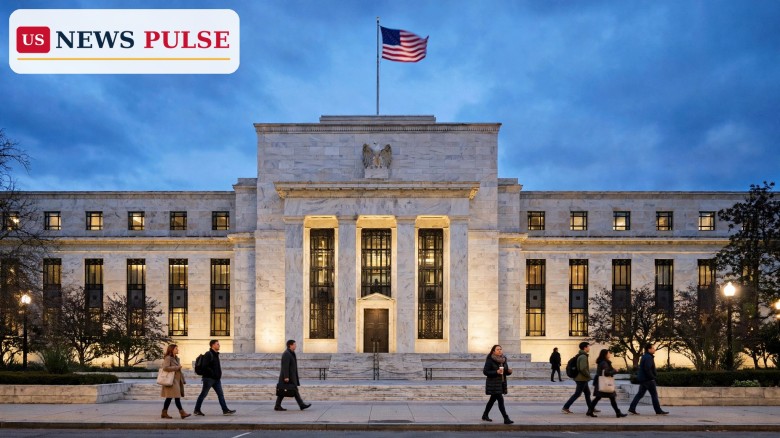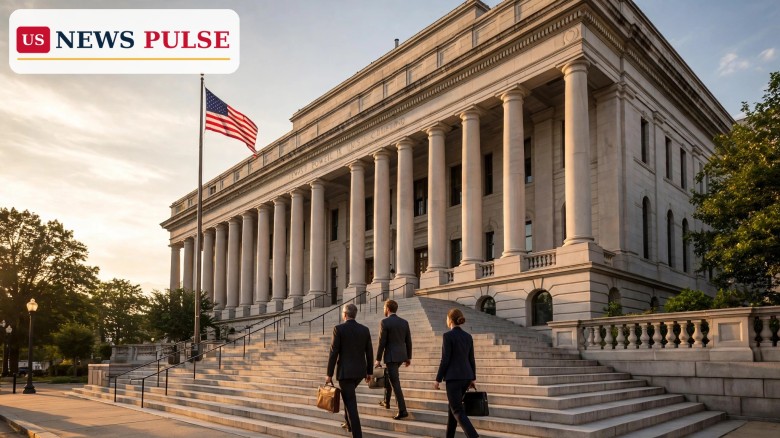
The Maryland judges lawsuit returned to the spotlight on Friday, October 30, 2026, when President Donald Trump's administration urged a federal appeals court in Richmond, Virginia, to revive its extraordinary case against every federal judge in Maryland. The Justice Department argued that a court order briefly pausing deportations unlawfully blocks immigration enforcement, while several judges on the three-judge panel openly questioned whether one branch of government may sue another at all. The hearing, in the case known as United States v. Russell, put the separation of powers itself on trial just four days before the November 3 midterm elections, in a dispute that began with a two-business-day pause designed to give detained migrants time to challenge their removal in court.
On Friday morning, a three-judge panel of the Richmond-based 4th US Circuit Court of Appeals heard oral argument in United States v. Russell, No. 25-2004. The Justice Department is appealing the dismissal of its June 2025 lawsuit against the entire federal bench in Maryland, including the district's clerk. Because every Maryland judge was named as a defendant, the case was assigned to US District Judge Thomas Cullen of the Western District of Virginia, a Trump appointee sitting by designation. Cullen dismissed the suit on August 26, 2025, calling it part of an "unprecedented and unfortunate" broader campaign to "smear and impugn" judges who rule against the administration's policies.
At Friday's argument, Welch told the panel that the lower court had improperly thrown the case out. She conceded the dispute between the executive and judicial branches may be unique, but insisted the government still has authority to bring such a case to protect its sovereign interests. "The injury is that the standing order, the local rule, enjoins the federal government from executing immigration enforcement," Welch said, framing the two-day pause as a direct restraint on the president's immigration powers rather than a routine case-management rule.
The panel pushed back hard. Judge Stephanie Thacker, an appointee of Democratic President Barack Obama, balked at the government's attempt to describe the lawsuit as anything other than one co-equal branch suing another. "This is against an entire court," Thacker told Welch. "This is the executive branch versus the judicial branch. I don't see a limiting principle to your position." The question matters because, if the government can sue a whole court over a rule it dislikes, there is little to stop future administrations from suing judges over any ruling or procedure they oppose.
Judge Marvin Quattlebaum, appointed by Trump and the only Republican appointee on Friday's panel, offered the administration a partial opening, saying "just because it's unprecedented doesn't mean it's wrong." But he then pressed Welch on the government's main legal anchor, the Supreme Court's 1895 decision in In re Debs, which the administration says allows it to seek injunctive relief to protect federal interests. Quattlebaum noted that many of the historical examples pursued under Debs involved private companies or individuals and were traditionally tied to property interests. "And if that's true, this seems to be, you know, perhaps outside of that, even if you can bring it against the judicial branch," he said.
The fight began in May 2025, when the US District Court for the District of Maryland adopted a standing order automatically blocking for two business days the removal of migrants in Maryland who filed new lawsuits challenging their detention. The order, signed by Chief US District Judge George Russell, cited a "recent influx of habeas petitions concerning alien detainees purportedly subject to improper and imminent removal from the United States." A habeas petition is a legal action challenging the legality of a person's detention, and in fast-moving immigration cases a removal can moot the challenge before a judge ever reads it.
Under the current version of the order, signed by Chief Judge George L. Russell III on December 1, 2025, a habeas petition for a detainee held in Maryland, certified as needing emergency relief, bars the government from removing that person from the continental United States until 4 p.m. on the second business day, and suspends any status change that would strip the court of jurisdiction. The assigned judge can extend, shorten or dissolve the pause in an individual case. In practical terms, the rule buys a detained person a long weekend at most, not a permanent shield against deportation.
Rather than challenge the order in an individual immigration case, the Justice Department sued every federal judge in Maryland, arguing the policy unlawfully interfered with the executive branch's authority over immigration enforcement. The department filed the lawsuit in June 2025, weeks after the order took effect. Cullen's 39-page dismissal rested on judicial and sovereign immunity and on the absence of any cause of action for one branch to sue another in this way. His advice to the government was straightforward: appeal in individual habeas cases, or ask the Fourth Circuit's Judicial Council to change the rule.
The appeal has taken an unusual path of its own. In January, the government said the revised December order superseded the ones it had sued over, and asked to drop the appeal and vacate Cullen's opinion; the Fourth Circuit denied that motion in February, according to the University of Michigan's Civil Rights Litigation Clearinghouse. Friday's argument therefore concerned a live dispute over a rule that has already been revised once, with the underlying question, whether a court may be sued over its own procedures, still unresolved.
The Maryland judges lawsuit is best understood as one front in a much larger confrontation between the Trump administration and the federal courts over immigration enforcement. The administration has repeatedly argued that district judges have used nationwide injunctions, standing orders and emergency rulings to slow deportations that the executive branch considers core presidential authority. Its critics, including Cullen himself, argue that suing judges personally is a pressure tactic designed to chill rulings the White House dislikes, and that the ordinary remedy for a bad order is an appeal in a real case, not a lawsuit against the court.
Friday's hearing arrived in a week crowded with immigration cases before the same court. On October 27, a different Fourth Circuit panel heard Virginia's appeal of the order blocking its ICE mask ban, a state law making it a crime for officers to hide their faces on duty. The two cases approach one question from opposite ends: whether a state legislature, or a federal court acting by standing order, can slow federal immigration enforcement. The answers will bind federal courts in Maryland, Virginia, West Virginia and the Carolinas, and they will shape how other states and cities write similar rules. The court sets no deadline for its opinions, and either case could eventually reach the Supreme Court.
The timing also matters politically. With the November 3 midterms four days away, immigration enforcement is among the most contested issues on the ballot, and the administration's courtroom strategy is itself a campaign talking point. A ruling reviving the lawsuit would hand the Justice Department a powerful new tool against judicial orders it opposes. A ruling affirming the dismissal would leave the two-day pause in place and push the government's objections into individual habeas appeals, case by case, exactly as Cullen recommended.
Paul Clement, a prominent appellate advocate retained to represent the federal judges, urged the appeals court to send a message by upholding the dismissal and preventing a future case like it from being filed. "The executive's extraordinary effort here to sue an entire judicial district in the name of the United States is a grave threat to the separation of powers that suffered multiple threshold defects," Clement said. In an earlier filing, the judges, represented by Clement, had called the Justice Department's case "misguided" and an "unprecedented overreach" that threatened further tensions between the administration and the judiciary.
Welch, for the government, framed the injury in concrete terms: the standing order prevents federal officers from carrying out removals the law authorises. Her argument rests heavily on In re Debs, the 1895 decision in which the Supreme Court allowed the federal government to seek an injunction against the Pullman strike to protect interstate commerce and the mails. The administration argues that the same sovereign-interest logic lets it challenge a judicial order that blocks immigration enforcement. The panel's questions suggested scepticism that a case about a labour strike and property interests can be stretched to cover a suit by the executive against the judiciary itself.
Legal observers noted the unusual composition of the panel's scepticism. When both an Obama appointee questioning the limiting principle and a Trump appointee questioning the precedent press the same lawyer, the government faces a difficult path to a majority. Bloomberg Law reported that the panel "appeared skeptical" of the Justice Department's bid overall. That is not a ruling, and oral argument is often a poor predictor of outcomes, but the tone of Friday's questions gave the judges' side clear encouragement.
The stakes go well beyond two business days. If the Fourth Circuit revives the lawsuit, the executive branch would gain a precedent for suing judges over court rules, standing orders and perhaps individual rulings, a tool no administration has successfully wielded before. That would blur the line between appealing a decision, which the system already allows, and suing the decision-maker, which it has traditionally forbidden through judicial immunity. Judges who fear personal lawsuits may hesitate before issuing orders that slow the government, even when those orders protect a detainee's right to be heard before removal.
If the court affirms the dismissal, the Maryland pause survives, and the practical effect for detained migrants is modest but real: a guaranteed window in which a habeas petition cannot be defeated by a swift deportation. The ruling would also confirm that the government's remedy for an order it dislikes is the ordinary appellate process, in a case with a real plaintiff and a real record, rather than a frontal suit against a court. For a judiciary that has faced sustained public criticism from the administration, that confirmation would itself be a significant statement.
For migrants detained in Maryland, the outcome is immediate and personal. A two-day pause can be the difference between a hearing and a plane ticket. For the rest of the country, the case will set the template for how far an administration may go when it believes courts are standing in the way of its agenda, and how firmly courts may defend the procedures that keep their own doors open.
The Fourth Circuit panel will now deliberate, with no fixed deadline for a decision. A ruling could come in weeks or months, and the losing side is likely to seek rehearing by the full court or petition the Supreme Court. In the meantime, the December 2025 version of the Maryland standing order remains in effect, so detained migrants who file certified emergency habeas petitions in Maryland continue to receive the pause until 4 p.m. on the second business day.
Separately, the court's ruling in the Virginia ICE mask ban appeal, heard October 27, will arrive on its own schedule, and the Justice Department is pressing the same intergovernmental-immunity theory in its suit over Denver's ban on masked federal agents. Together, the Maryland and Virginia cases will define how much room states and courts have to slow federal immigration enforcement, and how much the executive branch can do to stop them. Watch for the panel's opinion in United States v. Russell, and for whether the Supreme Court is eventually asked to settle a question no court has squarely answered before: can the president sue the judges?
It is the Justice Department's June 2025 lawsuit against every federal judge in Maryland, challenging a standing order that pauses deportations for two business days when a detained migrant files a habeas petition. The case is United States v. Russell, No. 25-2004, now on appeal before the Fourth Circuit.
The administration argues the standing order unlawfully interferes with the executive branch's authority over immigration enforcement by blocking removals. Rather than challenge the order in an individual case, it sued the entire bench, a step the district court called unprecedented.
A three-judge panel heard the administration's appeal of the dismissal. Judges questioned whether one branch of government may sue another, whether there is a limiting principle to the government's theory, and whether the 1895 In re Debs precedent supports a suit against a court.
US District Judge Thomas Cullen, a Trump appointee, dismissed the case on August 26, 2025, citing judicial and sovereign immunity and the lack of a cause of action for one branch to sue another this way. He advised the government to appeal in individual habeas cases instead.
The case would return to the district court for litigation over the standing order's legality, and the executive branch would gain a precedent for suing courts over their procedures. If the dismissal is affirmed, the two-day pause stays in place and challenges proceed case by case.
Related coverage: a skeptical appeals court also greeted the Justice Department's voter initiative this week; new subpoenas in the Alaska Senate race probe; and the Houston indictment of an ICE officer after a vehicle struck a man.
Leave a Comment



 | Today's Date: