Daylight saving time ends on Sunday, November 1, 2026, and for most of the United States that means one simple instruction: set your clocks back an hour. At 2 a.m. local time, clocks fall back to 1 a.m., the 1 a.m. hour happens twice, and the country returns to standard time for the winter. The change lands the morning after Halloween, so families who stay out late on Saturday night, October 31, will wake on Sunday to brighter mornings, darker evenings and, for one night only, an extra hour in bed.
Most phones, computers and connected devices will make the change automatically. Manual clocks, wall clocks, car dashboards, ovens, microwaves and watches will not, so the practical advice from forecasters and timekeeping guides is the same every year: turn those clocks back one hour before bed on Saturday night, and check them again on Sunday morning. The change happens at 2 a.m. in each time zone, not at a single moment nationwide, so New York falls back first, followed an hour later in elapsed time by Chicago, then Denver, then Los Angeles.
The end of daylight saving time is not a surprise announcement or a last-minute decision. It follows a fixed federal rule: daylight saving time begins at 2 a.m. on the second Sunday in March and ends at 2 a.m. on the first Sunday in November. In 2026, that meant daylight saving time began on Sunday, March 8, when clocks sprang forward from 2 a.m. to 3 a.m., and it ends on Sunday, November 1, the first Sunday in November, when clocks go back from 2 a.m. to 1 a.m.
The most immediate effect is the extra hour. Anyone working, travelling or staying up through the early hours of Sunday will live through the 1 a.m. hour twice: first in daylight time, then again in standard time. For most people, who will be asleep, the change simply feels like a longer night and a Sunday that starts an hour later on the clock than the body expects.
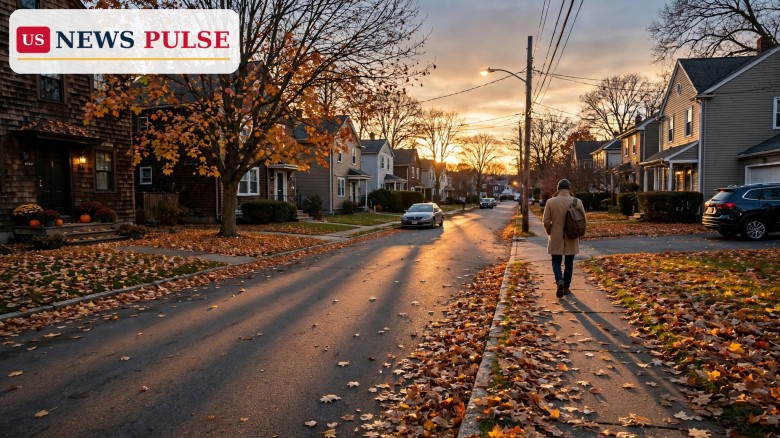
The second effect arrives by the afternoon. Sunrise and sunset will be about an hour earlier on November 1 than on the day before, so there will be more light in the morning and less light in the evening. Millions of residents in New York City, Chicago, Denver, Los Angeles and Seattle will see the sun set before 5 p.m. on Sunday, while Caribou, Maine, faces an early sunset at 4:16 p.m. Miami and Houston, by contrast, hold on to evening light past 5:30 p.m. The shift is the reason the weekend feels like a gear change even for people who barely notice the clock itself: the school run, the commute home and the evening walk suddenly happen in darkness.
That timing also matters for the week ahead. Standard time will be in effect for the midterm elections on Tuesday, November 3, and for the whole winter that follows, until daylight saving time returns in March. Voters, campaign events and polling places will all operate on the new, earlier-light schedule.
Daylight saving time in the United States is set by federal law, not by each state inventing its own calendar. The Uniform Time Act, as amended, sets the current schedule, and the Energy Policy Act of 2005 fixed the modern pattern that has applied since 2007: the second Sunday in March to the first Sunday in November. The Department of Transportation oversees time zones, and the National Institute of Standards and Technology publishes the official dates, listing March 8 and November 1 for 2026.
The idea itself is far older than the current law. A common misconception is that daylight saving time was created to give farmers more daylight for outdoor work. That is not true. The earliest known proposal to save daylight came from Benjamin Franklin's "An Economical Project" in 1784, but Franklin did not create the system used today. The first true proponent, according to the Old Farmer's Almanac, was a London builder named William Willet, who noticed in 1907 that houses still had their shutters closed even though the sun had risen, and spent a small fortune lobbying for clocks to be put ahead in spring and back in autumn.
Countries began adopting the concept during the First World War to conserve fuel and resources. Germany adopted it in 1915, Britain followed in 1916, and the United States began observing the change in 1918, when Congress passed the Standard Time Act, which established time zones. The United States has argued about the clock ever since, with supporters pointing to evening daylight in summer and critics pointing to the disruption of moving the clock twice a year.
Under current federal law, a state can opt out of daylight saving time and stay on standard time all year, as Hawaii and Arizona do, but it cannot choose permanent daylight saving time on its own. That one-way rule is why the debate keeps returning to Congress: only a change in federal law can end the twice-yearly switch in favour of permanent daylight time.
Most of the country falls back on November 1, but the exceptions are important, especially for travellers. Hawaii does not observe daylight saving time, staying on Hawaii-Aleutian Standard Time all year, in part because its tropical latitude means sunrise and sunset vary little through the seasons. Most of Arizona stays on Mountain Standard Time all year, a choice often linked to avoiding extending searing desert heat further into late summer evenings.
The exception inside Arizona is the Navajo Nation, which extends across north-eastern Arizona, Utah and New Mexico and does observe daylight saving time, so it will turn its clocks back on November 1. The Hopi Reservation, which sits inside Navajo land, does not observe it, so travellers crossing tribal boundaries in Arizona should check the local community rather than assuming the whole state behaves the same way.
The five inhabited US territories also skip the change: Puerto Rico, Guam, the US Virgin Islands, American Samoa and the Northern Mariana Islands remain on standard time year-round. For everyone else, the rule is simple: fall back on November 1.
Arizona's position also changes its relationship with its neighbours. All summer, Phoenix was on the same clock time as Los Angeles. Starting Sunday, Phoenix is an hour ahead of Los Angeles and matches Denver instead, because California falls back while most of Arizona does not move. Anyone scheduling calls, flights or deliveries across that border on Sunday should double-check which time the other end is using.
The political argument over the clock has sharpened this year because the House has already acted. The Sunshine Protection Act, H.R. 139, was filed on January 3, 2025, by Representative Vern Buchanan of Florida's 16th District, who has brought the bill before each Congress since 2018. The bill would make daylight saving time the permanent standard in the United States, while allowing states to opt out and stay on standard time. The House voted 308-117 on July 14 to send it to the Senate.
In August, President Donald Trump urged senators to pass the bill "ASAP", saying Americans are "sick and tired" of changing their clocks twice a year. The Senate version, however, has been in limbo since the Senate referred it to the Committee on Commerce, Science, and Transportation on January 7, 2025, and the Senate has not yet voted on it. No change has therefore been enacted into law, and the November 1 fall-back goes ahead as scheduled.
Florida has led the state-level push. In 2018, Florida became the first state to pass legislation locking the clock to daylight saving time year-round, but that law requires an act of Congress to take effect, and annual bills to provide it have since failed to move. In addition to Florida, 18 other states, Alabama, Colorado, Delaware, Georgia, Idaho, Louisiana, Maine, Minnesota, Mississippi, Montana, Oklahoma, Oregon, South Carolina, Tennessee, Texas, Utah, Washington and Wyoming, have already passed legislation to make daylight saving time permanent if the law is signed.
Forecasters, meanwhile, have focused on the practical shock of the darker evenings. AccuWeather expert meteorologist Tyler Roys said: "The time change can really catch people off guard, especially when they're leaving work or picking up their kids and suddenly find themselves doing those activities after sunset." He added: "While we aren't actually losing an hour of daylight when the clocks change, shifting that daylight to the morning can make evenings feel much shorter."
The clock change matters first because it touches almost everyone at once. Sleep, school start times, work commutes, television schedules, flight times and the timing of evening activities all shift by an hour in a single night. An extra hour of sleep sounds like a gift, but the body clock does not always agree: children, shift workers and anyone with a rigid morning routine can feel the adjustment for several days, even though the total daylight in a day has not changed, only where it falls.
It matters second for safety on the roads and pavements. The most dangerous part of the change is not the lost or gained hour itself but the sudden darkness during the evening rush. Pedestrians, cyclists and children walking home after school or after sports practice are suddenly out in the dark at a time when, the day before, it was still light. Reflective clothing, lights on bicycles, extra care at crossings and slower driving in residential areas all matter more in the first week of standard time than they did in the last week of daylight time.
It matters third because the debate is no longer theoretical. The House has voted, by a large margin, to end the switch, the president has urged the Senate to act quickly, and 19 states have already passed legislation to lock the clock if Congress allows it. The fact that the clocks still fall back on November 1 shows how far that effort still has to go: a House vote, a presidential urging and state laws are not enough without a Senate vote and a signature. Until that happens, Americans will keep doing what they do this weekend, and again on March 14, 2027.
Finally, it matters as a planning fact. The November 1 change sets the rhythm for the winter: earlier sunsets, brighter mornings, and a different pattern for energy use, outdoor leisure and evening shopping. Businesses that depend on evening foot traffic, sports leagues that play under lights, and families planning after-school activities all build their winter schedules around the new sunset, not the old one.
The immediate next step is simple: check the clocks. Before bed on Saturday, October 31, turn back every manual clock by one hour, from 2 a.m. to 1 a.m. in effect, so that Sunday morning reads correctly. Phones and computers should update themselves, but it is worth glancing at a car clock or a kitchen clock on Sunday morning, because those are the ones most often left an hour fast for a week.
Over the following days, the adjustment is about light, not time. Plan evening travel, exercise and trick-or-treat follow-ups with the earlier sunset in mind, and give children and pets a few days to settle into the new morning and evening pattern. Drivers should expect more pedestrians in darkness during the evening commute, and pedestrians should assume they are harder to see than they were a week earlier.
In Congress, the next step is the Senate. The Sunshine Protection Act remains before the Committee on Commerce, Science, and Transportation, and unless the Senate votes on it and the president signs it, the current schedule continues: standard time through the winter, then clocks forward again at 2 a.m. on Sunday, March 14, 2027, when 2 a.m. jumps directly to 3 a.m. and daylight saving time begins once more.
For now, though, the message for this weekend is the one that has applied for decades: enjoy the extra hour on Saturday night, remember that Sunday's sunset comes an hour earlier, and do not be surprised when the evening that felt like late afternoon last week suddenly feels like night.
Daylight saving time ends on Sunday, November 1, 2026, at 2 a.m. local time, when clocks fall back one hour to 1 a.m. Standard time then runs until March 14, 2027.
You gain an hour. The night of October 31 to November 1 is one hour longer, because the 1 a.m. hour happens twice. Sunrise and sunset are then about an hour earlier than the day before.
Hawaii and most of Arizona do not change their clocks. The Navajo Nation does observe daylight saving time and will fall back. Puerto Rico, Guam, the US Virgin Islands, American Samoa and the Northern Mariana Islands also do not change.
Not yet. The House passed the bill 308-117 on July 14, 2026, but the Senate has not voted on it and it has not been signed into law, so the November 1 change goes ahead as scheduled.
Daylight saving time returns on Sunday, March 14, 2027, at 2 a.m., when clocks spring forward one hour to 3 a.m.
Related coverage on US News Pulse: Cross-Country Storm to Blast 35 States With Flooding, Snow and Halloween Rain, Phoenix Halloween Rain Forecast: First Wet October 31 in Nearly 40 Years and Thunderstorms Hit 19 States Today as NWS Warns of Heavy Rain, Wind and Hail.
Leave a Comment



 | Today's Date: