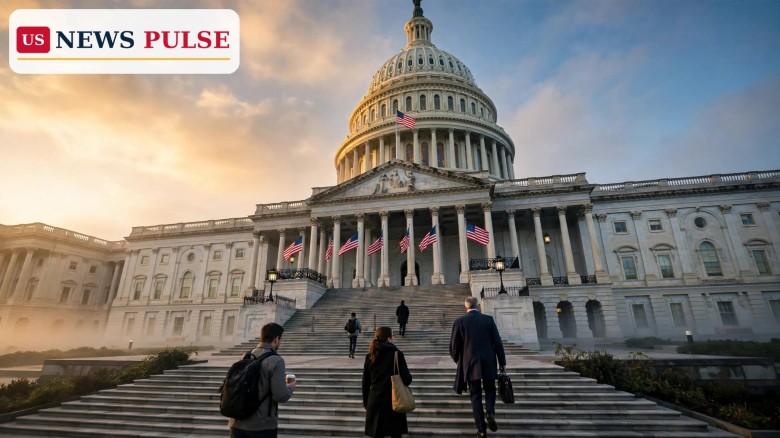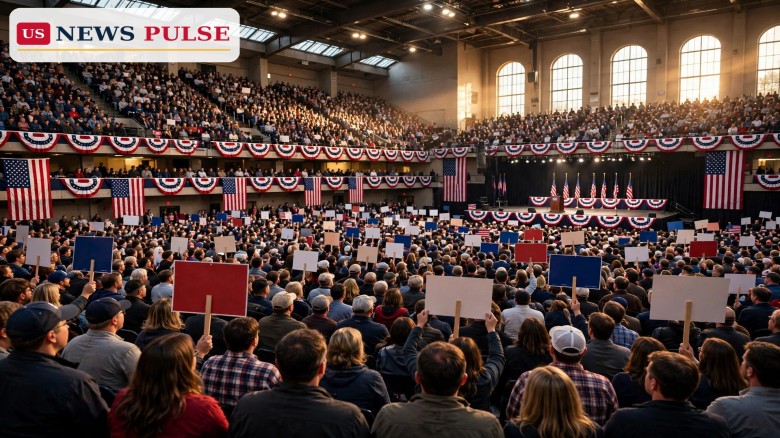
Trump Kansas Iowa rallies are back on. President Donald Trump will hold campaign rallies in Kansas and Iowa on Sunday, November 1, just two days before the November 3 midterm elections, reversing the abrupt cancellation of both events only a day earlier. The U-turn, confirmed on Friday, October 30, restores two of the most closely watched stops of the campaign's final weekend and puts the president back on the ground in two states where Republicans are defending Senate seats that were once considered safe.
The reversal capped a dizzying 24 hours in which the Republican National Committee first scrapped the weekend rallies in favour of telephone rallies, then scrambled to put them back on the calendar after Trump himself ordered the change. The episode has become a story in its own right: a window into the final-days tension inside the Republican campaign, the tightness of the Kansas and Iowa Senate races, and the risks of relying so heavily on one man's stamina and star power in the closing stretch.
On Thursday, October 29, the Republican National Committee announced that Trump had cancelled his planned weekend rallies in Kansas and Iowa. The Kansas event, for Senator Roger Marshall, had been scheduled for Saturday, October 31, in Salina. The Iowa event, for Representative Ashley Hinson, was scheduled for Sunday, November 1, in Dubuque. In their place, the RNC said Trump would hold a large number of tele-rallies reaching voters in nearly 20 states.
The announcement landed with a thud. Kansas and Iowa are states that have voted Republican for decades, and the idea that the president would skip them days before an election fed immediate speculation about whether Republicans had quietly given up on one or both races, or whether concerns about Trump's gruelling schedule were behind the change. Trump had already headlined more than two dozen rallies in the homestretch of the campaign, and his voice had turned hoarse in recent days as he maintained a breakneck pace of nightly appearances.
Less than 24 hours later, the plans changed again. A source familiar with the plans confirmed on Friday that the rallies were back on, and Trump himself addressed the reversal in the Oval Office on Friday afternoon. He said he had received calls from Republicans in both states asking him to reconsider.
"We have a couple of races that are very important, and they said if you could go, it would be better than a tele-rally," Trump said. "And I tried to talk them out of that. I said, 'What about a tele-rally?' But they asked me. So I'm going to go on Sunday."
Trump also pointed to Saturday afternoon college football games as a reason for moving the Kansas event to Sunday, consolidating both rallies into a single day of back-to-back appearances. Officials said the schedule had merely been rearranged to allow more time for Trump to dial into virtual events, and the RNC issued a short confirmation: "Rallies are BACK ON!"
The Kansas and Iowa rallies were never routine stops. Both Senate races have become unexpectedly competitive in a midterm cycle in which Democrats lead the national generic ballot by a wide margin and Republicans are defending a narrow 53-47 Senate majority. Democrats need a net gain of four seats to take control of the chamber, and while the map still favours Republicans, Kansas and Iowa have moved from afterthoughts to battlegrounds.
In Kansas, Marshall is seeking re-election against Democrat Adam Hamilton, a Methodist megachurch pastor. Kansas last elected a Democratic senator in 1932, and Trump carried the state by 16 percentage points in the 2024 presidential election. Yet multiple recent polls show Hamilton ahead. A Washington Post poll released Friday found Hamilton leading Marshall 52% to 43% among likely voters. A CNN poll found a narrower four-point Hamilton lead, within the survey's margin of error. The Real Clear Politics average has put the race essentially tied, with Hamilton ahead by a fraction of a point in some readings and Marshall ahead in others.
The CNN survey, conducted October 20-26 among 838 likely voters with a margin of error of plus or minus 4.5 points, also found that most Kansas likely voters view Marshall unfavourably, and that Hamilton draws support from about 12% of Republican and Republican-leaning voters. Other surveys have told a similar story of a close race: YouGov showed Hamilton up three points, a GBAO poll for Hamilton's campaign showed him up five, and an InsiderAdvantage survey gave Marshall a one-point edge.
In Iowa, Hinson, currently a member of the House, is running for the open seat of retiring Senator Joni Ernst against Democratic state Representative Josh Turek. Trump carried Iowa by 13 percentage points in 2024, but the Real Clear Politics average now has Hinson ahead by less than one percentage point. A Marist poll conducted October 8-11 had Turek ahead 48% to 45%, while an InsiderAdvantage survey from October 21-22 had Hinson ahead 47% to 45%. Prediction markets have also been split, with some narrowly favouring the Republicans in both states even as polling averages lean Democratic.
Trump's own standing complicates the picture. His approval rating is underwater in many of the states he is visiting, including Kansas and Iowa, according to state-level trackers cited in campaign coverage. In Kansas his net approval rating is around minus one point, while in Iowa it is around minus 20 points. That makes his appearance a double-edged sword: a powerful turnout tool for the Republican base, but also a potential drag with the independent voters both campaigns need.
The president's October schedule underlines how central he has become to the Republican closing argument. He headlined 25 rallies in October alone, including two in Texas on a single day and a stop in South Carolina on Thursday, October 29, for Senator Darline Graham. On Friday, October 30, he was scheduled to hold a rally in Daytona Beach, Florida, before spending most of the weekend at his Mar-a-Lago resort.
The Trump Kansas Iowa rallies reversal matters for three reasons. First, it signals that Republican campaigns in both states still want the president in person, despite the polling headwinds. Tele-rallies can reach more voters in less time, as the RNC argued on Thursday, but they cannot replicate the local news coverage, the crowd energy, or the get-out-the-vote surge of a rally in the final 72 hours. When candidates themselves ask the president to come, it is a sign they believe his presence helps more than it hurts.
Second, the episode shows how quickly the campaign's final-days strategy is being rewritten. The original plan was a 72-hour sprint of tele-rallies across nearly 20 states, including battlegrounds such as Michigan, Alaska, Texas and Iowa. The revised plan keeps most of those virtual events — Trump is still scheduled to hold at least 19 tele-rallies before Election Day, including several on Monday — but restores the two in-person stops that generated the most attention. The result is a hybrid closing argument: phone rallies for breadth, arena rallies for intensity.
Third, the cancellation and reinstatement exposed the sensitivity around Trump's schedule and stamina. When Trump initially scrapped the Kansas trip, he told reporters he did not feel he had to go to Kansas because Marshall was doing well, and he reacted sharply to a question about whether fatigue played a role, insisting he felt perfect. The speed of the reversal — staff who had just pulled the events off the calendar were sent scrambling to put them back on — suggests the political cost of the cancellation was judged higher than the cost of two more days on the road.
Trump's own words frame the story. On Thursday, he said: "I don't feel like I have to go to Kansas," and said Marshall was "doing well." On Friday, his tone shifted to one of obligation to the candidates who had asked for his help: "We have a couple of races that are very important, and they said if you could go, it would be better than a tele-rally. And I tried to talk them out of that. I said, 'What about a tele-rally?' But they asked me. So I'm going to go on Sunday."
RNC Chairman Joe Gruters defended the original tele-rally plan as a matter of reach. "Voters across the country want to hear from President Trump before Election Day, and this 72-hour sprint will be a huge boost in the closing days," Gruters said. The RNC's statement on Thursday said the tele-rallies would allow Trump to "reach more voters in the limited time left before polls close."
Some political operatives on the ground were initially relieved by the switch to tele-rallies, which tend to be more scripted and less unpredictable than arena events. Others warned that cancelling in-person stops in states where the races are tied risked signalling surrender. The reinstatement, reported by multiple outlets citing people familiar with the plans, was welcomed by Republican campaigns in both states, which had spent days preparing for a presidential visit before learning it was off, then on again.
Democrats, for their part, have treated the whiplash as evidence of Republican anxiety. With national polls showing Democrats ahead on the generic ballot and enthusiasm running higher among Democratic voters, the opposition's message in Kansas and Iowa is simple: even in states Republicans have dominated for a generation, the Senate is in play.
The Kansas and Iowa races matter because the Senate majority may hinge on seats nobody expected to be competitive. If Democrats win in Kansas — a state that has not sent a Democrat to the Senate since 1932 — it would be one of the great upsets of the modern midterm era and would dramatically change the arithmetic for control of the chamber. If they win in Iowa, where the open seat was supposed to be a straightforward Republican hold, it would confirm that the 2026 map is far wider than either party assumed at the start of the cycle.
For Trump, the rallies are also a test of his closing argument. He has made himself the centrepiece of the Republican campaign, telling supporters on Thursday: "We're going to have a strong Tuesday night." A strong showing in Kansas and Iowa would vindicate that strategy. Losses in either state, especially after a cancelled-then-restored visit, would invite a different conversation about whether the president's late-campaign blitz helped or hurt.
More broadly, the episode illustrates the central tension of the 2026 midterms: a president with deep support among the Republican base but weak approval ratings nationally, campaigning furiously in states where his party's candidates need both his voters and voters who are sceptical of him. Sunday's twin rallies will be watched as much for their crowds and coverage as for anything Trump says on stage.
Trump will hold the Kansas and Iowa rallies back-to-back on Sunday, November 1. The Kansas event was originally planned for Salina Regional Airport, and the Iowa event for the Five Flags Center in Dubuque, though reports on Friday noted that no new Kansas location or timing had been publicly confirmed at the time of the reinstatement, and it was unclear whether the Dubuque venue remained the plan. Campaigns typically confirm final venues and doors times closer to the event.
After Sunday, Trump is scheduled to hold several tele-rallies on Monday, November 2, as he closes out the election, including one for Louisiana's Republican Senate candidate. Early voting is already under way in many states, and Election Day is Tuesday, November 3. Results in Kansas and Iowa are expected to be among the most closely watched of the night, and either race could remain too close to call into Wednesday if margins are as tight as the polls suggest.
Watch also for the final round of polls over the weekend. If Hamilton's lead in Kansas holds or grows, or if Hinson's narrow edge in Iowa slips, the narrative of the final weekend will shift again — and Sunday's rallies will be remembered either as the moment Republicans steadied two wobbling seats, or as a last-minute rescue mission that arrived too late.
Are Trump's Kansas and Iowa rallies happening? Yes. After cancelling them on Thursday, October 29, Trump confirmed on Friday, October 30, that both rallies will take place on Sunday, November 1.
Where were the rallies originally scheduled? The Kansas rally was set for Saturday, October 31, in Salina, and the Iowa rally for Sunday, November 1, in Dubuque. Both are now scheduled for Sunday, with final venue details to be confirmed by the campaigns.
Who are the candidates in Kansas and Iowa? In Kansas, Republican Senator Roger Marshall faces Democrat Adam Hamilton. In Iowa, Republican Representative Ashley Hinson faces Democrat Josh Turek for the open seat of retiring Senator Joni Ernst.
Why were the rallies cancelled in the first place? The RNC said the change would allow Trump to hold tele-rallies reaching voters in nearly 20 states during the final 72 hours, reaching more voters than in-person stops could in the limited time left.
When is Election Day? The 2026 midterm elections are on Tuesday, November 3, when voters will decide control of the House and Senate as well as state and local offices.
Related coverage: Trump's Texas rallies and the tightening Senate race there and Trump's $5,000 dividend promise back in the spotlight before the midterms.
Leave a Comment



 | Today's Date: