United States Central Command has denied an Iranian navy claim that it destroyed an American unmanned surface vessel east of the Strait of Hormuz, saying every US sea drone in the Middle East is accounted for. The denial, issued on Friday, October 30, 2026, landed hours after President Donald Trump said the United States is in no rush to reach a deal with Iran, arguing that Tehran's economic troubles mean Washington can afford to wait.
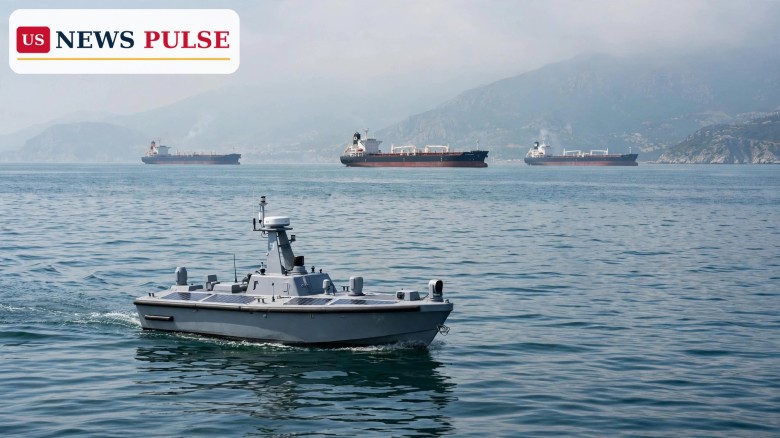
The exchange began on Friday when Iran's navy said, according to state media cited by Reuters, that it had destroyed an unmanned vessel moving through its operational area east of the strategic waterway. The claim was carried in live coverage of the US-Iran war on October 30, 2026, but it initially carried no confirmation from the United States and no detail about where exactly the vessel was struck, what weapon was used, or what became of the wreckage.
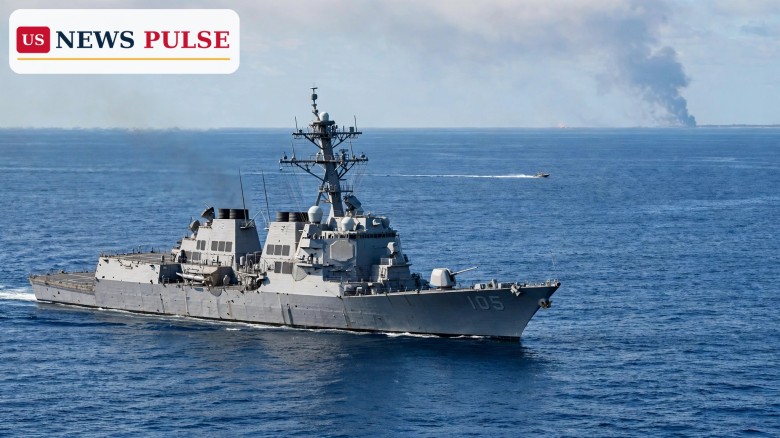
Hours later, CENTCOM answered directly on social media. “All US military unmanned surface vessels in the Middle East are accounted for, including a squadron of advanced sea drones on patrol in the Strait of Hormuz supporting CENTCOM's defensive layer,” the command said. The wording was unusually specific: rather than issuing a general denial, CENTCOM pointed to the very drone squadron that patrols the strait, the same squadron its commander, Admiral Brad Cooper, had described earlier on Friday during an aerial survey of the waterway.
Cooper had said the primary internationally recognised transit routes through the Strait of Hormuz had been cleared of Iranian sea mines and that commercial vessels were sailing freely. “When I flew over the strait, I saw dozens of commercial vessels transiting — all types: cargo, crude oil, liquid natural gas, or LNG. And I also saw our US assets in the air and on the water, including a squadron of advanced sea drones that were on patrol, supporting a defensive layer,” he said. He added that he did not see Iran's Islamic Revolutionary Guard Corps (IRGC) out on the water at all, saying: “They patrolled the Strait of Hormuz and surrounding waters for decades, harassing and threatening and seizing commercial vessels at will. But they were not out there because Iran's navy is all at the bottom of the sea.”
Cooper also announced a milestone in the economic campaign around the strait: US forces and Gulf partners have now assisted in exporting more than 1.5 billion barrels of crude oil since the summer, while, he said, the blockade on Iranian ports has prevented Iran from exporting any oil. “We've prevented Iran from exporting any oil because of the ironclad blockade on Iranian ports,” Cooper said, crediting the more than 50,000 service members supporting operations across the Middle East.
The Strait of Hormuz, the narrow channel between Iran and Oman that links the Persian Gulf to the open ocean, is one of the world's most important oil chokepoints, and it has been at the centre of the US-Iran confrontation for seven months. The war, which began with strikes on Iranian nuclear sites in June 2025 and escalated again in February 2026, has settled into a grinding contest over shipping, sanctions and the strait's transit routes, with both sides using claims about incidents at sea as part of the wider information war.
Friday was a crowded day on that front even before the sea-drone claim. The IRGC navy said two oil tankers were stopped south of the strait after ignoring radio warnings and trying to use an unauthorised route. The United Kingdom Maritime Trade Operations (UKMTO) had reported on Thursday that a tanker transiting the strait was targeted by a small boat that attached two explosive devices to its hull, triggering an engine-room fire; the fire was brought under control, the crew remained safe, and the tanker continued to its next port. Iran's armed forces then said four tankers caught fire after hitting mines, three of them described as “violating oil tankers” that had switched off radar and navigation systems, and a fourth east of the strait in what Tehran called a restricted and dangerous area.
Oil markets reflected the tension. Brent crude climbed above $115 a barrel in early Friday trading, gaining 86 cents, or 0.75 percent, to $115.74, while US West Texas Intermediate rose 72 cents, or 0.71 percent, to $102.72. Both benchmarks were heading for a fourth consecutive monthly gain, with Brent set to rise nearly 14 percent in October and WTI around 15 percent, as Houthi attacks on Saudi energy sites added to supply fears.
Diplomacy has run in parallel with the naval confrontation. Qatari mediators returned to Tehran on Friday as part of a renewed push, coordinated with Washington, to broker an agreement and head off another round of American strikes. Qatar had presented Iran with a draft proposal on Sunday, but a senior Iranian official rejected it as unacceptable to Tehran. The central disagreement is over sequence: Washington insists Iran's nuclear programme be discussed from the outset, while Tehran demands the US lift its blockade of Iranian ports and remove sanctions on Iranian oil exports before talks can move forward.
Vice President JD Vance has also written to Mohsen Rezaei, secretary of Iran's Supreme National Security Council, exploring a framework for negotiations and, according to reports, offering to meet Rezaei personally. Trump said on Thursday that the letter concerned the delivery of medical equipment to Iran, a narrower characterisation than the negotiating-framework accounts in US media. Vance, speaking at a Fox News town hall in Fort Worth, Texas, defended the campaign and said Trump would not let the Iran conflict turn into a “forever war”, recalling his own military service in Iraq when he acknowledged frustration over Middle East misadventures.
Unmanned surface vessels have become a visible part of the US posture in the Gulf, and that is precisely why a claim about one carries weight. The drones patrol, watch and extend what CENTCOM calls a defensive layer around commercial shipping; a confirmed kill would suggest Iran can still reach into that layer despite months of strikes on its navy. A false claim, on the other hand, is a low-cost way to project capability at a moment when Cooper says the IRGC is absent from the strait and Iran's navy has been badly damaged.
The denial matters for a second reason: it is checkable in a way many wartime claims are not. CENTCOM did not merely say the report was wrong; it said every vessel is accounted for, including the strait patrol squadron. If a drone were missing, that accounting would eventually be difficult to sustain, and the specificity of the statement raises the cost of bluffing for Washington as well as for Tehran. For now, though, neither side has produced the kind of evidence — wreckage, video, a hull number, a location — that would settle the matter independently, and readers should treat both claims with that caution.
The timing also matters. The claim and the denial arrived four days before the November 3 midterm elections, with Trump having already said the US would not launch further strikes against Iran before the vote. A confirmed Iranian success at sea would have complicated that pause; a denied claim, answered quickly, lets the administration keep the focus on its argument that the blockade and the naval campaign are working, with shipping moving and Iranian oil exports stopped.
Trump's Oval Office remarks on Friday evening were the fullest statement of the administration's current posture. Speaking during a meeting with Stephen Hubbard, an American citizen recently released from prison in Russia, he was asked for details about the Iran talks and replied: “There are talks. They want to talk. They keep talking, but look, they're not paying their soldiers. They're not paying their police officers. You know, they're in big trouble, and we have time.” The remark, reported by The Jerusalem Post, is the clearest signal yet that Washington believes time is on its side as economic pressure mounts on Tehran.
On the cost of the campaign, Trump dismissed critics directly. “I heard somebody say we're wasting money,” he said. “I spent a lot of money to get rid of nuclear weapons, and that's what we did. But every dollar we spent in Iran, we got back many times over through what we did in Venezuela.” He added: “Frankly, it's a war, but it's not a typical war. We've been there for seven months. We're spending very little money, relatively speaking.” He also claimed US operations in Venezuela had generated hundreds of billions of dollars for the United States, although he offered no figures to substantiate that claim.
Trump paired the patience message with a familiar warning. In an interview with Kansas City radio station KCMO, he said the war is “going to get wrapped up soon” and added: “We need a guarantee there'll never be a nuclear weapon.” He announced no breakthrough in the talks and made no commitment to refrain from further military action, keeping both the diplomatic track and the threat of renewed strikes alive at once.
Iran's own messaging pointed in the opposite direction. Its Foreign Ministry spokesperson, Esmaeil Baghaei, accused the UN Special Rapporteur on human rights in Iran, Mai Sato, of presenting a misleading account after she told the UN General Assembly that the scale of human rights violations in Iran was “extraordinary”. Baghaei called the mandate “deeply misleading and profoundly disingenuous” and accused the UN mechanism of being used to “whitewash aggression, atrocities, and unilateral coercive measures”. Separately, US Ambassador to the United Nations Mike Waltz urged Iran to cooperate with the International Atomic Energy Agency, telling the Iranian delegation: “Your lies are no good here.”
For American voters days from an election, the sea-drone episode is a small incident with a large subtext. It tests whether the administration's account of the war — shipping protected, the strait open, Iran's navy broken, Tehran's economy buckling — still holds under challenge. A credible Iranian strike would puncture that account; a claim that collapses under a specific denial reinforces it. Either way, the burden of proof now sits with Tehran, which has yet to produce evidence for its claim.
For the region, the episode shows how much of the war is now fought over the strait itself: mines and mine-clearing, blockades and tanker stops, drone patrols and claims about them. With Brent crude above $115 and Houthi attacks on Saudi energy sites continuing — the group claimed strikes on the Ras Tanura and Rabigh refineries, an Aramco facility in Abqaiq and airports in Riyadh and Dammam, without immediate confirmation from Saudi authorities — any incident in the strait can move oil prices and shipping insurance within hours.
For diplomacy, Trump's “we have time” line reframes the negotiation. It suggests Washington will not pay a premium for a quick deal, and that it expects Iran's unpaid soldiers and police, its blocked oil exports and its battered navy to do the persuading. That strategy carries its own risk: if Tehran concludes that waiting only deepens the blockade, it may escalate at sea instead, as the tanker incidents and mine claims of the past two days suggest it still can.
The immediate question is whether Iran produces evidence for its sea-drone claim — imagery, wreckage or coordinates — or lets it fade. A second claim, or a verified incident, would force CENTCOM to respond again and could change the assessment of how much capability Iran retains in the strait. Silence, by contrast, would leave the denial as the last word on this incident.
The diplomatic track moves next through the Qatari channel in Tehran, where mediators are testing whether the sequence dispute — nuclear talks first, or blockade and sanctions relief first — can be bridged, and whether Vance's letter to Rezaei opens a direct channel with authority to negotiate on nuclear issues. Any meeting between Vance and Rezaei, or any new draft proposal, would be the first concrete sign of movement beyond the current exchange of positions.
The military calendar points past the election. Trump has ruled out further strikes before November 3, but has not decided, according to senior officials cited in recent reporting, on a possible short, intense operation after the vote, and US forces have repositioned assets, restocked munitions and prepared aircraft and bombers while the diplomatic track runs. The next US statement on the strait — whether a further denial, a new incident report or a negotiating announcement — will show which track is winning.
Iran's navy claimed it destroyed an unmanned enemy vessel east of the strait on Friday, October 30, 2026. US Central Command denied the claim the same day, saying all US unmanned surface vessels in the Middle East are accounted for. Neither side has publicly produced wreckage or imagery, so the claim remains unverified.
Speaking in the Oval Office on Friday evening, Trump said the US is in no rush for a deal, arguing Iran is in big trouble, is not paying its soldiers or police officers, and that Washington has time. He also said the war could be wrapped up soon, but only with a guarantee Iran never gets a nuclear weapon.
According to CENTCOM chief Admiral Brad Cooper, the primary transit routes have been cleared of Iranian sea mines and dozens of commercial vessels, including cargo, crude oil and LNG carriers, were transiting unimpeded when he flew over the strait. Iran, however, says tankers have hit mines and been stopped for using unauthorised routes.
The two sides disagree on sequence. Washington wants Iran's nuclear programme discussed from the outset; Tehran wants the US blockade of its ports lifted and sanctions on its oil exports removed before talks move forward. Qatari mediators are in Tehran trying to bridge that gap.
Trump has said there will be no further strikes before the November 3 midterm elections, but he has made no commitment beyond that, and recent reporting says officials have been told to plan for a possible short, intense operation after the vote while diplomacy continues.
Related coverage on US News Pulse: Trump says Iran war will be wrapped up soon as mediators return to Tehran and US Iran strike plans: forces ready within 96 hours of Trump order, reports say.
Sources for this article: The Jerusalem Post, October 30-31, 2026; The Times of India live coverage of the US-Iran war, October 30-31, 2026, citing Reuters and CENTCOM statements; UKMTO advisories, October 30, 2026.
Leave a Comment



 | Today's Date: