Russian AI deepfakes using the names and photographs of real people are spreading false claims about two Democratic Senate candidates in the final days before the November 3 midterm elections, researchers and fact-checkers say, in what experts describe as a familiar foreign-influence playbook supercharged by artificial intelligence. The videos target former Senator Sherrod Brown in Ohio and state Representative James Talarico in Texas, two races that could help decide which party controls the Senate next year.
The Associated Press reported on October 28 that social media videos believed to be produced with AI and linked to Russia were misusing real people's identities to spread disinformation about both candidates. The claims in the videos are fabricated, researchers say, and the real people whose identities were used have said the material attributed to them is false. Yet the clips travelled widely before platforms acted, and copies were still circulating days later — a pattern that worries researchers precisely because early voting is already under way and millions of ballots have already been cast.
The two videos surfaced in the closing stretch of a midterm campaign in which Republicans hold the Senate 53-47 and Democrats need a net gain of four seats to take control. In Ohio, Brown, who lost his seat in 2024, is trying to return to Washington against Republican Senator Jon Husted. In Texas, Talarico, a state representative and former teacher, is challenging Republican Attorney General Ken Paxton for a seat Democrats have not won statewide since 1994. Both races are rated toss-ups, and recent polling has shown both contests within a few points, with different surveys producing different leaders.
The video aimed at Brown, according to the AP, depicts a newscast and includes pictures of Akbik, who interned for Brown several years ago, along with other former staff members. Akbik told the AP she was appalled by the clip. "It's my name, it's my reputation, making this allegation, and it's just completely false," she said. "And it harms the senator, someone else, in the process. So, it's just messed up." She added that the episode shows the importance of Congress regulating what she called "AI slop on the internet," adding: "This is so damaging."
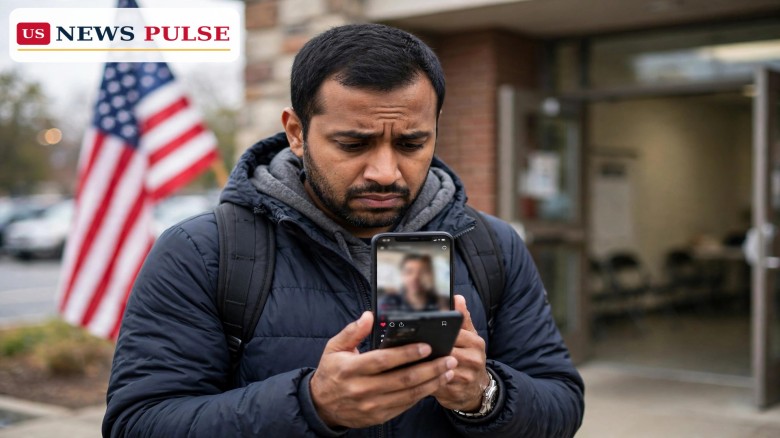
The video aimed at Talarico was posted to X on October 20 by an account created in September 2026 with Romania listed as the signup country, according to NewsGuard. It purported to show a former student of Talarico's at Rhodes Middle School in San Antonio making damaging claims about his time as a teacher. NewsGuard, PolitiFact and Lead Stories each investigated the clip and concluded it was fabricated: the man in the video is an AI-generated impersonation, and the real former student told Lead Stories on October 21, "I've looked at it, and it's not me." PolitiFact gave the claim that the video showed a genuine former student accusing Talarico of misconduct its strongest falsehood rating, "Pants on Fire."
The Talarico videos drew more than 850,000 views within 24 hours, according to threat-intelligence firm Alethea, cited in later reporting. Talarico's campaign responded in force. "The most powerful people in the world know they can't beat James Talarico with the truth, so they're slandering him with AI deepfakes, foreign bots, and conspiracy theories to protect their broken, corrupt political system," spokesperson JT Ennis said in a statement carried by the AP.
X took down the initial posts that shared the videos and suspended the users for violating the platform's rules, the AP reported. But containment proved difficult: copies could still be found online days later, some with hundreds of shares. That gap between removal and circulation is now a central part of the story, because a fabricated video does not need to stay up for long to reach hundreds of thousands of people, and because screenshots and re-uploads can outlive the original post indefinitely.
Researchers say the new videos bear the hallmarks of Storm-1516, a Russian-linked influence network documented by Microsoft's Threat Analysis Center, the Royal United Services Institute and NewsGuard. The network specialises in fabricated videos posted from newly created accounts, often impersonating real people or mimicking news broadcasts, and amplified by networks of accounts that have previously circulated its material. Clemson University professor Darren Linvill, a media forensics expert, told the AP that the accounts sharing the recent material had also shared earlier Storm-1516 content, and that the new videos are likely products of the same network.
The resemblance to 2024 is striking. In October 2024, Storm-1516 circulated a fabricated video in which a man posing as a former student accused Tim Walz, then the Democratic vice-presidential nominee, of misconduct while Walz was a high school teacher. That video reached almost 5 million views on X within 24 hours. Researchers say the Talarico video follows the same template: a supposed former pupil, a direct-to-camera confession, and a claim designed to be shocking enough to share before it can be checked.
The operation against Talarico is not his first brush with this kind of campaign. In September 2026, a network researchers call Matryoshka circulated fake CNN-style television reports about Talarico and Georgia Senator Jon Ossoff, according to later reporting. And Graphika, which tracks influence operations, identified Russian disinformation operations in September 2026 targeting a string of Democratic Senate candidates, including Brown, Talarico, Mary Peltola in Alaska, Troy Jackson in Maine, Ossoff, Roy Cooper in North Carolina, Abdul El-Sayed in Michigan and Josh Turek in Iowa. The pattern, researchers say, is to target close races and candidates who support Ukraine, with the aim of sowing distrust in the outcome as much as helping any single candidate.
The Russian Embassy in Washington did not immediately respond to the AP's request for comment on the new videos. In the past, it has denied interfering in US elections. The US Cybersecurity and Infrastructure Security Agency, which has publicly identified some videos as Russian disinformation in past election cycles, also did not respond to the AP's request for comment.
One of the most alarming findings in the Talarico case came not from social media but from the AI tools voters increasingly use to check what they see online. When NewsGuard tested Google's AI Overview, Gemini and Microsoft's Copilot on October 21, all three repeated the false claim as if it were established fact. AI Overview stated that the supposed former student had published a video making the claim, and cited an ABC News article from May 2026 and a KTAL article from October 15, 2026 — neither of which mentioned the allegation at all. The ABC article covered Talarico's views on religion and gender; the KTAL article covered his biography and policy positions.
Dartmouth professor Hany Farid, who studies AI deepfakes, told the AP his analyses showed both videos were likely generated or manipulated using AI. He described the Brown video as a "fairly low-tech fake," while the Talarico video was likely generated by AI and "consistent with previous disinformation campaigns released close to Election Day." NewsGuard reported signs of AI generation in the Talarico clips, including unnatural eye movements and stagnant facial expressions, and said an AI detection tool put the likelihood of a deepfake at 98 percent.
The chatbot failures matter because they show how a fabricated claim can gain a second life. A voter who sees a suspicious video and asks an AI assistant to verify it may be told, with apparent citations, that the claim is real. The citations look authoritative; the underlying articles say no such thing. Researchers say this is a new layer of risk in 2026: it is no longer only the video that must be debunked, but the machine-generated summaries that repeat it.
Akbik's reaction captured the personal cost behind the political story. Her name and photograph were used without her consent to attach false claims to a candidate she once worked for, and she told the AP the damage was twofold: to her own reputation and to the senator. Her call for Congress to regulate AI-generated material online echoes a broader debate that has so far produced little federal law. Only a handful of states ban certain deepfakes outright, while about 27 require disclosure, according to a Wesleyan Media Project update cited in earlier US News Pulse coverage of AI political advertising, which found AI-assisted political ads in the 2026 midterms had already topped $137 million.
Talarico's campaign framed the video as evidence that his opponents cannot win on the issues. Ennis's statement — that powerful interests "can't beat James Talarico with the truth" — was echoed by researchers who note that the video appeared on October 20, the day after Texas opened early voting, a timing they say is deliberate. Early voting in Texas ends on October 30, and the state's Senate race remains extremely close: a CBS News/YouGov poll of 1,458 likely voters conducted October 8-16 put Talarico ahead 51 percent to 49 percent, while an InsiderAdvantage poll completed October 14 put Paxton ahead 49 percent to 48 percent, and the RealClearPolitics average had Talarico ahead 48.5 percent to 46.3 percent.
In Ohio, the picture is similarly tight. A Marist survey released in late October put Brown ahead of Husted by four points, while Rasmussen Reports found Husted ahead 49 percent to 47 percent and an ActiVote survey showed Husted ahead by just 0.4 points. The RealClearPolitics average had Brown leading 47.4 percent to 44.6 percent. In races this close, researchers warn, even a fabricated video seen by a few hundred thousand voters in the final days can matter — not necessarily by changing minds wholesale, but by discouraging turnout, muddying the information environment, and giving partisans a shareable claim that survives debunking.
The deepfake campaign matters for three reasons that go beyond two Senate races. First, it shows that the barrier to producing convincing political disinformation has collapsed: a fabricated confession can now be generated, posted from a freshly created account, and viewed nearly a million times within a day. Second, it shows that the victims are not only candidates but private citizens — a former intern, a former student — whose names and faces can be hijacked without warning and who have little recourse once a video spreads. Third, it shows that the verification tools voters rely on, from platform moderation to AI assistants, are still catching up: X removed the originals, but copies survived, and chatbots repeated the falsehood with fake citations.
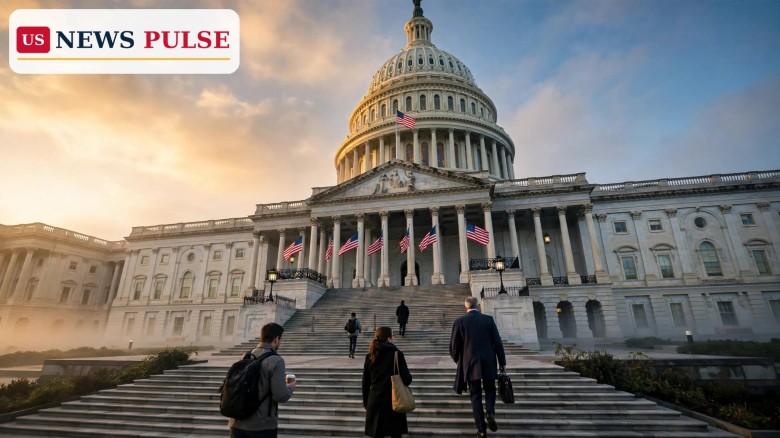
The context makes the stakes higher. The United States is four days from a midterm election that will decide control of Congress, early voting is under way in most states, and trust in election information is already fragile. Previous US News Pulse reporting has documented a wave of election-related legal fights, from Alaska to California, and a separate Texas controversy over millions of mystery mailers. The deepfake videos fit into that wider information war: not a single incident, but one front in a sustained effort to make voters doubt what they see, hear and read in the final days of a campaign.
There is also a foreign-policy dimension. Researchers and former officials have argued that Russia's goal is not only to help particular candidates but to weaken confidence in American democracy itself. Briefings to House and Senate intelligence leaders in recent weeks, reported by several outlets, described Russian efforts targeting candidates who support Ukraine. The administration, meanwhile, has dismantled parts of the federal apparatus that once countered foreign malign influence, including the Foreign Malign Influence Center, leaving researchers, journalists and platforms to do more of the detection work themselves.
With Election Day on Tuesday, November 3, the immediate question is whether more videos appear in the final 72 hours — the window in which a debunking has the least time to catch up with a viral claim. Researchers say the pattern from 2024 and from this autumn suggests further material is likely, and they urge voters to treat unsourced confession-style videos with scepticism, to check whether the person pictured has actually spoken to a reputable outlet, and to be wary of AI-generated summaries that cite articles without quoting them.
Platforms face their own test. X has shown it will remove original posts and suspend accounts, but the persistence of copies raises questions about how aggressively re-uploads are policed in the final days. Google and Microsoft have not, in the reporting reviewed for this article, publicly explained why their AI tools repeated the false Talarico claim or what fixes followed NewsGuard's findings. Those answers may come after the election, when the immediate damage is already done.
Longer term, the episode is likely to fuel the push for federal rules on AI-generated political content. Akbik's plea for regulation, the Wesleyan finding that only about a quarter of AI-assisted political ads carry a disclaimer, and the chatbot failures together make a case that the current patchwork — a few state bans, some disclosure rules, and voluntary platform policies — is not keeping pace with the technology. Whether Congress acts after the midterms, and in what form, will depend in part on who wins control of the chambers these videos were designed to influence.
No. Researchers at NewsGuard, PolitiFact, Lead Stories, Graphika and Clemson University's Media Forensic Hub have concluded the videos are fabricated. The real people whose identities were used have denied the claims attributed to them.
Researchers link the videos to Storm-1516, a Russian-linked influence network, based on the format, the amplification pattern and overlap with accounts that previously circulated Storm-1516 material. The attribution is based on pattern-matching by researchers, not on a public Kremlin admission, and the Russian Embassy has previously denied interfering in US elections.
Both are Democrats in toss-up Senate races that could decide control of the chamber, and both support Ukraine — two traits researchers say Russian influence operations have targeted this cycle. The Talarico video appeared the day after Texas early voting opened.
Check whether a reputable news outlet has independently verified the person and the claim, look for the original source rather than a re-upload, and be cautious about AI-generated summaries that cite articles without quoting them. If the person pictured has publicly denied the video, that denial carries more weight than the clip itself.
Yes. Storm-1516 circulated a similar fabricated video about Tim Walz in October 2024 that reached almost 5 million views on X within 24 hours, and researchers documented more than 190 fabricated Storm-1516 stories between August 2023 and March 2026.
Related coverage on US News Pulse: AI political ads top $137 million as deepfakes flood the 2026 midterms, Michigan Senate race becomes a faith fight, and Texas mystery mailers ruling: judge orders senders to testify under oath.
Sources: Associated Press via New Indian Express, October 28, 2026; NewsGuard Reality Check, October 21, 2026; PolitiFact, October 22, 2026; Graphika and Clemson University Media Forensic Hub assessments; CBS News/YouGov, University of Houston, InsiderAdvantage, Marist, Rasmussen Reports and ActiVote polling, October 2026.
Leave a Comment



 | Today's Date: