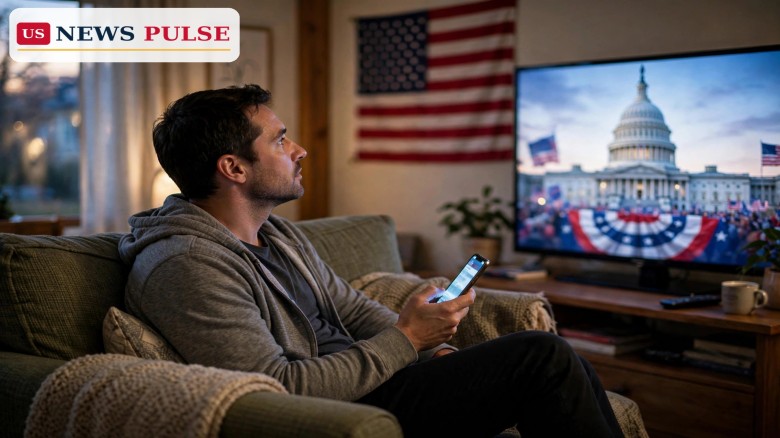
One week before Americans vote in the 2026 midterm elections, the campaign ad you just watched may never have happened. Artificial intelligence has flooded the airwaves and social media feeds with fabricated videos and images of candidates saying things they never said, doing things they never did, and appearing in places they have never been — and, according to new research, voters often have no way of knowing.
The Wesleyan Media Project, which tracks advertising in federal elections, has identified at least 220 political ads created or enhanced with artificial intelligence so far this election cycle. Spending on those ads has topped $137 million, an extraordinary leap from the less than $50,000 the project identified across the entire 2024 election cycle. The ads have appeared in 34 states, and researchers warn the true total is almost certainly higher, because AI involvement is often impossible to detect without a label.
Only 27 percent of the AI-generated ads identified carried a disclaimer telling viewers that artificial intelligence was used. That gap between what voters see and what is real is now one of the defining features of the final week of the 2026 campaign — and, researchers and lawmakers warn, a threat to the basic idea that voters can trust what they see before they cast a ballot.
The scale of the AI ad blitz became clear in the Wesleyan Media Project's October 15 update, analysed with expenditure estimates from AdImpact. The project counts an ad as AI-generated when artificial intelligence was used in at least part of its production — from a fully fabricated video to a single altered image or voice. Its researchers found 220 such ads nationwide, most of them sponsored by Republicans.
Republican candidates or groups sponsored 81 percent of the identified ads and accounted for 88 percent of the estimated spending. Democrats sponsored 12 percent of the ads, while the remaining 7 percent came from independent candidates or groups running issue ads that were not clearly partisan.
"AI is making its way into the 2026 midterms in a big way this year," said Erika Franklin Fowler, co-director of the Wesleyan Media Project. She called the low rate of disclosure "problematic" — and warned that the tally almost certainly misses ads whose AI origins are hidden. Some ads entered the project's database, Fowler said, "solely because there's a label at the end" disclosing AI use. Without that label, she said, researchers "would not be able to detect" what had been altered.
The timing matters. With Election Day on November 3, more than 30 million early ballots have already been cast, and the final week is when campaigns spend heaviest and voters pay closest attention. Veteran campaign advertising executive Fred N. Davis III has declared 2026 "the year of the A.I. election."
AI-generated political ads are not new. In 2024, campaigns experimented with the technology, but the tools were cruder, the results easier to spot, and the spending tiny — less than $50,000 identified all cycle. What changed in 2026 is the combination of cheaper tools, more realistic output, and a campaign environment in which video dominates.
"The financial incentives of using AI are clear," Fowler said. "You can produce content in a much quicker and cheaper way than you could without AI." That matters most for smaller campaigns, which can now produce slick attack ads without a traditional production budget — and for large ones, which can spin out variations at a speed no human editing team could match.
AI is also changing who sees an ad. Mike Ford, chief executive of the audience data and targeting company Skydeo, said AI combined with voter and consumer data lets campaigns target increasingly narrow groups, including through connected televisions. Ford described watching a football game with friends on two televisions in the same room, tuned to the same channel — and seeing different ads on each set. "With AI, that makes Cambridge Analytica look like a joke," Ford said, referring to the political consulting firm that became infamous for harvesting Facebook data to build detailed voter profiles. He added, though, that the technology itself is neutral: "People want to make AI the bad guy, but it just amplifies the character of the people making the ads."
The result is a campaign environment in which a voter in Michigan, Texas, Pennsylvania or New York may see a polished, realistic video of a candidate — and have no reliable way to tell whether any of it is genuine.
The ads themselves range from the superficially realistic to the openly absurd. In Texas, the Senate Republicans' campaign arm produced an 85-second video in which Democratic Senate candidate James Talarico looks into the camera, reads his old social media posts aloud, and voices commentary he never actually made. Deepfake expert Hany Farid of the University of California, Berkeley, said most people would not immediately know the video was fake; its "AI GENERATED" tag sits small and faint in a corner. Talarico, notably, has turned the issue into a selling point, ending one of his own campaign ads with the message: "Made by humans. Not AI."
In Michigan, a video from The Front Line Action, a political action committee aligned with Republican Senator Ted Cruz, targeted Democratic Senate candidate Abdul El-Sayed. Its AI-generated scenes show a board game featuring cards reading "Death to America" and "Celebrate 9/11," and a fabricated family photograph of the Muslim candidate with four veiled women. "His family values are wrong for Michigan," the ad says, while a voiceover claims "destruction of Israel and the West" is "a mission" for them. The ad does carry a disclaimer that it was created in whole or in part with artificial intelligence. A September 14 Federal Election Commission filing lists two independent expenditures opposing El-Sayed — $80,000 for media and $12,187.50 for media production — with September 12 recorded as the public distribution date, though the filing does not identify a specific ad.
In Pennsylvania, Republican gubernatorial candidate Stacy Garrity is running an AI-generated version of Democratic Governor Josh Shapiro, portraying him boasting about fast-tracking data centres while taking millions in campaign contributions from people with ties to the industry. The reality is more complicated: Shapiro did fast-track data centre projects before reversing course this summer, and he did receive millions from donors with industry ties — but several of those donors are not actually data centre developers, and there is no evidence the contributions influenced the policy.
Other campaigns have gone further into invention. In Georgia, a Republican-aligned super PAC portrayed Democratic Senator Jon Ossoff getting beauty treatments. In New York, Republican gubernatorial candidate Bruce Blakeman's campaign created an AI video depicting Governor Kathy Hochul and New York City Mayor Zohran Mamdani strolling through a park in a pharmaceutical-style advertisement for a fictional "political delusion pill." And in North Carolina, Republican state Senator Michael Lee ran an ad showing his opponent Jessica Bichler, a yoga instructor, contorting into impossible positions as a narrator declared her "totally bonkers."
"I struggle for an adjective beyond just weird," Fowler said of ads that depict people doing or saying things they never did but are meant as satire or parody. The problem, researchers say, is that satire without a label looks exactly like deception.
The findings have drawn sharp warnings. Democratic Senator Jon Ossoff, himself the target of one of the fabricated ads, told C-SPAN last month: "It is deeply troubling to see these deepfake videos used to fabricate political advertising. And it's a slippery slope toward the destruction of truth in political debate."
Fowler said researchers did not expect the partisan imbalance to be so stark. "We certainly didn't expect there to be such lopsidedness," she said. One possible explanation, she suggested, is that Democrats "may face more hypocritical backlash to using AI when they have a more pro-regulatory stance on the technology itself." Wesleyan professor Travis Ridout put it similarly, saying Democratic candidates and groups face more reputational risk when using a tool they argue should be regulated.
Voters, meanwhile, are worried — particularly about other voters. A survey by the AAPC Foundation of 1,568 likely 2026 general-election voters, conducted September 14–22, found that 66 percent were very concerned that deepfakes could change how other people vote, while 33 percent had the same level of concern about their own vote. That gap is familiar to researchers: people tend to believe they can spot a fake, even as evidence shows most cannot.
Whether the ads actually persuade anyone remains an open question. Fowler said researchers are only beginning to study their effects, and it is not yet clear whether voters are responding to the technology itself or simply to the message behind it. "Political advertising matters at the margin," she said. "It doesn't mean the margin doesn't matter. In a really competitive context, each fraction of a percentage point really matters." In a midterm cycle where Senate races in Maine, Texas, Michigan and elsewhere are within a few points, that margin could decide control of Congress.
The AI ad blitz matters for three reasons that go beyond any single race. First, it breaks the basic bargain of political advertising: that a voter can judge an attack on its merits, even if the attack is unfair. A fabricated video does not merely spin a record; it invents one, and the invention can travel further and faster than any correction.
Second, the disclosure gap means the burden falls entirely on the voter. With only 27 percent of AI ads labelled, and no federal requirement to label them at all, a voter scrolling through a feed has no reliable signal for which videos to trust. Detection tools exist — researchers and universities have built them — but they are not in the hands of most voters, and they struggle against each new generation of AI models.
Third, the legal vacuum is now a campaign strategy. According to the National Conference of State Legislatures' tracker, just four states — California, Maryland, Minnesota and Texas — prohibit certain uses of AI-generated deepfakes in political messaging, while 27 others require some form of disclosure. There is no federal law specifically regulating AI-generated political ads. Campaigns operating nationally can therefore run an ad that would be restricted in one state and perfectly legal in another, with the same video reaching voters in both.
The stakes extend past November 3. The tools used in this cycle will be cheaper, faster and more realistic in 2028, and the norms set now — whether campaigns disclose, whether platforms label, whether voters demand proof — will shape the next presidential election. The $137 million figure is best understood not as a peak but as a starting point.
In the final week, expect the volume to rise, not fall. Campaigns traditionally reserve their heaviest advertising for the last days, and AI makes last-minute production almost instant — a response ad to a debate moment or a polling shift can now be generated, targeted and aired within hours. Researchers at the Wesleyan Media Project are continuing to update their count, and their final tally for the cycle will almost certainly exceed the October 15 figure.
Regulatory action is unlikely before Election Day. No federal AI-advertising bill is expected to pass in the remaining days of the session, and state enforcement, where it exists, moves more slowly than a news cycle. The more immediate check is journalistic and civic: newsrooms debunking fabricated ads, platforms labelling them, and voters pausing before sharing a clip that seems too outrageous to be true.
For voters, the practical advice from researchers is simple. Check whether a video carries an AI disclaimer, however small. Look for the original source before resharing. Be especially sceptical of a clip that shows a candidate saying something wildly out of character, or appearing somewhere implausible. And remember that the absence of a label proves nothing — most AI ads in this cycle carried none at all.
When the polls close on November 3, the debate will shift from what AI did to this election to what rules, if any, should govern it in the next one. Until then, the most important skill for a voter in 2026 may be the oldest one in democratic politics: doubting what you see until you can verify it.
More than $137 million, according to the Wesleyan Media Project's October 15 update, covering at least 220 ads that used AI in at least part of their production. That compares with less than $50,000 identified across the entire 2024 cycle.
Republicans, by a wide margin. Republican candidates or groups sponsored 81 percent of the identified AI ads and 88 percent of the spending; Democrats sponsored 12 percent of the ads, and independents the rest.
Not under federal law — there is no federal law specifically regulating AI-generated political ads. Four states prohibit certain deepfake uses in political messaging and 27 require some disclosure, but most AI ads in this cycle carried no label at all.
Usually not. Experts say the most realistic AI videos are hard to spot in a feed, and researchers found that some ads were only identifiable because they happened to carry a small disclosure label. Checking the source and looking for independent reporting on a clip are the best defences.
The Wesleyan Media Project will publish a final tally for the cycle, and lawmakers are expected to revisit AI-advertising rules before the 2028 presidential election. The tools will only get cheaper and more realistic, so the disclosure debate is likely to intensify.
Related coverage on US News Pulse: tens of thousands of election observers will watch the polls on November 3; Trump's Texas rallies and the surging Talarico campaign; and the deadlocked Maine Senate race one week before the midterms.
Leave a Comment



 | Today's Date: