American singer Chris Brown walked out of a London courtroom a free man on Monday, October 26, 2026, after a judge handed him an eight-month prison sentence suspended for 12 months for a 2023 nightclub attack in which he struck music producer Abraham Diaw on the head with a tequila bottle. The sentence, delivered at Southwark Crown Court, means the 37-year-old Grammy winner will not serve time behind bars unless he commits another offence during the suspension period. His co-defendant and vocal coach, Omololu Akinlolu, received a four-month sentence, also suspended for 12 months, and both men were ordered to pay £1,500 in costs.
The outcome closes the criminal chapter of a case that has followed Brown for more than three and a half years, from a February 2023 night in a Mayfair members’ club to a dramatic arrest at a Manchester hotel in May 2025 and a guilty plea in July 2026. Judge Tony Baumgartner was unsparing about the violence itself, calling the repeated use of a glass bottle against a man’s head “plainly dangerous”, yet he stopped short of immediate custody, weighing Brown’s guilty plea, his compliance with bail, his work and charitable activity, and his role as a father of four.
Shortly after 3 a.m. on February 19, 2023, inside Tape, a private members’ club in London’s Mayfair district, Brown approached Diaw in the VIP area, according to the prosecution case set out in court. What followed was captured on three CCTV recordings shown to the sentencing hearing. Prosecutor Heidi Stonecliffe KC told the court that Brown struck Diaw four times with a heavy, square-shaped tequila bottle: two blows landed on the producer’s head, another hit his shoulder, and a further strike was attempted.
The confrontation lasted only 17 to 20 seconds, but it was, in the judge’s words, intense. Brown had to be physically pulled away from Diaw, who was pursued, punched and kicked as he tried to get away, according to the original prosecution account. Diaw was taken to hospital, where he was treated for head trauma and a knee injury; the judge later detailed head trauma, muscular-skeletal problems, tenderness around the cervical spine and abdomen, and reduced movement in his left knee.
Brown, who arrived at court on Monday wearing a black face mask, sunglasses and a black baseball cap, had admitted affray at a hearing in July. Akinlolu, 40, a rapper known as HoodyBaby as well as Brown’s vocal coach, admitted the same offence. Their guilty pleas spared Diaw a trial and led prosecutors to drop the more serious charges the pair had denied: attempting to cause grievous bodily harm, wounding with intent and possessing an offensive weapon.
The case moved slowly for more than two years because Brown did not return to Britain after the nightclub incident. It burst back into public view on May 15, 2025, when he was arrested in the early hours at The Lowry Hotel in Manchester, hours after flying in on a private jet for his worldwide Breezy Bowl XX tour. He was initially refused bail and spent about a week in custody, throwing the tour into doubt.
On May 21, 2025, Judge Baumgartner granted bail on a £5 million security arrangement, with £4 million payable immediately and a further £1 million due within seven days, and allowed Brown to continue touring, subject to conditions including surrendering his passport when not travelling, living at an address given to the court, not contacting Diaw and not visiting Tape. The tour began in Amsterdam on June 8, 2025, and went ahead across Europe and North America.
Brown’s legal history formed part of the sentencing picture. The judge noted two previous convictions involving violence, dating to 2009 and 2013, but said they were “now old”. The 2009 case, his conviction for assaulting then-girlfriend Rihanna, has defined public discussion of Brown’s conduct for much of his career. Brown, a two-time Grammy winner known for hits including “Run It”, “Loyal” and “Under the Influence”, has sold tens of millions of records worldwide.
Affray, the offence to which both men pleaded guilty, is defined under the Public Order Act 1986 as using or threatening unlawful violence in a way that would cause a person of reasonable firmness to fear for their safety. It carries a maximum sentence of three years in prison, so the eight-month and four-month suspended terms imposed on Monday sit well below the ceiling, reflecting the guilty pleas and the mitigation the judge accepted.
Judge Baumgartner said Brown played a “leading role in this joint offending” and that his offending was more serious than Akinlolu’s because he initiated the physical violence and used the bottle as a weapon. Akinlolu, who was unarmed, received the lighter term because he played a smaller part, the judge said, although he too joined the attack on Diaw.
“The repeated use of a glass bottle in that way, especially aimed at the head, was plainly dangerous, it carried the risk of delivering a more serious injury than was ultimately sustained,” the judge said. “This was not planned violence. It was nevertheless serious violence by two people in a crowded nightclub.” He added that violence of that kind in a crowded club creates an obvious risk not only to the person targeted but to others nearby.
Addressing Brown directly, the judge said: “I take account of your employment and long-established career in music. Your fame, commercial success and professional standing do not entitle you to special treatment. The law applies equally to everyone.” The sentence was suspended for 12 months, meaning the eight months will only be activated if Brown reoffends or breaches the terms of the suspension within that year.
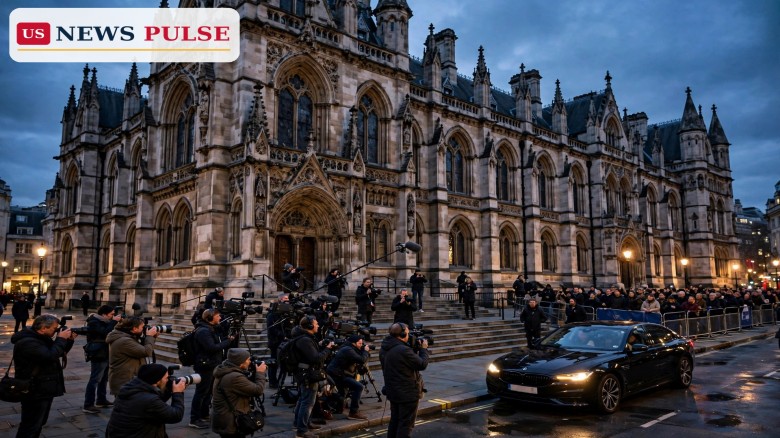
Mitigating factors recorded by the court included Brown’s guilty plea, his compliance with demanding bail conditions over more than a year, his stable employment, his charitable activities and his status as a father of four. Fans had queued outside the courthouse from early in the morning, some carrying merchandise bearing the singer’s name, before the hearing began.
The Crown Prosecution Service had already set the tone for the prosecution case when the guilty pleas were entered in July. Claire Campbell, a senior prosecutor with CPS London South, said at the time: “This was a vicious and unprovoked attack by Brown and Akinlolu in a crowded nightclub, where Brown used a glass bottle as a weapon to strike the victim’s head twice.”
London’s Metropolitan Police echoed that assessment after sentencing. Christina Jessah of the force said: “This was an inexcusable attack that put a man in hospital.” Police noted that it had taken several years to secure the outcome, a reference to the long gap between the 2023 incident and the 2025 arrest.
The judge’s own remarks were the most consequential reaction in the room. By describing the attack as “serious, public violence” while still suspending the sentence, Baumgartner drew a line that will shape how the case is remembered: the conduct was grave, the punishment real but not custodial, and the celebrity of the defendant counted neither for nor against him in the final calculation.
No statement from Brown or Diaw was reported immediately after the hearing. Brown thanked the judge before leaving the dock, according to one court report, and left the building without addressing the waiting press.
The sentence matters for three reasons. First, it resolves one of the most prominent celebrity criminal cases in Britain in recent years without a prison term, and the reasoning will be studied by lawyers and commentators as an example of how English courts balance serious violence against guilty pleas and mitigation. Suspended sentences are common for first-time or lower-level offending, but they are less expected where a weapon was used against the head, which is why the judge spent so long explaining his reasoning.
Second, the case is a reminder of how long accountability can take when a defendant lives abroad. For more than two years, the charges existed only on paper in London while Brown toured the world; it was his return for a concert that finally brought him before a court. The £5 million security arrangement that kept the Breezy Bowl XX tour alive became one of the most talked-about bail deals in recent British legal history.
Third, for Brown himself, the suspended sentence leaves his career intact but on a short leash. Any further offence within the next 12 months could activate the eight-month term, and the conviction will follow him into visa, touring and endorsement decisions for years. At 37, with a career spanning more than two decades, Brown remains commercially potent, but the court record now includes a second major violent conviction in Britain’s public memory.
Both men are now subject to their suspended sentences for 12 months. If either commits a further offence in that period, a court can order the suspended term to be served, in whole or in part, alongside any sentence for the new offence. Both must also pay £1,500 in costs.
For Brown, the immediate question is his touring and recording schedule. No new dates have been announced in connection with the sentencing, and any promoter booking him will now do so with a suspended sentence on the record. Diaw’s civil position, if he chooses to pursue one, is separate from the criminal case and was not addressed in the sentencing hearing.
The case is also likely to feed into wider debate about violence in nightclubs and the protection of staff and customers in crowded venues. Tape, the Mayfair club at the centre of the case, has not commented publicly on the sentencing. For the criminal justice system, the file is now closed unless the suspension is breached.
No. He received an eight-month prison sentence, but it was suspended for 12 months, so he will not serve time unless he commits another offence or breaches the suspension terms within that year.
He pleaded guilty to affray, an offence under the Public Order Act 1986 covering the use or threat of unlawful violence that would make a bystander fear for their safety. More serious charges were dropped after the plea.
Akinlolu, Brown’s vocal coach, pleaded guilty to the same offence and received a four-month prison sentence, suspended for 12 months. He was also ordered to pay £1,500 in costs.
The attack took place in the early hours of February 19, 2023, at Tape, a private members’ club in Mayfair, London. Brown was not arrested until May 15, 2025, when he returned to Britain for his tour.
After initially being refused bail, Brown was released in May 2025 on a £5 million security arrangement so he could continue his Breezy Bowl XX world tour while the case proceeded, on strict conditions including not contacting the victim.
Related coverage on US News Pulse: Jay-Z to headline the Super Bowl LXI halftime show at SoFi Stadium on February 14, 2027 and Ballon d’Or 2026: Harry Kane ends England’s 25-year wait as Putellas wins third.
Leave a Comment



 | Today's Date: