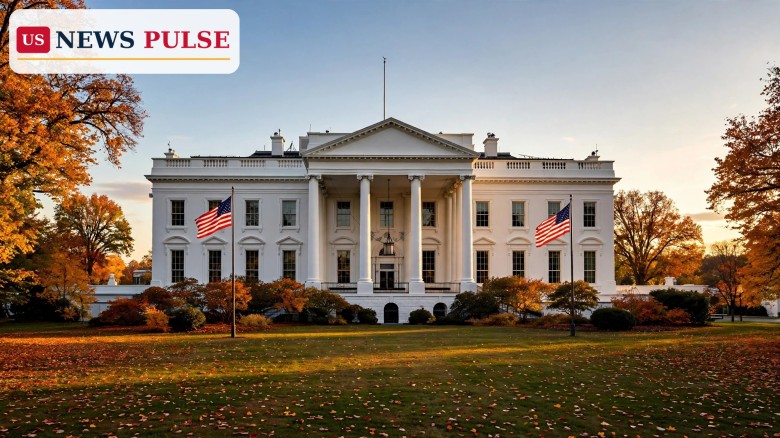
The Oval Office prayer that was supposed to stay private has become one of the most talked-about moments of the final week before America's midterm elections, after the White House defended President Donald Trump against a Milwaukee archbishop who said twelve Catholic bishops were turned into a political photo opportunity. Archbishop Jeffrey Grob's public apology on Sunday, in which he said the October 22 prayer was publicised without the bishops' consent, collided on Monday with a full-throated White House defence of Trump's record for Catholic Americans, twelve days before voters go to the polls on November 3.
On Thursday, October 22, Grob and eleven other Catholic bishops travelled to the White House for what they understood would be a private meeting. According to Grob's statement, the gathering was the second of two meetings arranged by the Heritage Foundation, and the bishops were told it would be a private discussion, that several Catholic members of the cabinet might make an appearance, and that there could be an opportunity to pray privately with the president. After about ninety minutes of discussion with White House staff and policy advisers, the group was escorted into the Oval Office, where Trump greeted them, presented them with commemorative tokens, and directed them to stand behind him to pray. Photographs were taken, and a video of the prayer was soon posted on social media by White House communications staff.
The publicity, Grob said, was the problem. In a statement titled "A Public Apology," published on the Archdiocese of Milwaukee's website on Sunday, October 25, he wrote that the administration had publicised the encounter "without the consent of the participants," and that he had soon begun receiving messages of serious concern from Catholics who feared he had inadvertently taken part in a political event less than two weeks before a national election. "Please know that my intention was never to cause confusion, anger, or disappointment among the people entrusted to my care," Grob wrote. He acknowledged that he had reservations before attending, and said he wished he had given them greater consideration. The White House responded on Monday, with spokeswoman Taylor Rogers rejecting the criticism and defending Trump's record to Fox News Digital, without directly addressing the question of consent.
The meeting did not come out of nowhere. Grob explained that he was invited the previous month, along with other bishops, to discuss "matters of importance to the Church and our people, including immigration enforcement, religious worker visas and human dignity." Those three topics sit at the heart of the current tension between Catholic leaders and the Trump administration: the Church has pressed the administration on the treatment of migrants and on visas for religious workers, while the administration has presented itself as a champion of religious freedom. A private conversation on those subjects, away from cameras, was the attraction for bishops who wanted to raise concerns directly with the people making policy.
That tension has already produced open conflict. The United States Conference of Catholic Bishops sued the administration in February 2025 over the suspension of refugee resettlement funding. At the same time, other prominent Catholic leaders have urged continued engagement rather than confrontation. Bishop Robert Barron, a member of Trump's Religious Liberty Commission, said in a May interview with Fox News Digital that he did not want the Church to fall into "a kind of demonization of the Trump administration," despite disagreements over immigration and other policies. The October 22 meeting was an attempt at the engagement Barron has advocated, and its public unravelling is precisely the outcome its participants had hoped to avoid. The timing sharpened everything: the prayer took place twelve days before the November 3 midterms, in which all 435 House seats, about a third of the Senate, and governorships in 39 states are at stake.
The sequence Grob describes is straightforward, and it is the sequence that makes the consent question so pointed. The bishops were told the meeting was private. They spent ninety minutes talking policy with staff. They were then ushered into the Oval Office, greeted by the president, given commemorative tokens, and directed to stand behind him while they prayed. Photographs followed, and a video appeared on social media the same day, posted by White House communications staff with a caption celebrating Catholic archbishops and bishops praying with the president. Within days, the clip had travelled far beyond the room, and the bishops found themselves explaining a moment they had expected to remain private.
Grob's language about that transformation was unusually strong for a bishop writing about a president. "I feel a heavy sadness, not only over the pain I caused, but also for the fact that something so sacred to a group of religious leaders, prayer to our Heavenly Father, would be manipulated in that way," he wrote. "We came in good faith to try to work for the betterment of our fellow human beings, to ease their suffering, to build up the common good, and to pray with a president, not to pose for a political photo opportunity to benefit the few." He did not say the bishops were tricked into the Oval Office, and he did not say prayer with a president is wrong. He said the meeting was presented as private, that its publicity came without the participants' consent, and that he regretted the distress his involvement caused.
The White House reply, delivered by spokeswoman Taylor Rogers to Fox News Digital, was unambiguous. "There has never been a greater president for Catholic Americans than President Trump, and his strong record proves it: he stopped the weaponization of the federal government against Christians, proudly defended and expanded our religious rights, pardoned pro-life activists, stopped the chemical mutilation of our nation's children, and protected parents' rights," she said. The statement turned the argument from process to record: whatever the bishops felt about the publicity, the administration's case is that its policies have served Catholic Americans better than any previous presidency.
Grob's own words were personal and penitential. "I feel a heavy sadness, not only over the pain I caused, but also for the fact that something so sacred to a group of religious leaders, prayer to our Heavenly Father, would be manipulated in that way," he wrote, adding: "We came in good faith to try to work for the betterment of our fellow human beings, to ease their suffering, to build up the common good, and to pray with a president, not to pose for a political photo opportunity to benefit the few." He was explicit that the meeting "was in no way an endorsement of the president, his policies, or his party."
Two other bishops who attended have spoken in their own voices, and their tones differ in instructive ways. Des Moines Bishop William Joensen, in a statement published on Saturday, October 24, said none of the bishops intended to endorse a political party or candidate, but added a frank note of self-criticism: "None of us bishops were unaware that our meeting was on the cusp of a national election. Yet in no way did any of us intend by our involvement to endorse any political party or any individual candidate. That said, in retrospect, I would have done well to be more mindful of Jesus' admonition: 'Behold, I am sending you like sheep in the midst of wolves; so be shrewd as serpents and simple as doves' (Matthew 10:16). I wish I had been more shrewd and less simple, like those who exploited our meeting for partisan political purposes."
Denver Archbishop James Golka, who led the prayer itself, struck a different note in an interview with the Denver Catholic. He acknowledged concerns about the video's political implications, but emphasised that praying for elected officials remains a longstanding Catholic practice. "I wasn't sure what to do. On one hand, it was a great opportunity to raise important issues for the Church's benefit," he said. "On the other hand, I knew people might be upset. Though I originally thought it would be a private meeting, I knew that it could be shared and that some might use it for political purposes. But as I prayed about it, I thought that this is what Catholics do. We pray for people. No matter whether we agree or disagree on anything, we always pray for our country and leaders." The Archdiocese of Milwaukee declined to comment further when approached by Fox News Digital.
The row matters first because of who is involved. Catholics are one of the largest religious groups in American politics, and they do not vote as a bloc, which is exactly why both parties compete for them. An image of a dozen bishops praying over a president, released days before an election, is valuable precisely because it suggests a unity that does not exist, and damaging precisely because it implies an endorsement the bishops say they never gave. Grob's apology is an attempt to withdraw that implication in public, in the same medium, before voters cast their ballots.
It matters second because it sets the terms for how religious leaders can engage with this White House, and with future ones. If a private meeting can become a public video without the participants' consent, faith leaders will think twice before accepting the next invitation, and the private conversations in which difficult subjects like immigration enforcement and religious worker visas are actually discussed will become harder to arrange. It matters third because it arrives in a midterm campaign already crowded with arguments about the rules of the election itself. Trump has spent the same week campaigning in Texas for Senate candidate Ken Paxton, telling reporters he will respect the midterm results only if the elections are honest, and defending his White House renovations against Barack Obama's "Cheesecake Factory" jibe. Readers following that argument can find the Texas rallies here, Trump's remarks on respecting the results here, and the White House renovation row here.
The immediate question is whether any of the other nine bishops who attended will speak. So far three have addressed the controversy in public, and their statements have not been coordinated: an apology, a self-critical reflection, and a defence of praying for leaders. If more bishops add their voices, the picture of what the group collectively understood about the meeting will sharpen, and so will the pressure on the White House to explain its publicity practice for faith meetings. The Archdiocese of Milwaukee has already declined to comment further, which suggests Grob's statement is intended to stand as his final word.
The White House, for its part, has shown no sign of apologising or of changing its account. Rogers' statement treated the episode as settled by the president's record, and no follow-up statement has qualified it. The practical question for future meetings is whether invitations to religious leaders will now come with clearer written terms about photography and publication, and whether leaders will demand them. The fixed point on the calendar is November 3. By then, voters will have decided whether the prayer row matters to them, and the bishops' apology will either have neutralised the endorsement impression or not.
Jeffrey S. Grob is the Archbishop of Milwaukee, Wisconsin. He was one of twelve Catholic bishops who attended the October 22 White House meeting, and he issued the public apology on October 25 that brought the controversy into the open.
After a ninety-minute policy discussion with White House staff, twelve bishops were escorted into the Oval Office, where President Trump greeted them, gave them commemorative tokens, and had them stand behind him while they prayed. Photographs and a video of the prayer were then published by White House communications staff.
Grob said the meeting was presented as private and was publicised without the participants' consent, that he received messages from Catholics worried it looked like an endorsement, and that he regretted the distress his involvement caused.
Spokeswoman Taylor Rogers defended Trump's record for Catholic Americans, saying there has never been a greater president for them, and citing his actions on religious rights, pro-life pardons, children's issues and parents' rights.
No, according to the bishops themselves. Grob, Joensen and Golka have all said the meeting was not an endorsement of any party or candidate, and that its purpose was to discuss Church concerns including immigration enforcement, religious worker visas and human dignity.
Leave a Comment



 | Today's Date: