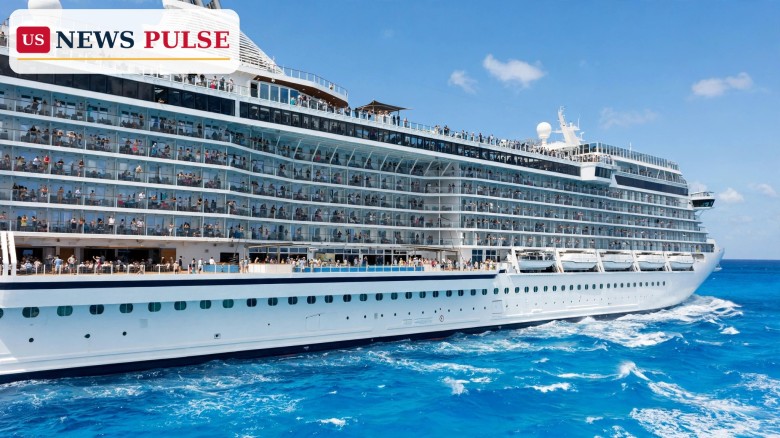
Royal Caribbean Q3 earnings beat Wall Street expectations on Tuesday, October 27, 2026, as the world's second-largest cruise operator turned fuller ships, stronger onboard spending and close-in demand in Europe and the Caribbean into its strongest quarter of the year. Royal Caribbean Group reported revenue of $5.59 billion for the three months ended September 30, up 9 percent from $5.14 billion a year earlier, while adjusted earnings per share reached $6.57, up from $5.75 and ahead of the consensus estimate of about $6.38. Shares rose 3.7 percent to $291 immediately after the results, a sign that investors were willing to look past a revenue figure that merely met expectations and focus instead on profit, guidance and bookings for 2027.
The quarter matters well beyond one cruise company. Royal Caribbean, Carnival and Norwegian now carry a large share of American leisure spending, and their bookings are read as a real-time gauge of consumer confidence, travel appetite and willingness to pay for experiences rather than goods. In a week when the Federal Reserve is meeting, Alphabet, Amazon and Apple are about to report, and JetBlue has just shown how quickly fuel costs can swallow revenue growth, a cruise result built on capacity growth, pricing and onboard sales offers a different, more reassuring read on the American consumer. It is not a boom without caveats: fuel and currency costs trimmed the full-year outlook, some costs simply shifted into the fourth quarter, and next-quarter guidance fell short in one summary of the results. But the direction was clear enough for the market to reward it.
Royal Caribbean reported its third-quarter 2026 results before the market opened on Tuesday, October 27. Revenue of $5,591 million compared with $5,139 million in the same quarter of 2025, an increase of 9.0 percent. Operating income rose 9.9 percent to $1,871 million, and the operating margin held at about 33.5 percent, roughly in line with a year earlier. Net income attributable to the company rose to $1,728 million from $1,575 million, while diluted earnings per share rose 12.4 percent to $6.45 from $5.74.
The adjusted figures, which strip out items including debt-extinguishment costs, restructuring expenses and amortisation related to the Silversea acquisition, told a stronger story still. Adjusted earnings per share of $6.57 were up 14.3 percent from $5.75 a year earlier, helped in part by a lower share count: diluted weighted-average shares fell to 268 million from 274 million after the company repurchased $1.04 billion of shares during the first nine months of 2026. Adjusted EBITDA of $2,539 million was up from $2,293 million, and its margin expanded to 45.4 percent from 44.6 percent.
By the usual scorecard, the quarter was a beat on profit and a draw on sales. Revenue of $5.59 billion was essentially in line with the $5.61 billion consensus estimate compiled by S&P, and one summary put the miss at about $20 million against a slightly lower estimate. Adjusted earnings per share beat by $0.19 against one estimate and by about 3 percent against another, while adjusted EBITDA beat its consensus by 3.2 percent. The shares, which had closed at $280.60 on Monday, rose 3.7 percent to $291 immediately after the release, according to the StockStory summary of the move.
Royal Caribbean's growth in the quarter came overwhelmingly from sailing more, and fuller, ships. Capacity increased 8 percent, and the company carried about 2.7 million passengers, 9 percent more than a year earlier. Passenger cruise days rose by 1.34 million year on year to 16.69 million. Load factor, the industry's occupancy measure, reached 112.4 percent, against 112.1 percent a year earlier; it can exceed 100 percent because more than two passengers can occupy some cabins.
Reported net yields, the revenue earned per available passenger cruise day after certain costs, rose a more modest 0.9 percent, or 0.6 percent at constant currency, driven by close-in demand in Europe and the Caribbean. That split is important: most of the revenue gain was volume, not price. Ticket revenue rose about 6.8 percent to $3.89 billion, while onboard and other revenue rose about 13.6 percent to $1.71 billion, consistent with management's statement that pre-cruise and onboard revenue rates remained ahead of the prior year. In other words, passengers are not only booking; once aboard, they are spending more on drinks, dining, excursions, Wi-Fi and other extras, and that spending is growing faster than the fare itself.
Costs were a mixed picture. Net cruise costs excluding fuel per available passenger cruise day fell 1.9 percent as reported and 1.8 percent at constant currency, but the company attributed the favourable result to expenses shifting into the fourth quarter, so the decline should not be read as a permanent saving. Fuel expense rose to $347 million from $297 million, and payroll and related expenses rose to $399 million from $342 million. Gross margin yield fell 0.8 percent even as adjusted EBITDA margin expanded, a reminder that different cost lines move in different directions in a business that buys fuel, food, labour and port services all at once.
The balance sheet, meanwhile, looks more comfortable than it did during the pandemic-era cruise shutdown. Nine-month operating cash flow rose to $5.27 billion from $4.84 billion, while purchases of property and equipment rose to $3.88 billion from $3.72 billion. As of September 30, cash and equivalents were $851 million and total liquidity was $7.4 billion including undrawn revolving credit capacity. Customer deposits stood at $6.03 billion, up from $5.74 billion at the end of 2025. Total debt was about $22.36 billion, and during the quarter the company issued $1.25 billion of 5.55 percent senior unsecured notes due in 2034, using the proceeds to repay part of its floating-rate term loans and debt maturing in 2027. Scheduled maturities include $2.4 billion in 2027 and $3.2 billion in 2028.
The strategic story behind the Royal Caribbean Q3 earnings is the company's push beyond the ship itself. In September, Royal Caribbean agreed to acquire a 50 percent interest in Sandals and Beaches Resorts, a portfolio of 18 Caribbean resorts, three resorts under development and more than 1,000 acres of undeveloped land. The company said about 30 percent of its guests also take all-inclusive vacations, while a similar share of Sandals and Beaches guests also cruise. It expects the investment to close in early 2027, subject to regulatory approvals, to be immediately accretive, and to be reported under the equity method with a one-quarter reporting lag, so the size of the 2027 contribution will depend on closing timing.
The logic is straightforward: Royal Caribbean already sells the Caribbean, and it already owns private destinations that blur the line between cruise and resort. Owning a stake in an all-inclusive resort brand lets it capture a customer who might otherwise choose a land holiday, and lets it sell a combined cruise-and-resort trip to a customer it already knows. The risk is equally clear. Resorts bring land, labour and property exposure that ships do not, regulatory approval is not guaranteed, and the equity-method lag means investors will wait a quarter to see the contribution in the numbers. For now, the deal is a statement of intent rather than a line in the earnings table.
The other long-term story is the Perfecta programme, Royal Caribbean's set of targets for the period from 2024 through 2027. Management maintained its goal of 20 percent adjusted earnings-per-share compound annual growth over that period and a return on invested capital of at least 17 percent by the end of 2027. It said it was already above the return target and remained on track for adjusted earnings per share in the "$20-handle" range in 2027, a strategic target rather than formal guidance. Capacity is expected to increase about 4.5 percent in 2027, 6.0 percent in 2028 and 6.5 percent in 2029, as new ships and land-based destination projects, funded by about $4.6 billion of expected 2026 capital expenditure, come on stream.
"Demand for our leading vacation experiences remains strong, and while it is still early, 2027 bookings are pacing ahead of historical levels at higher rates," Royal Caribbean chief executive Jason Liberty said in the company's results statement. "2027 also marks the final year of our Perfecta target period. The underlying business is performing well ahead of our initial expectations, and based on the forward fuel curve, we remain on track to achieve our Perfecta goals of delivering 20% Adjusted EPS CAGR from 2024 through 2027, or a $20-handle in 2027. We are currently already above our ROIC target."
Management added that booking volumes had increased in the mid-teens across major channels since the previous earnings call, with bookings for 2027 sailings up in the high teens. That is the kind of forward signal investors prize in a business that sells holidays months in advance: today's revenue is largely last year's bookings, so tomorrow's bookings are today's best guide to next year's revenue.
The market's immediate verdict was positive but measured. Shares rose 3.7 percent to $291 after the release, a gain that left the stock, with a market capitalisation of about $75 billion, still well below its 52-week high of $356.39 but comfortably above its 52-week low of $222.22. Analysts quoted in the earnings summaries noted the same tension the company itself flagged: EBITDA and earnings per share topped estimates, but next-quarter earnings guidance fell short in one reading, and the cost benefit in the quarter was partly timing. No analyst downgrade or upgrade was included in the coverage reviewed for this article, and the full analyst reaction will develop through the day as firms publish notes after the earnings call.
Cruise earnings matter because they test a specific version of the American consumer: one who books months ahead, pays in instalments, and then spends freely once on holiday. A weak result would have suggested that households are pulling back on discretionary travel, or that capacity growth is outrunning demand and forcing discounting. A strong result, especially one driven by onboard spending rather than fare cuts, suggests the opposite: that the customer who can afford a cruise is still willing to pay, and to pay more once aboard.
It also matters for the wider travel and leisure sector. Royal Caribbean's result arrived on the same morning as earnings from UPS, Coca-Cola, Boeing and other bellwethers, and a day before the Federal Reserve's rate decision and the Alphabet, Amazon and Apple reports that will dominate the week. A resilient cruise consumer does not settle the question of whether the broader economy is slowing, but it does complicate any simple story of a consumer in retreat. It also matters for the Caribbean economies, ports and suppliers that depend on cruise traffic, and for the thousands of crew and shore staff whose hours follow capacity.
There is a caution in the numbers too. Royal Caribbean estimates that a 1 percent change in net yields would affect fourth-quarter results by $37 million, and that a 10 percent change in fuel prices would affect the quarter by $15 million. Those sensitivities are small beside $5.59 billion of quarterly revenue, but they show how a business with thin per-passenger margins on some sailings can be moved by variables it does not control: the oil price, the dollar, and the weather in the Caribbean and Europe.
The immediate focus is the fourth quarter. Royal Caribbean guided to fourth-quarter adjusted earnings per share of $3.48 to $3.58, with revenue growth of 9 percent, capacity growth of 5.0 percent and reported net yield growth of 4.4 to 4.9 percent. For the full year, it raised adjusted earnings per share guidance to $17.85 to $17.95, up from its previous range, with revenue growth of 9 percent and capacity growth of 6.6 percent. The increase reflects the third-quarter performance, partly offset by higher anticipated fuel costs and currency exchange rates. Fourth-quarter fuel expense is put at $379 million based on current prices, with about 58 percent of forecast consumption hedged through swaps.
Investors will also watch three things that will not appear in a single headline. First, whether fourth-quarter yields hold up as the costs shifted out of the third quarter land, and whether net cruise costs excluding fuel, guided down 1.5 to 1.0 percent in the quarter, really fall. Second, whether 2027 bookings keep pacing ahead of historical levels at higher rates, or whether the early strength fades as consumers face the holiday season and the January booking wave. Third, whether the Sandals transaction closes in early 2027 as planned, and what management says about its first contribution, given the one-quarter reporting lag.
Beyond that, the Perfecta clock is ticking. 2027 is the final year of the target period, and management's "$20-handle" earnings ambition will be judged against the actual 2027 result, not against the trajectory. New ships, new destinations and the Sandals stake will all need to contribute, and fuel and currency will need to cooperate. If they do, Royal Caribbean will have turned a pandemic-era near-death experience into one of the strongest earnings recoveries in American travel. If they do not, the third quarter will be remembered as a good quarter in a harder year.
Revenue rose 9 percent to $5.59 billion, net income attributable to Royal Caribbean rose 9.7 percent to $1.73 billion, diluted earnings per share rose to $6.45 from $5.74, and adjusted earnings per share reached $6.57, up from $5.75 a year earlier.
On profit, yes: adjusted earnings per share of $6.57 beat the consensus of about $6.38 by roughly 3 percent, and adjusted EBITDA of $2.54 billion beat its consensus by 3.2 percent. On revenue, the $5.59 billion result was essentially in line with the $5.61 billion consensus.
The company raised full-year 2026 adjusted earnings per share guidance to $17.85 to $17.95, with revenue growth of 9 percent. Fourth-quarter adjusted earnings per share are guided at $3.48 to $3.58.
Royal Caribbean agreed in September 2026 to acquire a 50 percent interest in Sandals and Beaches Resorts, covering 18 Caribbean resorts, three under development and more than 1,000 acres of undeveloped land. It expects the deal to close in early 2027, subject to regulatory approval, and to be immediately accretive.
Shares rose 3.7 percent to $291 immediately after the release, as investors focused on the earnings beat, the raised full-year guidance and management's statement that 2027 bookings are pacing ahead of historical levels at higher rates.
Related coverage on US News Pulse: JetBlue's Q3 loss and its share rebound, the Fed rate decision expected this week and the Big Tech earnings test facing Alphabet, Amazon and Apple.
Leave a Comment



 | Today's Date: