DoorDash has struck a definitive deal to buy Instacart for about $17 billion, turning last week's takeover talk into one of the biggest delivery-industry mergers ever and redrawing the map of how Americans get their groceries. The DoorDash Instacart deal, announced on Thursday, October 29, 2026, pairs the country's largest restaurant-delivery network with the grocery platform that powers online shopping for more than 2,200 retail banners, and it lands on the same morning DoorDash reported record third-quarter results.
DoorDash and Maplebear Inc., Instacart's parent company, said on Thursday that they have entered into a definitive agreement under which DoorDash will acquire Instacart for $65.00 per share. The headline price is a 26% premium to Instacart's closing price on October 22, 2026, the last trading day before media reports of a possible transaction first surfaced. It is, however, only an 11% premium to Wednesday's closing price, after Instacart shares climbed on the takeover reports.
Under the terms, Instacart stockholders can elect $65.00 in cash for each share, 0.3372 shares of DoorDash common stock, or a mix of $48.75 in cash and 0.0843 DoorDash shares, subject to the 25% cap on total stock consideration and proration if the stock election is oversubscribed. Aggregate consideration will be at least 75% cash. DoorDash said it will fund the cash portion with cash on hand and debt financing, backed by a 364-day senior unsecured bridge loan commitment from JPMorgan Chase Bank, and that the deal is not subject to a financing condition. The company said it is targeting a capital structure that will maintain its investment-grade ratings.
The merger agreement is among DoorDash, a wholly owned subsidiary called Ibiza Merger Sub, and Instacart. Centerview Partners is acting as lead financial adviser to DoorDash, with J.P. Morgan Securities also advising and Latham & Watkins as legal counsel. Goldman Sachs is advising Instacart, with Cravath, Swaine & Moore and Cooley as legal counsel. DoorDash intends to file a registration statement on Form S-4 with the Securities and Exchange Commission that will include an Instacart proxy statement and serve as a DoorDash prospectus.
Until the transaction closes, the two companies will continue to operate as separate and independent businesses. Instacart has suspended its financial guidance and cancelled its November 5 earnings call while the deal is pending. DoorDash discussed the transaction on its earnings call at 8:30 a.m. Eastern Time on Thursday.
The agreement caps a fast-moving week. Reports of advanced talks first emerged on October 26, when the Wall Street Journal said DoorDash was in discussions to buy Instacart for around $17 billion, with a deal possible within days. Instacart shares jumped about 8% that Monday while DoorDash fell about 6%, and the two companies said nothing publicly until Thursday's joint announcement confirmed the talks had become a signed deal.
The pairing is not new. The companies held talks in 2021, when a valuation of $40 billion to $50 billion was discussed, but those discussions fell apart, partly over antitrust questions, according to reports at the time. The landscape has changed sharply since then. DoorDash, founded in San Francisco in 2013, began delivering groceries in 2020 and has grown into the dominant US restaurant-delivery platform, with nearly 61% market share by some measures. Instacart, founded in 2012 and taken public in 2023 at $30 a share, built its business on grocery fulfilment technology, online ordering, in-store operations and retail media advertising, working with more than 2,200 banners representing nearly 100,000 stores.
DoorDash has been on an acquisition run of its own. It completed its purchase of Deliveroo in 2025, and its third-quarter results showed the grocery and retail categories growing at more than double the pace of its US restaurant business. The Instacart deal is the second major delivery-sector transaction in recent weeks: in September, Uber announced its $2.3 billion purchase of ezCater to push Uber Eats deeper into catering and group ordering. Consolidation, in other words, is the direction of travel across the whole sector.
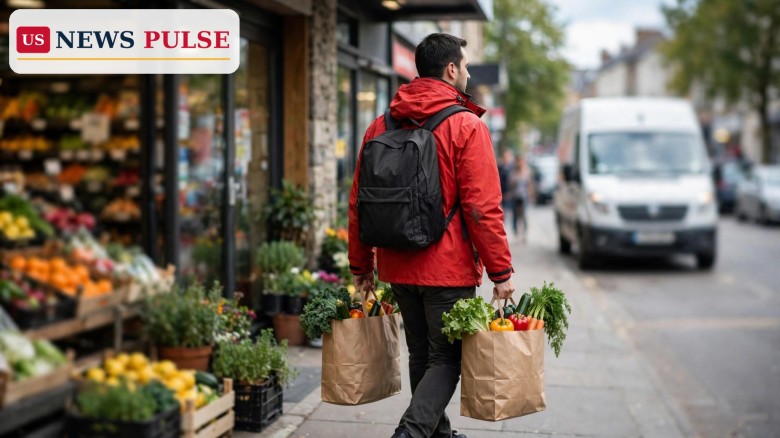
For customers, the headline promise is choice and one bill instead of two. DoorDash said Instacart customers will be able to shop at more than 50,000 additional stores on top of the nearly 100,000 already on Instacart's platform, and that DashPass and Instacart+ members will eventually pay a single membership fee rather than two, saving members an estimated $100 million a year in membership fees alone. The combined platform, the companies said, could offer consumers more store choices, more delivery options and more savings opportunities.
For grocers, DoorDash announced commitments designed to blunt the obvious antitrust argument. Local grocers will be able to work with any delivery platform they choose, with no grocery exclusivity. Instacart's brand, enterprise technology products and app will be retained after closing, and grocers will be able to use the combined delivery network and grocery technology in both apps and on their own websites, alongside the advertising and artificial intelligence tools each company has built.
For shoppers on the platform, DoorDash said Instacart Shoppers will keep existing features, including the information they use to decide which batches to accept and the choice of whether to take on DoorDash orders or keep shopping only on Instacart. DoorDash also said Instacart's scale would help spread the fixed cost of managing inventory on behalf of grocers, pointing to its DashMart operations, where it said fulfilment accuracy topped 99% and average delivery times ran more than 10 minutes faster than other grocery orders in US areas with an active DashMart store during the quarter.
"Grocery is one of the hardest things to get right online. Someone has to pick a ripe avocado, find a substitute you'd choose yourself, and get the ice cream to you before it melts," DoorDash co-founder and chief executive Tony Xu said in the announcement. "Instacart has spent years learning to do that well for grocers, while DoorDash has built a delivery network and technology that local stores rely on every day. Together, we could give stores of every size more of those tools and unlock the potential of grocery delivery. It's still early innings, but we know that when more people shop local, more dollars stay local."
Instacart chief executive Chris Rogers said "joining forces with DoorDash allows us to do even more," pointing to new opportunities for retail and brand partners and value for shareholders, and to the combination of Instacart's grocery technology and retailer relationships with DoorDash's consumer reach and logistics capabilities.
The market's first reaction was split, and it told its own story. DoorDash shares jumped on Thursday, trading about 3% to 6% higher in early reports, while Instacart shares slipped slightly to around $57.92, well below the $65 offer price. That wide gap is the market pricing in the long wait until a late-2027 or early-2028 close and the open regulatory risk, including an active Federal Trade Commission pricing probe. DoorDash's own record quarter helped its side of the trade: revenue rose 34% year over year to $4.62 billion, total orders rose 28% to 993 million, marketplace gross order value climbed 36% to $33.94 billion, net income jumped 91% to $466 million and adjusted EBITDA rose 41% to $1.06 billion.
Grocery is the largest and hardest prize in American delivery, and it is where the biggest rivals are already entrenched. Amazon and Walmart dominate online grocery through their own logistics and store networks, and Uber Eats is expanding through deals of its own. A combined DoorDash-Instacart would give independent and regional grocers a single technology and delivery partner with national reach, which is exactly the pitch to stores that cannot build their own e-commerce operations. It would also create a retail-media and advertising business of real scale, since both companies sell sponsored placements to brands fighting for space on a digital shelf.
The deal also tests the current antitrust climate. The 2021 talks collapsed partly over competition concerns, and regulators will now examine a combination of the top restaurant-delivery platform with the leading independent grocery platform. The timing is awkward: the day before the announcement, the FTC ordered DoorDash, Instacart and other major companies to detail how they use consumers' personal data when setting prices, part of a wider probe of so-called surveillance pricing, with responses due within 45 days. DoorDash's no-exclusivity pledge and its promise to keep Instacart's brand and shopper features are plainly designed to answer regulators before they ask.
For workers, the stakes are concrete. Shoppers' batch information and freedom to choose orders are protected in the announcement, but gig-worker pay models are part of the FTC's inquiry, and any integration of two courier and shopper workforces will be watched closely. For consumers, the $100 million membership saving is real money, but the longer question is whether fewer independent platforms eventually mean less competition on fees, prices and delivery times.
The road to closing is long and has several gates. Instacart shareholders must approve the deal, although holders of about 19% have already pledged support. Regulators must clear it under the Hart-Scott-Rodino antitrust waiting period in the United States, plus approvals in Canada and Israel, and other customary conditions must be met. DoorDash expects the deal to close in late 2027 or the first half of 2028. It sees a multi-year path to $500 million or more of annual synergies, net of investments, with more than 100% of total synergies invested in the first year after close and positive net synergies from year two onward.
In the meantime, both companies run independently, Instacart's standalone earnings disclosures are paused, and DoorDash has guided fourth-quarter marketplace gross order value of $35.4 billion to $36.4 billion and adjusted EBITDA of $900 million to $1.1 billion, assuming relatively stable consumer demand. The FTC's 45-day pricing response deadline will arrive long before any shareholder vote, and it may set the tone for the antitrust review. If regulators demand concessions, the no-exclusivity commitment is the likely starting point, not the end of the negotiation.
About $17 billion in equity value, at $65 per Instacart share, at least 75% in cash with DoorDash stock capped at 25% of the total consideration.
The companies expect late 2027 or the first half of 2028, subject to Instacart shareholder approval and regulatory clearances in the United States, Canada and Israel.
No. DoorDash said it will keep Instacart's brand, app and enterprise technology products after closing, and the two companies will operate independently until then.
The companies plan to combine them into a single membership fee eventually, which DoorDash estimates could save members about $100 million a year in membership fees.
Because the deal is not expected to close until late 2027 or early 2028 and still needs shareholder and regulatory approval, so the market is discounting the offer for time and deal risk.
Related coverage on US News Pulse: our earlier report on the DoorDash Instacart talks, the Wendy's $1.4 billion buyout offer, and the FTC personalized-pricing probe.
Leave a Comment



 | Today's Date: