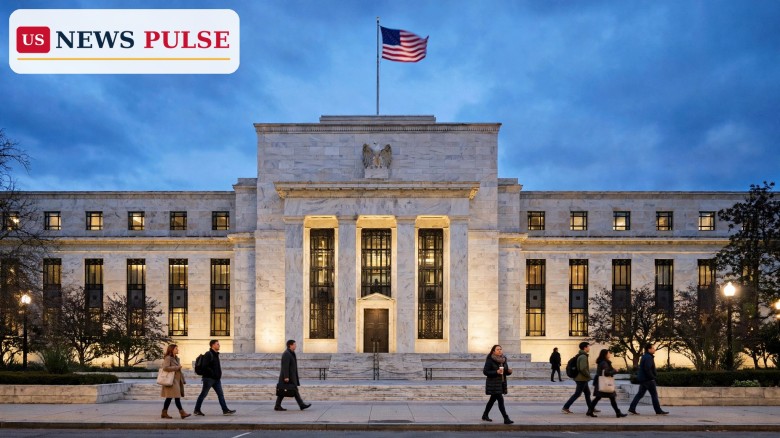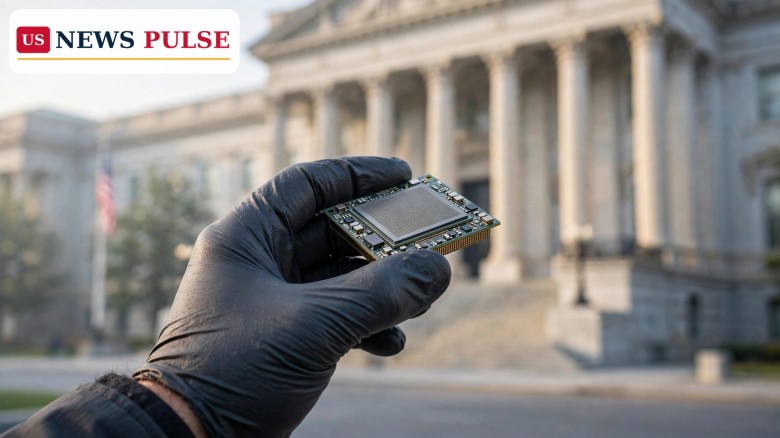
The Nvidia Hugging Face DOJ inquiry is now the sharpest test yet of how far Washington will let the world's most powerful AI chipmaker extend its reach. The US Department of Justice has made inquiries about how Nvidia's $12.93 billion deal to buy open-source AI platform Hugging Face would affect competition in artificial intelligence, Reuters reported on October 28, citing two people familiar with the matter. CNBC separately confirmed that an inquiry exists, though it did not report the specific questions Reuters described.
At the heart of the inquiry is a simple but consequential question: would owning Hugging Face let Nvidia capture a fundamental distribution point for AI? Hugging Face is where millions of developers find, share and deploy models. If the company that already supplies most of the world's AI chips also owned the marketplace where those models are discovered, regulators fear, rivals could find themselves playing on a field tilted toward Nvidia hardware, Nvidia software and Nvidia's own commercial interests.
Reuters reported that the Justice Department's recent questioning covers Nvidia's acquisitions, investments and sales practices, and whether the chip designer has exerted pressure on its customers. On Hugging Face specifically, officials have asked whether the deal would let Nvidia capture a fundamental distribution point for AI, and how Hugging Face's competitors might be affected. The department has also asked how Nvidia might use the newly acquired business to gain leverage in the AI market.
Nvidia declined to comment on the inquiry, and Hugging Face representatives did not respond to Reuters' request for comment. A Justice Department spokesperson declined to comment on any matters before the department, citing longstanding policy, but added: "This DOJ under President Trump's leadership will continue to prioritize advancement of Super Intelligence for the betterment of the American people." The spokesperson also said: "It would be inappropriate for the Department to conduct a merger investigation under the guise of a conduct investigation."
Shares of Nvidia slipped about 1% on Wednesday after the reports emerged, a modest move for a stock that has become the bellwether of the AI boom, but a sign that investors are watching the regulatory risk closely. The deal itself is not yet closed, and no lawsuit has been filed. Government investigations are not evidence of wrongdoing, and they do not necessarily result in lawsuits — a point that matters greatly here, because the inquiry could end with no action at all.
Nvidia announced on September 3, 2026 that it had agreed to buy Hugging Face for about $12.93 billion. The definitive agreement was signed the day before, on September 2. Under the terms set out in Nvidia's filing with the Securities and Exchange Commission, about $11.9 billion is payable to Hugging Face shareholders, subject to adjustments, and up to about $1 billion in equity-based retention is earmarked for employees who join Nvidia.
That price stunned many observers because Hugging Face, a private company, does not publish revenue figures. Third-party estimates put its annual recurring revenue at roughly $150 million as of August 2026 — meaning Nvidia is paying something like 86 times that figure. But the price makes sense if what Nvidia is buying is not today's sales but tomorrow's developer choices. Hugging Face hosts more than 3 million models, about 500,000 datasets and about 1 million applications, used by more than 18 million developers, researchers and creators across more than 200,000 companies. Nvidia is already the platform's largest contributor of open models and data, with more than 500 models and 250 open datasets published there.
The deal was also hotly contested before Nvidia won it. CNBC reported on September 28 that AMD and Salesforce had separately explored acquiring Hugging Face, and that OpenAI had proposed a $100 million investment, before the Nvidia agreement was struck. Hugging Face chief executive Clément Delangue has said his team approached Nvidia chief executive Jensen Huang over the summer, concluding that open-source AI had reached a turning point and needed more resources, scale and visibility.
Nvidia's dominance is the backdrop to everything. The company holds the biggest share of the market for AI chips, which power ChatGPT, Anthropic's Claude and similar tools, and it has become the world's most valuable company. It also backs major AI players such as Anthropic and OpenAI and drives data-centre development around the world. Competitors are fighting back: Broadcom and Alphabet's Google design processors together, aiming to beat Nvidia hardware with chips purpose-built for specific tasks, while Advanced Micro Devices says it can produce technically superior hardware and has struck billion-dollar deals with AI labs and cloud operators. Microsoft, meanwhile, has said its own chip will become the primary system for AI inside its products from 2027.
The Hugging Face questions do not stand alone. Reuters reported that the Justice Department has also examined Nvidia's December 2025 acquisition of SchedMD, whose open-source software helps run supercomputers relevant to national security, and which sparked worries among AI specialists about continued access. Nvidia has vowed to continue open access and support for that software.
Officials have also scrutinised Nvidia's conduct following other transactions, including its 2025 deal to license technology from chip startup Groq and hire its engineers, and its acquisition of Run:ai, which makes software that helps AI chips run more efficiently. In the Groq case, the department has explored whether Nvidia unfairly offered larger allocations of AI chips to customers who also bought its networking equipment and Groq processors — in other words, whether it used its dominant product to push into a newer market.
The pattern regulators are testing is a familiar one in antitrust law: a dominant company buys the connective tissue of its market, then uses that position to steer customers toward its own products. Hugging Face is connective tissue of a particularly sensitive kind. It is not a chip rival or a model rival; it is the place where developers choose. Control that choice, the theory goes, and you can shape which models get discovered, which hardware they are optimised for, and which clouds they run on — even without ever formally blocking a competitor.
Nvidia's answer, repeated since September, is that it will not do that. The announcement states plainly that "NVIDIA compute will not be required to build on or deploy through the Hugging Face platform" and that the platform will "continue to support open source and open weight models from across the ecosystem." Huang framed the deal as a personal handoff, writing: "I am honored that Clem came to me as he considered the next chapter of Hugging Face and believed NVIDIA would be a great home for the company, its community and the future of open models."
The official responses so far are narrow, because the inquiry itself is not public. The Justice Department spokesperson's two statements — the "Super Intelligence" priority line and the warning against running "a merger investigation under the guise of a conduct investigation" — suggest an agency conscious that its broader Nvidia conduct probe and its Hugging Face deal questions could be seen as overlapping, and determined to keep them distinct.
Nvidia's silence on the inquiry contrasts with its volubility about the deal itself. In September, Huang presented the acquisition as a stewardship story: a home for the open-model community, with more resources behind it. Delangue, likewise, described a deliberate choice, telling CNBC that Hugging Face "realized that Hugging Face and open source AI in general was at the turning point, and that it needed more, more resources, more scale, more visibility."
Market reaction was muted but telling. Nvidia shares edged down about 1% on Wednesday, while the broader AI trade was already under pressure this week after Alphabet's earnings miss and its huge capital-spending guidance. Investors, in other words, treated the inquiry as a real but not yet decisive risk — one more item on a growing list of reasons to ask whether the AI boom's biggest winner can keep winning unchecked.
Developers are the constituency with the most at stake and the least official voice so far. For small teams, Hugging Face is where models are found and tested; if Nvidia tightened its grip on that hub, the open ecosystem could become less neutral. That is precisely the concern the department's questions appear designed to test, and it is why the answers Nvidia gives about governance, neutrality and access will matter as much as the price it paid.
This inquiry matters because it goes to the structure of the AI economy, not just to one deal. Chips are the bottleneck of the AI boom, and Nvidia owns most of that bottleneck. Hugging Face is the distribution layer that sits on top of it. Combining the two would give one company unusual influence over both what AI gets built with and where developers go to find it. Regulators in the United States and the European Union must both approve the deal before it can close, so the scrutiny is only beginning.
It also matters politically. The broad Nvidia examination started under former President Joe Biden and has continued under President Donald Trump, during which time Nvidia has been the world's most valuable company. Reuters reported there is no indication that Trump has any involvement in the probe. That bipartisan continuity is itself notable: at a moment when much of Washington's tech policy is contested, the idea that Nvidia's power deserves a hard look has survived a change of administration.
There is a personal dimension too. Huang has developed a close relationship with Trump, joining the president's diplomatic trip to China, and Trump has disclosed owning Nvidia stock and awarded Huang the National Medal of Science for advancing AI hardware. Critics have previously accused the administration of political intervention at the Justice Department, which the administration has disputed. How the department handles a high-profile inquiry into a company so close to the president will be watched as a test of its independence.
Finally, the inquiry is a signal to the whole AI deal market. Nvidia's investing and acquisition strategy — backing Anthropic and OpenAI, buying Run:ai and SchedMD, licensing Groq technology, and now bidding for Hugging Face — has extended its influence far beyond chip sales. Any action by the Justice Department could ripple through the chip industry and challenge that strategy, and it could slow a wave of AI consolidation that has so far moved faster than regulators.
The immediate question is how far the inquiry goes. Staff-led investigations at the Justice Department often take years and can stretch from one administration to the next, and the department routinely seeks input from companies when evaluating proposed mergers. A formal second request for information would extend the timeline by months and force both companies to gather documents and answer detailed questions. Even an informal inquiry can slow a deal, because it consumes management attention and creates uncertainty for customers and partners.
The deal's expected close in the first half of 2027 gives regulators a long runway, but it also gives Nvidia and Hugging Face time to offer commitments — on neutrality, access, governance or data — that could ease concerns. Watch for whether either company announces such commitments, whether European regulators open a parallel review, and whether the department's questions harden into a formal challenge or fade away.
Also watch Nvidia's share price and its next earnings report for any hint of how seriously management takes the risk, and watch Hugging Face's community for signs of restlessness. If developers begin moving projects elsewhere, that would be a market verdict on the deal's openness promises before any regulator reaches one. For now, the deal is signed but not closed, and Washington is deciding how closely it wants to look.
What is the DOJ asking about the Nvidia Hugging Face deal?
Whether the $12.93 billion acquisition would let Nvidia capture a fundamental distribution point for AI, harm rivals, or gain leverage over competitors in the AI market.
Has the Justice Department blocked the deal?
No. It has made inquiries, reported by Reuters and confirmed in outline by CNBC. No lawsuit has been filed, and the inquiry may not result in any Justice Department action.
When is the deal expected to close?
In the first half of 2027, subject to regulatory approvals and other customary closing conditions. The agreement was signed on September 2, 2026 and announced on September 3.
What has Nvidia promised about Hugging Face's openness?
That Nvidia compute will not be required to build or deploy through the platform, and that it will continue to support open-source and open-weight models from across the ecosystem, across chip, cloud and AI providers.
Why is Hugging Face worth $12.93 billion?
Because of its position, not its revenue: more than 3 million models, 500,000 datasets, 1 million applications, 18 million developers and researchers, and 200,000 companies use it, making it the main place where AI models are discovered and shared.
Related coverage on US News Pulse: Marvell's $83 billion Lumentum talks show the same AI infrastructure land-grab, Meta's $95 billion AI raise leads a $198 billion day of AI spending, and the Big Tech earnings test facing Alphabet, Amazon and Apple.
Leave a Comment



 | Today's Date: