DoorDash has signed a definitive agreement to buy Instacart for about $17 billion, turning days of reported deal talks into one of the biggest consolidations in the history of American food delivery. The DoorDash Instacart deal, announced on Thursday, October 29, 2026, will pay Instacart shareholders $65.00 for each share, a 26% premium to the company's closing price on October 22, the last trading day before reports of a possible sale first surfaced.
The agreement pairs the United States' leading restaurant delivery network with the country's leading grocery delivery technology platform. If regulators approve it, the combined company will serve shoppers buying the weekly groceries on Instacart and the restaurant meals and last-minute essentials ordered through DoorDash, all through stores in their own neighbourhoods.
DoorDash Inc. (NASDAQ: DASH) and Maplebear Inc., which trades as Instacart (NASDAQ: CART), announced the definitive agreement on Thursday morning, alongside DoorDash's third-quarter 2026 financial results. Instacart's board of directors has unanimously approved the agreement, and shareholders holding about 19% of Instacart's outstanding shares have already agreed to vote in favour of it.
Under the terms, Instacart shareholders may elect to receive, for each share, $65.00 in cash, 0.3372 shares of DoorDash common stock, or a mix of $48.75 in cash and 0.0843 DoorDash shares. The stock component is capped at 25% of the total consideration, with proration if too many shareholders choose stock. The transaction is not subject to a financing condition, and DoorDash says it is targeting a capital structure that maintains its investment-grade credit ratings.
DoorDash shares jumped around 8% on the news, while Instacart shares slipped about 2% in early trading, after having already climbed sharply since the talks were first reported. Instacart shares had hit a record high of $62 on Monday, October 26, after Bloomberg and Reuters reported the advanced talks, and traded around $58.50 in premarket trading on Thursday.
DoorDash will discuss the transaction on its earnings call at 8:30 a.m. ET on Thursday. Centerview Partners is acting as lead financial adviser to DoorDash, with J.P. Morgan Securities also advising; Goldman Sachs is advising Instacart.
The deal caps a week of fast-moving reports. Reuters reported on Monday, October 26, that DoorDash was in advanced talks to acquire Instacart in a deal that could value the grocery platform at about $17 billion, with a deal possible as soon as Wednesday. The Wall Street Journal first reported the discussions, and The Information had earlier reported that Instacart had held preliminary talks with potential buyers including Uber and DoorDash. Uber's talks with Instacart are no longer active, according to Reuters.
Instacart, based in San Francisco, went public in 2023 after a pandemic-era surge in online grocery shopping. It partners with more than 2,200 retail banners representing nearly 100,000 stores, and its advertising and enterprise technology business accounted for nearly 30% of revenue in the second quarter of 2026, growing faster than its core transaction business. Its enterprise customers include Costco, which has used Instacart technology to power online ordering in parts of North America and Europe.
DoorDash, founded in 2013 and also based in San Francisco, has facilitated more than 10 billion consumer orders and driven more than $230 billion in sales for merchants. It has been on a buying spree as delivery consolidates: it completed its purchase of UK-based Deliveroo last year, bought hospitality technology company SevenRooms and advertising technology firm Symbiosys, and agreed in September to buy the campus dining business of smaller rival Grubhub. Uber, meanwhile, signed a deal in July for Germany's Delivery Hero to strengthen its international position.
Not every Instacart bet has paid off. The company recently said it will stop offering its high-tech Caper Cart smart shopping carts to grocers, citing development costs and competing priorities for its retail customers.
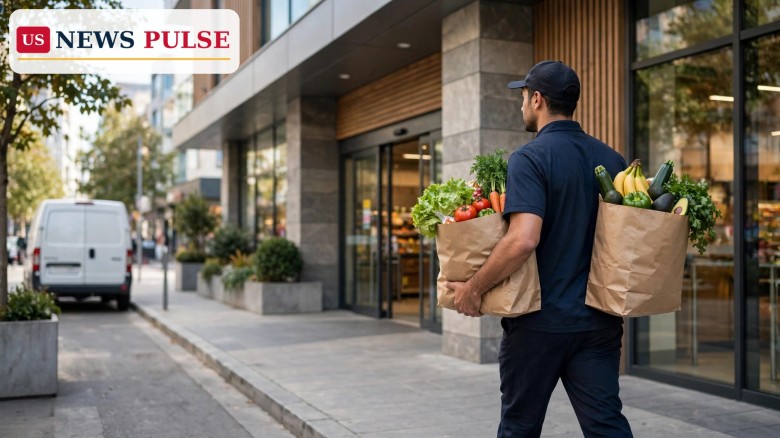
DoorDash says the combination is aimed squarely at local commerce. Families turn to Instacart for the big weekly shop and to DoorDash for meals and nearly anything else they need from their neighbourhood in under an hour, the companies said. Together, they would offer grocers and retailers of every size DoorDash's delivery network and Instacart's grocery and fulfilment technology, in both apps and on stores' own websites, plus the advertising and artificial intelligence tools each company has built.
DoorDash set out three headline benefits. Instacart customers could shop at more than 50,000 additional stores, on top of the nearly 100,000 stores already on the Instacart platform. DashPass and Instacart+ members would pay one membership fee instead of two, saving an estimated $100 million a year on membership fees alone. And Dashers and Shoppers would get more ways to earn, choosing grocery orders on a quiet day, restaurant orders at peak times, or both.
DoorDash also made post-close commitments: an open platform with no grocery exclusivity, so local grocers can work with any delivery platform they choose; and a promise that Instacart Shoppers can keep the features they value, including flexibility over how much they work and the information they need to decide which batches to accept, and can choose whether to take DoorDash orders or keep shopping only on Instacart. After closing, DoorDash expects to keep Instacart's brand, enterprise technology products and app. Until then, the two companies will continue to operate as separate and independent companies.
"Grocery is one of the hardest things to get right online. Someone has to pick a ripe avocado, find a substitute you'd choose yourself, and get the ice cream to you before it melts," said Tony Xu, co-founder and chief executive of DoorDash. "Instacart has spent years learning to do that well for grocers, while DoorDash has built a delivery network and technology that local stores rely on every day. Together, we could give stores of every size more of those tools and unlock the potential of grocery delivery. It's still early innings, but we know that when more people shop local, more dollars stay local."
"Over the last 14 years, Instacart has transformed online grocery by helping retailers of all sizes compete and grow, and joining forces with DoorDash allows us to do even more," said Chris Rogers, chief executive of Instacart. "When our purpose-built grocery technology and trusted retailer and brand relationships are combined with DoorDash's global consumer reach and logistics capabilities, we can create new opportunities for our retail and brand partners, offer an even better experience for customers and shoppers, and deliver compelling value for our shareholders. Together, we can accelerate innovation across the grocery industry and make online grocery more seamless and affordable for the millions of households we serve."
Analysts and investors read the deal as a direct challenge to the retail giants. For DoorDash, already the leading restaurant delivery app in the US, buying Instacart would boost its grocery segment, which Xu recently described as the fastest-growing part of the business, and better position it against Walmart and Amazon, which have made online grocery orders a bigger priority. The broader delivery industry has been consolidating since the pandemic, as order growth slowed from pandemic-era peaks, labour costs rose and regulators tightened scrutiny of gig work.
The deal matters because grocery is the largest and hardest part of online retail. Most grocery shopping still happens in physical stores, but more people are buying groceries and everyday goods online, expecting fast, affordable delivery and an easy way to order. The biggest online retailers and grocers are racing ahead, building their own delivery fleets, warehouses, membership programmes and AI shopping assistants. A grocer running on thin margins cannot build all of that alone, the companies argued, and with AI, the playing field risks tilting further away from local commerce.
For consumers, the promise is more choice and lower costs: more stores, one membership fee, faster delivery. For workers, the pitch is more earning opportunities across two kinds of orders. For grocers, the offer is technology they could not afford to build themselves, plus advertising revenue from their own retail media networks. The risk, which regulators will test, is concentration: two of the biggest delivery platforms becoming one, with power over the fees stores pay and the terms on which Dashers and Shoppers work.
The timing also matters. DoorDash reported the deal alongside a strong quarter, giving it a position of strength. Third-quarter revenue rose 34% year over year to $4.6 billion, or 23% excluding Deliveroo. Total orders rose 28% to 993 million, while Marketplace gross order value expanded 36% to $33.9 billion, beating the average analyst projection of $33.7 billion. GAAP net income attributable to common stockholders grew 91% to $466 million, and adjusted EBITDA climbed 41% to $1.06 billion. DoorDash also issued a fourth-quarter outlook for gross order value of $35.4 billion to $36.4 billion, ahead of estimates, though the midpoint of its adjusted EBITDA guidance, $900 million to $1.1 billion, falls slightly short of the average Bloomberg-compiled estimate of $1.06 billion.
The road to closing is long. The deal needs approval by Instacart shareholders, expiry or termination of the waiting period under the Hart-Scott-Rodino Antitrust Improvements Act, and other regulatory approvals, including in Canada and Israel, plus other customary closing conditions. DoorDash expects it to close toward the end of 2027 or in the first half of 2028.
Antitrust scrutiny is the biggest open question. Regulators in Washington have examined delivery and grocery competition closely, and a combination of the top restaurant delivery network with the top grocery delivery platform will draw attention from lawmakers, grocers and gig-worker groups. Watch for the Hart-Scott-Rodino review, any state attorneys general interest, and the terms regulators might demand on fees, data or worker treatment.
Investors will also watch Uber's response, after its own Instacart talks ended, and its results next week, which will give the next read on consumer demand for delivery. DoorDash's fourth-quarter gross order value guidance will be tested against the holiday season, and any sign of slowing order growth could change how the market judges the price DoorDash is paying.
How much is DoorDash paying for Instacart?
About $17 billion in equity value, at $65.00 per Instacart share, a 26% premium to Instacart's closing price on October 22, 2026, the last trading day before deal reports emerged.
When will the DoorDash-Instacart deal close?
DoorDash expects closing toward the end of 2027 or in the first half of 2028, subject to Instacart shareholder approval and regulatory clearances in the United States, Canada and Israel.
Will the Instacart app disappear?
No. DoorDash says it expects to keep Instacart's brand, enterprise technology products and app after closing, and the two companies will operate separately until then.
What happens to DashPass and Instacart+ memberships?
DoorDash says members would pay one membership fee instead of two, saving an estimated $100 million a year on membership fees alone.
How did DoorDash perform in the third quarter?
Revenue rose 34% to $4.6 billion, total orders rose 28% to 993 million, gross order value grew 36% to $33.9 billion, and adjusted EBITDA climbed 41% to $1.06 billion.
Related coverage on US News Pulse: DoorDash-Instacart talks, first reported on October 26, Wall Street's October 28 close as the Fed held rates, and Meta's $95 billion AI raise.
Leave a Comment



 | Today's Date: