A New York safety inspector who faked the X-ray tests meant to keep natural gas pipelines from leaking or exploding was sentenced on Thursday, October 29, 2026, to two and a half years in federal prison. Michael Vasconcellos, 45, of Mahopac, New York, was also ordered to serve three years of supervised release and to pay more than $64 million in restitution to Consolidated Edison, the utility whose pipelines he was supposed to be checking.
The sentence, handed down by U.S. District Judge Cathy Seibel in White Plains federal court, closes one chapter of a fraud that ran for seven years across the Bronx and Westchester County. Between 2016 and 2023, prosecutors said, Vasconcellos and a colleague repeatedly faked radiographic inspections of pipeline welds, passing off X-ray images of one weld as proof that a different weld had been tested. Hundreds of welds were affected, and because Con Edison could not tell which ones had actually been checked, the utility has spent more than $64 million digging up pipelines and re-testing them.
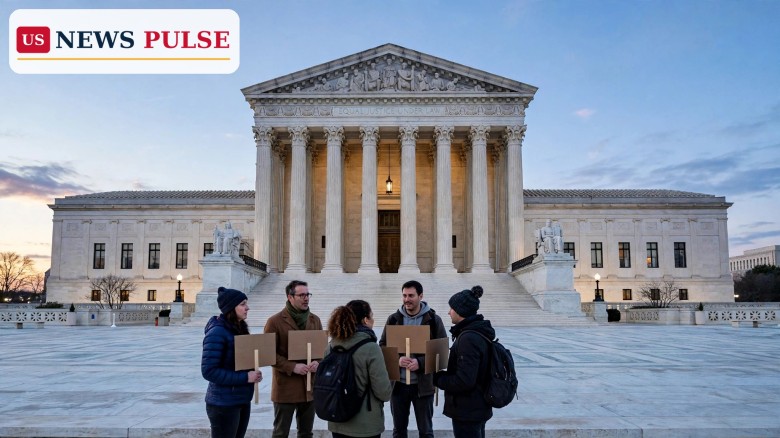
The sentencing hearing in White Plains laid bare the two very different pictures of the same defendant. Prosecutors David Markewitz and James McMahon asked Judge Seibel to impose a prison term within the federal sentencing guidelines of four and three-quarter years to five years. They argued that anything more lenient would fail to deter others in the non-destructive testing industry from doing the same thing, and would fail to deter Vasconcellos himself, who has since moved on to similar work in the industry.
Defence lawyer Edward Sapone asked for no prison time at all. He proposed three years of supervision instead, including one year of home confinement and 500 hours of community service. Sapone argued that keeping his client free and employed at his new job would let him begin paying restitution to Con Edison and continue caring for his elderly mother and uncle. He also stressed that Vasconcellos did not benefit financially from the scheme, describing the skipped inspections as corner-cutting "under production pressure and fatigue".
Judge Seibel landed between the two positions: 30 months behind bars, well below the guideline range prosecutors sought, but a real prison term rather than the supervision-only sentence the defence wanted. The judge also ordered three years of supervised release after prison and restitution of more than $64 million, reflecting the enormous cost Con Edison has already incurred cleaning up the fraud.
The case had been building for years. The fake inspections were discovered in 2023, and after an investigation Vasconcellos and his colleague Liam Treibert were arrested in August 2025. Vasconcellos pleaded guilty in April 2026 to conspiracy to commit wire fraud, admitting that he had agreed to pay Con Edison $8.2 million in restitution at that stage. Prosecutors said that figure was only the minimum he would have to pay, and that the utility's remediation costs have since ballooned to $64 million, according to court documents. Treibert's case remains pending.
To understand why this fraud matters, it helps to understand what a pipeline weld inspection is supposed to do. When a gas company lays a new pipeline, it places pipe segments in the ground and welds them together. Before that pipeline can be put into service, every weld must be inspected to make sure it has no defects. The most common method is radiographic testing, essentially an X-ray of the weld: a team radiographs each weld and examines the film for cracks, gaps or other flaws. If a defect is found, the weld is repaired before the pipeline is cleared for use.
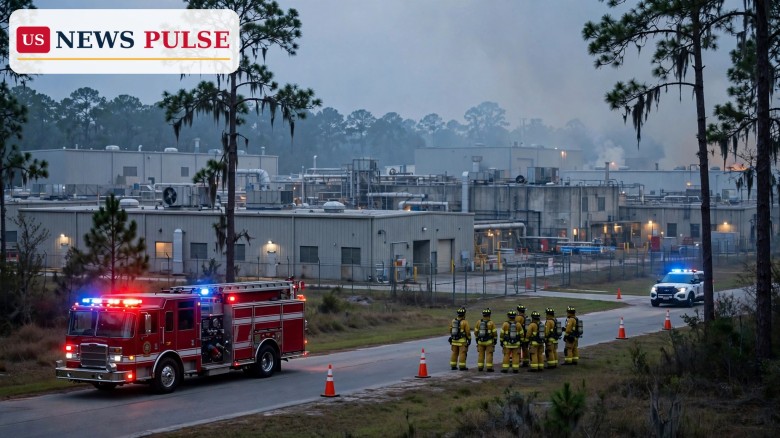
Failure to repair a defect before a pipeline goes into service can lead to critical failures, including gas leaks or explosions. That is why the inspections are not optional paperwork. They are the last safety check standing between a buried defect and a neighbourhood above it.
Vasconcellos worked for two Con Edison contractors over the period in question, first Certified Testing Laboratories and later Vibranalysis. His job was to perform those radiographic tests. Instead, according to the U.S. Attorney's Office for the Southern District of New York, he and Treibert repeatedly engaged in a practice the non-destructive testing industry calls "radaring". Radaring typically involved radiographing the same weld twice and then passing off one copy of the films as having come from a second weld. A radiographer might radiograph Weld A twice, then claim the second set of films is of Weld B, even though the radiographer never inspected Weld B at all.
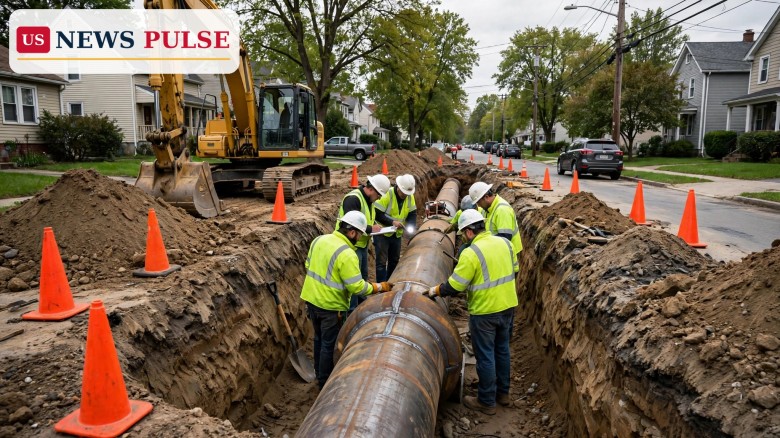
In total, hundreds of welds across Con Edison's pipelines installed throughout the Bronx and Westchester County between 2016 and 2023 were affected. The utility paid for hundreds of sham inspections and was deceived into thinking its pipelines had passed critical safety tests that were never performed. Only a small part of Con Edison's cost was the money it paid to Vasconcellos's employers. The far larger bill came after the fraud was found: because the utility could not determine which welds had gone uninspected, it had to spend millions of dollars excavating pipeline and re-testing welds to be sure they were safe.
The investigation was carried out by the New York State Inspector General's Office, the Office of Inspector General of the U.S. Department of Transportation, and special agents with the U.S. Attorney's Office, with the case handled by the White Plains Division.
The Con Edison pipeline fraud is striking not for its sophistication but for its simplicity, and for the scale of the damage a simple trick caused. Radaring required no hacking, no forged signatures on a grand scale, just a second exposure of the same weld and a label claiming it was something else. Yet the consequences cascaded: every weld that might have been faked became suspect, and suspect welds cannot simply be left in the ground.
That is why the restitution figure is so large. The $64 million is not money Vasconcellos pocketed; prosecutors acknowledged he did not benefit financially from the scheme. It is the cost of undoing the uncertainty he created. Excavating buried pipeline, re-testing welds and repairing any defects found is slow, disruptive and expensive work, carried out street by street across two of the most densely populated parts of New York.
The case also exposes a weakness in how critical infrastructure safety is policed. The system trusted the inspector. Con Edison hired contractors, the contractors employed radiographers, and the radiographers' own films were the evidence that the work had been done. When the person holding the X-ray machine decides to fake the result, there is no second set of eyes unless someone goes looking. It took until 2023 for the fraud to be discovered, seven years after it began, and only then did the excavation and re-testing start.
For the non-destructive testing industry, the sentencing sends a message prosecutors explicitly wanted sent. Markewitz and McMahon argued that a lenient sentence would signal to other radiographers that "radaring" carries little risk. The 30-month term, while below the guidelines, is still a federal prison sentence for a white-collar defendant who, by his lawyer's account, cut corners under pressure rather than for profit.
U.S. Attorney Jamie McDonald did not mince words in the Justice Department's announcement of the sentence. "Michael Vasconcellos fabricated gas pipeline test results designed to prevent gas leaks and explosions, putting the lives of New Yorkers at risk," McDonald said. "Instead of doing his job, the defendant left New Yorkers relying on critical safety checks that never happened."
New York State Inspector General Lucy Lang struck a similar note when the charges were first brought, saying Treibert and Vasconcellos "put entire Bronx and Westchester communities at risk, and must face consequences for their actions". Her office's statement at the time of the arrests stressed that the case demonstrated an "unwavering commitment to protecting critical infrastructure and pursuing accountability on behalf of all New Yorkers".
The defence framed the conduct very differently. Sapone described the skipped inspections as the product of production pressure and fatigue, noting that prosecutors themselves acknowledged the inspections were most often skipped when pipeline work would otherwise have been slowed, when the crew was tired, or when a weld was particularly challenging. In that telling, Vasconcellos was a worker who cut corners under strain, not a fraudster who set out to endanger anyone.
Prosecutors rejected that framing as a reason for leniency. They pointed out that Vasconcellos has moved on to similar work in the testing industry, and argued that only a prison sentence would deter both him and others from repeating the practice. The judge's sentence, below the guidelines but still custodial, suggests she weighed both accounts and found neither fully persuasive.
This case matters because it is about the infrastructure most people never think about until it fails. Natural gas pipelines run beneath streets, homes, schools and hospitals across New York City and its suburbs. The safety of that system depends on a chain of trust: the utility trusts its contractors, the contractors trust their inspectors, and the public trusts all of them. Vasconcellos broke that chain at its most basic link, the person holding the testing equipment.
It matters, too, because of what it reveals about deterrence. The fraud lasted seven years and was discovered only in 2023. If the penalty for being caught is light, the calculation for a tired inspector under production pressure looks very different from the calculation the public would want. A prison sentence, even one below the guidelines, changes that calculation for an entire industry whose workers operate largely out of sight.
And it matters for the cost. The $64 million remediation bill ultimately lands somewhere: on the utility, on ratepayers, or on shareholders. It is a reminder that fraud in infrastructure safety is not a victimless paperwork offence. The bill for fake inspections is paid in real excavation, real disruption and real money, long after the fake films have been filed away.
Several threads remain open. Liam Treibert's case is still pending, and its outcome will determine whether the second defendant in the scheme faces a similar sentence. Vasconcellos will serve his 30 months in federal prison, followed by three years of supervised release, during which his employment and activities will be monitored.
Restitution is another long road. A $64 million order against an individual defendant is rarely paid in full, and the practical question is how much Con Edison will actually recover and over what period. The court will set a payment schedule, and Vasconcellos's post-prison earnings will be part of that picture, which is one reason his lawyer argued for keeping him employed.
Con Edison's remediation work is also not finished. The utility has already spent more than $64 million, and the process of identifying, excavating and re-testing suspect welds continues. Regulators and the utility may also face questions about whether inspection oversight should change: whether contractors' work should be independently audited, whether films should be digitally tracked to prevent reuse, and whether the seven-year gap before discovery points to a systemic blind spot.
For residents of the Bronx and Westchester, the most immediate question is simpler: are the pipelines under their streets safe now? The utility's answer, implicit in the scale of its remediation spending, is that it is working to make sure they are, weld by weld, at a cost that shows just how expensive a shortcut can become.
Who is Michael Vasconcellos?
He is a 45-year-old safety inspector from Mahopac, New York, who worked for two Con Edison contractors, Certified Testing Laboratories and later Vibranalysis, performing radiographic tests on natural gas pipeline welds.
What did he do?
Between 2016 and 2023, prosecutors said, he repeatedly engaged in "radaring": X-raying the same weld twice and passing off one set of films as the inspection of a different weld that was never actually tested. Hundreds of welds in the Bronx and Westchester County were affected.
What was his sentence?
On October 29, 2026, Judge Cathy Seibel sentenced him to two and a half years in federal prison, three years of supervised release, and more than $64 million in restitution to Con Edison.
Why is the restitution so large if he did not profit?
Because Con Edison could not tell which welds had gone uninspected, it had to excavate pipeline and re-test welds across the affected areas. That remediation work has cost more than $64 million, and the restitution reflects that cost, not money Vasconcellos took.
What happens to his colleague?
Liam Treibert, arrested alongside Vasconcellos in August 2025, still has his case pending. Vasconcellos pleaded guilty on April 21, 2026, to one count of conspiracy to commit wire fraud.
Related coverage on US News Pulse: the third criminal case against former FBI chief James Comey and the Justice Department's charges against green card holders accused of illegal voting in five states.
Leave a Comment



 | Today's Date: