Israel's 2026 election has ended without a clear winner, according to exit polls published the moment voting closed on Tuesday, October 27, 2026. Prime Minister Benjamin Netanyahu's Likud emerged as the largest single party, but his right-wing and religious bloc won only about 50 of the Knesset's 120 seats in all three television exit polls — 11 short of the 61-seat majority needed to govern. The Jewish-led opposition bloc finished narrowly ahead on 52 to 53 seats, while Arab-led parties surged to a record 17 or 18 seats, leaving them as the potential kingmakers in what promises to be weeks of coalition bargaining.
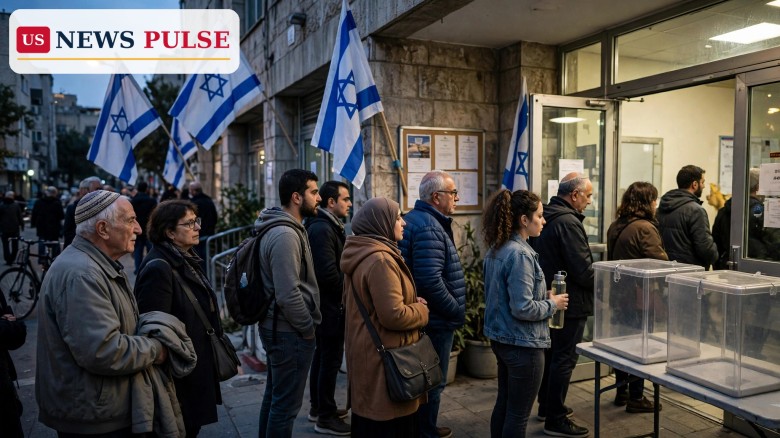
Polling stations closed at 10 p.m. local time on Tuesday after a day of voting for the 26th Knesset, Israel's first general election since the Hamas-led attacks of October 7, 2023. Within minutes, the three main television channels published their exit polls, and all three told the same basic story: no bloc has a majority, and neither Netanyahu nor his challengers can form a government without partners they have so far refused to embrace.
Channel 12's exit poll gave Likud 24 seats and Yashar 22, with the four main parties seeking to replace Netanyahu — Yashar, B'Yachad, Yisrael Beiteinu and the Democrats — holding 52 seats against 50 for the prime minister's allies. Channel 13's poll was similar but slightly stronger for the opposition: Likud 25, Yashar 23, B'Yachad 14, and the change bloc on 53 seats. Kan 11's figures fell in the same range, with Likud on 25 and Yashar on 21. In every poll, the Arab parties held the balance, with the Joint List and Ra'am together on 17 or 18 seats.
Exit polls are projections, not results. The Central Elections Committee began counting real ballots overnight, and up to 650,000 special ballots — from soldiers, hospital patients, diplomats and prisoners — could delay the final count until Thursday. The final tally is expected by October 30, with official results on November 4, and actual results often differ from exit poll projections by a seat or two per party.
The election was framed from the start as a referendum on Netanyahu, who has led Israel for most of the past 17 years and is seeking to extend his rule after the October 7 attacks and the wars that followed. His challenger, former army chief of staff Gadi Eisenkot, leads the centrist Yashar party, which had topped most pre-election polls. Former prime minister Naftali Bennett's B'Yachad party ran third, while Yair Golan's Democrats and Avigdor Liberman's Yisrael Beiteinu rounded out the opposition bloc.
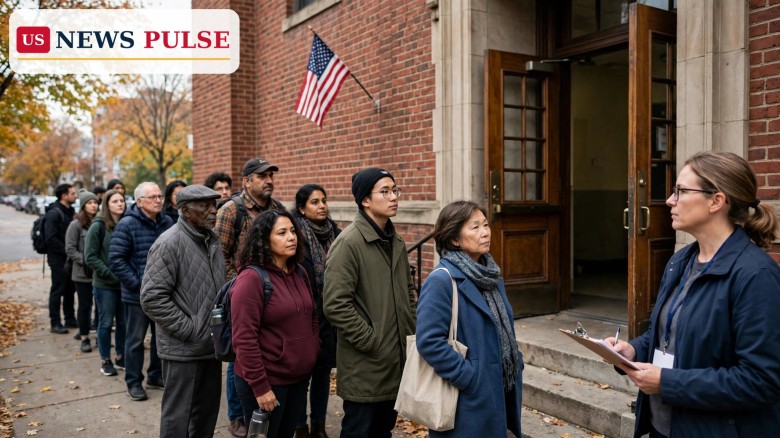
Some 7.33 million Israelis were eligible to vote, including about 330,000 first-time voters, across 12,018 regular polling stations. Voters choose party lists rather than voting directly for a prime minister, and a party must clear a 3.25 percent threshold to enter the Knesset. Two small parties — the Reservists and the right-wing People of Israel — fell below that threshold in the Channel 12 and Channel 13 exit polls, as did Amcha Yisrael, the party that had joined Likud's request to extend voting hours.
The final pre-election television polls, published on October 23, had already pointed to deadlock: Kan 11, Channel 12 and Channel 13 each put Netanyahu's bloc on 50 seats, with the opposition on 52, 56 and 54 respectively and Arab parties counted separately. The exit polls landed almost exactly where those surveys predicted, suggesting the campaign's final days moved few voters.
The full party-by-party picture from the three exit polls shows how fragmented the next Knesset will be. Behind Likud and Yashar, Bennett's B'Yachad took 12 to 14 seats, the Joint List 10 to 11, the Democrats 9 to 10, and Yisrael Beiteinu 7 to 9. On Netanyahu's side, Shas won 6 to 8 seats, the ultra-Orthodox United Torah Judaism 6 to 7, Itamar Ben Gvir's Otzma Yehudit 6 to 7, and Bezalel Smotrich's Religious Zionism 6.
The most striking development is the Arab vote. The Joint List, an alliance of Arab parties, and the Islamist Ra'am party together won 17 to 18 seats, up from the 14 to 16 seats projected in the final pre-election polls. Turnout in Arab communities surged: in Umm al-Fahm, 70.1 percent of eligible voters had cast ballots by 8 p.m., compared with 38.3 percent across the whole of Election Day in 2022, while in Nazareth the figure reached 70 percent, against 48.3 percent in 2022. Nationally, turnout hit 66.7 percent by 6 p.m. — against 57.7 percent at the same hour in 2022 — and 74.3 percent by 8 p.m., the highest ever recorded at that stage and above the 70.6 percent total turnout of 2022.
Turnout was also high in Jewish towns: Rosh Ha'ayin reached 79 percent by 8 p.m. and Modi'in-Maccabim-Re'ut 76.5 percent. The surge was not confined to one community, but the Arab turnout jump was the sharpest, and it is the main reason the Arab parties' seat totals beat their pre-election projections.
The final hours of voting were tense. Likud, joined by Shas and Amcha Yisrael, asked the Central Elections Committee to extend voting beyond 10 p.m., arguing that voters still in line should not lose their chance to vote. The committee rejected the request on Tuesday evening, noting that anyone who arrived at a polling station by 10 p.m. would still be allowed to cast a ballot even if voting ran later.
Eisenkot's Yashar party opposed the extension within the hour. "The request is intended to lay the groundwork for claims challenging the integrity of the election, following the lies Netanyahu has been spreading since this morning. No unusual event has occurred that would justify approving it," the party said in a statement. Shas said it had requested the extension to "prevent a situation in which citizens waiting in line would be unable to vote."
Netanyahu himself had sent voters a recorded message during the day accusing the left and Arab parties of trying to "steal the election," while far-right Finance Minister Bezalel Smotrich issued an 11th-hour appeal on X, saying turnout "in the Arab sector is unprecedented" and that a "dangerous left-wing government" could take power. "Do not despair! It is still possible to win," Smotrich wrote, adding in a separate post: "This is an emergency for the right."
The day was not without incident. Power was cut in Kuseife and Ar'arat an-Naqab, two Bedouin towns in southern Israel; the outage lasted half an hour in Kuseife but continued for more than two hours in Ar'arat an-Naqab. Mansour Abbas's United Arab List accused right-wing actors of cutting power to cost it votes in towns where the party is strong. The Association for Civil Rights in Israel warned the committee of suspected deliberate delays at numerous polling stations in Arab communities, and a man carrying a knife was arrested after approaching Democrats leader Yair Golan in Tel Aviv.
The result matters far beyond Israel's borders. With neither bloc near 61 seats, the Arab parties — which have generally not joined governing coalitions — hold unusual leverage. Opposition leaders have largely ruled out forming a government with the Arab parties, with the exception of the Democrats' Yair Golan, and Netanyahu's bloc has historically refused to rely on them either. If neither side bends, Israel could face another round of voting, repeating the 2019 to 2022 cycle that saw five elections in less than four years, with Netanyahu remaining as caretaker prime minister in the meantime.
The result also tests Netanyahu's political survival after 19 years in office across his terms, and it comes at a moment of intense international attention on Israel's wars, its relationship with the United States, and the future of Gaza. Both Netanyahu and Eisenkot may declare victory and appeal to President Isaac Herzog to give them the first shot at forming a government — Netanyahu because he leads the largest party, Eisenkot because he leads the biggest bloc. Under Israeli law, the president consults party leaders and then gives one candidate up to 42 days to assemble a coalition.
For American readers, the stakes are direct: the next Israeli government will shape US policy in the Middle East, from Gaza's future to Iran, and Washington will be watching whether the coalition that emerges can command a stable majority or collapses back into another election.
The immediate next step is the count. The Central Elections Committee will release official tallies through the night and into Wednesday, with the special ballots — up to 650,000 of them — counted last and capable of shifting a seat or two between parties. The final tally is expected by October 30 and official results on November 4.
Once the results are certified, President Herzog will hold consultations with every elected party and then hand the mandate to the candidate he judges most likely to build a 61-seat coalition. That candidate gets 28 days, extendable by 14 more, to strike deals. If the first candidate fails, the president can turn to another, and if no one succeeds, the Knesset can dissolve itself and trigger a fresh election.
Watch three things in the coming days: whether the opposition bloc moves toward any arrangement with the Arab parties, whether any party on Netanyahu's right defects or demands a price he cannot pay, and whether the final count moves any small party across the 3.25 percent threshold — a single seat changing hands could change the arithmetic of the whole negotiation.
No one has won outright yet. Exit polls show Netanyahu's Likud as the largest party with 24 to 25 seats, but his bloc holds only 50 seats, while the opposition bloc holds 52 to 53. Neither side reaches the 61-seat majority needed to govern, and final results are still being counted.
The Joint List and Ra'am together won 17 to 18 seats in the exit polls, a record showing driven by a surge in Arab voter turnout. Their support could prove decisive in coalition talks, even though most party leaders have so far ruled out governing with them.
The Central Elections Committee is counting votes overnight, with up to 650,000 special ballots potentially delaying the final count until Thursday. The final tally is expected by October 30, with official results on November 4.
Yes. If neither Netanyahu nor Eisenkot can assemble a 61-seat coalition, Israel could return to the polls, as it did five times between 2019 and 2022. Netanyahu would remain as caretaker prime minister until a new government is formed.
Turnout reached 74.3 percent by 8 p.m., the highest ever at that hour, with a particularly sharp rise in Arab towns such as Umm al-Fahm and Nazareth. The election, the first since the October 7, 2023 attacks, was widely seen as a referendum on Netanyahu's long rule.
Related coverage on US News Pulse: Israel election 2026: record turnout as Netanyahu claims vote is being stolen, Israel election 2026: Netanyahu fights for survival as Israel votes today, and Netanyahu treason probe demanded as army chief resisted Iran strike before vote.
Leave a Comment



 | Today's Date: