Defeated Brazilian presidential candidate Flavio Bolsonaro has left Brazil for the United States just two days after losing Sunday's runoff election to President Luiz Inacio Lula da Silva, according to Reuters sources and multiple Brazilian media reports published on Tuesday, October 27, 2026. The reported departure came hours after Brazilian authorities cancelled his passports for missing a Supreme Court deadline to surrender them, turning a bitter election defeat into a fast-moving diplomatic and legal drama between the two largest countries in the Americas.
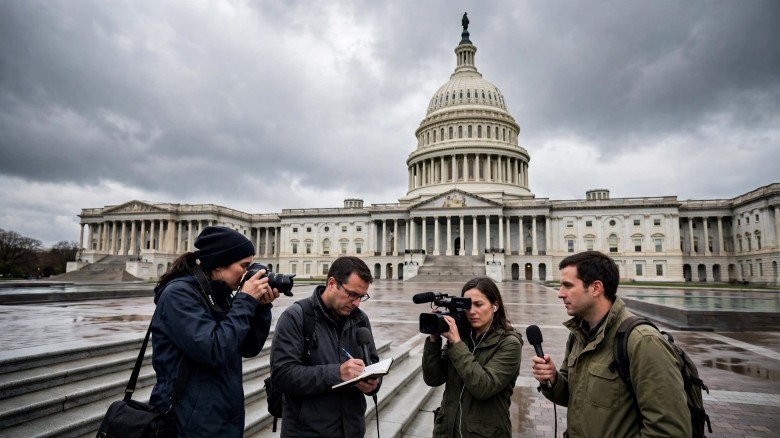
Reports of Bolsonaro's departure spread rapidly on Tuesday morning in Brazil, after a day in which his whereabouts had already become a mystery. Reporters gathered outside his home in the capital, Brasilia, but he did not appear, and Brazilian media outlets reported that several of his allies had been unable to reach him. The news agency AFP observed a motorcade leaving his residence, although it could not determine whether the senator was inside any of the vehicles.
Reuters then reported, citing an ally of the senator, that Bolsonaro had left the country for the United States. A second source close to Bolsonaro told the agency he had departed with his wife and two daughters, just hours after police announced that his passports had been cancelled. USA TODAY, citing Reuters and multiple Brazilian media reports, described him as on a plane headed to the United States. The Associated Press, carried by US regional outlets, likewise reported that he had left Brazil for the United States, citing multiple media reports.
The timing is what makes the departure so striking. On Monday, Bolsonaro had appeared in a video on his own social media channels insisting he had no intention of leaving. "I have never thought about leaving the country," he said, adding that he would surrender his passports and defend himself against what he described as an attempt to intimidate him. Within about a day, according to the reports, he was gone.
Confusion about his route added to the drama. Rumours circulated on Monday that he might have headed for Argentina, but Argentine authorities said they had no record of him entering their territory. After reports of a private plane at Iguazu International Airport, near the Argentina-Brazil border, border officers checked the aircraft and its crew and found no flight plan listing the Bolsonaro family. A spokesperson for Argentine President Javier Milei, who has yet to congratulate Lula on his victory, said there was no asylum request from Bolsonaro.
Bolsonaro, a sitting senator and the eldest son of former president Jair Bolsonaro, lost Sunday's runoff in a stunning reversal. He had emerged as the leading candidate in the first round earlier in October, but Lula, the 80-year-old incumbent leftist who turned 81 on Tuesday, won the second round with 51.79 percent of the vote. Lula received more than 64 million votes against just under 60 million for Bolsonaro, a margin of nearly 4.4 million votes, or about four percentage points.
Analysts credited Lula's comeback to voters who had stayed home or backed other candidates in the first round. About 14.1 million more voters took part in the runoff than in the first round, and reporting on the result estimated that roughly three-quarters of those additional votes went to Lula. Lula is expected to be sworn in on January 5, 2027, for a historic fourth, non-consecutive term.
Bolsonaro refused to accept that outcome. He initially asked for the results to be annulled after an evening of disruption at some polling places prompted authorities to extend voting by two hours. On Monday, he urged the electoral court to investigate alleged fraud and to nullify the candidacies of Lula and Vice President Geraldo Alckmin, a step the electoral court has never taken. To succeed, he would have to present evidence of fraud affecting Lula's 4.4-million-vote margin and convince the eight-member electoral court before the results are certified on December 18.
The legal pressure on Bolsonaro did not begin with the election. He is under investigation by Brazil's Supreme Court for alleged corruption, money laundering and tax evasion in two cases, all of which he denies. In one, he is accused of using a sports betting company to launder fraudulent deductions from government pensions paid to senior citizens. In the other, he is accused of accepting millions of dollars from a disgraced banker. Prosecutors suspect funds from the banker were used to pay his brother Eduardo Bolsonaro's expenses and to promote Flavio Bolsonaro's political agenda with the Trump administration.
On Sunday, the Supreme Court issued a sealed order, later viewed by the Associated Press, requiring Bolsonaro to surrender his regular and diplomatic passports. He was served with the order on Monday, a day after the election, outside the home where his father is serving a 27-year sentence under house arrest for attempting a coup following his own 2022 election loss to Lula. Justice Alexandre de Moraes gave him 24 hours to comply. The deadline expired at noon on Tuesday, and authorities then cancelled his passports.
What is firmly established is this: Bolsonaro lost the election, was ordered to surrender his passports within 24 hours, missed that deadline, and had his passports cancelled on Tuesday. Multiple news organisations, citing sources close to him, then reported that he had left Brazil for the United States. His own party, his spokesperson and the US government have not confirmed the details.
What remains unclear is almost everything about the journey itself. It is not known which airport he used, which flight he boarded, when he is expected to arrive, or what documents he travelled on after his passports were cancelled. It is also unknown whether he intends to seek asylum, request some other form of protection, or simply remain in the United States while challenging the election and the investigations from abroad. The US Embassy in Brazil did not immediately respond to requests for comment, and neither the White House nor the State Department immediately responded to questions about his reported flight.
His Senate term adds a clock to the story. The eight-year term expires on January 31, 2027, when he will also lose the special jurisdiction he currently enjoys at the Supreme Court. That change could alter how, and by whom, his cases are handled. A Supreme Court justice has also ordered an investigation into potential foreign interference in Bolsonaro's campaign, examining allegations of manipulation intended to influence Brazil's electoral process, according to Arab News reporting.
Bolsonaro's inner circle has gone largely silent. His spokesperson did not respond to requests for comment, and his Liberal Party also did not immediately respond. Paulo Figueiredo, a close ally who lives in the United States, declined to discuss the senator's whereabouts directly. "At this moment, following months of intense work that were unfairly thwarted, I have no desire to speak with the press," Figueiredo said. "Should I have a statement to make on any matter, I will reach out."
Before the reports of his departure, Bolsonaro had struck a defiant tone about the road ahead. "I am going to gather elected lawmakers and senators to organize our strategy and make the lower house and the Senate our fortress against barbaric acts that are set to happen in another four years of Lula," he said. That promise now sits uneasily alongside his reported flight: an opposition leader who vowed to fight from inside Brazil's Congress is, according to the reports, fighting from outside the country.
President Donald Trump, who did not formally endorse Bolsonaro, nevertheless cast doubt on the election on Monday. "It looked like another rigged election, frankly," he told reporters. "I thought it had a very bad look, the way it was tabulated." Trump had previously condemned the criminal case against Jair Bolsonaro, calling his trial a "witch hunt." The Trump administration has previously alleged that the elder Bolsonaro was a victim of judicial persecution in Brazil.
One voice of caution came from Benjamin Gedan, director of the Stimson Center's Latin America programme, who warned about the wider danger of unproven fraud claims. "False claims of fraud are becoming commonplace, though that does not make them any less dangerous," he said.
The family parallel is impossible to miss. Jair Bolsonaro travelled to the United States after refusing to concede defeat to Lula in 2022, then later returned to Brazil and was sentenced to 27 years in prison for plotting a coup. Flavio's younger brother Eduardo, who has lived in Texas since 2025, publicly encouraged him to leave Brazil if he lost: during an October 23 appearance on the "Louder with Crowder" podcast, Eduardo suggested his brother should flee in the event of defeat. Eduardo himself was convicted in absentia in June of illegally lobbying the Trump administration and sentenced to four years in prison, with a warrant recently issued for his arrest.
For Brazil, the episode deepens an already raw political wound. A presidential candidate who led the first round, refused to concede, and then reportedly left the country hours after his passports were cancelled leaves behind a party that has accepted the result and a Congress that must now decide how to handle an absent senator-elect of the opposition. It also raises a practical question for Brazil's courts: how do investigations proceed when the subject is reported to be abroad and his travel documents have been cancelled?
For the United States, the stakes are diplomatic as much as legal. Lula has accused Washington of colluding with the Bolsonaro family to restore them to power, and Reuters has previously reported on a US State Department campaign aimed at bringing the family back into office. If Flavio Bolsonaro seeks asylum or protection in the United States, the Trump administration would face a decision that could either inflame or ease tensions with Latin America's largest country, just as Lula prepares to begin a fourth term.
There is also a pattern worth noting. Across the Americas, losing candidates who claim fraud and then leave the country have repeatedly turned domestic disputes into international ones. The question now is whether Bolsonaro's departure becomes a footnote to a conceded election, or the opening chapter of a longer exile, legal battle and campaign conducted from American soil.
In the immediate term, watch for three things. First, any statement from Bolsonaro himself, his lawyers or his party confirming where he is and what he intends to do. Second, any response from the US government on whether he has arrived, what status he holds, and whether any asylum or protection request has been made. Third, any move by Brazil's Supreme Court or electoral court: the fraud challenge faces a December 18 certification deadline, and the money-laundering investigations continue regardless of where Bolsonaro is.
Longer term, the calendar will do some of the work. Lula's inauguration is set for January 5, 2027, and Bolsonaro's Senate term ends on January 31, 2027. Between those two dates, the political and legal ground under this story will shift substantially, whatever Bolsonaro decides from abroad.
Has Flavio Bolsonaro fled to the United States? Reuters sources and multiple Brazilian media reports say he left Brazil for the United States on Tuesday, October 27, 2026, with his wife and two daughters. The US government, his party and his spokesperson have not confirmed the details.
Why were his passports cancelled? Supreme Court Justice Alexandre de Moraes ordered him to surrender his regular and diplomatic passports within 24 hours as part of a money-laundering investigation. After he missed the noon Tuesday deadline, Brazilian authorities cancelled the documents.
Did Bolsonaro say he would stay in Brazil? Yes. In a video posted on Monday, he said he had never thought about leaving the country and would surrender his passports and defend himself. Reports of his departure emerged about a day later.
Has he conceded the election to Lula? No. He has refused to concede and is seeking to annul the result over alleged irregularities, but his Liberal Party recognised Lula's victory on Monday. Lula won by nearly 4.4 million votes.
What happens to his Senate seat and court cases? His Senate term expires on January 31, 2027, when he loses his special Supreme Court jurisdiction. The electoral fraud challenge must be decided before certification on December 18, and the money-laundering investigations continue.
Related coverage: Brazil Election 2026: Lula Wins Historic Fourth Term Against Bolsonaro; Trump Brazil Election Rigged Claim After Lula Beats Bolsonaro in Runoff.
Leave a Comment



 | Today's Date: