Taylor Farms salad recall fears returned to Texas fridges on Tuesday, as the produce giant recalled its H-E-B Backyard BBQ Chop Salad Kit after discovering the kits may contain soy and tree nuts that are nowhere on the label. The recall, announced in a Food and Drug Administration notice on October 27, 2026, covers a single product sold only at H-E-B stores in Texas, and it carries a blunt warning for anyone with a soy or tree-nut allergy: do not eat it.
The affected kits are 13.4-ounce bags of H-E-B Backyard BBQ Chop Salad Kit, marked with UPC 041220300457 and a best-by date of October 30, 2026. Both numbers are printed on the back of the bag. The kits may contain undeclared soy and almonds, two of the nine major food allergens United States law requires manufacturers to declare. No adverse reactions had been reported as of October 27, according to the recall notices, but allergy specialists warn that for sensitive shoppers the risk is not theoretical: an undeclared allergen can trigger a serious or even life-threatening reaction in someone who has no reason to suspect it is there.
The timing makes the warning urgent. With a best-by date of October 30, the recalled kits are exactly the kind of product still sitting in a fridge or a lunch bag this week, bought on a routine grocery run and easy to overlook. Taylor Farms has told customers to throw the kits away or return them to the store for a full refund, and to call the company at 855-455-0098, Monday to Friday between 8 a.m. and 4 p.m. Pacific time, with questions. No other Taylor Farms salad kit is included in this recall.
The recall was issued by Taylor Farms of Dallas and published through the FDA on October 27, 2026. According to the notice, the H-E-B Backyard BBQ Chop Salad Kit may contain soy and tree nuts, specifically almonds, that are not properly listed on its packaging. The product was distributed to H-E-B stores in Texas and sold in a plastic bag under the H-E-B private label, a detail that matters because shoppers looking for a Taylor Farms brand name on the front of the bag may not realise the kit is the one being recalled.
The identification details are deliberately narrow, and that is good news for most shoppers. Only one product, one size and one date combination is affected: the 13.4-ounce H-E-B Backyard BBQ Chop Salad Kit, UPC 041220300457, best-by October 30, 2026. The FDA has also published label images of the recalled kit on its site, so anyone unsure can compare the bag in their fridge against the official pictures rather than guessing from memory.
The official advice is unambiguous. USA TODAY, reporting the FDA notice, states: "Do not consume the recalled salad kits; either dispose of them or return them to the place of purchase for a refund, per the FDA notice." H-E-B's own guidance, carried in its announcement, tells customers to throw the kits away or return them for a full refund. The distinction matters for households without an allergy in them: if nobody in the home has a soy or tree-nut allergy, the kit poses no identified danger, because this is a labelling failure, not a contamination event. But because a bag can be shared, packed into a lunchbox or served to a guest, the safest course for any household that cannot be certain is to follow the recall and not serve it.
The recall lands in a year when Taylor Farms has already been at the centre of one of the largest food-safety stories in recent American history. Health officials identified iceberg lettuce grown by Taylor Farms de Mexico as the source of an unprecedented cyclospora outbreak this summer, a parasitic illness that causes prolonged gastrointestinal sickness. USA TODAY described it as the nation's largest-ever cyclospora outbreak, sickening more than 20,000 people, while figures cited from the Centers for Disease Control and Prevention put the confirmed count at 12,883 people across 21 states, with at least 570 hospitalisations and two deaths. The FDA declared the outbreak over in September and said on October 2 that it had concluded its investigation, finding cyclospora present in the environment where the lettuce was grown and processed.
This week's recall is explicitly not related to that outbreak, and it is not related to Taylor Farms de Mexico. The distinction is important, because it changes what shoppers should worry about. The summer outbreak was a pathogen in fresh produce, the kind of risk that washing cannot reliably remove. The October recall is a labelling error: allergens that should have been declared were not. The products are different, the facilities are different, and the hazard is different. What links them is only the company name and a fresh reminder of how much trust a bagged salad asks of its buyer.
H-E-B, the Texas grocery chain where the recalled kits were sold, operates more than 400 stores across Texas, which explains why a recall limited to a single state can still reach a very large number of shoppers. Bagged salad kits are also a high-frequency purchase: they are bought weekly, eaten within days and often served straight from the bag, with no cooking step that might change the risk profile. That combination of scale, speed and ready-to-eat use is exactly why allergen labelling rules exist, and why regulators treat an undeclared allergen as a recall matter even when no illness has yet been reported.
Checking takes less than a minute, and it is worth doing before the next meal rather than after it. First, look for the product name: H-E-B Backyard BBQ Chop Salad Kit. Second, check the size: 13.4 ounces. Third, turn the bag over and find the UPC, 041220300457, and the best-by date, October 30, 2026, both printed on the back of the package. If all three match, the kit is part of the recall, whatever store in Texas it came from.
Next, decide who might eat it. Soy and tree nuts are among the nine major food allergens that federal law requires to be declared on packaging, alongside milk, eggs, fish, crustacean shellfish, peanuts, wheat and sesame. For people with a soy or almond allergy, even a small amount can provoke symptoms ranging from hives and swelling to difficulty breathing and anaphylaxis, a severe reaction that needs emergency treatment. Children, guests and anyone whose allergy status is unknown should be treated as at risk if the bag is in the house.
Finally, act on the bag, do not just set it aside. Throw it away in a sealed bag or return it to H-E-B for a full refund, and clean any surface, bowl or utensil it touched if an allergic person uses the kitchen. Anyone who has already eaten the kit and develops symptoms such as swelling of the lips or tongue, trouble breathing, widespread hives or vomiting should seek emergency medical help immediately and mention the possible allergen exposure. Anyone with questions about the recall can call Taylor Farms at 855-455-0098 on weekdays between 8 a.m. and 4 p.m. Pacific time.
Regulators and retailers have kept the messaging deliberately simple, and that simplicity is itself the message: this is a check-your-fridge recall, not a wait-and-see one. The FDA notice, as reported by USA TODAY, directs shoppers not to consume the kits and to dispose of them or return them for a refund. H-E-B's announcement echoes that instruction, offering a full refund on return. Taylor Farms has not reported any adverse reactions to date, a fact every outlet covering the recall has repeated, because it draws the line between a precautionary allergen recall and an outbreak with victims.
Consumer coverage has stressed the same distinction from the other direction: for shoppers without a soy or tree-nut allergy, there is no reason to panic about a bag already eaten, because the salad itself is not described as contaminated or spoiled. The risk is specific to people with those allergies, which is precisely why the missing label matters so much. An allergy sufferer cannot avoid what a label does not mention, and a host cannot warn a guest about an ingredient the package hides. In allergen recalls, the label is the safety device, and when it fails, the recall has to do the label's job.
The wider food-safety context has also shaped the reaction. After a summer in which a Taylor Farms-linked outbreak sickened thousands, shoppers and retailers are primed to treat any Taylor Farms recall as major news, even when the underlying hazard is different and smaller. That sensitivity cuts both ways: it gets the warning in front of more people, which is what a recall needs, but it also risks blurring two unrelated events into a single impression that all Taylor Farms salad is unsafe. The facts do not support that reading. One product, one date, one state, two undeclared allergens: that is the scope of this recall, and staying inside that scope is what lets shoppers act correctly.
Allergen recalls are sometimes dismissed as paperwork problems, but for the roughly one in ten American adults and children living with a food allergy, a missing declaration is a genuine safety failure. Allergic reactions are not a matter of preference or mild discomfort. They can escalate within minutes, they can require an epinephrine auto-injector and an emergency room visit, and they are frightening precisely because they strike people who believed they were eating something safe. A salad kit marketed as a quick, healthy choice becomes a hazard only for the shopper the label failed.
The case also matters as a test of how the food system handles small, fast-moving errors. Bagged salads move from field to shelf to fridge in days, and their best-by dates are short. A recall announced on October 27 for a product expiring on October 30 has a window of days, not months, to reach the people who hold the product. That is why the identification details, UPC and date and store chain, are printed so prominently in every report, and why this article repeats them: in a recall like this, the useful information is not the company's history but the numbers on the back of the bag.
Finally, the recall matters because it arrives at a moment of heightened scrutiny of the fresh-produce supply chain. The summer cyclospora outbreak, the largest of its kind on record, prompted questions about irrigation, processing environments and traceability that regulators are still answering. An unrelated labelling recall does not answer those questions, but it does show the other side of the same system: the controls that are supposed to catch a wrong label before a bag ships. When they fail, the recall is the backstop, and its success depends entirely on shoppers hearing about it in time.
For shoppers, the next step is immediate and personal: check the fridge, check the bag, and if it matches, throw it away or take it back to H-E-B for a refund. With the best-by date falling on October 30, remaining stock should clear from shelves and fridges within days, and the practical risk window will close as the date passes. Anyone who returns a kit should keep the receipt or a photo of the bag if possible, in case a refund needs a record, though H-E-B's guidance promises a full refund on return.
For Taylor Farms, the next steps are regulatory and reputational. The company will be expected to explain how soy and almond ingredients entered a kit whose label did not declare them, whether the error was a recipe change, a supplier substitution or a packaging mix-up, and what labelling checks have changed as a result. The FDA will monitor whether the recall reaches the affected stock and whether any adverse reactions emerge after the announcement, which would change the recall's risk assessment. If reports of illness do appear, expect updated guidance and a wider public notice.
For the wider market, this recall is a reminder to treat best-by dates as deadlines for checking, not just for eating. Shoppers who buy bagged salads weekly should make a habit of glancing at recall notices for their store chain, and households with allergies should keep the habit of reading the back of the bag every time, even for a product bought many times before. Recipes, suppliers and labels change, and a familiar bag is not a guarantee that its contents are unchanged.
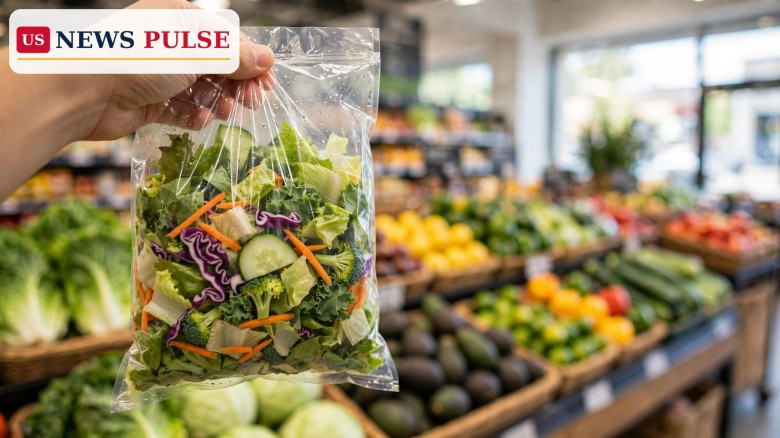
The H-E-B Backyard BBQ Chop Salad Kit, 13.4 ounces, made by Taylor Farms of Dallas, with UPC 041220300457 and a best-by date of October 30, 2026, sold at H-E-B stores in Texas.
The kits may contain undeclared soy and tree nuts, specifically almonds. Both are major food allergens that must be declared on packaging, and people with those allergies could have a serious or life-threatening reaction.
No adverse reactions had been reported as of October 27, 2026, according to the recall notices. The recall is precautionary, based on the labelling failure rather than reported illness.
Do not eat it. Throw it away or return it to H-E-B for a full refund. For questions, call Taylor Farms at 855-455-0098, Monday to Friday, 8 a.m. to 4 p.m. Pacific time.
No. The FDA notice and subsequent reporting state this recall is not related to cyclospora or to Taylor Farms de Mexico, the source identified in the summer outbreak. It concerns undeclared allergens in a Texas-sold salad kit only.
Related reading on US News Pulse: the 4.3 million-tube toothpaste recall, the Miyoko's plant-based butter recall in 10 states, and the FDA salmonella warning on Darwin's cat food.
Leave a Comment



 | Today's Date: