Utah officials have closed one of the state's longest-running murder cases, announcing on Tuesday, October 27, 2026, that serial killer Ted Bundy was responsible for the 1974 killing of 17-year-old Melissa Ann Smith. The announcement came exactly 52 years to the day after hunters found the teenager's body in a wooded area of Summit County, and it was made possible by a DNA breakthrough that linked her case to another Utah teenager murdered in the same terrible autumn.
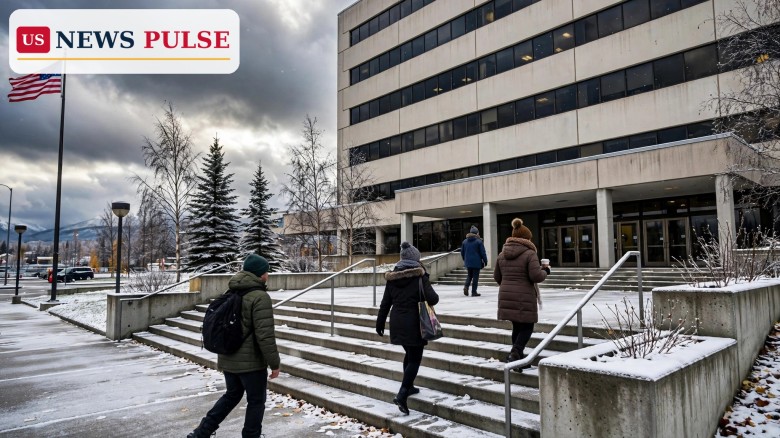
The Ted Bundy Utah cold case had sat on the books for more than half a century, a file that outlived investigators, survived the loss of witnesses and waited for science to catch up with it. On Tuesday, at the Summit County Justice Center near Park City, Sheriff Kacey Bates and County Attorney Margaret Olson said that wait was over. They told reporters they were satisfied that Bundy, who was executed in Florida in 1989 and can never face a courtroom for this crime, killed Melissa Smith. For her family, the closure arrives after 52 years of unanswered questions.
The announcement was delivered at a news conference at the Summit County Justice Center, attended by law enforcement leaders from three counties. Sheriff Bates opened by stating plainly that the county was closing the 1974 homicide investigation into Melissa Ann Smith's death. County Attorney Olson, whose office had reviewed the findings before the case was closed, explained the basis for the decision in careful, deliberate terms.
Olson said investigators were satisfied that Bundy was responsible for Smith's killing, pointing to two pillars of evidence. The first was DNA. The second was the pattern of the crime itself: in Olson's words, Smith's death carried the hallmarks of Bundy's "pattern, motive, means and opportunity." Taken together, she said, the evidence established Bundy's responsibility beyond the standard investigators needed to close a case in which the suspect is already dead.
"This DNA evidence, when considered alongside evidence related to pattern, motive, means, and opportunity, establishes that Ted Bundy was responsible for Melissa Ann Smith's murder," Olson told reporters. "Although Ted Bundy is no longer alive to face prosecution, advances in forensic science and the continued dedication of law enforcement professionals have helped provide answers in a case that has remained unsolved for over 50 years."
Officials said they had been in touch with Smith's next of kin, none of whom still live in the area. The formal closure changes the case's status in state records from active to closed, and it ends an investigation that, in practical terms, had been waiting for a scientific answer for decades.
Melissa Ann Smith was 17 years old and from Midvale, a city in Salt Lake County. She was the daughter of the town's police chief, Louis Smith, a detail that made her disappearance sting all the more sharply for the local law enforcement community. On October 18, 1974, she left a pizza restaurant where she had been visiting a friend. She never made it home.
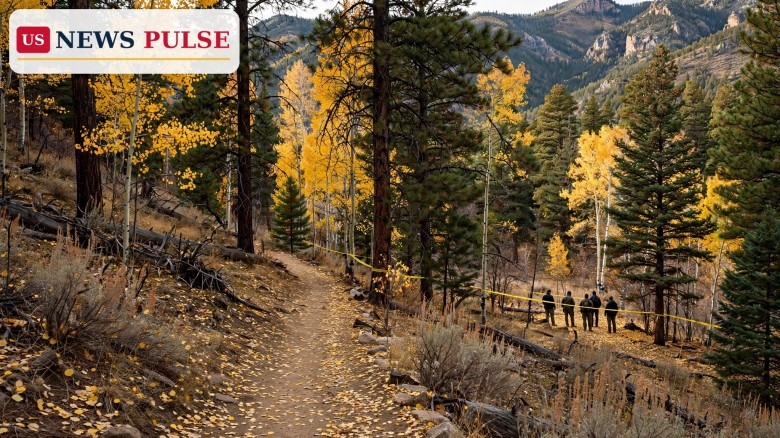
Nine days later, on October 27, 1974, hunters found her body in a wooded area near the line between Summit and Salt Lake counties, in the Summit Park area near Toll Canyon. For most of the half century that followed, Utah's cold-case listing carried her as a homicide victim believed to have been killed by Bundy, but belief is not proof, and the case stayed open.
The autumn of 1974 was a dark season along Utah's Wasatch Front. Bundy was then a law student at the University of Utah, and several teenage girls disappeared in the region during those months. In 1976, Bundy was convicted in Utah of kidnapping Carol DaRonch, a teenager who escaped from his car, but he was never tried for a murder in the state. He later fled to Florida, where in January 1978 he killed two women at the Chi Omega sorority house at Florida State University and, weeks later, 12-year-old Kimberly Leach. He was executed in Florida's electric chair in 1989 at the age of 42.
In his final days, Bundy gave a series of confessions, including to crimes that had previously been unknown to police. Not all of those confessions have been confirmed. He confessed to killing around 30 women and girls, and law enforcement has confirmed at least 30 victims across several states in the 1970s, with estimates of his total toll ranging far higher. Among the Utah cases he claimed in those final confessions were two other girls from that autumn, Nancy Wilcox and Debra Kent, whose bodies have never been found.
The road back to Melissa Smith's case ran through Utah County, and through another 17-year-old girl. Laura Ann Aime, of Lehi, disappeared on Halloween in 1974. Earlier this year, the Utah State Crime Lab developed a DNA profile from evidence recovered in Aime's case that matched Bundy's known profile on file in Florida, and Utah County closed her case on April 1, 2026.
That breakthrough set everything else in motion. The renewed review of Smith's case began in May 2025, when Utah County investigators contacted Summit County about similarities between the two killings. In June 2025, a Summit County detective reached out to the Salt Lake County Sheriff's Office, and a Salt Lake detective was able to locate original investigative reports and evidence that had been preserved for decades. Without that preserved evidence, there would have been nothing left to test.
The crucial comparison involved paternal DNA, the male-line DNA carried on the Y chromosome. It can link a sample to a family line rather than to a single individual, which makes it less specific than the DNA profiles used in most modern detective work, and it is not catalogued in a national database. Even so, when a paternal DNA profile was created from Summit County evidence, it matched the Utah County profile determined to be from Bundy. Utah County Sergeant Mike Reynolds explained that a highly similar DNA profile linked to Bundy had been found in evidence obtained from Smith's autopsy.
On July 14, the Utah State Crime Lab concluded that the DNA profile recovered from Aime's body matched the profile recovered from Smith's body. That finding, together with the other evidence and reports in the case, was presented to the county attorney's office on October 7. Twenty days later, on the 52nd anniversary of the day Smith's body was found, officials announced the case closed.
There is one bittersweet footnote to the confessions. According to local reporting, a Salt Lake County detective asked Bundy in his final days about Aime and Smith, but he could not place either of them. The answers, when they finally came, arrived not from the killer but from a laboratory, decades after his death.
Salt Lake County Sheriff Rosie Rivera used the announcement to make a broader point about cold cases everywhere. "This case demonstrates the importance of preserving evidence," she said, adding that law enforcement owes it to the families of cold cases to keep doing the painstaking work even when decades have passed. "It's super important for law enforcement to do their due diligence to solve a case," Rivera said. "We owe that to the families of these cold cases."
Sergeant Reynolds struck a more personal note, one that captured the strange mix of relief and anger that accompanies a case like this. "With every case closure, may we stomp the memory of Ted Bundy out," he said. The line drew attention because it named what closure cannot do: it cannot bring Melissa Smith back, and it cannot put her killer on trial. What it can do is replace uncertainty with an answer, and give a family a name for what happened to their daughter.
County Attorney Olson's statement was the most legally significant of the day. By saying the evidence "establishes" Bundy's responsibility, she moved the case beyond long-standing suspicion and into formal attribution. That distinction matters for the historical record, for the families of other victims, and for investigators still working on cases from the same era.
The closure matters for three reasons. First, it matters to a family that has waited 52 years. Cold cases are not abstractions to the people left behind; they are birthdays, anniversaries and holidays marked by an absence that was never explained. An official answer, even one that arrives after the killer's death, changes how a family carries that loss.
Second, it matters as proof that preserving evidence works. The DNA that closed this case was recovered from material kept for half a century, through changes in technology, personnel and storage. Had any link in that chain broken, the case would have remained a suspicion forever. Rivera's message was aimed squarely at every agency holding boxes of old evidence: keep them, catalogue them, and revisit them when science advances.
Third, it matters for the remaining cases. Bundy's confirmed victim count continues to grow as DNA testing improves, and authorities said they are still working to solve the death of 16-year-old Nancy Wilcox, another likely Utah victim. Every closure narrows the field, sharpens the pattern, and gives investigators a stronger basis for testing the next file. The Aime case closed Smith's case; Smith's case may, in turn, help close another.
With Bundy dead, there will be no prosecution, no trial and no sentencing in Melissa Smith's case. The formal work is done: the investigation is closed, the records are updated, and the family has been told. What continues is the wider effort to resolve the remaining Utah cases linked to Bundy, including the disappearances of Nancy Wilcox and Debra Kent, whose bodies have never been recovered.
Investigators will also continue to apply the same method elsewhere. Paternal DNA, once a rarely used tool, has now closed two Utah cases in a single year, and other agencies with preserved evidence from the 1970s will be watching closely. The lesson of October 27 is that a case is only truly cold when the evidence is gone. While the evidence survives, so does the chance of an answer.
For the public, the announcement is a reminder of how long justice can take, and how much it depends on unglamorous work: storing a box, filing a report, answering a phone call from another county. The headline belongs to DNA, but the case was closed by patience.
Melissa Ann Smith was a 17-year-old from Midvale, Utah, and the daughter of the town's police chief. She disappeared on October 18, 1974, and her body was found by hunters in Summit County nine days later.
DNA evidence was the key. The Utah State Crime Lab concluded that a paternal DNA profile from Smith's case matched a profile from the Laura Ann Aime case, which had been tied to Bundy's known profile on file in Florida. Combined with evidence about pattern, motive, means and opportunity, investigators concluded Bundy was responsible.
The case stayed open because suspicion is not proof. It took the DNA breakthrough in the Aime case in April 2026, a renewed review that began in May 2025, and the recovery of preserved evidence and reports from 1974 to build a case strong enough to close formally.
No. Ted Bundy was executed in Florida in 1989, so there is no one alive to prosecute. Closing the case formally ends the investigation and updates its status in state records.
Yes. Authorities said they are still working on the death of 16-year-old Nancy Wilcox, another likely Utah victim, and the bodies of Wilcox and Debra Kent, both of whom Bundy said he killed, have never been found.
Related coverage on US News Pulse: Alexander brothers sentenced to 30 years each in sex trafficking case, James Comey third criminal case: DOJ accuses ex-FBI chief of leaking in 2016, and Elizabeth, New Jersey vigil shooting: 1 dead, up to 6 wounded as suspect flees.
Leave a Comment



 | Today's Date: