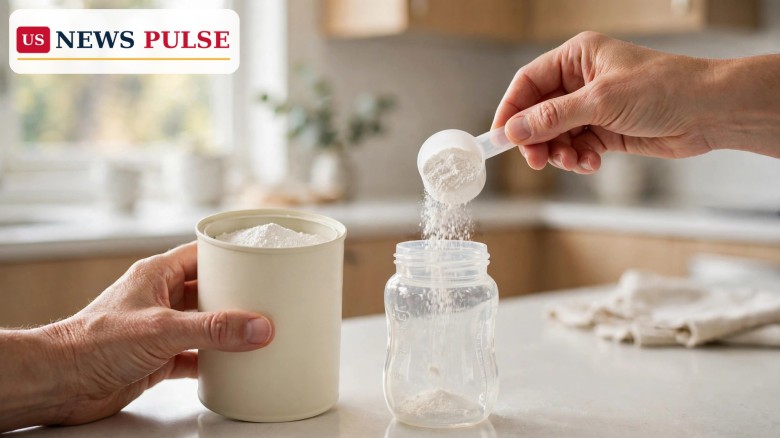
A draft petition asking the US Food and Drug Administration to require botulism testing of powdered infant formula has put a long-standing gap in American food safety rules under fresh scrutiny, after two outbreaks sickened 52 babies. The petition, drafted by food safety attorney Bill Marler on behalf of 23 parents whose infants developed botulism after drinking powdered formula, would add the bacteria that cause botulism to the short list of organisms formula makers must test for before their products reach store shelves. With public comments on the draft open until Friday, October 30, 2026, parents, doctors and manufacturers have just days left to shape a proposal that could change how every can of powdered formula in the United States is made.
Marler posted the draft petition for public comment in an opinion column in Food Safety News, the publication he founded and publishes, and outlined it in a column dated October 19, 2026. The draft, which runs to 31 footnotes to public sources and four appendices, asks the FDA commissioner to change the regulation directly, rather than waiting for Congress to pass a law. Once a citizen petition is formally filed, it receives a public docket where anyone can comment directly to the FDA, and the agency must respond within 180 days, although that response can be an interim one that does not include a final decision.
The timing matters. Comments on the draft close on Friday, October 30, just three days after this article's publication date, and Marler has since posted a follow-up asking commenters two further questions: whether testing should reach every formula ingredient rather than only dairy ingredients, and whether it should reach every tanker of raw milk. He wrote that the petition itself would not change on those points for now, because it asks for what the record from the ByHeart and Nara outbreaks supports, but added: "That record was built after fifty-two babies were hospitalized, and the next outbreak will not wait for a better one. If there is a case for reaching further upstream, I want to hear it before I file, not after."
It is important to be precise about what this petition is, and what it is not. This is advocacy, not agency action. The FDA has not announced any plan to change its formula testing rules, and it has not responded to the draft because nothing has been filed yet. Marler is a plaintiffs' attorney, and he discloses in the draft that he and his firm represent each parent petitioner in litigation arising from the outbreaks. The petition itself states that nothing in it should be read as a concession by any petitioner on any issue in that litigation.
The two outbreaks at the heart of the petition unfolded over nearly two years. ByHeart Whole Nutrition Infant Formula sickened 48 infants in 17 states, with illness onsets from December 2023 through November 2025, according to Food Safety News. Nara Organics Whole Milk Organic Infant Formula sickened four infants in California, Pennsylvania and Washington in April and May 2026. Every one of the 52 babies was hospitalised.
On August 27, 2026, the FDA reported that whole genome sequencing linked the two outbreaks. Formula from both brands was made with milk supplied by Organic West Milk and spray dried by Dairy Farmers of America, and the agency said the evidence points to a common source. But the root cause has not been found. "Currently there is not enough evidence to determine where the milk was contaminated," the FDA wrote on its post-outbreak response page, as quoted by Medical Daily.
ByHeart voluntarily recalled two batches of its Whole Nutrition Infant Formula, lots 206VABP/251261P2 and 206VABP/251131P2, in 24-ounce containers with a use-by date of December 1, 2026. The company has described the recall as precautionary, noting that no ByHeart product tested positive for contamination and that no direct link between its formula and the illnesses has been confirmed, and it offered free replacements for discarded products. Parents are advised to check the batch code on the bottom of the can and dispose of any affected product immediately.
The regulatory history shows why the petition's supporters say change is overdue. Federal regulation 21 C.F.R. section 106.55(e) requires infant formula manufacturers to test finished product for two organisms: Cronobacter and Salmonella. The FDA added Cronobacter to that list in 2014 on a record of about one reported illness a year, reasoning that voluntary industry testing might not be enough for a food that is the sole source of nutrition for infants. Then, on March 8, 2023, the FDA commissioner wrote to the entire powdered infant formula industry and named Clostridium botulinum as a hazard to be considered in designing controls. Yet the organism was never added to the mandatory testing list, and since that letter, 52 infants have been hospitalised with botulism in the two outbreaks.
The draft's top request is testing of each production aggregate of powdered formula using at least thirty 200-gram samples, with a required result of none detected. It also asks for testing of each lot of dairy ingredients, such as whole milk powder, before those ingredients are used, notice to the FDA within one business day of any confirmed positive result, a finalized test method within 180 days, and records tracing ingredients back to the drying facility and the dairy farms that supplied the milk.
The draft focuses on dairy-based ingredients that have not been through a validated spore-reduction step: whole milk powder, nonfat dry milk, milk protein concentrate, whey and its concentrates and hydrolysates. That is where the evidence points, Marler wrote, because FDA inspections found the organism in a lot of organic whole milk powder at the dryer, and when the agency surveyed powdered milk in February 2026, it found a spore-former carrying a botulinum toxin B1 gene in two of 48 samples on the first pass.
The petition takes a regulatory route instead of a legislative one. Medical Daily previously reported on a House bill, the Infant Formula Safety Modernization Act, introduced in March 2026, which would also require botulism testing of infant formula and environmental monitoring at formula plants. That bill has not become law. The petition argues the FDA can add to its testing list itself, under sections 402, 412 and 701(a) of the Federal Food, Drug, and Cosmetic Act, without Congress. Marler's central argument is moral as much as technical: "Babies cannot read a label or be warned. The testing has to happen before the can is opened," he wrote.
The draft also sits inside a wider campaign. Marler has filed or prepared seven petitions to the FDA and the US Department of Agriculture's Food Safety and Inspection Service this year, covering subjects from warning labels on raw milk cheese to faster public warnings about contaminated food. In that campaign, he described the formula petition as asking the FDA to add botulinum neurotoxin-producing clostridia to the finished-product testing table and to require testing of the dairy-based ingredients formula is made from, this time with 46 parents of 24 of the sickened infants listed as co-petitioners in the campaign summary, a larger group than the 23 parents named in the original draft.
The FDA itself has acknowledged both the risk and the practical difficulties. The agency has noted that botulism-causing spores survive typical pasteurization, and that testing can take two weeks or more to produce final results, which complicates any rule that would hold finished product until results arrive. It has asked an international microbiology commission to reconsider its guidance on testing formula and dairy ingredients for Clostridium botulinum, and in July 2026 it sent formula makers a letter urging closer vetting of ingredient suppliers.
Testing would not catch every problem, even its supporters concede. Contamination can be scattered unevenly through a batch, so sampling reduces risk without eliminating it, which is why the draft also asks for supplier controls and environmental monitoring at plants. That limitation is central to the debate now playing out in the comments: whether a testing rule alone is enough, or whether the FDA should also require the kind of environmental monitoring and supplier vetting that the House bill proposes.
For parents, the official advice has not changed. Most powdered formula is not affected by these outbreaks, and families do not need to stop using a formula their baby tolerates. They should check that any ByHeart or Nara Organics product at home is not from a recalled lot, and talk with a pediatrician before switching brands rather than making changes on their own. Infant botulism can be hard to spot at first. The US Centers for Disease Control and Prevention lists signs including constipation, poor feeding, drooping eyelids, pupils that are slow to react to light, a face showing less expression than usual, and a weak cry that sounds different than usual. Botulism is a medical emergency, and the CDC tells parents not to wait, but to see a doctor or go to the emergency room right away if a baby shows these signs.
Related recalls on US News Pulse include the toothpaste recall of more than 4.3 million tubes, the Miyoko's plant-based butter recall in 10 states, and the Darwin's cat food salmonella alert.
This petition matters because powdered infant formula is unlike almost any other food. For many babies it is their only food, and they cannot describe symptoms, choose alternatives or heed warnings. A testing gap that would be a footnote for an adult snack becomes a serious vulnerability when the consumer is a newborn. The fact that Cronobacter was added to the mandatory list in 2014 on a record of about one illness a year, while botulism has now hospitalised 52 infants without being added, is the comparison the petition's supporters return to again and again.
It also matters because it tests how food safety regulation works in practice. If the FDA can add a pathogen to its testing list by regulation, as the petition argues, then families do not need to wait for Congress, where the Infant Formula Safety Modernization Act remains stalled. If the agency instead waits, or issues only an interim response after 180 days, the petition will have exposed the limits of the citizen petition route, and pressure will return to Capitol Hill. Either way, the next few months will show whether an outbreak that sickened dozens of babies is enough to change a rule, or whether the system requires a larger tragedy before it moves.
The case also exposes a supply-chain problem that reaches beyond any single brand. Two competing brands, made with milk from the same supplier and dried by the same company, produced the same rare illness. That pattern points away from a single factory error and toward a shared upstream vulnerability in how milk powder is produced and tested. A rule that tests only finished cans, without tracing ingredients back to drying facilities and farms, would miss the part of the chain where the evidence suggests contamination entered.
The immediate deadline is Friday, October 30, 2026, when comments on the draft close. After that, Marler is expected to file the petition formally, at which point the FDA will open a public docket and the 180-day response clock will start. That response can be a final decision, or an interim response that keeps the petition open while the agency studies the issue, consults the international microbiology commission and weighs the practical problems of testing time and spore survival.
Parents who want a say can read the draft and send comments to Marler before October 30. Once filed, they can comment directly to the FDA on the public docket. Meanwhile, the FDA's investigation into the outbreaks continues, and the agency has said it is still working to determine whether additional products are affected. Families should keep checking recall lists, keep the batch code from any can they buy, and seek emergency care immediately if a baby shows signs of botulism, since early treatment matters and symptoms can take several weeks to develop after a baby drinks contaminated formula.
The open question, as Medical Daily put it, is whether the FDA will act on its own or wait for Congress. The answer will arrive in stages: first the filing, then the docket, then the agency's response within 180 days. For the 52 families whose babies were hospitalised, and for the parents now reading labels in supermarket aisles, that timeline will feel slow. But it is the timeline the petition has chosen, deliberately, because it is faster than waiting for a bill that has not moved since March.
It is a draft citizen petition asking the FDA to require botulism testing of powdered infant formula and its dairy ingredients before products ship. It had not been formally filed when reported on October 21, 2026.
Food safety attorney Bill Marler and 23 parents of infants who developed botulism after drinking powdered formula: 21 from the ByHeart outbreak and two from the Nara Organics outbreak. Marler represents those families in litigation.
Finished powdered formula must be tested for Cronobacter and Salmonella, but not for botulinum neurotoxin-producing clostridia, the bacteria that cause botulism.
Fifty-two infants in two outbreaks: 48 linked to ByHeart Whole Nutrition formula in 17 states, and four linked to Nara Organics Whole Milk formula. All were hospitalised.
Constipation, poor feeding, drooping eyelids, pupils slow to react to light, reduced facial expression, and a weak or unusual cry. Botulism is a medical emergency: seek emergency care right away.
Yes. Comments on the draft are due October 30, 2026, and once the petition is filed the FDA opens a public docket for comments directly to the agency.
Leave a Comment



 | Today's Date: