President Donald Trump said on Friday, October 30, 2026, that the Iran war will be "wrapped up soon" — but he offered no timeline and no explanation of how the conflict would end, even as Qatari mediators returned to Tehran the same day to push for a deal coordinated with Washington. The Trump Iran war remark, made in an interview with Kansas City radio station KCMO four days before the November 3 midterm elections, set one clear condition for any settlement: a guarantee that Tehran will never obtain a nuclear weapon.
"It's going to get wrapped up soon," Trump said. "We need a guarantee there'll never be a nuclear weapon." Trump has also said the United States would not strike Iran before the elections, a pledge that frames the next few days as a pause for diplomacy — and, his critics will note, for politics — before any decision on renewed military action.
Trump's interview landed on a day when the diplomatic track was visibly moving. Qatari mediators returned to Tehran on Friday, a source briefed on the talks told Reuters, and the mediation talks have been coordinated with the United States. A Qatari delegation arrived in Tehran on Friday morning for meetings with Iranian officials, according to Iranian news agency reports, with discussions expected to focus on bilateral relations and regional developments amid continuing tensions over the conflict.
The return to Tehran followed a draft peace plan Qatar presented to Iran on Sunday. A senior Iranian official dismissed those proposals as unacceptable and said Tehran would maintain its nuclear position, according to an official briefed on the negotiations. That rejection, reported before Friday's meetings, set the tone for the latest round: the mediators are back at the table, but the gap between the two sides' starting positions has not yet closed.
Trump's own words added a second, parallel track to the day's news. Speaking to KCMO, he predicted that petrol prices would decrease once the conflict ended. He rejected responsibility for starting the war, accusing Iran of pursuing an aggressive policy for years and killing many Americans. And he repeated the upbeat forecast that has become a refrain in recent weeks — that the war will end soon, that the job will be finished — without filling in the steps between today and that ending.
The interview matters precisely because of what it did not say. It gave no date, no venue for talks, no named envoy, and no description of what a guarantee on nuclear weapons would look like in practice — whether it would mean inspections, limits on enrichment, a broader agreement, or something else entirely. It also left open the question that has shadowed every recent statement on Iran: whether "wrapped up" means a negotiated settlement, a military conclusion, or a pause that hardens into something longer.
The war began on February 28, 2026, with US-Israeli strikes that killed Iran's then Supreme Leader Ali Khamenei, according to reporting on the conflict's opening days. His son and successor, Mojtaba Khamenei, was wounded in those strikes and has not been seen in public since, according to US intelligence officials cited in recent reporting on the mediation effort. That fact alone helps explain why the diplomatic channel now runs through a different figure in Tehran.
That figure is Mohsen Rezaei, the hardline head of Iran's Supreme National Security Council. Washington reportedly sees Rezaei as the best-placed official to head off renewed fighting, and Vice President JD Vance contacted him directly. On Wednesday, the Wall Street Journal reported that Vance had sent a letter to Rezaei concerning a possible framework for peace negotiations. Trump later told reporters he had approved the outreach and that it concerned medical supplies — a description that sat uneasily alongside reports linking the letter to efforts to revive peace talks.
Washington Post columnist David Ignatius, citing a US official familiar with the talks, reported that Vance's letter stressed the need for the US and Iran to return to negotiations focused on their respective national interests — for Iran, rebuilding its economy, and for the US, preventing a nuclear Iran. Ignatius also quoted the official as saying Vance conveyed "the need for Iran to provide representatives who are empowered to discuss the nuclear issues." Vance expressed willingness to meet Rezaei personally for peace talks, Ignatius said, adding that if there is a meeting it will likely take place in Istanbul or Doha.
According to Ignatius, Vance's message reflected the White House's assessment that "Rezaei is the essential point of contact in Tehran and the only person who could build a consensus behind an agreement to halt the nuclear program." The US reached that conclusion after Vance's talks in Islamabad in April with Iran's parliament speaker Mohammad Bagher Ghalibaf failed to yield a meaningful settlement, Ignatius said. Rezaei has the respect of former colleagues from Iran's Revolutionary Guard, is regularly in touch with Supreme Leader Mojtaba Khamenei, and has communicated with Khamenei since receiving Vance's letter, according to US intelligence officials cited by Ignatius.
While Rezaei's years of railing against the West cast doubt on his willingness to reach a deal with Washington, US officials believe the hardline official "understands the dire situation" in Iran's economy, Ignatius said. That economic pressure is also the backdrop to Tehran's own public position. On Wednesday, Iran's Foreign Minister Abbas Araghchi said Tehran remained in close contact with intermediaries to review ideas that could ensure the implementation of its own seven-day proposal aimed at ending the war in the Middle East — a proposal Iran has put forward as its own route out of the conflict, distinct from the Qatari draft.
The phrase "wrapped up soon" is doing a lot of work in Trump's interview, and it is worth asking what it actually settles. It settles the president's public expectation: that the war will not drag on indefinitely, and that voters should expect movement soon. It does not settle the method, the mediator, or the terms. The same is true of "finish the job", the phrase Trump has used several times in recent weeks without specifying whether he intends to push for diplomatic or military measures. Both phrases point in the same direction — an ending — while leaving the route deliberately, or conveniently, vague.
That vagueness is not accidental in the context of the election calendar. With the midterms on Tuesday, November 3, and Trump having said the US would not strike Iran before the vote, the coming days are, in effect, a holding period. Diplomacy can proceed, mediators can travel, and the president can promise an ending without having to choose, in public, between a deal and a campaign. After the election, that choice becomes harder to defer — and the military option, which US Central Command chief Admiral Brad Cooper briefed Trump on at a White House meeting on Thursday, according to the Wall Street Journal, remains on the table.
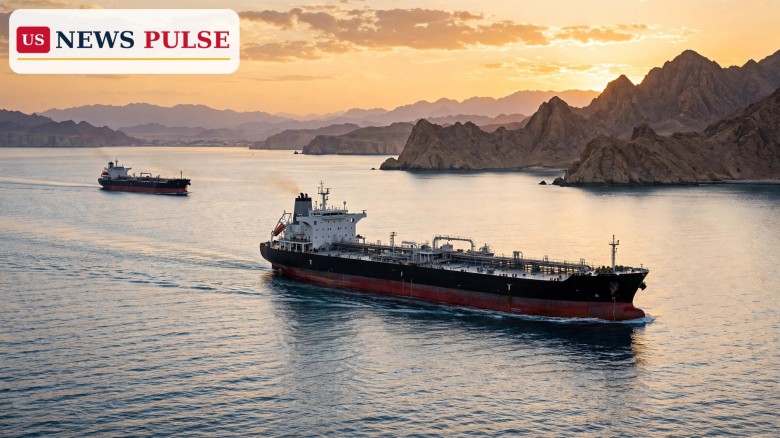
The Strait of Hormuz is where the war's economic stakes are most visible. Cooper said Iranian Revolutionary Guard forces were no longer present in the strait, a strategic waterway for global oil shipments. He said he had visited American troops in the Middle East this week and witnessed oil tankers navigating the strait. He also said US forces had removed Iranian sea mines and remained on high alert to protect freedom of navigation. According to Cooper, Gulf partners had helped facilitate the movement of more than 1.5 billion barrels of oil since the summer. However, Iran's Revolutionary Guard Navy reported an incident involving two oil tankers, accusing them of attempting to cross the strait through an unauthorised route — a reminder that maritime tensions in the waterway have not fully eased, even as tankers keep moving.
Oil prices have climbed sharply this week amid Hormuz incidents, and Trump's prediction that petrol prices would fall once the conflict ends speaks directly to American voters feeling that pressure at the pump. It also links the war to the election in a way his "wrapped up soon" promise does not fully spell out: an ending, in Trump's telling, is not just a foreign-policy outcome but a cost-of-living one.
The only direct quotes from Trump in the KCMO interview that have been reported so far are the two that define the story. "It's going to get wrapped up soon," he said. "We need a guarantee there'll never be a nuclear weapon." Both are short, both are categorical, and both leave the hardest questions unanswered.
The mediation side of the story has produced no public quotes from the Qatari delegation or from Iranian officials on Friday's meetings themselves. What is on the record is the shape of the deadlock, as described by officials briefed on the talks: Washington wants nuclear issues included from the start; Tehran wants the blockade ended and oil sanctions lifted first; and a senior Iranian official has already called the Qatari draft unacceptable while insisting Tehran will maintain its nuclear position.
Araghchi's Wednesday statement is the closest thing to an Iranian public position this week: Tehran remains in close contact with intermediaries to review ideas that could ensure the implementation of its own seven-day proposal. That is not a rejection of talks, but it is a insistence on Tehran's own framework — and a sign that any agreement will have to reconcile at least three documents: the Qatari draft, Iran's seven-day proposal, and whatever framework Vance outlined to Rezaei.
On the American side, the most detailed account of the diplomatic approach comes not from the White House podium but from Ignatius's reporting on Vance's letter: a focus on national interests, a demand for empowered negotiators on nuclear issues, and a willingness to meet Rezaei personally in Istanbul or Doha. If that account is accurate, the administration's private diplomacy is more specific than the president's public language — which may be the point. The public message is reassurance; the private message is a set of conditions.
This story matters because it captures the war at a hinge point. On one side, there is a functioning diplomatic channel — Qatari mediators in Tehran, a direct American outreach to the Iranian official Washington believes can deliver a consensus, and an Iranian proposal on the table. On the other side, there is a military option that has been briefed to the president, a nuclear condition that has not been defined, and a deadline of sorts in the form of the election: no strikes before November 3, but no public commitment about what happens after.
It also matters for American voters, who will decide control of Congress on Tuesday while the war continues. Trump's promise that the war will end soon, and that petrol prices will fall when it does, is a campaign argument as much as a foreign-policy forecast. Voters cannot yet judge whether it is a prediction, a plan, or a hope — and the difference between those three will only become clear in the days after the election, when the pause Trump has promised expires and the choice between a deal and a campaign must be made.
For the wider world, the stakes are the same ones that have defined the war since February: the safety of shipping through the Strait of Hormuz, the price of oil, and whether a nuclear guarantee can be written in a way both Washington and Tehran can accept. The Qatari mediators' return to Tehran keeps that possibility alive. The Iranian dismissal of the Qatari draft shows how far it still has to go.
The immediate next steps are diplomatic, not military — at least until after the election. Watch for any readout, however brief, from Friday's Qatari meetings in Tehran, and for any sign that Rezaei will meet Vance in Istanbul or Doha. Watch, too, for whether Tehran softens its demand that the blockade and oil sanctions be lifted before nuclear talks begin, or whether Washington softens its demand that nuclear issues be on the table from the start. Movement on either side of that sequencing question would be the first real sign of a breakthrough.
After November 3, the calendar changes. Trump's pledge not to strike before the elections expires, and the military option briefed by Admiral Cooper will be weighed against whatever the mediators have achieved. If the Qatari talks produce a framework both sides can accept, the "wrapped up soon" promise could be fulfilled by negotiation. If they do not, the same phrase could be used to justify the other route Trump has kept open — to "finish the job" by force.
For now, the war continues, the mediators are in Tehran, and the president has promised an ending without describing one. That is the state of play on Friday, October 30, 2026 — four days before an election, with a nuclear guarantee demanded, a blockade in place, and a strait that the world's oil still has to pass through.
In an interview with Kansas City radio station KCMO, Trump said the war with Iran is "going to get wrapped up soon" and that "we need a guarantee there'll never be a nuclear weapon." He did not give a timeline or say how the war would end.
Trump has said the United States would not strike Iran before the November 3 midterm elections. He has repeatedly promised the US and Israel will soon "finish the job" in Iran, without specifying whether that means diplomacy or further military action.
Qatari mediators returned to Tehran on Friday, October 30, 2026, for talks coordinated with the United States, after Qatar presented a draft peace plan to Iran on Sunday. A senior Iranian official dismissed that draft as unacceptable and said Tehran would maintain its nuclear position.
Washington wants nuclear issues included from the start of negotiations, while Tehran demands that the US first end its port blockade and lift oil export sanctions. Iran also has its own seven-day proposal, which Foreign Minister Abbas Araghchi said on Wednesday Tehran is discussing with intermediaries.
Rezaei is the hardline head of Iran's Supreme National Security Council. Washington reportedly sees him as the best-placed official to head off renewed fighting, and Vice President JD Vance contacted him about a possible peace framework. Vance is said to be willing to meet Rezaei personally, likely in Istanbul or Doha.
Related coverage on US News Pulse: Vance letter to Iran: Trump denies peace talks, says it was medical aid, US-Iran strike plans: forces ready within 96 hours of Trump order, reports say, and Trump: Iran war ends whenever he wants, as Tehran hits back.
Leave a Comment



 | Today's Date: