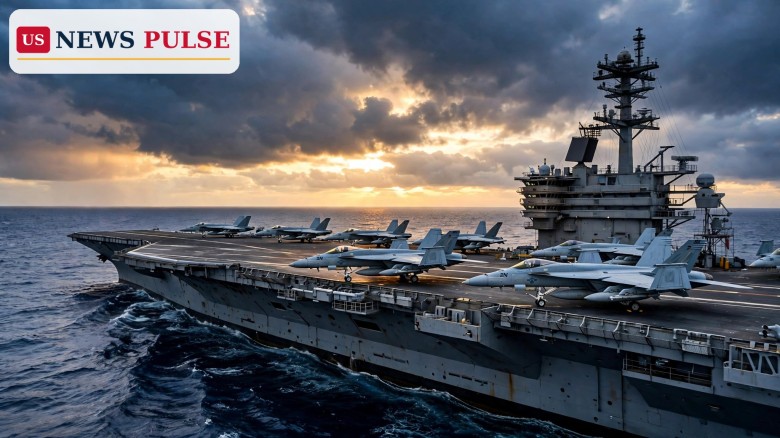
The Iran war cost has climbed past $47 billion, according to a new Pentagon estimate shared with Congress, laying bare the mounting price of a conflict President Donald Trump once predicted would last only a few weeks. The war in Iran has cost the US military $47.1 billion as of October 16, US Central Command told lawmakers, a figure obtained by USA TODAY and confirmed in Pentagon data reviewed by Reuters.
The total is more than 25 percent higher than the Defence Department estimate from July, and it is almost certainly an undercount. The estimate does not clearly include the cost of repairing US bases and facilities across the Middle East damaged by Iranian missile and drone attacks, so the true bill to American taxpayers is higher still.
Reuters reported on October 27 that the US military has spent over $47 billion so far to prosecute the war in Iran, citing Pentagon data that had not been shared publicly. The Pentagon did not immediately respond to a request for comment on the estimate. USA TODAY separately obtained the Central Command assessment provided to Congress, putting the precise figure at $47.1 billion through October 16.
The latest update is $3.5 billion higher than Central Command's previous assessment, which stood at $43.6 billion in early September. It is also well above the $37.5 billion estimate Defence Secretary Pete Hegseth gave in July. The Congressional Budget Office had earlier put the cost at about $38 billion through August 1, using a different accounting approach, and warned that replacing the munitions used could take at least five years.
The breakdown shows where the money has gone. More than $29 billion is the projected cost of replacing expended munitions, including air defence interceptors and bombs. More than $6 billion would be needed to replace military equipment and so-called platform losses, including aircraft and many drones lost during the war. Nearly $12 billion more covers additional military operating expenses, from flight operations to cyber support.
The United States and Israel jointly launched airstrikes against Iran on February 28 in an effort to cripple the Iranian state. Trump initially predicted the war would last only a few weeks, but it has dragged on for nearly eight months, disrupting energy markets, sending oil prices higher and driving up inflation. The prolonged conflict has upended the global economy, and Moody's Analytics estimates it has cost the average American household $2,000 so far.
Trump's initial strategy relied first on expensive, high-end precision missiles to bomb Iran's defences, so that cheaper munitions, including air-launched JDAM gravity bombs, could be used later. But an April ceasefire gave Iran time to dig out underground storage facilities, bringing back online defences, missiles and drones that had been inaccessible. Trump has since imposed a naval blockade on Iran to starve it of oil export revenue, and has held out the possibility of restarting combat operations after the midterm elections.
US officials speaking on condition of anonymity say the Pentagon has been planning to restart heavy fighting if ordered to do so. Central Command has already developed options for additional strikes against Iranian targets if the White House authorises another round of attacks. Hegseth recently travelled to Central Command and Israel, where he met Israeli Prime Minister Benjamin Netanyahu, as Washington and Tehran remain at a stalemate despite strikes, negotiations and sanctions.
The Air Force has borne the largest service-level burden, spending $7.6 billion since fighting began, covering deployed personnel, airlift, base operations, communications and transportation in the region. The Army has spent $2.1 billion, while the Navy has spent $1.5 billion. The Air Force has also lost dozens of aircraft during the war, contributing to the equipment replacement bill.
The munitions picture is the most worrying for military planners. The war has caused a shortage of certain critical munitions the US military needs to defend itself in other parts of the world, such as the Indo-Pacific, after expending roughly 65 percent of its Patriot missile interceptor stockpiles. Replacing those interceptors and other expended weapons at scale will take years, even if funding is approved quickly.
Trump has repeatedly suggested the United States may resume major military operations against Iran after the midterm elections. "I have a decision to make: Do I finish it off, which would be very easy to do, or do I make a deal?" Trump told Fox News on October 25. "We don't play games." Speaking on Tuesday at a rally in Corpus Christi, Texas, he struck a different note, saying the United States was "making an absolute fortune because of the situation" in the Middle East, and predicting the Iran war would "end very soon."
The disclosure lands at a sensitive political moment. Reuters notes that the rising cost comes as Republicans wrestle with the political fallout of the unpopular conflict ahead of the November 3 election that will determine control of Congress for the next two years. The war's impact on global energy costs has weighed on support for Republican candidates and hurt Trump's approval ratings, even as his party holds a narrow majority in both chambers of Congress.
The $47.1 billion figure matters because it is both a fiscal and a strategic warning. Fiscally, it shows a war sold as short and decisive becoming a long, expensive commitment, with the largest costs still to come in munitions and equipment replacement, plus uncounted base repairs. Strategically, the depletion of Patriot interceptors and other critical stocks limits US options elsewhere, at a time when Washington is also watching tensions in the Indo-Pacific.
Politically, the timing is unavoidable. Voters go to the polls on November 3, with energy prices, inflation and the cost of living high on their minds. A war that has cost the average household an estimated $2,000, while producing no capitulation from Tehran, is a difficult record to defend, and the prospect of renewed bombing after the election means the bill is unlikely to stop at $47 billion.
Watch for three things. First, whether Congress demands a fuller accounting, including the cost of repairing bases damaged by Iranian strikes, which the current estimate leaves unclear. Second, whether the administration follows through on its signalled post-election escalation, which would push munitions and operating costs sharply higher. Third, how the cost debate plays in the final week of the midterm campaign, as Democrats press the price tag and Republicans argue the alternative, a nuclear-armed or emboldened Iran, would cost far more.
Related coverage on US News Pulse: US Iran strike plans: forces ready within 96 hours of Trump order, reports say and Netanyahu treason probe demanded as army chief resisted Iran strike before vote.
$47.1 billion as of October 16, according to a US Central Command estimate provided to Congress and obtained by USA TODAY and Reuters. The figure excludes, or does not clearly account for, repairs to US bases damaged by Iranian attacks.
Replacing expended munitions, at more than $29 billion, including air defence interceptors and bombs. Equipment and platform losses add more than $6 billion, with nearly $12 billion in additional operating costs.
At least 21 US service members have died and 865 have been wounded since February 28, according to the US military's official casualty database, among more than 50,000 who have deployed to Central Command's area of responsibility.
The war has lasted nearly eight months rather than a few weeks, munitions are expensive to replace, aircraft and drones have been lost, and an April ceasefire allowed Iran to restore defences that then had to be struck again.
That is not decided publicly. Trump has said he will decide whether to "finish it off" or make a deal, US officials say the Pentagon is planning for renewed heavy fighting if ordered, and Trump has also predicted the war will "end very soon."
Leave a Comment



 | Today's Date: