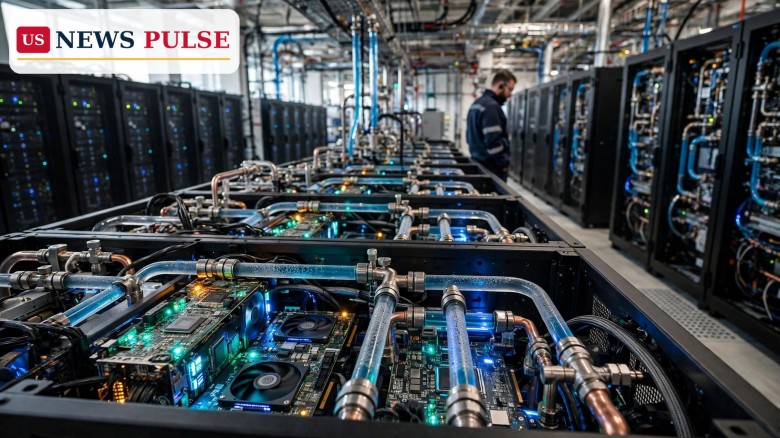
OpenAI Google AI chips are at the centre of a reported deal that would mark one of the most significant shifts yet in the artificial intelligence hardware race. OpenAI plans to buy Google's AI chips, The Information reported on Tuesday, citing a person familiar with the matter, as the ChatGPT maker looks to widen its computing options beyond Nvidia's dominant graphics processors.
The reported plan would deepen the commercial ties between OpenAI and Alphabet's Google, two companies that compete fiercely in AI products and search but have increasingly struck deals with each other. It comes as technology companies ramp up spending on data centres and semiconductors to meet surging demand for AI computing, and just as investors prepare to judge whether that spending is paying off.
The report, carried by Reuters on Tuesday, says OpenAI intends to purchase chips from Google rather than simply renting computing power through Google Cloud, as it has done before. Reuters reported in June 2025 that the ChatGPT maker had begun renting Google's AI chips, so a direct purchase would be a further step into Google's hardware ecosystem.
No price, volume or timetable was disclosed in the report, and the lack of detail matters. A chip purchase can mean many things in this industry: a small test order to check performance, a large multi-year supply agreement, or something in between. Until either company confirms the plan or files details, the scale of the deal remains unknown, and that uncertainty is itself part of the story for investors trying to read the AI supply chain.
What is clear is the direction of travel. OpenAI's computing needs keep growing as more people use ChatGPT and as its models become larger and more capable. Buying chips directly, rather than only renting capacity, would give OpenAI more control over its own infrastructure and another lever in negotiations with suppliers. It would also make Google a hardware supplier to one of its main AI rivals, a relationship that is unusual even in an industry full of frenemies.
The timing is also notable. Last week, OpenAI said it would make its frontier AI models available through Google Cloud, adding a distribution partnership to a relationship that already spans rented chips. The reported chip purchase would add a third strand: Google as a supplier of the silicon itself.
To understand why this report matters, it helps to start with Nvidia. The company's graphics processing units, or GPUs, have become the default hardware for training and running large AI models, and OpenAI is among its biggest customers. That dominance has given Nvidia enormous pricing power and made its chips a bottleneck for the whole AI industry, with developers constantly hunting for more capacity and for alternatives that can do specific jobs more cheaply.
Google's TPUs were built for exactly that kind of work. Tensor Processing Units are processors designed by Google to handle machine-learning workloads, and they have gained traction as companies seek cheaper options and chips suited to particular AI tasks. For years Google mainly made TPUs available through its own cloud infrastructure, but it began selling the chips directly to some customers this year, turning an internal tool into a product in its own right.
Demand for those chips is already rising. Deals with customers including rival Anthropic have fuelled demand for Google's TPUs, according to the Reuters report. Alphabet chief financial officer Anat Ashkenazi has previously said the company expects to begin recognising a small percentage of revenue from TPU sales agreements by the end of this year, with the vast majority expected to be recognised in 2027. An OpenAI purchase would fit that timetable and could become one of the largest outside endorsements of the TPU programme so far.
OpenAI, meanwhile, has been working on its own hardware path as well. In June it unveiled its first custom AI chip designed with Broadcom, and said it planned to deploy the processor by the end of this year as part of a multi-generation chip programme. That effort does not conflict with buying Google chips; if anything, it shows a consistent strategy of reducing dependence on any single supplier by building, renting and now possibly buying from several sources at once.
A separate report added another piece to the TPU picture on Tuesday, saying Google and Oracle announced a partnership to deploy TPU computing power on Oracle Cloud Infrastructure starting in 2027, with Oracle providing supporting data centre power, cooling and network infrastructure. Taken together, the reports sketch a Google chip business that is moving beyond its own data centres and onto other companies' platforms.
The most immediate change would be in OpenAI's supply chain. Today, training a frontier model and serving it to hundreds of millions of users depends heavily on Nvidia hardware. Adding Google TPUs as a second major source would spread that risk, give OpenAI engineers a different architecture to optimise for, and strengthen its hand in price and delivery negotiations with every supplier, including Nvidia.
For Google, the change would be equally significant. Selling chips to OpenAI would validate TPUs in the eyes of other buyers and turn a cost centre — the silicon that powers Google's own AI services — into a revenue stream from the wider market. It would also deepen a paradox at the heart of the AI race: Google would be arming a competitor whose ChatGPT product challenges Google Search, while earning money from that competitor's growth.
For Nvidia, the report is a reminder that dominance is not permanence. The company remains the market leader by a wide margin, and OpenAI is not reported to be dropping Nvidia chips. But every large customer that qualifies a second supplier makes the market a little less one-sided, and chip buyers across the industry will be watching closely to see how TPUs perform on OpenAI's workloads, particularly inference — the day-to-day running of models for users — where cost per query matters as much as raw training speed.
There is also a jobs signal worth noting. Separate reporting on the plan noted that OpenAI has posted job listings for engineers to optimise its advanced AI models for Google TPUs, covering both model training and inference workloads. Hiring for a specific chip architecture is the kind of practical step that usually precedes, rather than follows, a hardware commitment.
Neither company has confirmed the report. Google did not immediately respond to a Reuters request for comment outside regular business hours, while OpenAI declined to comment. That silence is normal at this stage of a reported deal, and it leaves the key questions — price, quantity, delivery dates and which TPU generation is involved — unanswered for now.
Alphabet's own guidance gives one clue about timing. Ashkenazi has previously said only a small percentage of revenue from TPU sales agreements is expected to be recognised by the end of this year, with the vast majority expected in 2027. If an OpenAI agreement follows that pattern, its financial effect on Alphabet would build through next year rather than landing all at once in the current quarter.
Investors will get their next hard data point very soon. Alphabet reports quarterly results later on Wednesday, and the market will be listening for signs that heavy AI investment is continuing to drive growth in Google Cloud, as well as any comment from executives on the TPU business. The report of an OpenAI purchase, arriving the day before those results, guarantees that chip demand will be among the first topics raised.
This story matters because AI is, at bottom, a hardware story. Models grab the headlines, but they run on chips, power and data centres, and whoever controls that supply chain controls the pace and cost of the whole industry. Amazon, Microsoft and Google parent Alphabet plan to spend as much as 600 billion dollars combined this year on AI infrastructure, according to the Reuters report, and investors are increasingly asking when such spending will translate into meaningful returns.
A deal between OpenAI and Google would show that even the largest AI companies feel the pressure of that spending. OpenAI needs more computing power than any single supplier can comfortably provide, and it needs it at a price that keeps its business viable as usage grows. Google needs to prove that its years of TPU investment can compete in the open market, not just inside its own data centres. Both needs point in the same direction: cooperation between rivals.
It also matters for the wider US technology landscape. The AI boom has concentrated enormous power in a handful of companies, and the relationships between them — OpenAI buying from Google, Google renting to Anthropic, Nvidia investing in other AI players — are reshaping competition faster than regulators or rivals can track. A purchase like this one would blur the lines further, making it harder to say where one company's AI stack ends and another's begins.
The next step is confirmation, or its absence. Watch for any statement from OpenAI or Alphabet, for details in Alphabet's earnings call later on Wednesday, and for filings or announcements that put numbers on the reported plan. If the deal is confirmed, the following details will matter most: how many chips, which TPU generation, when deliveries begin, and whether the chips are destined mainly for training new models or for running existing ones for users.
OpenAI's own chip programme is the other timeline to watch. Its first custom chip, designed with Broadcom, is due to be deployed by the end of this year, and the company has described it as part of a multi-generation programme. How Google TPUs, Broadcom-designed chips and Nvidia GPUs divide OpenAI's workloads over the next two years will say a great deal about where AI hardware is heading.
Google's TPU expansion will also be tested in 2027, when the bulk of TPU sales revenue is expected to be recognised and when the reported Oracle partnership would begin deploying TPU power on Oracle's cloud. If those milestones land as described, Google will have built a genuine third force in AI chips alongside Nvidia and the custom silicon programmes of Amazon, Microsoft and Meta. If they slip, sceptics will ask whether TPUs can ever escape Google's own data centres.
For now, the report stands as a sign of where the industry is going: rivals doing business, buyers diversifying, and the most valuable commodity in technology — computing power itself — becoming too important to leave to a single supplier.
OpenAI plans to buy Google's AI chips, according to a report by The Information cited by Reuters on October 27, 2026. Neither company has confirmed the plan, and no financial terms were disclosed.
Tensor Processing Units are AI processors developed by Google to handle machine-learning workloads. They are an alternative to Nvidia's graphics processing units, and Google began selling them directly to some customers in 2026 after previously offering them mainly through Google Cloud.
No. The report describes OpenAI adding Google chips to its options, not replacing Nvidia. OpenAI remains one of the largest buyers of Nvidia GPUs, and it is also developing its own custom chip with Broadcom.
To expand computing capacity, gain an alternative to Nvidia's dominant processors, potentially lower costs for specific AI tasks, and strengthen its negotiating position with suppliers as demand for AI computing keeps surging.
Alphabet reports quarterly results later on Wednesday, October 28, 2026, when executives may be asked about TPU demand. Any confirmation from OpenAI or Alphabet, or details on price, volume and delivery dates, would fill in the gaps left by the initial report.
Read more on US News Pulse: Big Tech earnings test: Alphabet, Amazon and Apple face AI spending verdict, Meta's $95 billion AI raise leads a $198 billion day of AI spending, and Anthropic IPO filing: Claude maker seeks Nasdaq listing in $2 trillion test.
Leave a Comment



 | Today's Date: