The Trump Iran war will end on the president's timetable and no one else's, Donald Trump told reporters as he returned from Texas on Wednesday, October 28, 2026, in remarks that drew an angry response from Tehran within hours. Asked about the conflict that began on February 28, Trump said Iran had approached Washington seeking a deal but was dragging out the talks — and suggested Tehran was waiting for next week's midterm elections, a gamble he said would not pay off.
"It's a question of when do I want to end it... They've wanted to make a deal, but they like tapping it along. Maybe they're waiting for the election or something — but that's not gonna help them," Trump said at Joint Base Andrews, Maryland, after campaign rallies in Corpus Christi and Lubbock, Texas, on Tuesday. The exchange, carried by the Associated Press and reported across US and international outlets on Wednesday, set the tone for a day in which both sides restated positions that have barely moved since the war began: Washington insisting it holds the initiative, Tehran insisting Washington cannot be trusted to keep a bargain.
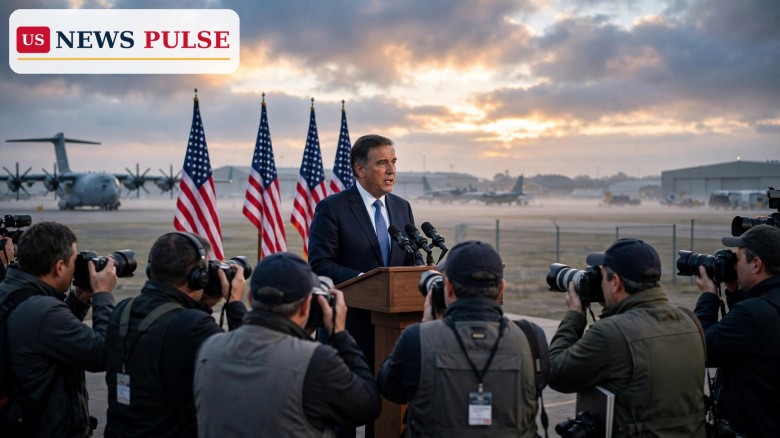
Trump's remarks came in two settings that, taken together, read as a single message to Tehran and to American voters. On the tarmac at Joint Base Andrews in the early hours of Wednesday, returning from his Texas campaign swing, he framed the war as a matter of his own choosing. Hours earlier, at a rally in Lubbock, he had given the same answer in blunter form to a crowd question about when the fighting would stop: "Somebody asked me before, 'When will the war in Iran end?' I said, 'Whenever I want it to end.'"
In Lubbock, Trump also rewrote the war's origin story in his own terms. "America did not start the war with Iran. Iran has been waging this war against America since 1979, killing many of our great people. They've killed thousands of our soldiers and wounded so many more," he said, before criticising his predecessors: "Past leaders should have settled this problem long ago, but they didn't have the courage or intelligence to do it."
Tehran's reply arrived on Wednesday morning, not through a battlefield statement but through a diplomatic broadside on social media. Foreign Ministry spokesperson Esmail Baghaei, posting on X, seized on Trump's description of the 14-point Islamabad memorandum of understanding — an agreement Trump has described as a waste of time he never believed in — and turned it into an indictment of American diplomacy as a whole. "Washington's contempt for diplomacy is once again laid bare. President Trump's admission that he never believed in the Islamabad MoU and considered it a waste of time exposes the hollowness of their diplomatic commitments," Baghaei wrote.
"For Iran, this is nothing new. Washington has a long record of reneging on its commitments and treating international obligations as disposable whenever they become inconvenient," he added, before widening his criticism to Europe: "There is absolutely no justification for European states and other apologists for Washington to continue whitewashing US misconduct and shielding it from accountability." He closed with the line that gave the Iranian response its headline: "Broken commitments cannot be excused, international law cannot be applied selectively, and no amount of political spin can absolve Washington of accountability."
The war Trump is now describing as his to end began on February 28, 2026, when the United States went to war with Iran. Trump has said one of the major reasons for the war was to deny Tehran the ability to develop nuclear weapons, and he has repeatedly insisted that American strikes on Iranian nuclear sites in June 2025 "obliterated" the country's atomic programme. That claim has become central to the politics of the war at home, where the conflict has emerged as a liability for Republicans heading into the November 3 midterm elections, and where Trump has argued that higher fuel prices are worth paying to prevent a nuclear-armed Iran.
The cost of the campaign has meanwhile grown into a story of its own. The Pentagon has put the price of the Iran war at more than $47.1 billion as of October 16, according to a Central Command estimate supplied to Congress and reviewed by US media, up from $43.6 billion in early September. And the military picture around the region has been moving in ways that suggest Washington is preparing for a further escalation rather than a wind-down: the Wall Street Journal reported on October 27 that the United States had told several Gulf Arab states, through diplomatic and military channels, to prepare for a possible short, intense campaign against Iran after the midterms, with a Patriot missile-defence system moving from Texas to Israel, troops shifted away from vulnerable bases and munitions restocked. Trump, according to that report, has not made a final decision but is leaning toward a large post-election attack on Iranian infrastructure and nuclear sites.
That context is what gives Trump's "whenever I want it to end" line its edge — and its ambiguity. It can be read as a claim of control, a warning to Tehran not to wait him out, or an admission that no endgame has yet been chosen. His suggestion that Iran may be "waiting for the election" cuts both ways: it accuses Tehran of playing for time, while also acknowledging that the November 3 vote is now a factor in the war's timing on both sides.
The sharpest challenge to the administration's case for the war came not from Tehran but from the world's nuclear watchdog. Speaking to the UN Security Council on Tuesday, October 27, International Atomic Energy Agency Director General Rafael Grossi said there had been no indication that Iran had tried to repair or reconstruct its nuclear facilities damaged in US and Israeli strikes in 2025 and 2026.
"Since June 2025, we have not identified any activity to repair or reconstruct any of the facilities damaged in the military attacks of 2025 and 2026," Grossi said, urging Iran to give inspectors access to all nuclear sites, including those hit in the attacks. The IAEA has not been able to verify the status of Iran's stockpile of near weapons-grade uranium since the United States bombed its sites last year, and Grossi said the agency could not confirm that safeguarded nuclear material had not been diverted. Iran maintains its programme is peaceful, but the agency says the country holds 440.9 kilograms of uranium enriched to 60% purity — a short, technical step from the 90% level considered weapons grade.
The assessment echoes a conclusion former US Director of National Intelligence Tulsi Gabbard included in written testimony before a congressional committee earlier in 2026, in which she wrote that Iran's uranium enrichment programme had been "obliterated" in the June 2025 strikes and that there had been no effort since then to rebuild its enrichment capability. Taken together, the two assessments complicate the argument that a new war was necessary to halt an advancing nuclear programme — while leaving open the question the IAEA itself keeps raising: without inspector access, no one can say with certainty where the existing stockpile is or what condition it is in.
That uncertainty is also why the Islamabad memorandum matters to Tehran. For Iran, the MoU is Exhibit A in its case that Washington signs understandings it does not intend to honour; for the White House, it appears to be an agreement the president regards as worthless. Baghaei's response was designed to make that disagreement public and to put European governments, which have often urged both sides back to talks, in an uncomfortable position: either defend the value of agreements Washington dismisses, or accept Tehran's charge that they are shielding American misconduct.
Trump's own words, in both settings, were the story's spine. "It's a question of when do I want to end it," he said at Joint Base Andrews, adding of Tehran: "They've wanted to make a deal, but they like tapping it along. Maybe they're waiting for the election or something — but that's not gonna help them." In Lubbock he had put the same point more starkly: "Whenever I want it to end."
Baghaei answered in the language of international law rather than of war. "Washington's contempt for diplomacy is once again laid bare," he wrote, and: "Broken commitments cannot be excused, international law cannot be applied selectively, and no amount of political spin can absolve Washington of accountability."
Grossi, by contrast, kept to the measured language of inspection. "Since June 2025, we have not identified any activity to repair or reconstruct any of the facilities damaged in the military attacks of 2025 and 2026," he told the Security Council, while pressing Tehran to restore access so the agency can verify the stockpile it has been unable to account for since last year's bombing. The White House did not immediately respond to requests for comment on Grossi's remarks, according to reports of the Security Council session.
Trump also used the same round of remarks to touch on the other crises competing for his attention. He said his administration was making "a lot of progress" on Russia-Ukraine and that a meeting would be set up "very soon", days after he said a Putin-Zelensky meeting would be arranged soon, and he repeated his approval for Brazilian Senator Flávio Bolsonaro entering the United States after losing Brazil's presidential election. Those asides underline how crowded the president's foreign-policy calendar has become in the final week before the midterms — and how the Iran war, for all its cost, is only one of several confrontations he is now managing in public.
This exchange matters because it exposes the gap between the war's stated purpose and its current politics. If, as the IAEA says, Iran has made no attempt to rebuild the nuclear facilities struck in 2025, then the case for a further, larger post-election campaign rests less on stopping an imminent nuclear breakout and more on forcing a political settlement — or on demonstrating resolve. That is a harder case to make to voters already feeling the war in fuel prices, and to Gulf allies being asked to brace for retaliation.
It matters, too, because of the election calendar. Six days before Americans vote, the president has told both Tehran and his own electorate that the war's end is his personal decision. That is a powerful claim of command, but it also concentrates responsibility: if the fighting continues past the election, or escalates into the short, intense campaign the Gulf states have reportedly been warned about, there will be no ambiguity about whose decision it was. Tehran's response — that Washington's word cannot be relied on — is aimed squarely at that same audience, arguing that a deal with this White House is not a safe bet however the election turns out.
For the wider region, the stakes are immediate. A war that one side describes as ending on a single man's say-so, and the other describes as proof that diplomacy is pointless, leaves very little room for the mediators — Gulf capitals, European governments, the IAEA itself — who would have to broker or verify any settlement. The shouting match at the United Nations over Cuba this week showed how quickly US diplomacy can turn public and personal; the Iran exchange shows the same dynamic applied to a live war.
Three dates now frame the war's next chapter. The first is November 3, the midterm elections, which both Trump and Tehran appear to be factoring into their timing. The second is the window immediately after the vote, when — if the Wall Street Journal's reporting is right — a decision on a larger campaign against Iranian infrastructure and nuclear sites could be taken, with Gulf defences already being reinforced in anticipation. The third is the quieter, technical track at the IAEA, where Grossi's demand for inspector access to damaged sites and to the 440.9-kilogram stockpile will test whether any verification regime can survive a war in which one side blocks inspectors and the other dismisses agreements as worthless.
Watch, in the coming days, for any direct Iranian military response to the Gulf warnings, for whether European governments answer Baghaei's charge that they are shielding Washington, and for whether the White House offers any detail — a venue, a mediator, a condition — behind Trump's claim that Tehran wants a deal. Until one of those appears, the war's end remains, in the president's own phrase, a question of when he wants it to end.
What did Trump say about when the Iran war will end? At Joint Base Andrews on October 28, 2026, Trump said "It's a question of when do I want to end it," and at his Lubbock rally he said the war would end "Whenever I want it to end." He also said Iran wants a deal but is "tapping it along", possibly waiting for the election.
How did Iran respond? Foreign Ministry spokesperson Esmail Baghaei accused Washington of "contempt for diplomacy" over Trump's dismissal of the 14-point Islamabad memorandum of understanding, saying "broken commitments cannot be excused" and that international law cannot be applied selectively.
What did the IAEA say about Iran's nuclear facilities? Director General Rafael Grossi told the UN Security Council on October 27 that since June 2025 the agency had identified no activity to repair or reconstruct facilities damaged in the 2025 and 2026 strikes, but it still cannot verify the 440.9-kilogram stockpile of uranium enriched to 60%.
When did the US-Iran war begin, and why? The war began on February 28, 2026. Trump has said a major reason was to deny Tehran the ability to develop nuclear weapons, and he has claimed US strikes in June 2025 "obliterated" Iran's atomic programme.
Could the war escalate after the midterms? The Wall Street Journal reported on October 27 that the US has warned Gulf states to prepare for a possible short, intense campaign after the November 3 elections, with a Patriot system moving from Texas to Israel and troops shifted from vulnerable bases. Trump has not publicly confirmed a final decision.
Related coverage on US News Pulse: US Iran war warning: Washington tells Gulf to brace for short, intense campaign; Trump-Xi nuclear meeting planned as Trump seeks disarmament talks with China; Iran war cost tops $47 billion, Pentagon tells Congress.
Leave a Comment



 | Today's Date: