A federal grand jury in Washington has declined to indict Cassidy Hutchinson, the former White House aide whose dramatic 2022 testimony about President Donald Trump's actions on January 6, 2021, made her one of the most consequential witnesses in the investigation of the US Capitol attack. The Cassidy Hutchinson grand jury decision, reported on Tuesday, October 27, 2026, is the latest setback for a Justice Department that has repeatedly tried — and repeatedly struggled — to bring criminal charges against people the president regards as his adversaries, just seven days before the November 3 midterm elections.
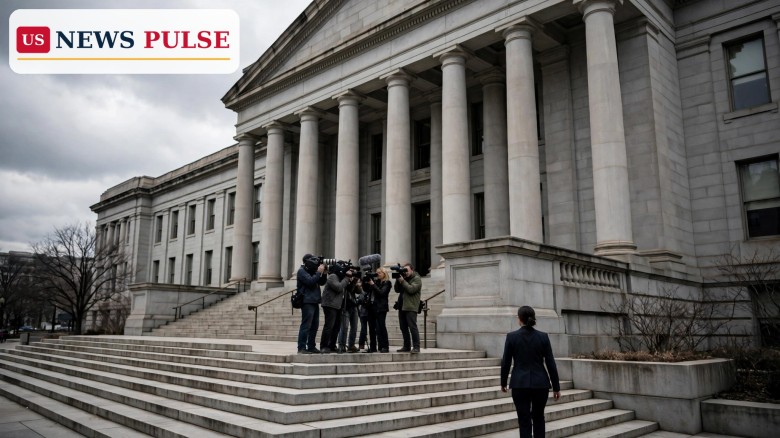
Prosecutors had been investigating whether Hutchinson gave false testimony to the House committee that probed the Capitol riot, and Republican lawmakers and allies of the president have long argued she should be charged with perjury. Hutchinson has always maintained that her testimony was truthful. On Tuesday, a Justice Department attorney told a federal magistrate judge in a brief court appearance that the grand jury had submitted a "non-concurrence" — the formal term for a panel rejecting the indictment prosecutors sought. The prosecutor did not name the defendant in court, but two people familiar with the matter confirmed to the Associated Press and CNN that the rejected indictment concerned Hutchinson.
The decision emerged in an unusually oblique way. A federal prosecutor appeared before US Magistrate Judge Zia Faruqui on Tuesday and told the court that a grand jury in Washington had rejected an indictment, but did not reveal in court the proposed defendant or the charges. It was only through people familiar with the matter, speaking on condition of anonymity because they were not authorised to publicly discuss the case, that the identity became clear: the person prosecutors had failed to indict was Cassidy Hutchinson.
Reuters was first to report the development on Tuesday, citing a source familiar with the matter, and said a second source had confirmed the grand jury weighing evidence in the case had been meeting that day. CNN, citing two people familiar with the matter, reported that Justice Department prosecutors "tried and failed" to secure the indictment that day. The Associated Press, citing two people familiar with the matter, reported the same outcome: the grand jury "rejected prosecutors' request to return an indictment charging Cassidy Hutchinson".
What exactly prosecutors put before the grand jury remains unclear. The AP reported that details of the prosecutors' allegations against Hutchinson were "not immediately clear", and none of the reports published on Tuesday set out a specific proposed charge, a draft indictment, or a vote count. Grand jury proceedings are secret by law, and the Justice Department did not, in the reporting available on Tuesday, publicly explain why its presentation failed or whether it intends to try again. Attorneys for Hutchinson did not respond to requests for comment from CNN.
The timing matters. The rejection came six days before the November 3 midterm elections, in which control of Congress — and with it, the future of investigations into the administration — is at stake. It also came in the same week as a string of other legal and political setbacks and confrontations for the administration, and it immediately became part of the campaign-season argument about whether the Justice Department is being used against the president's critics. Political experts cited by Reuters have raised concerns about efforts by the Trump administration to target his critics and political opponents, a concern that has shadowed several of its prosecutions this year.
To understand why this case carried such weight, it is necessary to return to June 2022, and to a hearing that was announced only 24 hours in advance. Hutchinson, then 26, was a special assistant to Mark Meadows, Trump's chief of staff, and one of the closest junior aides to the centre of power on January 6, 2021. Her surprise public testimony before the House select committee investigating the Capitol attack was, in the AP's words, "seen at the time as particularly powerful given Hutchinson's proximity to power".
She described an angry, defiant president on the morning of January 6. Trump, she testified, grew furious on learning that his supporters — some of whom, she said, were seen with weapons, including guns and knives — had been stopped at security checkpoints before his rally at the Ellipse, where he was protesting his 2020 election defeat. Hutchinson said she heard Trump say something similar to: "I don't effing care that they have weapons. They're not here to hurt me. Take the effing mags away. Let my people in." The "mags" were the magnetometers, the walk-through metal detectors at the rally entrance.
She also testified that, after his speech urging supporters to march to the Capitol, Trump tried to force his motorcade to take him there, and that when the crowd at the Capitol began chanting "Hang Mike Pence", Trump declined to intervene. The most explosive passage concerned what she said she had been told by then-White House deputy chief of staff Tony Ornato: that Trump had lunged at a Secret Service member and grabbed at the steering wheel of the presidential SUV when told he could not go to the Capitol. Hutchinson acknowledged during her testimony that she was relaying what she had heard from a White House security official and did not have firsthand knowledge of the episode because she was not in the vehicle.
That passage was quickly disputed. Ornato and others denied the account. In March 2024, House Republicans released a previously undisclosed transcript of the select committee's interview with the Secret Service officer who drove the presidential SUV. That driver contradicted some of Hutchinson's testimony but corroborated other aspects of it, including Trump's attempt to join the crowd at the Capitol. The driver said he did not see the altercation Hutchinson described. "I didn't see him, you know, lunge to try to get into the front seat at all," the driver said, and: Trump "never grabbed the steering wheel."
Hutchinson also testified about pressure she said she faced while cooperating with the committee. She alleged that members of Trump's inner circle dangled job opportunities and financial assistance, and that her own lawyer — a former ethics counsel in the Trump White House — told her "the less you remember, the better". She told the committee: "It feels ridiculous, because in my heart I knew where my loyalties lied, and my loyalties lied with the truth. And I never wanted to diverge from that."
Trump denied much of what she said at the time on his social media platform, Truth Social, calling her a "total phony" and "bad news". The House impeached Trump in 2021 on allegations that he incited the mob that attacked the Capitol, but he was later acquitted by the Senate. The Justice Department under President Joe Biden charged Trump with felony offences, accusing him of illegally working to overturn his 2020 election loss in the run-up to the attack, but then-special counsel Jack Smith abandoned the case after Trump's 2024 victory, citing longstanding Justice Department policy against prosecuting a sitting president. Trump pardoned nearly everyone criminally charged with participating in the Capitol attack on his first day back in office in January 2025.
A grand jury's job is not to decide guilt. It decides only whether prosecutors have shown probable cause — a relatively low threshold — that a crime was committed and that the person named committed it. That is why rejections are so unusual: prosecutors control what evidence the grand jury hears, there is no defence lawyer in the room, and the old saying that a prosecutor could indict a ham sandwich has endured precisely because refusals are so rare.
It is that rarity that gives Tuesday's decision its force. CNN reported that, despite the low bar, grand juries have declined to bring charges in several cases since Trump took office, including a single charge against former FBI Director James Comey and full indictments against New York Attorney General Letitia James and six lawmakers who urged service members to disobey illegal orders. The Comey saga is familiar to readers of this site: the Justice Department has pursued the former FBI chief through multiple cases this year, and a federal judge has separately ruled that the department unlawfully fired his daughter, prosecutor Maurene Comey. Each failed presentation, whatever its individual merits, feeds the same question: are these cases failing because the evidence is thin, because grand jurors are sceptical of the motives behind them, or both?
CNN also reported that Hutchinson's potential prosecution had become a point of controversy inside the Justice Department itself. Some inside the department believed there was not enough evidence to bring a viable criminal case, sources familiar with the matter told CNN, and the case had become a point of contention between lawmakers and department employees. That internal division matters because it suggests Tuesday's outcome was not simply a surprise verdict from an unpredictable panel, but the endpoint of a case that had already divided the people charged with bringing it.
There is a further wrinkle, noted by the former special counsel who investigated January 6. Jack Smith, in a closed-door interview with members of Congress earlier this year, told lawmakers that Hutchinson was not a powerful witness in his investigation, in part because many of her stories were secondhand. That assessment does not settle whether she lied — secondhand testimony can be accurate, and it can also be honestly mistaken — but it helps explain why a perjury case built substantially on the steering-wheel passage, which Hutchinson herself flagged as something she had been told rather than seen, would face a steep climb before any jury, grand or trial.
The most pointed political reaction reported on Tuesday came from within the president's own party. Republican Senator Bill Cassidy of Louisiana called the matter an act of "lawfare" directed by the president, according to CNN, and lawmakers across the aisle have called on the department to abandon its investigation. That a Republican senator would use the president's own favoured word — lawfare — against a prosecution pursued by his administration underlines how contested this case had become even before the grand jury voted.
Hutchinson's own position has been consistent since 2022: her testimony was truthful. Her attorneys did not respond to requests for comment on Tuesday, and neither the Justice Department nor the White House had, in the reporting available on Tuesday, issued a detailed public response to the rejection. The absence of an immediate official explanation left the anonymous sourcing — two people familiar with the matter for the AP and CNN, a source familiar with the matter for Reuters — as the public record, a familiar pattern in cases where grand jury secrecy prevents officials from confirming what happened in the room.
The broader reaction, from legal observers and political experts, centred on the pattern rather than the single case. Reuters noted that political experts have raised concerns about efforts by the Trump administration to target his critics and political opponents. CNN framed the Hutchinson case explicitly as "yet another attempt to target one of the president's perceived political enemies", and noted that Republicans and allies of the president have repeatedly said they believe Hutchinson should be charged with perjury over testimony that drew Trump's ire. The dispute, in other words, has never been only about what Hutchinson said in 2022; it has been about whether the criminal process is the right way to settle a factual dispute about that testimony, and about who gets to decide.
For Hutchinson herself, the decision removes — for now — the threat of a criminal charge that has hung over her since she broke with the Trump White House. She is a native of Pennington, New Jersey, who previously worked in the White House Office of Legislative Affairs and interned for Republicans including Representative Steve Scalise of Louisiana and Senator Ted Cruz of Texas. Her path from loyal Republican staffer to star committee witness to target of a federal investigation has made her a symbol, for different audiences, of either courage or betrayal. Tuesday's vote does not resolve that argument. It resolves only the narrow legal question that was put to the grand jury, and even that resolution may not be final.
First, it matters for the Justice Department's credibility. A department that repeatedly asks grand juries to indict the president's critics and repeatedly fails risks something more durable than a lost news cycle: it risks grand jurors, judges and the public treating its future presentations with scepticism, whatever their merits. That scepticism can cut both ways — it can protect people who should not be charged, and it can complicate legitimate prosecutions — but it is a real institutional cost, and it accumulates with each public failure.
Second, it matters for the January 6 record. Hutchinson's testimony remains part of the historical record of that day, and Tuesday's decision does not validate or invalidate it in any formal sense; a grand jury's refusal to indict is not a finding that testimony was true, just as an indictment would not have been a finding that it was false. But in practical terms, the failure to bring a perjury case removes the most direct legal challenge to her account, and it leaves the factual disputes — the magnetometers, the motorcade, the steering wheel — where they have always been: contested, partly corroborated, partly contradicted, and unresolved by any court.
Third, it matters for the midterms. Six days before voters decide control of Congress, the administration has suffered a visible legal defeat in a case its own supporters had demanded. Democrats will cite it as evidence of politicised prosecution; Republicans who opposed the case, like Senator Cassidy, will cite it as evidence that the department overreached; and the president's allies will argue, as they have before, that the system protected one of his critics. The case will not decide the election, but it will feature in the closing argument about the rule of law that both parties are making to voters.
The immediate question is whether prosecutors will try again. A grand jury's refusal to indict does not bar prosecutors from presenting the case to a different grand jury, or from presenting a revised case with additional evidence, and the Justice Department has not said what it intends to do. Watch for any statement from the US Attorney's office in Washington, for any further court filing, and for whether the department seeks a new presentation before or after the election — the timing of any second attempt would itself be politically significant.
The second question is what happens to the underlying dispute about Hutchinson's testimony. House Republicans' 2024 release of the limousine driver's transcript showed that the record is more complicated than either side's shorthand allows: contradiction on the steering wheel, corroboration on Trump's desire to go to the Capitol. Further releases, testimony or reporting could still shift that picture, and the committee's full archive remains a resource for historians and journalists revisiting January 6.
The third question is the pattern. If grand juries continue to balk at cases against the president's critics, the department will face pressure — from Congress, from the courts and from within its own ranks — to explain its charging decisions more rigorously. The Hutchinson case, the Comey cases and the other rejected presentations reported by CNN may together become a case study in the limits of using the criminal process to settle political scores, whichever party is in power. For now, the Hutchinson investigation ends, at least in this grand jury room, not with a verdict but with a refusal — a single word, "non-concurrence", that says the prosecutors did not make their case.
What did the grand jury decide about Cassidy Hutchinson? A federal grand jury in Washington declined to indict Hutchinson, submitting a "non-concurrence" — a formal rejection of the indictment prosecutors sought — according to a Justice Department attorney's statement in court on October 27, 2026, confirmed by sources to Reuters, AP and CNN.
What was Hutchinson accused of? The Justice Department had been investigating whether she gave false testimony to the House committee investigating the January 6, 2021, Capitol attack. Details of the prosecutors' specific allegations were not immediately clear, and Hutchinson has maintained her testimony was truthful.
What did Hutchinson testify in 2022? She testified that Trump wanted armed supporters let past security screening at his January 6 rally, that he tried to force his motorcade toward the Capitol, and that she had been told he grabbed at the steering wheel of the presidential SUV — an account she acknowledged was secondhand and which others, including the limousine driver, have disputed in part.
Why is a grand jury rejection rare? Grand juries decide only whether prosecutors have shown probable cause, a low threshold, and prosecutors control the evidence presented without a defence lawyer present. Rejections are therefore uncommon, which is why several such rejections since Trump returned to office have drawn attention.
Can prosecutors try again? Yes. A refusal to indict does not legally bar prosecutors from presenting a case to another grand jury or presenting revised evidence. The Justice Department has not said whether it intends to do so in Hutchinson's case.
Related coverage on US News Pulse: James Comey third criminal case: DOJ accuses ex-FBI chief of leaking in 2016; DOJ charges green-card holders with illegal voting in 5 states ahead of midterms; Epstein files: Democrats demand special counsel to probe Trump ties.
Leave a Comment



 | Today's Date: