Operation Ghostbusters is the Justice Department's name for a nationwide crackdown on an alleged international student aid fraud scheme that, investigators say, has used stolen American identities to invent “ghost students,” enrol them in colleges and siphon off federal financial aid since at least 2021. On Thursday, October 29, 2026, federal officials announced the first indictments in the operation and put the potential taxpayer losses at several hundred million dollars, in what they described as organised fraud at scale rather than a collection of isolated mistakes.
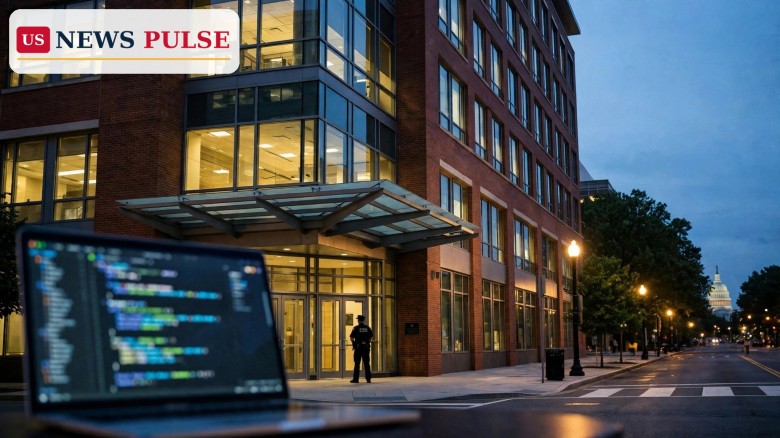
Assistant Attorney General Colin McDonald announced the operation at a news conference on Thursday, October 29, in Alexandria, Virginia, alongside federal prosecutors and FBI officials. The announcement, previewed for 11 a.m. ET in the Justin W. Williams Building, marked the first public enforcement wave in an investigation that officials said has been building for years and now reaches across the country.
According to the Justice Department, the scheme worked by stealing the personal information of Americans who had never sought a college place. That information was then used to file applications and create federal student aid accounts in their names. Once a fictional student was enrolled, prosecutors say, tuition and fees were paid from federal funds and any leftover grant or loan money was diverted — first through domestic “money mules” and then abroad.
“These are not isolated errors,” McDonald said at the news conference. “This is organized fraud at scale. Some use super intelligence to fill out college applications and complete coursework.” He added that some participants went further still: “Some even create the appearance of a fake student in an online classroom to convince schools that a real person is attending.”
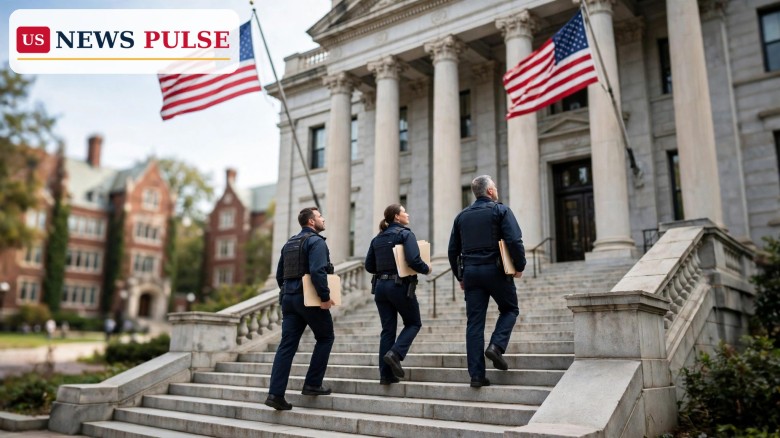
The first wave produced indictments against five defendants, officials said. Reporting of the announcement did not, in the material reviewed for this article, name all five defendants or set out every charge in detail, and the charges remain allegations that have yet to be tested in court. Separately, authorities said they had seized more than $750,000 in cryptocurrency allegedly laundered through networks connected to Kenya, and that a US team had been sent to Kenya to work on the ground there.
“We have already sent a team to Kenya to be on the ground for purposes of rooting out this fraud scheme and figuring out how it works on the ground in Kenya,” McDonald said during the question-and-answer session, according to reports of the briefing.
Federal student aid is one of the largest flows of public money into American higher education. Students typically apply through the Free Application for Federal Student Aid, known as FAFSA, and eligible students can receive Pell Grants, which do not have to be repaid, as well as federal student loans. Colleges receive tuition and fee payments directly, and any remaining aid — intended for books, housing and living costs — is normally disbursed to the student.
That structure is also what investigators say made the alleged scheme profitable. If a fictional student could be kept “enrolled” long enough, the money kept flowing: first to the institution, then onward as a refund. Prosecutors allege that in this scheme the refunds did not stay with any real student. Instead, they were routed through intermediaries in the United States and then funnelled overseas, including through fronts such as a Nairobi safari company, according to reports of the announcement.
The scale described on Thursday helps explain why the case has drawn so many agencies. More than 40 open cases are being handled through 26 FBI field offices, with more than 20 US attorney's offices involved. That footprint suggests investigators believe the same methods were used at institutions in many states, not at a single college, and that the networks behind them may share organisers, money routes or identity sources.
California's community colleges have been at the sharp end of the wider problem. McDonald told reporters that nearly one-third of community college applications submitted in California in 2024 were flagged as fraudulent. Community colleges, which are open-access and often offer online courses, have been a particular target for automated or bulk applications in recent years, because a fraudulent enrolment can be created cheaply and at scale — and because each one can unlock a separate aid payment.
The announcement also comes against a broader federal push on identity checks for student aid. Fox News reporting around the announcement highlighted a Trump administration requirement for government-issued identification when applying for federal student aid, which it said had saved $200 million in fraud in two months. The Justice Department has not, in the reporting reviewed here, presented that figure as part of the Ghostbusters case totals, and it should not be added to the several-hundred-million-dollar loss estimate for the scheme itself.
Put together, the official account describes a chain with five links. First, organisers allegedly obtained the identities of working Americans — people who, crucially, had never applied to college and so were unlikely to notice an aid application in their name until a bill or a credit problem surfaced. Second, those identities were used to complete applications and FAFSA filings, with artificial intelligence allegedly used to fill in forms and even complete coursework so the “student” appeared genuine.
Third, the fictional students were enrolled at colleges across the country, including online programmes where physical attendance is hard to verify. Fourth, federal aid was disbursed, tuition was settled, and the leftover money was collected. Fifth, that money was laundered: domestic money mules moved it on, cryptocurrency was used to obscure the trail, and funds were funnelled abroad, with Kenya identified as a key node in the networks under investigation.
Each link, if proved, matters for a different reason. The identity theft harms individuals directly, leaving victims facing ruined credit and bills for an education they never received, according to prosecutors. The fake coursework and fake classroom presence, if proved, would show deliberate deception of colleges, not just of the aid system. And the laundering route — through mules, crypto and overseas fronts — is what turns a domestic benefits fraud into an international organised-crime case, and explains the involvement of so many FBI field offices.
Officials were careful to frame the announcement as a first wave, not a final accounting. Forty open cases, five indictments so far and one seizure figure of more than $750,000 do not yet add up to a complete picture of how much money was taken, how many identities were misused, or how many institutions were affected. Those questions are likely to be answered, if at all, case by case as indictments are unsealed and prosecutions proceed.
The strongest language at the announcement came from McDonald himself. “This is organized fraud at scale,” he said, in the line most widely quoted from the briefing. “Investigators believe this fraud has been ongoing since at least 2021, potentially reaching several hundred million dollars lost.” The date matters: a scheme running since 2021 would have spanned multiple academic years, multiple aid cycles and, potentially, thousands of individual applications.
On the human cost, prosecutors stressed that the victims were not colleges or the aid system in the abstract, but named individuals whose identities were taken. Working Americans who never applied to college found themselves, in the official account, enrolled in courses they never took and indebted for loans they never sought. That framing — identity theft first, financial fraud second — is likely to shape how the cases are charged and how colleges are expected to respond.
No detailed response from the colleges named in the underlying cases, from student-aid administrators, or from defence lawyers for the five indicted defendants was included in the initial reporting reviewed for this article. That is normal for a breaking announcement: indictments are often reported before defence statements are available, and institutions typically respond once they have seen the specific allegations against them. This article will be updated if those responses emerge.
The Kenya dimension also drew attention at the briefing. Sending investigators to Kenya, and seizing crypto allegedly tied to networks there, signals that US prosecutors see the scheme's money trail, not just its US enrolments, as central to the case. It also raises practical questions about extradition, evidence-sharing and whether further defendants abroad will be charged.
Operation Ghostbusters matters for three groups at once: taxpayers, identity-theft victims and genuine students. For taxpayers, the alleged losses — potentially several hundred million dollars — are money intended to widen access to education that instead, prosecutors say, enriched criminal networks. For victims, the damage is personal and lasting: a fraudulent loan in your name can damage your credit, trigger collection letters and take months to untangle, even when you did nothing wrong.
For genuine students, the stakes are quieter but real. Large-scale fraud invites tighter controls — stricter identity verification, slower disbursements, more checks on enrolment — and those controls, however justified, can also make legitimate applications harder, especially for first-generation students, adult learners and people without straightforward documentation. How the Education Department and colleges calibrate that response will matter as much as the prosecutions themselves.
The case also tests how well federal agencies can police an aid system that is, by design, decentralised. Thousands of institutions, millions of applicants and a heavy reliance on self-reported information make student aid an attractive target for organised fraud, particularly when artificial intelligence can generate plausible applications and coursework at scale. If Ghostbusters produces convictions, it may become the template for future enforcement; if the cases stall, it will show how hard that template is to prove in court.
The immediate next steps are procedural: the five indictments already announced will move through the courts, where defendants will enter pleas and defence lawyers will test the evidence. Further indictments are possible, given the 40 open cases, and officials have signalled that this is a first wave rather than the end of the operation. Investigators in Kenya, and any seizures or arrests that follow from that work, will be watched closely.
Colleges, meanwhile, face a practical question: how to spot ghost students without shutting out real ones. Expect more attention on application anomalies — bulk filings from the same devices or addresses, coursework completed implausibly fast, students who never engage beyond enrolment — and on the identity-verification steps that the administration has already begun to tighten.
For anyone who suspects their identity was used, the advice from fraud investigators in similar cases is consistent: check your federal student aid account and your credit reports, report any loan or grant you do not recognise to the aid servicer and to the FBI's Internet Crime Complaint Center, and keep records of every communication. Victims should not pay a bill for an education they never received without first disputing it through the official channels.
Finally, the loss figure itself will be refined. “Potentially reaching several hundred million dollars” is an investigators' estimate, not a court finding. As cases proceed, prosecutors will have to prove specific amounts, tied to specific defendants and specific fraudulent applications — and that accounting, more than the headline estimate, will determine the ultimate scale of Operation Ghostbusters.
It is the Justice Department's name for a nationwide crackdown, announced October 29, 2026, on an alleged international scheme that created fictional “ghost students” to claim federal student aid.
Prosecutors say organisers stole Americans' identities, enrolled fictional students at colleges, used AI to complete applications and coursework, and diverted leftover grant and loan money through money mules and cryptocurrency abroad.
Investigators estimate potential taxpayer losses of several hundred million dollars since at least 2021. More than $750,000 in cryptocurrency has been seized so far, but the total is an estimate, not a court finding.
Five defendants have been indicted in the first wave, according to officials. The reporting reviewed for this article did not name all five, and the charges remain allegations until proved in court.
Check federal student aid accounts and credit reports, dispute any unrecognised loan or grant with the servicer, and report the fraud to the FBI's Internet Crime Complaint Center.
Related coverage: DOJ charges in a five-state illegal voting case; Alaska ballot probe ordered in the Senate race; Con Edison pipeline fraud inspector sentenced.
Leave a Comment



 | Today's Date: