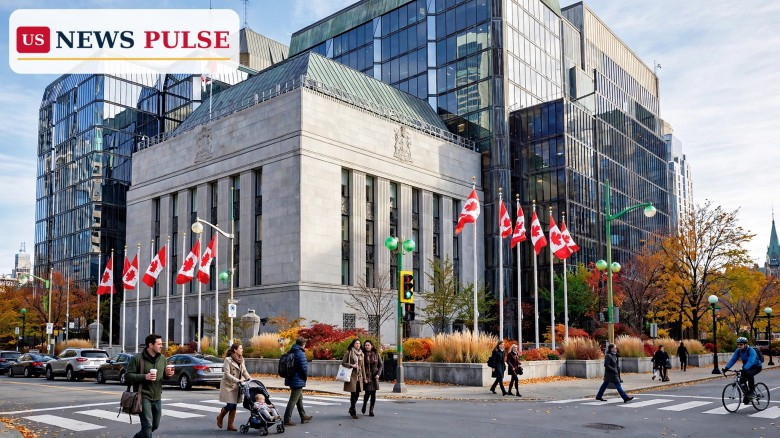
The Bank of Canada rate hike announced on Wednesday, October 28, 2026, marks a sharp turn for North America's monetary policy: Canada's central bank raised its policy interest rate by a quarter of a percentage point, to 2.5%, its first increase since July 2023. The move ends a long easing era and a pause at 2.25% that had held since October 2025, and it came on the very same day the United States Federal Reserve chose to hold its own rate steady — a split that sent bond markets swinging from Toronto to Washington and gave the Canadian dollar a lift.
In an opening statement in Ottawa alongside Senior Deputy Governor Carolyn Rogers, Macklem put the decision in plain terms: "Today, we raised the policy interest rate by 25 basis points, bringing it to 2.5%. This is the first interest rate increase since July 2023." The statement, published by the Bank for International Settlements, framed the hike as a precaution against a familiar danger — that a temporary energy shock hardens into lasting, generalised inflation.
Two developments since the Bank's July outlook drove the decision, Macklem said. First, the inflation outlook has deteriorated. With the war in the Middle East persisting, global oil prices have increased and are expected to remain higher for longer, hitting Canadians at the petrol pump and raising costs for many businesses. Second, the growth outlook has improved modestly despite continued trade actions by the United States. "With the outlook for inflation substantially higher and the economy showing resilience, an increase in the policy rate is needed to reduce the risk that elevated energy prices could spill over and become generalized inflation," Macklem said.
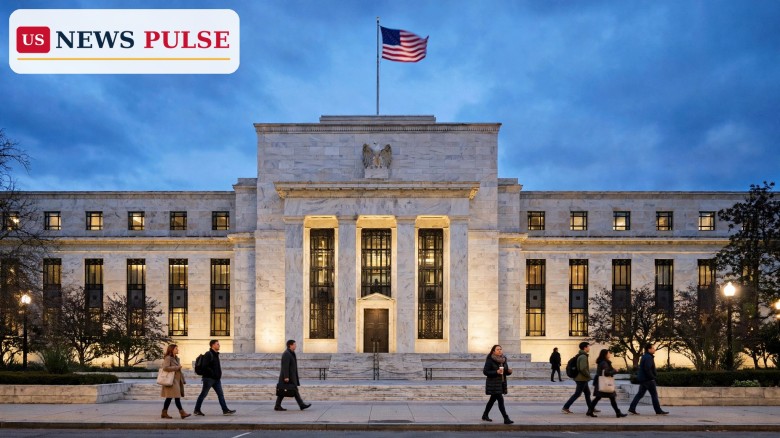
The market reaction was immediate. The Canadian dollar strengthened after the announcement, with the US dollar trading near 1.3975 Canadian dollars in early Asian trading on Thursday, October 29, and bond yields whipsawed as traders repriced the split between the two North American central banks. The Federal Reserve had held its key rate at 3.75% to 4.00% on the same day, leaving Canada hiking while its largest trading partner stood still.
To understand why a quarter-point move matters so much, it helps to retrace the path. The Bank of Canada last raised rates in July 2023, at the peak of the post-pandemic inflation fight. It then spent the following years cutting as inflation cooled, eventually pausing at 2.25% in October 2025. For more than a year, borrowers, homebuyers and businesses planned around the assumption that the next move, if any, would be down — or at least not up.
That assumption broke in 2026. Consumer price inflation has sat around 3% since April, well above the Bank's 2% target, and the Bank now expects it to climb to about 3.5% by the end of the year and to remain at or above 3% through much of 2027 before returning close to target around the middle of 2028. The details matter: inflation excluding petrol is still 2.2%, and measures of core inflation remain close to 2%. So far, the surge is concentrated in energy and in services that rely heavily on energy inputs, such as airfares. The Bank's fear is precisely that this concentration will not last — that fuel, diesel and heating-oil prices, considerably higher than in July and expected to stay higher for longer, will seep into freight, manufacturing and services.
The growth side of the ledger gave the Bank room to act. GDP growth was 3.3% in the second quarter of 2026, and recent indicators point to about 2% in the third quarter. Consumer spending has been solid even with slow population growth, business investment has rebounded on oil and gas activity and spending on machinery and equipment, and exports have strengthened on robust US demand, higher energy production and signs that businesses are adapting to the changing trade environment. The unemployment rate has remained around 6.5% for several months, although Canada lost 68,000 jobs in September, a reminder that the labour market is not uniformly strong. A broad set of indicators still point to some excess supply in the economy — slack that would normally argue against a hike.
The Bank also had to weigh the trade war. Growth will likely slow in the fourth quarter as new US tariffs weigh on activity, Macklem said, but it should pick up again in 2027 as consumer spending continues, exports strengthen and business investment recovers, supported by fiscal measures. Following growth of 1% in 2026, the economy is projected to expand by about 2% in both 2027 and 2028, absorbing the remaining slack. The overall growth projection is somewhat stronger than in the July report.
Macklem was unusually open about the internal debate, saying Governing Council considered two options: hold or hike. The case for holding was real. Inflation so far has been concentrated in energy and energy-heavy services, core measures are near target, economic slack remains, and new US tariffs will drag on growth. Holding would have let the Bank wait for proof that energy costs were genuinely spreading.
The case for hiking won because of persistence. Energy prices are higher, they are expected to remain higher, and cost pressures are building. Businesses have mostly absorbed higher input costs so far, Macklem noted, but past experience and Bank surveys suggest that pass-through to consumer prices will increase over the next year. Imported industrial and electronics input prices have also risen. With the economy expected to recover, there is less downward pressure on prices to offset those cost pressures. In short, waiting risked a bigger problem later: once households and firms start expecting higher inflation, they raise prices and wage demands in turn, and the Bank would need a much larger move to restore control.
That logic also explains the Bank's careful language about what comes next. "There could be a need to raise the policy rate further, but given the uncertainties, we will proceed carefully," Macklem said, adding that future decisions will be taken one meeting at a time. The Bank stressed that uncertainty remains elevated: developments in the Middle East and Canada-US trade relations are both fluid, and nobody can yet say how much energy costs will seep into consumer prices more broadly.
"Today, we raised the policy interest rate by 25 basis points, bringing it to 2.5%. This is the first interest rate increase since July 2023," said Bank of Canada Governor Tiff Macklem in his October 28 opening statement in Ottawa.
"With the outlook for inflation substantially higher and the economy showing resilience, an increase in the policy rate is needed to reduce the risk that elevated energy prices could spill over and become generalized inflation," Macklem said.
"The longer energy prices remain high, the more likely it is these costs will spill over to consumer prices more broadly," Macklem said, explaining why the Bank acted before that spillover was fully visible in the data.
"There could be a need to raise the policy rate further, but given the uncertainties, we will proceed carefully," Macklem said of the path ahead.
"The Bank remains committed to maintaining Canadians' confidence in price stability through this period of global upheaval," Macklem concluded.
Market analysts echoed the caution. Francis Fong, managing director and senior economist at TD Bank, noted that the Bank has revised its inflation forecasts significantly higher and now expects inflation to remain above target, while stressing that further hikes are not a foregone conclusion given uncertainty over growth, trade and geopolitical risks. Analysts also warned that higher rates are expected to suppress housing activity and keep home prices stagnant, particularly in Toronto and Vancouver, where affordability remains a key concern.
For Canadians, the hike will filter through quickly to variable-rate mortgages, lines of credit and business loans. After years in which borrowing costs only fell or stood still, households renewing mortgages or carrying variable-rate debt face higher monthly payments, and would-be homebuyers face tighter affordability tests. That is the intended medicine — cooling demand just enough to stop energy inflation from becoming entrenched — but it lands at an awkward moment, with unemployment at 6.5% and new US tariffs already squeezing exporters.
For the United States, the decision matters for three reasons. First, Canada is America's largest trading partner and a major energy supplier, so a stronger Canadian dollar and slower Canadian demand feed back into US exporters and energy prices. Second, the split with the Federal Reserve is a live experiment: two economies facing similar energy shocks have chosen opposite policies on the same day, and investors will watch which one looks wiser by December. Third, the inflation story rhymes uncomfortably with America's own numbers — US economic growth accelerated to 3.4% in the third quarter of 2026, while September PCE inflation, the Fed's preferred gauge, rose to 3.6% year on year, also pushed up by energy costs. If Canada's central bankers are right that energy inflation spreads, the Fed may face the same debate sooner than markets expect.
For investors, the message is that the era of one-way rate bets is over. Bond markets swung on the announcement precisely because traders had positioned for a continued pause in Canada and a steady Fed. A hawkish surprise from Ottawa — and the open possibility of more — forces a repricing of everything from currency hedges to cross-border borrowing costs.
The next test comes on December 9, when the Bank of Canada delivers its next policy decision. By then it will have fresh inflation data, another employment report and a clearer read on whether autumn energy prices stayed high or faded. If inflation prints come in hot and pass-through is visible in services prices, markets will price a further hike; if energy costs retreat and growth slows under tariff pressure, the Bank can credibly pause again.
The Bank's next Monetary Policy Report is scheduled for January 27, 2027, and will give the fullest update of its forecasts. In the meantime, watch three signals: petrol and heating-oil prices, which drive the headline rate; core inflation and wage settlements, which show whether expectations are shifting; and housing activity in Toronto and Vancouver, the most rate-sensitive corner of the economy. The Bank has promised to decide one meeting at a time — which means every data release between now and December 9 becomes a potential market mover.
Why did the Bank of Canada raise interest rates? Because the inflation outlook deteriorated: consumer prices have been around 3% since April, are expected to reach about 3.5% by year end, and the Bank fears persistently high energy prices will spill into broader inflation.
What is Canada's interest rate now? The policy interest rate is 2.5%, after a 25-basis-point increase on October 28, 2026, from 2.25%. It is the first increase since July 2023.
Will the Bank of Canada raise rates again? Possibly, but not certainly. Governor Tiff Macklem said there could be a need to raise further, but the Bank will proceed carefully and decide one meeting at a time. The next decision is December 9.
How does this affect mortgages and housing? Higher policy rates push up variable mortgage rates and borrowing costs, which analysts expect to suppress housing activity and keep prices stagnant, particularly in Toronto and Vancouver.
How does Canada's move differ from the US Federal Reserve? On the same day, October 28, the Federal Reserve held its key rate at 3.75% to 4.00%, while the Bank of Canada hiked — a split that strengthened the Canadian dollar and swung bond markets.
Related coverage on US News Pulse: Fed holds rates at 3.75% to 4% in October decision; US GDP grows 3.4% in Q3 as investment beats forecasts; September PCE inflation rises to 3.6% as energy costs push prices higher.
Sources: Bank of Canada opening statement via Bank for International Settlements, October 28, 2026; Wealth Professional, Seeking Alpha, Global Economy Charts and Moneta Markets reporting, October 29, 2026.
Leave a Comment



 | Today's Date: