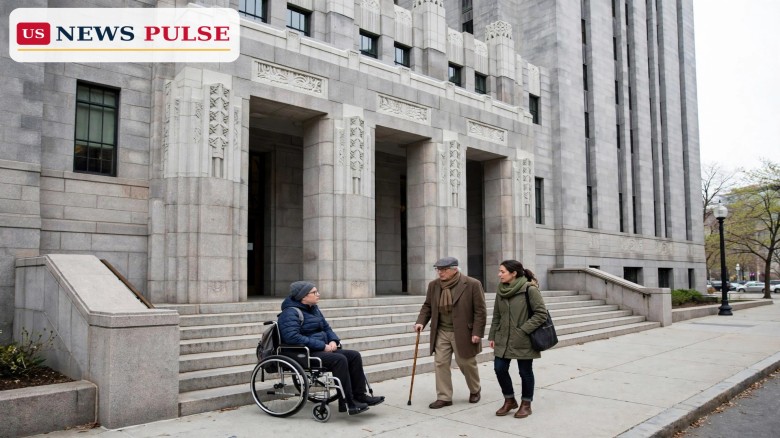
A federal judge in Boston has blocked the Trump administration from enforcing a narrowed definition of who counts as “medically frail” under the new Medicaid work requirements, in a ruling that protects a key exemption for people with serious medical conditions just two months before the requirements are due to take effect. The Medicaid work requirements ruling, handed down on Thursday, October 29, 2026, sides with 25 states and the District of Columbia and stops the government from applying a definition the states said would force vulnerable people to clear unnecessary hurdles to keep their health cover.
Judge Richard Stearns of the U.S. District Court in Boston ruled on Thursday that the Centers for Medicare & Medicaid Services (CMS) had unlawfully limited who qualifies as “medically frail or otherwise [having] special medical needs” under its June rule implementing the Medicaid work requirements. The states had argued that the new definition would force medically frail people to clear unnecessary hurdles to maintain government-funded health insurance coverage, and Stearns agreed that enforcing it risked serious harm.
In the ruling, Stearns wrote: “Because enforcement of an unlawful definition of ‘medically frail’ may lead to the disenrollment of otherwise eligible vulnerable individuals relying on Medicaid coverage for continuity of care, the States (and public) face potential for great hardship in the absence of an injunction.” That sentence is the heart of the decision: the judge was not ruling in the abstract about paperwork, but about people losing cover they need for ongoing treatment if the definition were allowed to stand.
The CMS rule at issue said the exemption would apply only if a person’s “physical, mental, or other behavioral health condition significantly impairs the individual’s ability to comply with the community engagement requirement.” Stearns found that wording unlawfully narrowed the exemption written into the law. In practice, the ruling means the administration cannot use that stricter test to decide who is too ill to meet the work rules, at least while the case continues.
The ruling is also deliberately limited. While Stearns invalidated that part of the rule, he upheld other provisions that the Democratic-led states had also challenged. The decision therefore does not cancel the Medicaid work requirements as a whole, and it does not end the wider legal fight over how the requirements are implemented. What it does is remove, for now, one of the most consequential barriers the states identified for the sickest enrollees.
Medicaid is the government health insurance programme for low-income Americans, jointly funded by the federal government and the states. It covers tens of millions of people, including many who work in low-paid jobs, care for family members, or live with chronic illness and disability. Changes to who qualifies, and on what terms, therefore affect hospitals, clinics, state budgets and households at the same time.
The work requirements come from President Donald Trump’s signature tax and spending measure, the One Big Beautiful Bill Act, which he signed into law last year. Under that law, adults aged 19 to 64, with a few exceptions, must complete a minimum of 80 hours of work or community engagement activities each month, or be enrolled in an education programme at least half time, to qualify for Medicaid beginning January 1, 2027. The law itself sets the framework; CMS then issued guidance in June telling states how to put it into practice.
That June guidance is where the dispute began. The states that sued said the rule threw a wrench into preparations that were already under way, because states were building eligibility systems, staffing call centres and writing notices to enrollees on a tight timetable set by Congress. They also said the narrower “medically frail” definition created a new problem on top of the timetable: states would have to judge serious illness against a stricter standard, with the risk that people who should be exempt would instead be treated as non-compliant and lose cover.
This is not the first time Stearns has ruled in this case. In an earlier decision, he rejected the states’ bid for a preliminary injunction that would have paused the work requirements altogether. He said then that it was not clear that the states’ costs of setting up the requirements would be entirely unrecoverable, noting that the federal government had said it would reimburse 90 percent of states’ costs to develop eligibility systems. He also said the tight timeline was set by Congress in the Big Beautiful Bill, not by CMS in the challenged rule. Thursday’s ruling is narrower and more targeted: it leaves the timetable and the broader programme in place, but blocks the specific definition the judge now calls unlawful.
Stearns was appointed by former President Bill Clinton, a Democrat. That background will feature in political reactions, but the ruling itself turns on a question of administrative law: whether the agency’s definition faithfully carried out the exemption Congress wrote, or whether it rewrote that exemption in a way that would leave eligible people unprotected.
For enrollees, the immediate change is about the test for exemption, not about whether work requirements exist. A person with a serious physical, mental or behavioural health condition should not now have to prove that the condition “significantly impairs” their ability to comply with the community-engagement rule in the way CMS had defined it. States will need to apply the exemption on a broader, lawful basis while the litigation continues, rather than using the blocked definition to screen people out.
For states, the ruling removes one source of legal risk, but it does not remove the work itself. Twenty-five states and the District of Columbia brought the challenge, and they still face the January 1, 2027 start date for most states. They must still build systems to track hours, verify education enrolment, process exemptions and send notices, and they must do so for a programme that will affect people whose hours, health and caring responsibilities can change from month to month. The ruling may make the exemption process less restrictive, but it does not simplify the underlying system.
For the administration, the ruling is a partial defeat, not a total one. Because Stearns upheld the other challenged provisions, CMS can continue implementing the rest of its June rule. The administration could seek to appeal, seek a stay, or rewrite the definition in a way it argues satisfies the court. None of those steps was announced in the immediate reporting of the ruling, and CMS did not immediately respond to a request for comment. Any appeal would put the definition back before a higher court, while enrollees and states wait for a final answer.
For hospitals and clinics, the stakes are continuity of care. The judge’s own reasoning focuses on that point: people relying on Medicaid for ongoing treatment — for cancer, heart disease, mental illness, addiction treatment, or the management of a disability — face the greatest hardship if a paperwork definition, rather than their medical reality, decides whether they keep cover. Providers have long warned that coverage gaps interrupt treatment, increase emergency visits, and ultimately cost the system more than the cover itself.
The states’ argument, as reported, was straightforward: the narrowed rule would force medically frail people to clear unnecessary hurdles to maintain coverage. That framing — that the hurdle, not the underlying illness, would decide the outcome — is now echoed in Stearns’s own words about “great hardship” and “continuity of care.” The attorneys general of California, Massachusetts and New Jersey led the challenge, and the coalition of 25 states plus the District of Columbia gives the ruling a national footprint, even though it was issued in Boston.
CMS did not immediately respond to a request for comment, so the administration’s public position on the ruling was not available in the first reporting. That silence leaves two questions open: whether the administration will appeal the definition, and whether it will issue interim guidance to states telling them how to handle “medically frail” determinations in the meantime. States, which must give enrollees clear instructions before January, will be looking for that guidance quickly.
Supporters of work requirements have previously argued that the rules encourage work and community engagement and protect the programme for those who truly need it, and that exemptions for the medically frail were always part of the design. Critics have argued that the requirements create administrative barriers that cause eligible people to lose cover even when they are working, caring or ill, because hours are hard to document and notices are easy to miss. Thursday’s ruling does not settle that wider debate, but it does side with the critics on one specific point: the definition of frailty cannot be drawn so tightly that it defeats the exemption itself.
The ruling matters first because of timing. With the requirements due to begin on January 1, 2027, states are already sending information to enrollees and building the systems that will decide who keeps cover. A definition that is unlawful in October cannot simply be swapped out in December without confusion, retraining and revised notices. By blocking the definition now, the court gives states a chance to apply a lawful standard before the first compliance month begins, rather than correcting disenrollments after the fact.
It matters second because of who is affected. The “medically frail” exemption is not a marginal category: it is the safety valve for people whose health makes steady, documented, 80-hour months difficult or impossible. If that valve is too narrow, the programme’s promise — that the sickest people are protected — fails at the exact moment it is needed. Stearns’s focus on disenrollment and continuity of care makes that human consequence the legal test, not an afterthought.
It matters third because it shows how the courts are handling the Big Beautiful Bill’s health provisions piece by piece, rather than all at once. The same judge who refused to pause the whole programme has now blocked one part of it. That pattern — uphold the framework, strike the unlawful detail — is likely to repeat as other challenges to CMS rules, state implementation plans and individual disenrollments reach the courts. Each ruling will shape, in small but concrete ways, who actually keeps Medicaid in 2027.
The next steps are procedural, but they will decide the practical outcome. The administration may appeal to the First Circuit, seek a stay of the injunction, or issue a revised definition. The states may seek further clarification on how to apply the exemption while any appeal is pending. CMS may also issue guidance to states, which will be closely watched by enrollee advocates and by state Medicaid directors who must finalise their systems.
Enrollees should watch for notices from their state Medicaid agency in the coming weeks, and for any change in how “medically frail” status is described on application and renewal forms. People with serious health conditions who are worried about the new rules should keep medical documentation, respond promptly to state letters, and seek help from local Medicaid offices, legal aid organisations or community health centres if they receive a notice they do not understand. The ruling does not remove the need to engage with the system; it removes one unlawful barrier within it.
The wider programme still starts on January 1, 2027, for most states. Unless a further court order intervenes, adults aged 19 to 64 who are not exempt will need to meet the 80-hour monthly standard or be in education at least half time. That means the next two months will be dominated by implementation: state notices, system testing, and the first real test of whether hours can be tracked fairly for people with irregular work, gig work, seasonal jobs and caring duties.
What did the judge actually block? Judge Richard Stearns blocked enforcement of CMS’s narrowed definition of “medically frail” for Medicaid work-requirement exemptions. He did not block the work requirements themselves, and he upheld other provisions the states had challenged.
Who brought the case? Twenty-five states and the District of Columbia sued, with the attorneys general of California, Massachusetts and New Jersey leading the challenge. They argued the narrowed definition would force medically frail people to clear unnecessary hurdles to keep cover.
What are the Medicaid work requirements? Under the One Big Beautiful Bill Act, most adults aged 19 to 64 must complete at least 80 hours a month of work or community engagement, or be enrolled in education at least half time, to qualify for Medicaid from January 1, 2027, subject to exemptions including for the medically frail.
Does this ruling mean Medicaid work requirements are cancelled? No. The requirements remain in place for most states from January 1, 2027, unless a further court order or legislative change intervenes. The ruling removes one definition; it does not cancel the programme.
What should Medicaid enrollees do now? Watch for notices from your state Medicaid agency, keep medical documentation, and respond promptly to any letter about your status. If you receive a notice you do not understand, contact your state Medicaid office, a community health centre or a legal aid organisation for help.
Related coverage: PBM transparency rule finalized: drug middlemen must reveal their pay; Bodum French press recall: 5.9 million coffee makers pulled over burn risk; September PCE inflation rises to 3.6% as energy costs push prices higher.
Sources: Reuters, October 29, 2026, reporting by Nate Raymond in Boston; Bloomberg Law / Bloomberg Tax, October 29, 2026; Healthcare Dive, background on the earlier ruling in this case.
Leave a Comment



 | Today's Date: