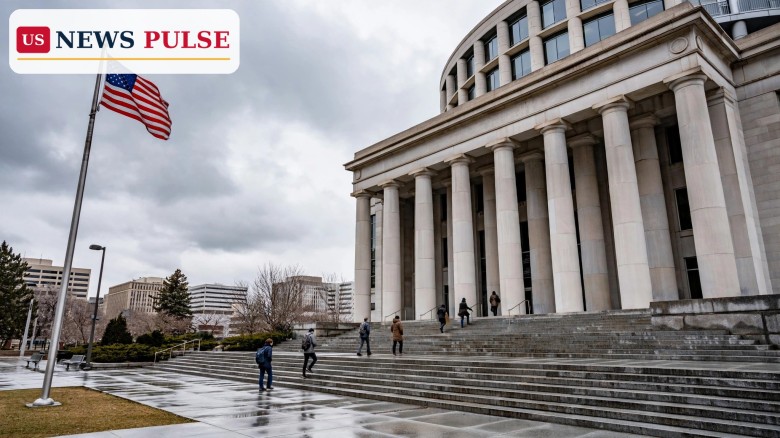
A federal judge in Minneapolis has sentenced Salim Said to 30 years in prison for his central role in the Feeding Our Future fraud, a pandemic-era scheme that claimed to feed needy children in Minnesota while siphoning tens of millions of dollars from a federal child nutrition programme. The Salim Said 30-year sentence, handed down on Wednesday, October 28, 2026, is one of the longest punishments yet in a sprawling case that prosecutors put at about $250 million and that has drawn repeated attacks from President Donald Trump.
United States District Judge Nancy Brasel imposed the sentence in Minneapolis on Wednesday, October 28, 2026, after a 2025 trial in which a jury convicted Said on 21 counts including wire fraud, conspiracy, federal programmes bribery and money laundering. The sentence sits below the 40 years prosecutors requested and above the 12 years his defence sought, and it falls at the bottom end of the calculated sentencing guidelines range reported from the hearing.
“You took more than taxpayers' dollars to enrich yourself. You took the reputation of our state down with you,” Judge Brasel told Said at sentencing, according to the Associated Press and Al Jazeera. She also spoke of the damage done to trust in government, and wondered how long it would take before the words “Minnesota” and “fraud” were no longer linked in the same sentence.
Said, a native of Somalia who operated the Safari Restaurant, which specialised in Somali dishes, had denied the allegations while testifying at his trial in 2025, saying many meals were delivered off site. At sentencing he changed course and expressed remorse, telling the court he was deeply sorry for his actions and for the people he hurt.
Feeding Our Future was a Minnesota nonprofit that sponsored organisations in the federal child nutrition programme, which normally feeds children through schools and other authorised institutions. When COVID-19 disrupted schooling, the rules were loosened: restaurants could take part and food distribution could move outside schools. Prosecutors say Bock used the nonprofit to recruit operators who submitted claims for meals that were never served.
Said's part of the scheme ran for 21 consecutive months. Prosecutors said he made thousands of fraudulent reimbursement claims, day after day and month after month, listing children who did not exist. “Each submission represented meals purportedly provided to underprivileged children, yet the listed children themselves were entirely fictitious,” prosecutors said in a court filing quoted by the Associated Press.
The numbers at the heart of the case are stark. Said claimed what prosecutors called a “ridiculous daily distribution of 6,000 meals”, while FBI cameras showed about 40 people a day collecting food. “The defendant and his sites did not serve thousands of children; he served a calculated, lucrative lie,” prosecutors said.
The wider investigation has produced dozens of convictions. Bock, who devised the overall plan, is serving a 42-year sentence and was ordered to repay $242 million. Other defendants have received long terms, including a 28-year sentence for Abdiaziz Farah, head of the Empire Cuisine group of defendants, a comparison raised by both sides at Said's hearing. Forfeiture approved at Said's sentencing covered homes, vehicles and commercial property prosecutors say were bought with stolen programme funds.
The government said Said “hit the jackpot”. Prosecutors told the court he used the proceeds to buy a $1.2 million home, commercial real estate and an $87,000 pickup truck, and that he expanded the fraud by recruiting others, including through a nonprofit that claimed to run meal sites in Willmar, St. Cloud and Mankato. Some of the $44 million attributed to him was fraud committed by others he recruited, prosecutors acknowledged.
Assistant US Attorney Rebecca Kline argued at sentencing that public programmes depend on trust and that the crime would affect Minnesota for generations. The defence, by contrast, pointed to Said's difficult childhood in Somalia, to letters of support from relatives, and to the argument that Bock, not Said, controlled the money. Judge Brasel weighed those submissions before settling on 30 years, with restitution of more than $44 million shared with his co-defendants.
“You took more than taxpayers' dollars to enrich yourself. You took the reputation of our state down with you,” said US District Judge Nancy Brasel, sentencing Said on October 28, 2026.
“The defendant and his sites did not serve thousands of children; he served a calculated, lucrative lie,” prosecutors said in a court filing, describing the gap between the claimed 6,000 meals a day and the roughly 40 people a day seen collecting food.
“For 21 consecutive months, Said made thousands of fraudulent reimbursement claims, day after day, month after month,” prosecutors said, adding that the children listed on the claims were entirely fictitious.
Defence attorney Barry Zone, who had asked for a 12-year sentence, disputed the government's description of Said as the scheme's “architect”, and argued that a 40-year term would not be justice. Said himself told the court at sentencing that he was deeply sorry for his involvement.
The sentence matters for three reasons. First, it closes one of the biggest remaining chapters of the largest fraud prosecution in Minnesota's history, a case that has become shorthand nationally for pandemic-era programme abuse. Second, it tests how courts punish fraud that steals from programmes meant for children: 30 years is an exceptionally long term for a white-collar case, exceeded in this investigation only by Bock's 42 years.
Third, the case has become political. President Trump has repeatedly ridiculed Minnesota's Democratic governor, Tim Walz, for failing to stop the fraud, and has partly cited it as grounds for an immigration crackdown in the state's largest cities. Walz announced in January that he would not seek re-election after sustained criticism over theft in programmes that rely on federal money. State auditors separately found that Minnesota's Department of Education received numerous complaints about Feeding Our Future but often told the group to police itself.
Said will begin serving his 30-year federal term, with the restitution order of more than $44 million standing alongside it. Because he is not an American citizen, he may also face deportation proceedings at some point in the future, according to courtroom reporting on the hearing.
The wider investigation continues: prosecutors have said dozens of people have been convicted so far, with asset seizures continuing for victim restitution and further indictments possible in the broader probe of pandemic-era child nutrition funds. Bock has filed a notice of appeal against both her conviction and her sentence, so the legal end of the Feeding Our Future saga is not yet in sight.
For Minnesota, the political fallout will run into the November 3 midterm elections, where fraud, immigration enforcement and trust in state government are already live campaign issues. The sentencing gives both parties a fresh, concrete example to argue over in the final five days of the campaign.
Who is Salim Said? Salim Said, 37, is the former co-owner of the Safari Restaurant in south Minneapolis. He was convicted in 2025 alongside Feeding Our Future founder Aimee Bock and sentenced on October 28, 2026, to 30 years in prison.
How much fraud was Salim Said responsible for? Prosecutors held him responsible for about $44 million in fraud, part of it committed by others he recruited, and he was ordered to pay more than $44 million in restitution. The wider Feeding Our Future scheme is put at about $250 million.
What was the Feeding Our Future scheme? Prosecutors say the nonprofit sponsored operators who claimed federal reimbursement for meals for children that were never served, exploiting COVID-era rule changes that let restaurants take part and moved distribution outside schools.
How did investigators catch the fraud? FBI surveillance showed about 40 people a day collecting food at Said's sites, against claims of 6,000 meals a day, and prosecutors said the meal rosters listed children who did not exist.
What sentences have others received? Feeding Our Future founder Aimee Bock is serving 42 years and was ordered to repay $242 million; Abdiaziz Farah of the Empire Cuisine group received 28 years. Prosecutors sought 40 years for Said and his defence asked for 12.
Related coverage on US News Pulse: Operation Ghostbusters: DOJ targets ghost student aid fraud scheme nationwide; James O'Keefe charged in Minnesota over August primary polling-place stunt; Minnesota Senate race tightens as fraud, ICE and Omar probe shake Democrats.
Sources: Associated Press via 28/22 News, Al Jazeera, Economic Times, Particle News, American Experiment, October 28-29, 2026.
Leave a Comment



 | Today's Date: