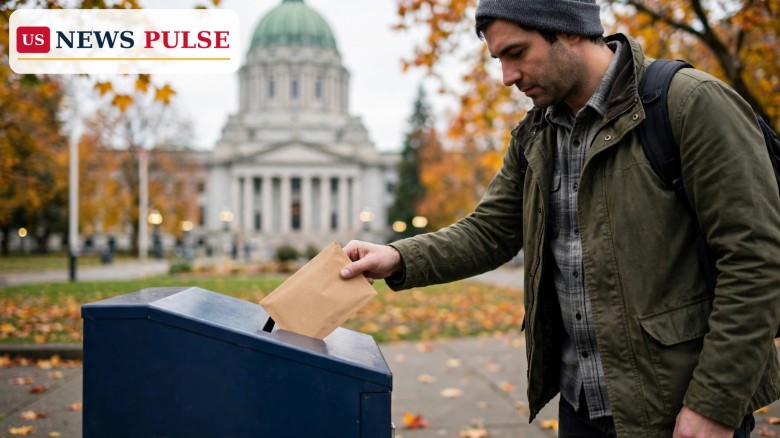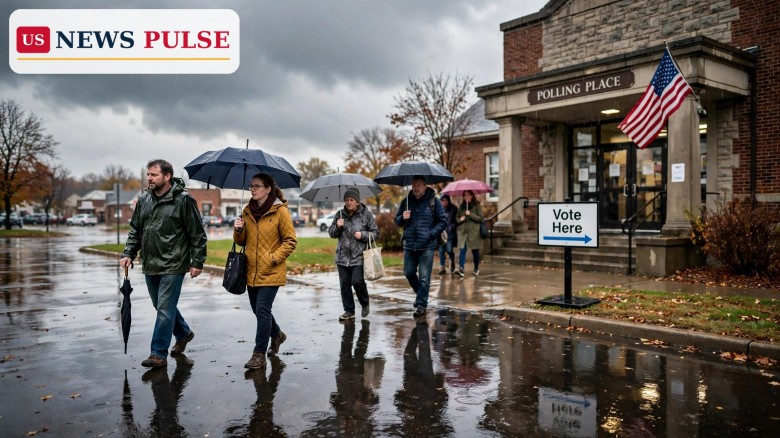
An Election Day storm could soak some of the most important battlegrounds in the 2026 midterm elections, with rain and thunderstorms threatening to dampen turnout when voters head to the polls on Tuesday, November 3, 2026. Forecasters say a soggy system tracking through the central United States could bring wet weather to Iowa, Kansas, Michigan, Ohio and Texas, five states where key midterm races will help decide control of Congress, and where millions of voters have yet to cast a ballot.
The warning comes from CNN meteorologist Chris Dolce, who reported on October 28, 2026, that exactly which races see rain on Election Day is still uncertain nearly a week out. The storm's precise track and strength remain open questions, and forecasters expect greater confidence by the weekend. But the broad picture is clear enough to matter: a band of rain stretching from parts of the Great Lakes and Upper Midwest to the western Gulf Coast, gusty winds across the Midwest and Plains, and strong thunderstorms possible along the storm's southern edge.
The forecast was published on October 28, 2026, five days before Election Day, at a moment when the midterm campaign is in its final stretch and early voting is already running at a remarkable pace. Dolce's report, carried by CNN and its affiliates, describes a storm that will track through the central United States on Election Day itself, rather than clearing before voters go to the polls or arriving after they have finished.
That timing is what makes the forecast politically relevant. Rain on Election Day does not stop an election, and it does not change the ballots already cast. What it can do, according to multiple studies cited by CNN, is change the behaviour of the voters who have not yet voted, particularly those who were already wavering about whether to go. Rainfall and other active weather tend to suppress turnout, the studies find, while sunshine tends to lift it.
The 2026 midterm elections on November 3 will decide control of Congress, with every seat in the House of Representatives and a swath of Senate seats on the ballot, alongside governors' races and state contests across the country. The stakes explain why even a weather forecast is being read as political news: in close races, a small shift in who shows up can decide the outcome.
Early voting has already blunted some of that risk. More than 35 million people had cast ballots through early voting at the time of Dolce's report, according to CNN. A separate analysis by the Associated Press and CNN with data firm Catalist put the figure at about 32.6 million early ballots as of October 27, 2026, including in-person early voting and voting by mail, and suggested as much as two-thirds of all votes in this midterm election could ultimately be cast early, a share similar to the 2024 presidential election.
The early-voting surge has been especially strong in battleground states. Early voting rose in 29 of the 39 states for which meaningful data were compiled, compared with the midterm elections four years ago, with Kansas up 94.9 percent, North Carolina up 36.3 percent, Maine up 36.0 percent, Texas up 35.9 percent, Ohio up 35.8 percent, Iowa up 32.7 percent and Michigan up 15.0 percent. In Texas alone, 5.5 million people had voted early, about 29 percent of the state's 19 million registered voters, with early voting ending on Friday, October 30, 2026, and no voting on the Saturday, Sunday or Monday before Election Day.
Iowa faces rain for at least part of Election Day, although there is still a chance showers could push out of the state by early morning, with highs in the 50s and low 60s. Kansas is a good bet for rainfall in parts of the state, though how much falls and exactly where remains uncertain, with highs in the 50s and 60s. Both states sit squarely in the storm's expected path through the Plains.
Michigan is the hardest state to call. Forecast models show vastly different outcomes: some bring widespread rain sweeping across much of the state, while others bring just nuisance showers to western Michigan or the Upper Peninsula. Highs will range from the 40s and 50s in the Upper Peninsula to the 60s in southern Lower Michigan, so even the temperature picture varies sharply within the state.
Ohio looks drier, but not safe. Most forecast models keep rainfall west of the state, yet forecasters say it is too early to rule out wet weather, with highs expected to reach the 60s. Texas carries the clearest storm risk in the south: the eastern half of the state, especially along and east of Interstate 35, has the highest chance of rain, with some thunderstorms possible too, and highs ranging from the 80s near the coast to the 60s in the Panhandle.
Dolce framed the forecast with deliberate caution. "A soggy storm will track through the central United States on Election Day and could influence voter turnout for key races in the region," he wrote, before adding the caveat that defines the whole forecast: "Exactly which races will see rain next Tuesday is still a toss-up, with questions remaining about the storm's exact location and strength. This is normal for a forecast nearly a week away."
His bottom line for voters was patience, not panic. "We'll know more by this weekend," he wrote, a reminder that a forecast issued five days out will shift as new model runs come in. The difference between staying dry, a washout, or nuisance showers, he noted, will come down to exactly where the storm sets up, a detail models cannot yet pin down.
It matters because the midterms are close, and because the voters most affected by rain are the ones campaigns spend the final days trying to reach. A committed voter will vote in the rain. A voter who was already on the fence may not, and in a race decided by a few thousand votes, that difference can be decisive.
It also matters because the storm does not fall evenly. A dry, warm Election Day in Georgia and North Carolina alongside a wet one in Iowa, Kansas, Michigan, Ohio and Texas means the weather itself becomes an uneven factor in a national election, helping turnout in some battlegrounds while hindering it in others. That unevenness is why forecasters and campaigns alike are watching the weekend model runs so closely.
Forecasters expect greater confidence in the storm's track by the weekend, and conditions could change before Election Day. The next model runs will narrow the key questions: whether Michigan sees widespread rain or scattered showers, whether Ohio stays dry, and how far east the Texas storms reach. Voters should check their local forecast again on Sunday and Monday rather than relying on the first outlook.
Iowa, Kansas, Michigan, Ohio and Texas are the states most likely to contend with wet conditions on Tuesday, November 3, 2026, according to CNN meteorologist Chris Dolce. Rain could stretch from parts of the Great Lakes and Upper Midwest to the western Gulf Coast, with gusty winds in the Midwest and Plains and strong thunderstorms possible on the storm's southern side.
Not definitely, but research suggests it can. Multiple studies cited by CNN have found that rainfall and other active weather tend to suppress voter turnout, while sunshine has the opposite effect. The effect is strongest among voters who were not firmly committed to voting, and it matters most in close races.
Forecasters expect greater confidence in the storm's track by the weekend before Election Day, and conditions could change before November 3. Voters should check their local forecast again on Sunday and Monday, when the models should agree more closely on where the rain will fall.
Georgia, Maine, New Hampshire and North Carolina are currently expected to remain mostly dry, with temperatures generally above average for late October and early November. Georgia should see highs in the 70s and low 80s, and North Carolina highs in the 70s.
More than 35 million people have already voted early nationwide, and early voting remains open in many states, though deadlines vary. In Texas, early voting ends on Friday, October 30, 2026, with no voting over the following weekend. Check your state or county election office for local early-voting hours and deadlines.
Related coverage: Early voting surge: over 30 million ballots cast a week before midterms, Midterm ad spending hits record $11.4 billion as 2026 race beats 2024 total and DOJ poll monitors: FBI and ICE agents will not watch midterm polls, Justice says.
Leave a Comment



 | Today's Date: