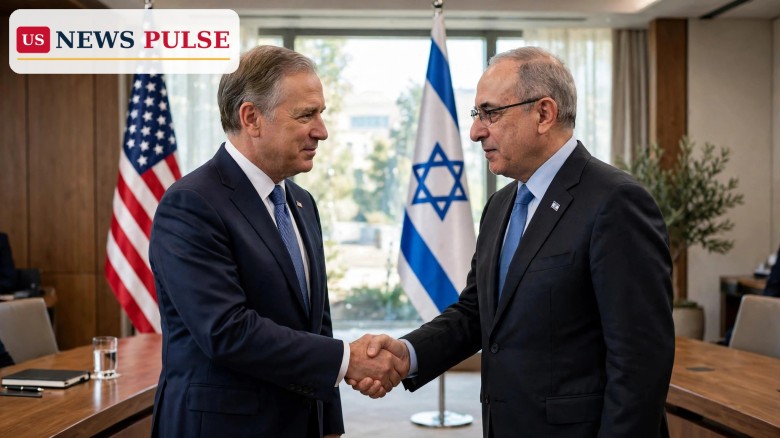
Donald Trump has claimed that his endorsement saved Benjamin Netanyahu in Israel's deadlocked 2026 election, telling Axios on Wednesday that his backing made a decisive difference for the Israeli prime minister as neither of the country's main blocs reached the 61 seats needed to govern. The Trump Netanyahu endorsement claim, made as Israel counted the final ballots from Tuesday's vote, immediately raised the question of whether Washington will now step into Israel's coalition talks — a step Trump said he would consider, while a United States official cautioned that no decision had been made.
"I heard my endorsement made a big difference for Bibi," Trump said, using Netanyahu's familiar nickname, in comments reported by Axios and carried by news agencies on Thursday, October 29, 2026. Asked whether he would help put together a unity government led by Netanyahu, Trump replied: "I will take a look." The remarks came as partial results left Netanyahu's right-wing and religious bloc on 53 seats, the Jewish-led opposition headed by Gadi Eisenkot on 48 seats, and Arab-led parties on a record 19 seats in the 120-member Knesset.
Trump spoke to Axios on Wednesday, October 28, 2026, a day after Israelis voted in the country's first general election since the October 7, 2023, Hamas attacks. According to the reports, Trump said he had initially received what he called "horror reports" about Netanyahu's prospects, but that the prime minister's position had improved in the latest projections after his endorsement. Trump had publicly urged Israeli voters to back Netanyahu before polling day, arguing that the two countries needed to finish joint security work, including on Iran.
On social media, Trump went further, saying his intervention had turned what looked like a certain defeat for Netanyahu into a competitive stalemate or a possible victory. That claim is impossible to prove from the vote count alone: elections turn on many factors, including turnout, security, the cost of living and anger over the October 7 attacks, and no published evidence separates the effect of a foreign leader's endorsement from those forces. What is not in dispute is the arithmetic Trump was reacting to. With 93 per cent of ballots tabulated in the reports cited by The Tribune, Netanyahu's bloc led Eisenkot's opposition but remained eight seats short of a majority, while the opposition needed 13 more seats even before the Arab parties were counted.
The timing matters for Washington as well as Jerusalem. Trump made the remarks five days before the United States midterm elections on November 3, 2026, at a moment when his administration is also warning allies to prepare for possible renewed military action against Iran after the midterms. Netanyahu has made his relationship with Trump a central part of his campaign, particularly on security cooperation and Iran, and any American role in coalition-building would therefore carry implications far beyond Israel's domestic politics.
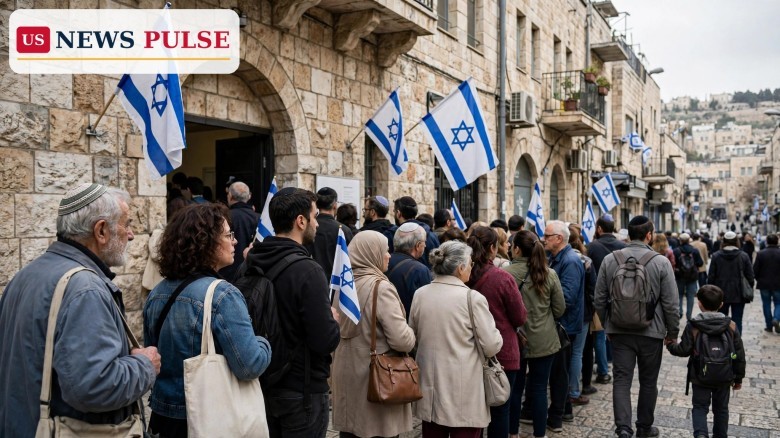
Israel went to the polls on Tuesday, October 27, 2026, with 7.33 million eligible voters and turnout of 77.7 per cent, with more than 5.4 million votes cast by 8 p.m. on election day — the highest figure at that hour since 1988. The vote was the first since the Hamas attacks of October 7, 2023, and the long war that followed, and it was fought in large part over security, the exemptions from military service enjoyed by sections of the ultra-Orthodox community, and Netanyahu's own long tenure in office.
The partial results reported by Israel's Central Elections Committee put Netanyahu's Likud as the largest single party, with 26 seats, ahead of Eisenkot's Yashar party on 21 seats. The two Arab-led groupings, the Joint List and Ra'am, were projected to win 19 seats between them, their highest total to date and a substantial increase on their strength in the outgoing parliament. Together, the Jewish-led opposition and the Arab-led parties would hold 67 seats, but that number has not translated into a governing coalition, because several opposition parties have refused to cooperate with Arab-led parties and the Joint List has ruled out formally joining a coalition under present circumstances.
Counting is not yet finished. Israel's Central Elections Committee said regular votes had been processed from 11,712 of 12,018 polling stations, representing 5,126,759 voters, and that counting of about 500,000 double-envelope ballots — votes cast by soldiers, diplomats, prisoners, medical staff and other voters outside their assigned stations — began on Thursday. Those ballots could shift individual seat allocations, although reports say they are not expected to overturn the broad balance of power. A final tally is expected on October 30, with official results published on November 4.
The fraud dispute that followed the vote is also now part of the background to any coalition talks. Likud alleged on Wednesday that Arab parties had stolen the election, citing bribery, threats, violence, forgery, multiple voting and prohibited voter-mobilisation software, and submitted hundreds of testimonies to the police, Shin Bet and the Central Elections Committee. Israel Police found no investigative or intelligence-based evidence for that claim, and the committee dismissed claims of systematic ballot manipulation while reviewing Likud's complaint through its routine procedures. Joint List leader Ahmad Tibi dismissed the allegations as "the rhetoric of the defeated" and called the Arab parties' result a historic achievement.
Trump's Axios comments were short, but they covered three distinct points: the state of the race, the effect of his endorsement, and the possibility of American involvement in what comes next. On the race itself, he said Netanyahu was in "pretty good shape" after the partial results, a striking description given that Netanyahu's bloc was still eight seats short of a majority and no coalition had been agreed. On his own role, he said: "I heard my endorsement made a big difference for Bibi." On coalition-building, he said: "I will take a look."
That last phrase is deliberately ambiguous. It does not commit the United States to mediating between Israeli parties, to backing a particular coalition formula, or to pressing any party to join a government it opposes. It does, however, keep the option open in public, at a moment when Israeli party leaders are testing each other's positions and when President Isaac Herzog has yet to begin the formal consultations that follow the official results.
The caution from inside the administration was equally clear. A United States official told The Times of Israel that Washington had yet to determine whether it would intervene in coalition negotiations, and that any media reports suggesting Washington favoured a particular coalition arrangement were inaccurate and premature, because vote tabulation was still under way. In other words, Trump's personal remarks and the administration's formal position are not yet the same thing — a gap that Israeli party leaders will be watching closely.
Trump's relationship with Netanyahu has been a campaign theme in its own right. Netanyahu campaigned on the strength of that relationship, particularly over security cooperation and Iran, and Trump had already renewed his endorsement in the run-up to the vote, telling Israelis that both countries needed to conclude ongoing security initiatives. For Netanyahu's supporters, the endorsement was presented as proof of international standing. For his critics, it was presented as foreign interference in a domestic election. Neither characterisation changes the seat count, but both help explain why Trump's claim about his own influence has become a story in itself.
Trump's own words remain the centre of the story. "I heard my endorsement made a big difference for Bibi," he told Axios. "I will take a look," he said when asked about helping to form a unity government. And on Truth Social, he maintained that his backing had transformed the outlook from a projected defeat for Netanyahu into a prospective triumph or deadlock.
The United States official quoted by The Times of Israel offered the counterweight: Washington had not decided whether to get involved in coalition efforts, reports of a preference for particular arrangements were "false and premature," and vote counting was still under way. That statement does not contradict Trump's remarks directly, but it does make clear that no American coalition plan has been settled.
Inside Israel, the reactions have split along the same lines as the election itself. Democrats leader Yair Golan has called on Eisenkot's opposition bloc to unite with Arab parties to reach a majority, openly advocating cooperation that several of his opposition allies have resisted. The Joint List has said it is ready for political cooperation to oust Netanyahu's government, while ruling out formally joining a coalition for now. Tibi, dismissing Likud's fraud claims, said the Arab parties' result was a historic achievement for the Arab public and accused critics of trying to delegitimise votes cast for Arab parties. Herzog, for his part, is expected to consult party leaders after the official results and to urge them to come with an open mind and avoid another election.
Netanyahu himself, on Wednesday, said he would work with Trump on Iran, which he called an existential threat, a reminder that whatever government emerges in Jerusalem, the United States-Israel security relationship will remain at the top of its agenda. Iran's Foreign Minister Abbas Araghchi, meanwhile, has warned of a devastating impact if Israel or the United States escalates, a warning that underlines why coalition talks in Jerusalem are being watched in Washington, Tehran and across the region.
It matters first because Israel has no government yet, and the path to one is narrow. Netanyahu needs eight more seats. Eisenkot needs 13 more, and would need Arab-party support that his own allies are divided over. A unity government — the formula Trump was asked about — would in principle solve the arithmetic by bringing rivals together, but it would require parties that have spent the campaign attacking each other to share power, and it would require agreement on security, the ultra-Orthodox exemption and the future of the war's aftermath. That is why the identity of any mediator, American or otherwise, could matter as much as the seat numbers.
It matters second because of the precedent. Foreign leaders endorse candidates in other countries' elections from time to time, but a sitting American president publicly claiming credit for the result, and publicly entertaining a role in the coalition talks that follow, is a different level of involvement. If Washington does step in, it will be seen by some Israelis as stabilising and by others as interference, and that perception will shape the legitimacy of whatever government emerges. If Washington does not step in, Trump's remarks will be remembered mainly as campaign rhetoric — but they will still have signalled to Netanyahu's supporters and critics alike how closely the American president identifies with the Israeli prime minister's political fate.
It matters third because of the regional stakes. Israel's next government will have to decide how to handle the aftermath of the war, the future of Gaza, relations with Arab states, and the confrontation with Iran, at a moment when the United States has warned allies to prepare for possible renewed strikes after its own midterm elections. A government that is seen as stable and broadly based will have more room to make those decisions. A government that emerges from a bruising, narrow coalition negotiation — or that fails to emerge at all, forcing another election — will have less. That is why a remark as short as "I will take a look" has travelled so far, so fast.
The immediate timetable is set by Israel's electoral process. The final tally is expected on October 30, 2026, and official results are due on November 4. President Herzog will then consult the leaders of the parliamentary parties and assign one candidate the task of forming a government. That candidate will have up to 42 days to negotiate a coalition of at least 61 seats. If no leader succeeds, Israel could face another general election, with Netanyahu remaining as caretaker prime minister in the meantime.
Before that, the double-envelope count will be watched for any seat changes, and Likud's fraud complaint will continue through the police and Central Elections Committee's routine procedures — though the police have already said they found no investigative or intelligence-based evidence for it. Party leaders, including Eisenkot, Golan and Tibi, will test whether the opposition's numerical advantage can become a political one, and whether Netanyahu can find eight seats from smaller parties or defectors without the Arab parties.
Washington's next move is the open question. The administration has said no decision has been made on intervening in coalition talks. If Trump follows his Axios remark with a concrete offer of help, it will become a central fact of the negotiations. If he does not, Israeli leaders will proceed without it, and the claim that his endorsement made the difference will remain a matter of political argument rather than diplomatic action. Either way, the next two weeks — final results, Herzog's consultations and the opening of coalition talks — will show whether Trump's endorsement was the end of his involvement in this election, or only the beginning.
Trump told Axios that Netanyahu was in "pretty good shape" after partial results, said "I heard my endorsement made a big difference for Bibi," and, when asked whether he would help form a Netanyahu-led unity government, replied: "I will take a look." He also said on Truth Social that his backing had turned a projected defeat into a possible triumph or deadlock.
No, according to a United States official quoted by The Times of Israel. The official said Washington had yet to decide whether to get involved, and that reports suggesting it favoured particular coalition arrangements were false and premature while vote counting was still under way.
Partial results give Netanyahu's right-wing and religious bloc 53 seats, Gadi Eisenkot's Jewish-led opposition 48 seats and Arab-led parties a record 19 seats in the 120-member Knesset. A majority requires 61 seats, so no bloc can govern alone. About 500,000 double-envelope ballots are still being counted.
A final tally is expected on October 30, 2026, with official results published on November 4. President Isaac Herzog will then consult party leaders and assign a candidate to form a government, who will have up to 42 days to build a coalition of at least 61 seats.
No finding of systematic fraud has been made. Israel Police found no investigative or intelligence-based evidence for Likud's claim that Arab parties stole the election, and the Central Elections Committee dismissed claims of systematic ballot manipulation while reviewing Likud's complaint through routine procedures.
Related coverage: Israel election 2026: Netanyahu fights for survival as Israel votes, Israel election fraud claims rejected as police find no evidence for Likud charges and US warns allies to brace for possible Iran strikes after elections.
Leave a Comment



 | Today's Date: