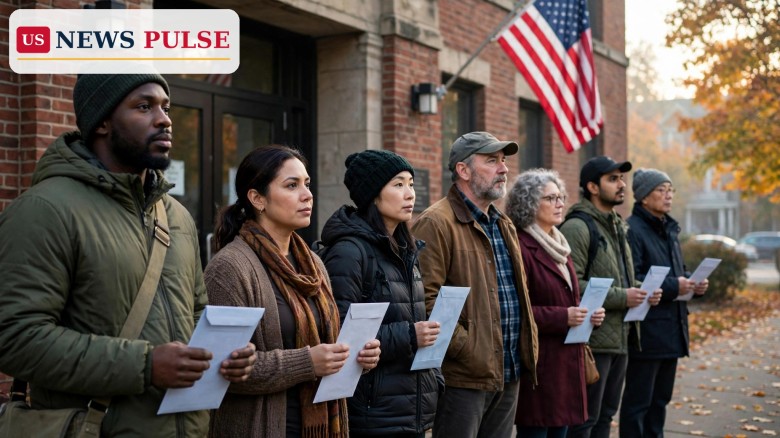
Early voting has passed 40 million ballots in the 2026 midterm elections, putting the country within reach of the 45.9 million early votes cast in the last midterms five days before Election Day. The early voting milestone, tracked by the University of Florida's Election Lab and reported on Thursday, October 29, 2026, means a large share of the electorate has already decided the contests that will determine control of Congress for the final two years of President Donald Trump's term.
The surge has arrived in the final week of a campaign dominated by the cost of living, the war in Iran and the fight for the House and Senate. All 435 seats in the House of Representatives and 35 Senate seats are on the ballot on Tuesday, November 3, alongside governors' races in 36 states and 58 ballot measures across 24 states. Democrats need to gain four Senate seats and five House seats to take control of Congress, a result that would give them new power to investigate the Trump administration.
The 40-million figure marks the latest step in a steady climb through October. Reports on Wednesday had put the national early-vote total at more than 36 million, and then at more than 36.4 million, before the count crossed 40 million as updated state figures arrived. The University of Florida's Election Lab compiles the national total from state and county reports, and its figures were carried by CBS News and Reuters as the campaign entered its final stretch.
The total matters because it is closing on the full 2022 early-vote figure with days of early voting still to run in most states. In 2022, 45.9 million Americans voted early during the midterm elections held under then-President Joe Biden. The 2026 pace suggests the final early-vote total could exceed that mark, although the comparison is complicated by different state calendars, different mail-ballot rules and the shift toward in-person early voting since the pandemic.
State figures show where the surge is strongest. In Texas, about 4.5 million people voted in the first seven days of early voting, with Harris County alone logging more than 700,000 voters. In Florida, more than 3.5 million people had voted by Tuesday, including approximately 1.93 million in person and 1.58 million by mail. Georgia had recorded about 2.04 million in-person ballots, and analysts tracking the state said it was on pace to pass its 2022 early-vote total on Friday, October 30. Michigan had recorded roughly 1.39 million ballots and Minnesota more than 419,000 accepted ballots.
The closing rallies reflect the same urgency. President Trump campaigned in Chillicothe, Ohio, on Wednesday with Senator Jon Husted, who faces former Senator Sherrod Brown in one of the races that will decide the Senate, and former President Barack Obama campaigned in Georgia for Senator Jon Ossoff and gubernatorial candidate Keisha Lance Bottoms. Trump is scheduled to hold a rally in Rock Hill, South Carolina, at 12:30 p.m. on Thursday for Senator Darline Graham, who is tied 48-48 with Democrat Annie Andrews in a New York Times/Siena poll, while Vice President JD Vance has campaigned in North Carolina, where former party chair Michael Whatley faces Democrat Roy Cooper for the seat of retiring Senator Thom Tillis.
Early voting in the United States is not a single system. Each state sets its own window, its own hours and its own rules for mail ballots, and the national total is therefore a patchwork that fills in at different speeds. Some states report party registration for early voters, some report only the primary ballot a voter chose, and Texas does not have party registration at all, which makes state-by-state comparisons difficult and national partisan readings unreliable.
The 2022 comparison is the benchmark because it was the last midterm and the first held after the pandemic-era expansion of mail voting. That year, early voting reached 45.9 million ballots, and analysts have spent this cycle asking whether 2026 would match it, given changes in state law, mail-service concerns and a shift back toward voting in person. The early evidence points to a high, uneven turnout: strong in Texas, Florida, Georgia, Louisiana, Tennessee and Kansas, softer in some states where mail-ballot returns have fallen even as in-person voting has risen.
The pandemic changed habits permanently for many voters. Election offices now see a larger share of people voting in person before Election Day rather than waiting until Tuesday, and campaigns have reorganised around that shift, spending the final week chasing voters who have not yet cast a ballot rather than persuading undecided voters from scratch. Large get-out-the-vote mail campaigns have also created confusion in some places, with voters unsure of polling hours or whether they have already returned a ballot, according to tracker reports.
The stakes of the count are straightforward. Republicans currently hold a narrow House majority, with 218 seats to 214 for Democrats, one independent and two vacancies, and a 53-47 Senate majority. The final outcome will depend not only on the ballots already cast but on Election Day turnout, on how quickly states count mail ballots, and on close races where a few thousand votes could decide control of a chamber.
The state breakdown shows a surge that is broad but not uniform. Texas, the largest early-voting state in raw numbers so far, reported about 4.5 million ballots in its first week, and measured by the primary each early voter chose, the Texas early vote was dead even, compared with a Republican advantage of 9 points for the whole 2022 early vote, although analysts caution that is not a like-for-like comparison because March's larger Democratic primary builds in part of the gain.
Florida's ballots were up 6 percent from the same point in 2022 on the last complete day's count, with Democratic ballots up 10 percent and Republican ballots down 1 percent, leaving Republicans ahead by 1.1 points among early voters compared with 5.4 points at the same stage in 2022. Georgia's turnout was up 9 percent from the same point in 2022, and its dashboard projection put the state on course to pass its 2022 total of 2,534,136 on Friday, at about 2.68 million, with the high end of the range reaching the mark on Thursday.
North Carolina showed the sharpest Democratic tilt among the states that report registration. Democrats led by 15.6 points among early voters, compared with 7.5 points at the same point in 2022, with Democratic ballots up 42 percent and Republican ballots up 8 percent. Nevada showed a statewide Democratic lead of about 29,800 ballots, or 5.6 points, compared with 3.1 points at this point in 2022, while New Mexico, Ohio, Virginia, Colorado, Maryland and Oklahoma also looked stronger for Democrats than at the same stage four years ago.
Not every state fits that pattern. Pennsylvania remained behind its 2022 pace even after adjusting for registration changes, with Republican mail ballots up 20 percent and Democratic mail ballots down 10 percent. Arizona was roughly even after adjusting, Iowa slipped further behind 2022 on the headline figure but was about even after adjusting for weaker Democratic registration, and Michigan's flat mail returns were described as explainable, with Wisconsin's mail drop likely reflecting a shift to in-person voting rather than a fall in turnout.
The common thread is that early voting now represents a large and growing share of the total vote, and that the remaining campaign is increasingly about turnout mechanics: who still has to vote, where they live, and whether they know their state's deadline. In Texas and Georgia, early voting ends on Friday. In North Carolina it ends at 3 p.m. on Saturday. Michigan offers early voting through Sunday, November 1, Ohio runs through Sunday from 1 to 5 p.m., and Iowa's in-person absentee voting continues through Monday, November 2.
Analysts urged caution about reading a winner into the early numbers. Michael McDonald, a political science professor at the University of Florida who maintains the university's Election Lab data on early voting, said: "It's important not to overinterpret early voting data because it's often a poor predictor of final results." His warning was echoed in tracker reports, which stressed that the figures count who voted, not who they voted for, and that party registration is not a vote.
Obama framed the election in Georgia as a judgement on the country's direction, telling supporters: "We are not going to fix the system that's broken, we're not going to unrig our economy, so long as we've got a culture where anything goes, where people in the highest offices of the land think it's OK to lie and cheat and bully." His return to the campaign trail in the final week, after a relatively low public profile, underlined how much Democrats are relying on high-profile surrogates to drive turnout in the closing days.
Trump's closing message has been different: that Republicans must hold Congress to protect his agenda, with border security, domestic energy production, taxation and national defence at the centre of the party's pitch, while Democrats have focused on living costs, healthcare and criticism of the administration's economic policies. Trump's approval rating is near a record low, according to Reuters, with Americans increasingly sour on the high cost of living and the Iran war, a backdrop that makes the turnout race in the final days even more important for both parties.
Election officials, meanwhile, have warned voters to check their state and county rules before heading to the polls. Hours, locations and mail-ballot return deadlines vary widely, and counting timelines will vary by state, raising the odds of tight margins, late results and prolonged counting in close House and Senate contests, according to tracker analysis.
The 40-million milestone matters for three reasons. First, it shows that the 2026 midterms are on course to be a high-turnout election, not a low-energy off-year contest, and that voters are engaging early despite the cost-of-living pressures and war fatigue that dominate the campaign. Second, it changes how campaigns spend their final days: with so many ballots already banked, both parties are narrowing their outreach to supporters who have not yet voted, and the record $11.4 billion in midterm advertising is increasingly aimed at that shrinking pool.
Third, it raises the stakes for Election Day itself. A large early vote does not settle close races, because Election Day turnout, mail ballots that arrive late, and the counting rules in each state can still swing a contest. In states where early voting leans one way and Election Day voting leans the other, the result can appear to shift as ballots are counted, a pattern that has fuelled disputes in past cycles and that election officials are already preparing the public for this time.
It also matters for the balance of power. If Democrats gain the five House seats and four Senate seats they need, they would gain the power to launch investigations into the Trump administration and to block its legislative agenda for its final two years. If Republicans hold either chamber, they preserve their ability to advance legislation aligned with the president's priorities. The early-vote total does not answer that question, but it shows that the electorate deciding it is already unusually large, unusually early.
The next 48 hours are the last chance to vote early in several large states. Texas and Georgia close early voting on Friday, October 30, North Carolina closes at 3 p.m. on Saturday, October 31, and Michigan and Ohio offer weekend voting through Sunday, November 1. Voters should check their official state or county election site for locations and hours, and mail voters should check return deadlines, which differ by state.
Trump's tour continues through South Carolina on Thursday, with further stops planned in Florida, Kansas and Iowa in the coming days, while Democrats continue to deploy Obama and other surrogates in battleground states. The final weekend will also bring a weather complication: forecasters warn that a soggy storm could track through the central United States on Election Day, with rain possible in Iowa, Kansas, Michigan, Ohio and Texas, a factor that could affect turnout in exactly the states where early voting has been strongest.
After the polls close on November 3, attention will turn to counting. States process and count mail ballots on different timetables, and close races may take days to call. The Associated Press, which tracks and calls races on election night, will rely on its vote-counting operation as results arrive, and officials have urged patience in contests where the margin is narrow and ballots remain outstanding.
More than 40 million ballots had been cast early as of Thursday, October 29, 2026, according to the University of Florida's Election Lab, compared with 45.9 million early votes in the 2022 midterms.
No. Early-vote figures count who voted, not who they voted for. Party registration data, where states report it, shows the partisan mix of early voters, but it does not reveal their ballot choices, and analysts warn against overinterpreting the data.
Texas reported about 4.5 million early ballots in its first seven days, Florida passed 3.5 million, Georgia recorded about 2.04 million in-person ballots, Michigan about 1.39 million, and Minnesota more than 419,000 accepted ballots.
Texas and Georgia end early voting on Friday, October 30, North Carolina ends at 3 p.m. on Saturday, October 31, Michigan and Ohio offer voting through Sunday, November 1, and Iowa's in-person absentee voting runs through Monday, November 2. Hours and rules vary by county.
All 435 House seats, 35 Senate seats, governors' races in 36 states and 58 ballot measures across 24 states. Democrats need to gain four Senate seats and five House seats to control Congress.
Related coverage on US News Pulse: Early voting surge: over 30 million ballots cast a week before midterms; Midterm ad spending hits record $11.4 billion as 2026 race beats 2024 total; South Carolina Senate poll: Graham and Andrews tied 48-48 before midterms.
Leave a Comment



 | Today's Date: