President Donald Trump has cancelled his planned rally in Kansas, swapping a second in-person visit to the state for tele-town halls in the final days before the November 3 midterm elections. The Trump Kansas rally cancelled decision was confirmed on October 29, 2026, just two days before he was due to appear at the Salina airport on Saturday, October 31.
The change matters because Kansas, long one of the safest Republican states in presidential politics, is now home to one of the closest Senate races in America. Incumbent Republican Senator Roger Marshall is fighting to hold a seat his party has held for generations against Democrat Adam Hamilton, and the latest polling puts the two men within a few points of each other. With control of the Senate at stake, the question in Kansas is no longer whether the president will visit, but whether a phone call can do the work of a rally stage.
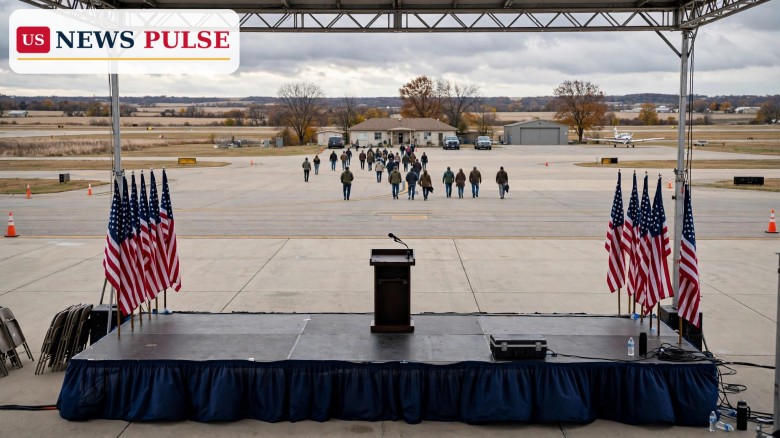
Trump was scheduled to rally in Salina on Saturday, October 31, at the Salina airport. The event page was still live as of noon on Thursday, October 29, according to the Topeka Capital-Journal, which first reported the cancellation. By that afternoon, the Kansas Republican Party had confirmed that the president would no longer be coming in person.
Two explanations were offered, and they point in slightly different directions. Salina Airport Authority executive director Pieter Miller told the newspaper that "our latest information is that the rally was cancelled due to scheduling conflicts". That is the formal, logistical account: something in the president's diary moved, and Salina lost out.
The political explanation, from a GOP source familiar with the situation, was more revealing. "The demand for POTUS from our candidates to hold rallies in their states has been insane, so we're adjusting to a tele-rally to maximize his reach in battleground states as races continue to tighten," the source said. In other words, this was not presented as a retreat from Kansas, but as a reallocation of the president's scarcest resource in the final week: his time.
Kansas GOP spokesperson Laura Francis framed it the same way. "President Trump is shifting from in-person rallies, including Saturday's event in Salina, to tele-town halls that allow him to reach more voters across the nation," Francis said. "With key races in multiple states, this approach allows him to connect with voters in more communities as Republicans work toward victory on Election Day."
No information was immediately available on plans for a tele-rally, including when it would take place, how Kansas voters could join it, or whether it would be a Kansas-specific call or a national one. That gap matters: a tele-town hall can reach people in many states at once, but it cannot recreate the local news coverage, the crowd pictures and the sense of momentum that a rally in Salina would have generated for Marshall's campaign.
This was to have been Trump's second Kansas rally of the midterm campaign. He previously rallied in Park City on October 19, where he asked Kansas voters to "pretend please that I'm on the ballot". That line captured the logic of the whole closing stretch: Trump is not on any ballot on November 3, but Republicans want his voters to turn out as if he were.
Vice President JD Vance has also been deployed to Kansas. He rallied in Topeka on October 26 and in Olathe on September 14. Those rallies promoted Senator Roger Marshall and other Republicans on the ballot, and Republicans are hoping that visits by Trump, Vance and officials in the Trump administration will help boost GOP turnout in the November 3 election.
The Salina cancellation therefore breaks a pattern, not just a diary entry. For weeks, the closing argument of the Republican campaign in Kansas has been delivered in person, in packed rooms, by the two most prominent figures in the party. A telephone call is a different kind of closing argument: cheaper, wider, but also easier to ignore.
It is also worth noting what the cancellation does not mean. Nothing in the reporting suggests Trump has abandoned Kansas, downgraded Marshall's race, or decided the state is lost. The Kansas Republican Party confirmed the change itself, and its own explanation was about reach, not retreat. The test will be whether the promised tele-town halls actually happen, and whether they are pitched to Kansas voters specifically or to a national audience.
The reason a cancelled rally in Salina is national news is the state of the Kansas Senate race itself. Senator Roger Marshall, a Republican and an obstetrician-gynaecologist who was elected to the Senate in 2020, is seeking a second full term. His challenger is Adam Hamilton, a Democrat and the founding pastor of the United Methodist Church of the Resurrection in Leawood, described as the largest United Methodist congregation in the country. Libertarian David C. Graham is also on the ballot, and in a race this close, his share of the vote could matter as much as either frontrunner's.
Kansas has not sent a Democrat to the United States Senate since 1932. Trump carried the state by 16 points in the 2024 presidential election. By every historical measure, this should be a safe Republican seat. This year, it is not.
The Cook Political Report moved the race to Toss-up on October 6, and Sabato's Crystal Ball followed on October 14. Inside Elections moved it to Tilt Republican on October 20, a slightly more favourable rating for Marshall, but still a sign of a competitive race. The polling tells the same story from several directions at once.
A CNN poll conducted by the nonpartisan research firm SSRS over the past week starting on October 20, with a margin of error of plus or minus 4.2 to 4.7 percentage points, puts Hamilton ahead of Marshall 49% to 45% in Kansas. That is the headline number, and it is striking precisely because of the state's history: a Democrat leading a Senate race in Kansas, even within the margin of error, would have been unthinkable in most recent cycles.
Other polls point in the same tight direction. A RedBox Research survey finished on October 23 had Marshall up 46% to 45%, and a separate RedBox release put the race at Marshall 45.7% to Hamilton 45.0%, effectively tied. A New York Times/Siena poll had the two level at 45%, Trafalgar had a 44% to 44% tie, InsiderAdvantage had Marshall up 48% to 47%, and a YouGov poll had Hamilton ahead 48% to 45%. A GBAO poll conducted for Hamilton's campaign had him up by five points. Averaged together, the race is a coin flip.
Prediction markets have moved with the polls. Kalshi's market had Marshall at about 83% in early September; by late October he was at about 60%, with Hamilton at 40%, and more recent trading put Marshall at about 52%, a true coin flip. Polymarket put Marshall at 52% and Hamilton at 49%. The direction of travel is clear even when the exact numbers differ: a seat that looked safe in September looks winnable for Democrats in late October.
The national context explains why both parties are watching Kansas so closely. Republicans hold the Senate 53 to 47, so Democrats need a net gain of four seats to take control. CNN's new battleground polling also found Democrats leading in Michigan, where Abdul El-Sayed leads Mike Rogers 49% to 42%; in Texas, where James Talarico leads Ken Paxton 49% to 43%; and in Maine, where Troy Jackson leads Senator Susan Collins 49% to 45%. Kansas is the least likely of those four on paper, which is exactly why a Democratic lead there, even a narrow one, has attracted so much attention.
The on-the-record reactions so far are short, and they are worth quoting in full because they are the whole of the official explanation. From the GOP source: "The demand for POTUS from our candidates to hold rallies in their states has been insane, so we're adjusting to a tele-rally to maximize his reach in battleground states as races continue to tighten."
From Salina Airport Authority executive director Pieter Miller: "our latest information is that the rally was cancelled due to scheduling conflicts."
From Kansas GOP spokesperson Laura Francis: "President Trump is shifting from in-person rallies, including Saturday's event in Salina, to tele-town halls that allow him to reach more voters across the nation. With key races in multiple states, this approach allows him to connect with voters in more communities as Republicans work toward victory on Election Day."
From Trump's earlier Kansas appearance in Park City on October 19: "pretend please that I'm on the ballot."
No statement from the Marshall campaign, the Hamilton campaign or the White House itself was included in the Capital-Journal's report of the cancellation, and none should be invented here. The silence from the campaigns is itself informative: in the final five days, neither side wants to be seen either celebrating or lamenting a scheduling change before it knows what replaces it.
First, it matters for turnout. Rallies are not just speeches; they are organising events. They generate local television coverage, they give volunteers a reason to gather, and they create the photographs and clips that campaigns circulate for days afterwards. A tele-town hall can reach more people in raw numbers, but it reaches them in their kitchens and cars, not in a crowd, and it is much easier to hang up on than to walk out of.
Second, it matters for the signal it sends about the map. When a president cancels an in-person rally in one battleground to reach several battlegrounds by phone, he is telling his party that the map is wider than his diary. That is consistent with the CNN polling, which shows competitive races in states as different as Maine, Michigan, Texas and Kansas. It is also a sign of how tight the final week has become: every hour of the president's time is being fought over by candidates in different states.
Third, it matters for Kansas specifically. Marshall's campaign has leaned heavily on national Republican star power, with Trump in Park City and Vance in Topeka and Olathe. If the closing message to Kansas voters now arrives by telephone, the campaign will need its own ground game, its own advertising and its own local surrogates to do more of the work. Hamilton's campaign, by contrast, can present the cancellation as evidence that the race is close enough to force Republicans to recalculate, even if the official explanation is about scheduling and reach.
Finally, it matters because of what it does not resolve. The Libertarian vote, at between 2% and 5% in polls that named Graham, is larger than the lead either major-party candidate holds in most surveys. In a race decided by one or two points, the question of whether Graham's voters stay with him, drift to Marshall, or stay home could decide the seat. A tele-town hall aimed at Republican base voters may not move those voters at all.
The immediate question is the tele-rally itself. Watch for an announcement of a date, a time and a dial-in or streaming route, and for whether it is billed as a Kansas event or a national one. A Kansas-specific call, with Marshall prominently featured, would suggest the campaign still sees the state as a priority. A national call, in which Kansas is one stop among many, would suggest the opposite.
The second question is whether other scheduled in-person rallies survive the same logic. If demand for the president is, as the GOP source put it, "insane", then other candidates in other states will be making the same case for his time. Each cancellation or conversion to a tele-event will be read as a clue about which races the party privately thinks are closest.
The third question is polling. The CNN poll showing Hamilton ahead 49% to 45% was conducted from October 20 onwards, before the cancellation. The next round of Kansas polling, and the prediction-market movement that follows it, will show whether voters punish or reward a campaign that swaps a rally for a phone call, or whether they barely notice the difference.
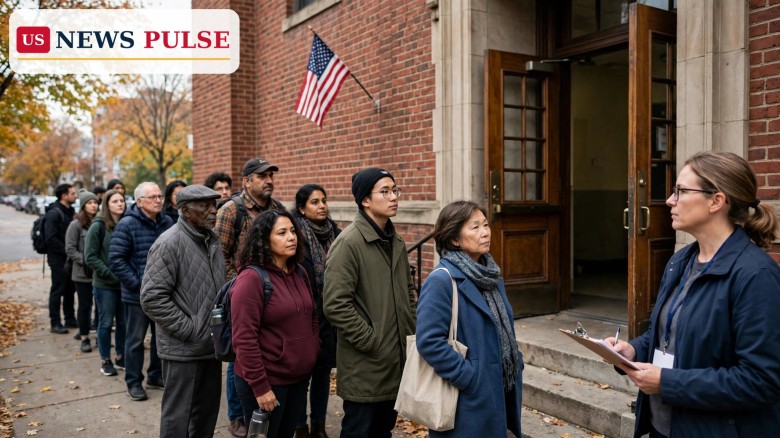
And the final question is Election Day itself, Tuesday, November 3. Early voting has already surged nationally, with more than 40 million ballots cast before Election Day in this cycle. Whatever happens in the final five days, the Kansas result will be decided by voters who have already made up their minds, voters who are still undecided, and voters who need a reason to turn out at all. A rally is one kind of reason. A phone call is another. On November 3, Kansas will show which one worked.
The Kansas Republican Party confirmed the cancellation of the October 31 rally at the Salina airport. Salina Airport Authority executive director Pieter Miller said the latest information was that it was cancelled due to scheduling conflicts, while a GOP source said the president was shifting to tele-rallies to maximise his reach in battleground states.
According to Kansas GOP spokesperson Laura Francis, Trump is shifting to tele-town halls that allow him to reach more voters across the nation. No details of a specific tele-rally, including its date or how to join it, were immediately available.
Incumbent Republican Senator Roger Marshall faces Democrat Adam Hamilton, a Leawood pastor, with Libertarian David C. Graham also on the ballot. The election is on Tuesday, November 3, 2026.
Very close. A CNN/SSRS poll puts Hamilton ahead 49% to 45%, while other recent polls show ties or leads of one to two points for either candidate. Cook Political Report and Sabato's Crystal Ball both rate the race a Toss-up.
No. Kansas has not sent a Democrat to the United States Senate since 1932, and Trump carried the state by 16 points in the 2024 presidential election, which is why the current competitiveness of the race is so notable.
Related coverage on US News Pulse: Trump Texas Rallies: Paxton, Methane Plan and a Talarico Surge, Early Voting Passes 40 Million as Midterm Ballots Surge, South Carolina Senate Race Now a Toss-Up as Fox News Shifts Its Forecast
Leave a Comment



 | Today's Date: