The Tennessee Space Academy bid became official on Wednesday, October 28, 2026, when Governor Bill Lee announced that Tennessee will pursue the new United States Space Academy, proposing a campus anchored in the Coffee County Joint Industrial Park in Tullahoma. The pitch puts Tennessee into a growing contest, led by NASA, to host a federal academy meant to train the next generation of astronauts, engineers, scientists, technicians and operators.
Lee announced Tennessee's bid in a news release on Wednesday, saying the state intends to compete for the academy established by President Trump to strengthen America's space workforce. NASA will lead the evaluation of potential locations, and Tennessee hopes to be a frontrunner for the new campus.
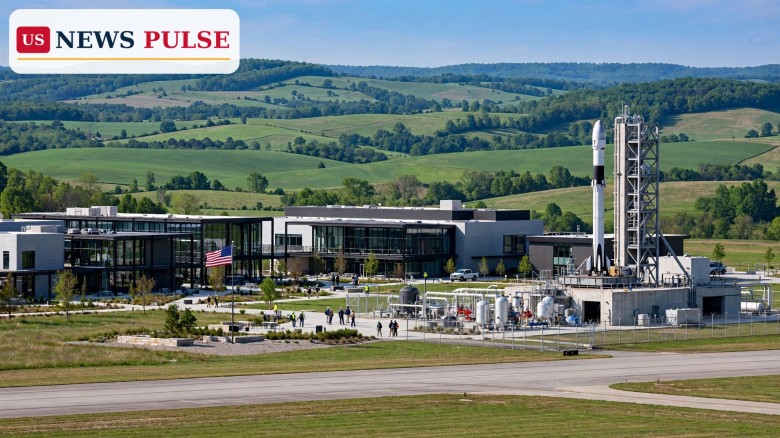
Under Tennessee's proposal, the academy would be anchored within the Coffee County Joint Industrial Park in Tullahoma, in Middle Tennessee. The release pointed to existing infrastructure with room to grow and immediate access to what it called one of the country's premier aerospace and defense corridors. Tullahoma sits not far from Arnold Air Force Base and from Huntsville, Alabama, itself a major aerospace research hub — a neighbour that is now also a rival in this contest.
Speaking to reporters on October 28, Lee framed the bid as a natural fit for a state he said is already leading in the technologies of the future. "Someone has to determine what the future looks like, and I've long believed that should be Tennessee," Lee said in the release. "That corridor is uniquely positioned, and our state is uniquely positioned," he told reporters. "We are innovatively leading in quantum, in nuclear, and it makes a lot of sense for NASA to consider a location like Coffee County for the space center."
Lee added a broader claim about the state's standing: "From leading the nation in clean, reliable nuclear energy to developing the workforce needed to win the future, the Volunteer State is already leading the next era of American innovation."
The academy at the centre of this contest does not exist yet. On August 28, 2026, President Trump signed Executive Order 14423, Establishing the United States Space Academy. The order describes the academy as a proposed NASA-led federal institution combining rigorous technical training with leadership development, and it created a presidential commission, chaired by NASA Administrator Jared Isaacman, to advise on setting it up. One of the commission's jobs is to recommend a process for selecting a permanent physical location.
NASA has since issued a request for information to help inform where the institution might be sited, with responses due by 6 p.m. Eastern Time on November 16, 2026. The timeline outlined in that request is ambitious: a groundbreaking no later than 2027, a temporary campus hosting an inaugural class of roughly 300 students by 2028, and a permanent facility operating by 2031. The commission was tasked with producing a report within 120 days of the executive order.
The academy's stated mission is to prepare future scientists, engineers, astronauts, pilots, operators, entrepreneurs, civil servants and warfighters to advance American interests across the aerospace sector, serving NASA, the U.S. Space Force and the commercial space industry. The order frames space as increasingly important to national security, economic prosperity, scientific leadership and technological strength, and argues that maintaining American leadership will require more people with both technical expertise and leadership skills.
Tennessee's pitch draws heavily on institutions already in place. The University of Tennessee Space Institute, near Tullahoma, is presented as a unique selling point: ten graduates of the University of Tennessee System have become astronauts, including Randy Bresnik, who is set to command the Artemis III moon mission test flight next year. The University of Tennessee at Chattanooga continues to build quantum infrastructure, and the flagship Knoxville campus is growing its research facilities with three planned innovation districts, including a focus on quantum and national security.
The case for Tullahoma rests on three pillars: testing heritage, academic depth and room to grow. Arnold Air Force Base, one of the most important aerospace ground-test facilities in the country, anchors the region's claim to hands-on engineering credibility. The University of Tennessee Space Institute gives the bid an academic home already devoted to aerospace research and graduate training. And the Coffee County industrial park offers land and infrastructure that, according to the state's release, can expand as the academy grows from a temporary campus to a permanent one.
The partner network Lee named is deliberately broad. Alongside Arnold Air Force Base, it includes the University of Tennessee, Middle Tennessee State University's aerospace leadership, Tennessee Tech University's technical expertise and Vanderbilt University's space and quantum research. "Together, these institutions give Tennessee the talent, infrastructure and technical expertise needed to educate and train the next generation of American space leaders," the state's release said.
That breadth matters because the academy's mission is broader than astronaut training alone. The institution is meant to combine technical education with disciplined leadership development, civic responsibility and public service, producing operators, engineers and entrepreneurs as well as astronauts. A bid that can show depth across universities, military test facilities and industry stands a better chance of matching that wide brief than one built around a single campus.
Lee's own words set the tone for Tennessee's campaign: confident, and pitched at a state audience as much as at NASA. "Someone has to determine what the future looks like, and I've long believed that should be Tennessee," he said. His emphasis on quantum and nuclear leadership reflects two areas where Tennessee institutions have invested heavily in recent years, and where the state believes it can outflank rival bids.
The rival camp has been making its own case for weeks. Alabama Governor Kay Ivey formally submitted Huntsville as a candidate on October 1, 2026, and the state's congressional delegation has championed North Alabama as the natural home. Representative Dale Strong said North Alabama "is uniquely positioned to lead America's next chapter in space," while Representative Robert Aderholt pointed to Huntsville's identity as America's Rocket City. "Before Kennedy Space Center and Mission Control in Houston, Huntsville was already at the heart of America's modern space program, developing the rockets that carried the first American into space and later took our astronauts to the Moon," Aderholt said. "That legacy continues today through Marshall Space Flight Center, Redstone Arsenal, U.S. Space Command, and a world-class aerospace workforce."
The Alabama case is formidable: Marshall Space Flight Center, Redstone Arsenal and U.S. Space Command all sit in the Huntsville area, and the city built the Saturn V rockets of the Apollo era. Tennessee's answer is that its corridor — spanning Tullahoma, Arnold Air Force Base and the University of Tennessee system — offers the same Tennessee Valley aerospace heritage, plus a university network and a ready industrial-park site. The contest, in effect, is a Tennessee Valley derby: both bids draw on the same regional aerospace ecosystem, separated by a state line.
Where the academy lands will matter far beyond state pride. A federal academy is a decades-long anchor: faculty, students, research funding, contractors and suppliers cluster around it, and the host region gains a permanent place in the national space workforce pipeline. For Tennessee, winning would cap years of investment in nuclear energy, quantum research and aerospace education with a flagship federal institution. For Alabama, losing to a neighbour would sting precisely because Huntsville's claim rests on being the historic heart of the American space programme.
The timing also matters. With the Artemis programme aiming to return astronauts to the Moon and the commercial space industry expanding rapidly, the United States faces a genuine workforce question: who will design, build, operate and defend the next generation of spacecraft? The academy is the Trump administration's answer — a dedicated institution, modelled in spirit on the military service academies, but civilian and NASA-led. Its location decision, due to be shaped by the commission's recommendations and NASA's site evaluation, will signal which model of space education the government favours: one rooted in a historic space centre, or one built around a university and test-facility corridor.
There is also a political dimension. The academy was created by executive order, not by Congress, and its future funding will depend on sustained political support. A site with champions in both parties and across state institutions — universities, a major Air Force base and local industry — is easier to defend in budget fights than a site dependent on a single patron. Tennessee's broad coalition pitch appears designed with exactly that test in mind.
The immediate deadline is November 16, 2026, when responses to NASA's request for information are due. Tennessee's announcement positions its Tullahoma proposal as a formal contender ahead of that deadline, and other states are expected to make their own pitches public in the coming weeks. The presidential commission's report, due within 120 days of the August executive order, will recommend a process for choosing the permanent location.
If NASA holds to the timeline in its request, a groundbreaking would follow no later than 2027, with a temporary campus welcoming an inaugural class of about 300 students by 2028 and a permanent facility operating by 2031. That schedule is tight for a federal institution of this scale, and slippage would not be surprising — but the 2028 inaugural class gives the project a concrete near-term milestone to be judged against.
For Tennessee, the next steps are to turn a news-release pitch into a detailed proposal: site plans for the Coffee County industrial park, formal commitments from its university partners, and evidence that Arnold Air Force Base and the surrounding corridor can support a growing campus. For Huntsville and other rivals, the task is the same. The contest is now public, and the state that makes the most complete case by November 16 will have the early advantage.
What is the U.S. Space Academy? It is a proposed NASA-led federal academic institution, created by President Trump's Executive Order 14423 on August 28, 2026, meant to combine rigorous technical education with leadership development to train astronauts, engineers, scientists, technicians, operators and other space leaders.
Where does Tennessee want to put it? In the Coffee County Joint Industrial Park in Tullahoma, Middle Tennessee, near Arnold Air Force Base and the University of Tennessee Space Institute, in the Tennessee Valley Aerospace Corridor.
Who else is competing to host it? Huntsville, Alabama, is the most prominent rival: Governor Kay Ivey formally submitted it on October 1, 2026, backed by Alabama's congressional delegation, citing Marshall Space Flight Center, Redstone Arsenal and U.S. Space Command.
When will the location be decided? NASA's request for information responses are due November 16, 2026, and the presidential commission must report within 120 days of the August executive order, recommending a process for selecting the permanent site. A groundbreaking is targeted for no later than 2027.
When would students arrive? Under NASA's outlined timeline, a temporary campus would host an inaugural class of roughly 300 students by 2028, with a permanent facility operating by 2031.
Related coverage on US News Pulse: NASA Swift Observatory ends 22-year mission as spacecraft falls back to Earth, Artemis III crew meets Trump at White House before 2027 moon mission tests, NASA Artemis moon landing 2028: SpaceX and Blue Origin race to return astronauts
Leave a Comment



 | Today's Date: