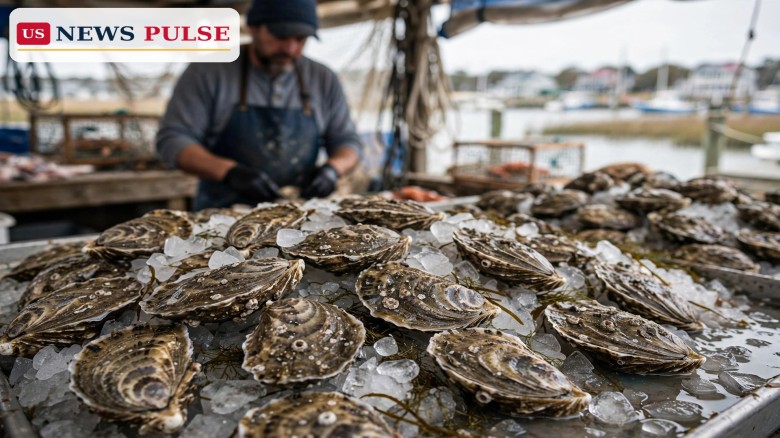
A Virginia oysters Salmonella outbreak has sickened 27 people across 12 states and sent five to hospital, federal health officials have reported, after raw oysters harvested from one Virginia river reached restaurants and retailers in 15 states and Washington, D.C. No deaths have been reported, but investigators are still tracking the outbreak as the autumn oyster season gets under way.
The oysters at the centre of the investigation were harvested by the Little Wicomico Oyster Company from the Little Wicomico River and the Little Wicomico River Lower growing areas in Virginia between September 18 and October 8, 2026. The company voluntarily recalled the whole shellstock oysters on October 9, and the Virginia Department of Health temporarily closed the downstream portion of the river to shellfish harvesting, a closure set to remain in place through November 7.
The multistate investigation links the illnesses to raw oysters from the Little Wicomico River, which flows into Chesapeake Bay at the Potomac River along the Virginia-Maryland border. The U.S. Food and Drug Administration (FDA), the Centers for Disease Control and Prevention (CDC) and state public health agencies announced the investigation publicly on October 19, reporting 27 cases in 12 states and five hospitalisations.
The recall covers whole, shellstock oysters — oysters sold in the shell — harvested from the Little Wicomico River and Little Wicomico River Lower areas during the September 18 to October 8 window. The company ceased harvesting in the affected area and notified its distributors and customers, according to the FDA safety alert and CDC investigation notice summarised in the coverage reviewed for this article.
The distribution list shows how far a single harvest area can reach. The recalled oysters were sold in Maryland, California, Colorado, Connecticut, Florida, Georgia, Illinois, Missouri, North Carolina, New Jersey, Nevada, New York, Pennsylvania, Texas and Virginia, as well as Washington, D.C. Officials have warned that the oysters may also have reached other locations through further distribution, so the state list is a guide to where they were sent, not a guarantee that every case will come from those states.
Public health authorities in Pennsylvania were among the first to link illnesses to the Little Wicomico area, according to the investigation timeline. The Virginia Department of Health collected 400 oysters from the river for Salmonella testing on October 13, and the emergency condemnation order closing the downstream portion of the river followed. The closure remains in place through November 7.
Salmonella infection usually begins between six hours and six days after eating contaminated food. The most common signs are diarrhoea, fever and stomach cramps, and most people recover within four to seven days without treatment. Children under five, adults aged 65 and older, and people with weakened immune systems face the highest risk of severe illness.
Raw oysters carry a particular risk because they are filter feeders: they draw in large volumes of surrounding water, and with it any bacteria present in that water. Cooking kills Salmonella, but the raw-bar tradition — oysters served on ice with lemon, hot sauce or mignonette — does not. Health officials stress that hot sauce and lemon juice do not kill bacteria, a point worth repeating at the start of the fall oyster season, when raw oysters are at their most popular.
The outbreak is one of five active multistate food-borne outbreaks the CDC is currently tracking, involving 168 reported illnesses in total and no deaths to date. The others include an E. coli outbreak linked to raw milk cheese, with 13 cases in nine states, eight hospitalisations and three cases of haemolytic uraemic syndrome, more than half of them in children aged five and under. Recalls are in effect for oysters, raw milk cheese, alfalfa and radish sprouts, and broccoli sprouts.
That wider picture matters for shoppers: several unrelated recalls can be in the news at once, and the advice differs by product. In this case the risk is tied to one dealer and one harvest window, not to Virginia oysters in general. Officials have emphasised that oysters harvested from Virginia's other 90-plus growing areas are not part of the recall or the closure.
The most useful check is the shellstock tag. Restaurants and retailers are required to keep tags showing the harvest area, the harvest date and the dealer, and shoppers can ask to see them. Oysters from the Little Wicomico Oyster Company harvested between September 18 and October 8, 2026, should be thrown away or returned to the place of purchase, and any containers or surfaces they touched should be washed with hot, soapy water and sanitised.
The FDA warns that foods contaminated with Salmonella may still look, smell and taste normal, so appearance is no guide. Consumers should not eat the recalled oysters, and restaurants and retailers should not serve or sell them. Businesses should contact their distributors so the products can be destroyed, rather than simply discarding them into a system where they could be recovered.
For oysters that are not part of the recall, thorough cooking remains the safest option. The Virginia Department of Health recommends steaming live oysters for four to nine minutes, or boiling them for four to five minutes after the shells open. Anyone who is pregnant, very young, older, or living with a weakened immune system should be especially cautious about raw shellfish.
The FDA's safety alert carries the investigation's bluntest warning: "Food containing Salmonella may look, smell, and taste normal." That single sentence is the reason the agencies have told restaurants and retailers to rely on tags and distribution records rather than on sight or smell.
The CDC and FDA have said they will update their notices as new cases and test results arrive, and the case count is expected to move. The Virginia Department of Health, for its part, has advised people to call a healthcare provider for diarrhoea with a fever above 102 degrees Fahrenheit, diarrhoea lasting more than two days, bloody stool, or signs of dehydration — the red flags that separate a routine stomach upset from an illness that needs medical attention.
No deaths have been reported in the outbreak, and the five hospitalisations have not been broken down by state in the coverage reviewed. That restraint is normal in the early weeks of an investigation, when health departments confirm cases county by county and protect patient privacy, but it also means the public picture will sharpen only as state reports are compiled.
This outbreak matters for three reasons. First, it is a food-safety warning with a long tail: oysters harvested in September and early October can still be sitting in restaurant cold rooms or retail displays, and the recall depends on tags and distribution records being checked, not on consumers noticing anything wrong with the product.
Second, it is a test of the shellfish safety system itself. The harvest-area closure, the company recall, the state testing and the federal alerts all worked in sequence — Pennsylvania linked illnesses to the area, Virginia closed the river and tested oysters, the company recalled the product, and the CDC and FDA warned the public. How quickly cases stop appearing will show whether that chain caught the distribution in time.
Third, it arrives as raw oysters return to menus for the fall season, when demand is highest and the temptation to assume a familiar product is safe is strongest. The agencies' message is deliberately narrow — one river, one company, one three-week harvest window — precisely so that consumers do not need to avoid all Virginia oysters, while still taking the specific recall seriously.
The Virginia harvest closure runs through November 7, and the CDC and FDA investigation remains open. New case reports, if any, will be added to the CDC investigation notice, and the agencies have said they will update their public alerts as new information arrives. Restaurants and retailers that received the recalled oysters should already have removed them from sale and contacted distributors about destruction.
Shoppers who ate raw oysters in recent weeks and develop diarrhoea, fever or stomach cramps should note what they ate, where, and when, and seek medical advice if symptoms are severe or prolonged. Anyone who still has oysters from the affected harvest window should dispose of them and clean any surfaces they touched.
Related recalls this season include a nationwide eye-drops recall, a plant-based butter recall and a toothpaste recall, all covered in our recent health reporting:
Which oysters are recalled? Whole shellstock oysters harvested by the Little Wicomico Oyster Company from Virginia's Little Wicomico River and Little Wicomico River Lower areas between September 18 and October 8, 2026.
How many people have fallen ill? Federal health officials have reported 27 illnesses across 12 states and five hospitalisations, with no deaths reported.
Are all Virginia oysters unsafe? No. Officials have stressed that oysters from Virginia's other 90-plus growing areas are not part of the recall or the river closure.
What are the symptoms of Salmonella? Diarrhoea, fever and stomach cramps, usually starting six hours to six days after eating contaminated food, with most people recovering in four to seven days.
What should I do if I have the recalled oysters? Do not eat them. Throw them away or return them, wash and sanitise any surfaces they touched, and ask your retailer or restaurant about the shellstock tag if you are unsure of the harvest area or date.
Leave a Comment



 | Today's Date: